

King Mongkut Studies Project
Social and Cultural Changes in Siam
Social and Cultural Changes in Siam during the Reign of King Mongkut
Somdet Phra Chao Boromwong Thoe, Krom Phraya Damrong Rajanubhab, recorded that “…during the reign of King Nangklao, there were five Siamese who excelled in learning Western knowledge from the Americans: King Mongkut, who, while ordained, studied languages himself; King Pinklao, who studied military science himself; Krom Luang Wongsa Thiratsanit, who studied medicine himself; Somdet Chao Phraya Borom Maha Si Suriyawong, who, from the time he was still Luang Nai Sit, studied shipbuilding; and Nai Mot Amatyakun, who studied mechanical engineering…” (200 Years of Somdet Phra Chao Boromwong Thoe, Krom Luang Worawongsa Thiratsanit. 2008. p. 28)
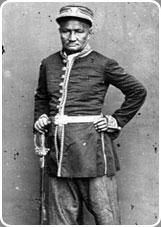
Somdet Chao Phraya Borom Maha Si Suriyawong (Chuang Bunnag) (B.E. 2351–B.E. 2425). Image from: Collection of Historical Images of the Reign of King Mongkut. Bangkok: Fine Arts Department, 2005. p. 152.
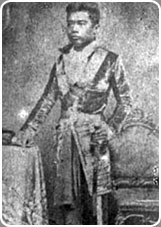
Phra Ong Chao Supradit (Phra Chao Boromwong Thoe, Krom Muen Witsanunat Niphathorn), born to Chao Chom Manda Noi of the Supradit lineage (B.E. 2367–B.E. 2405). Image from: Collection of Historical Images of the Reign of King Mongkut. Bangkok: Fine Arts Department, 2005. p. 152.
When King Mongkut ascended the throne, he promoted the preparation of human resources who would become the principal force in the future development of the country. He encouraged royal sons and daughters to receive education and expanded educational opportunities to nobles as well as commoners, with particular emphasis on the study of foreign languages in order to broaden perspectives and to learn knowledge from abroad. These included physics, chemistry, metal plating with silver and gold ores (Somsri Boonarunraksa, 2007, pp. 172–174), navigation, Western medicine, coin minting, printing, communications, military affairs, agriculture, photography, and engineering works such as road construction. In addition, personnel were sent to study and observe abroad, as he “graciously appointed Somdet Chao Phraya Borom Maha Si Suriyawong and Phra Chao Luk Ya Thoe, Krom Muen Witsanunat Niphathorn, to observe administration and national development in Singapore in B.E. 2402…” (Naengnoi Saksri, 1994, p. 216). This was because he perceived that Siam at that time needed to prepare itself to confront sweeping changes from all directions, which would affect national security, the economy, ways of life, society, and Siamese culture thereafter. Examples included abolishing the custom of appearing before the king bare-chested, allowing foreign merchants to attend audiences in the Grand Audience Hall, permitting commoners to receive or attend royal audiences or show respect by arranging offerings in front of their houses, allowing petitions of grievance to be submitted directly to the king, and permitting foreigners to greet by handshaking or by standing to show respect (Sombat Phlainoi, 1984, pp. 29–30; Somsri Boonarunraksa, 2007, pp. 87, 91).
The major transformation or reform of state administration resulted from King Mongkut’s royal statement: “Since Siam is harassed by France on one side and by the British colonies on the other… we must decide what to do. Shall we swim upstream to befriend the crocodile, or swim out to sea and cling to the whale? Even if we were to discover a gold mine in our country sufficient to buy hundreds of warships, we would still not be able to fight them, because we would have to purchase warships from those very countries (Britain and France). They could stop selling to us at any time… The only weapon that will truly be useful to us in the future is speech and the heart endowed with mindfulness and wisdom” (Nawaporn Rueangsakul, 2007, p. 10). This led to the Bowring Treaty of B.E. 2398 between Siam and Britain, and subsequently with other countries. King Mongkut recognized the necessity for Siam to accept treaties according to British proposals, despite the great disadvantages to Siam, because he feared that Siam might be coerced by British military force and modern weaponry (the Gunboat Policy, introduced by Sir John Bowring at the mouth of the Chao Phraya River, whereby force would be used if Siam refused to sign, a policy that had proven effective in China), and might ultimately be seized as a colony, as neighboring countries were experiencing at that time (Krairerk Nana, 2007).
During the implementation of these policies, King Mongkut also ordered the modernization of the country in accordance with Western models so that Western powers could not use the pretext that Siam was barbaric and uncivilized, thereby claiming it as the duty or mission of white people to transform Siam into a modern and civilized nation according to Western standards, what was referred to as the “White Man’s Burden.” Western powers often used such justification to legitimize their colonization of countries in Asia and Africa. The making of these treaties thus brought about changes in various aspects as follows.
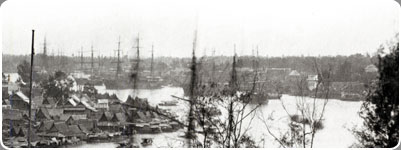
The phenomenon of 100 merchant ships on the Chao Phraya River in late B.E. 2407
Image from: Pipat Pongraphiphon. Panoramic Views of Bangkok during the Reign of King Rama IV: A New Discovery. Bangkok:
Muang Boran, 2001. p. 100.
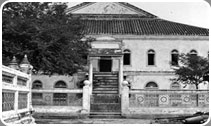
Sittikan Mint. During the reign of King Rama IV, a machinery workshop for minting coins was ordered to be constructed
in front of the Royal Treasury.
Image from: Collection of Historical Images of the Reign of King Mongkut. Bangkok: Fine Arts Department, 2005. p. 38.
Economic Aspects
Sir John Bowring entered into the Bowring Treaty (1855 or B.E. 2398), which is regarded as Thailand’s first official opening of the country. This treaty is considered the origin of today’s Free Trade Area (FTA), an economic grouping among countries aimed at reducing customs duties within the group. As a result, Siam was required to completely abolish monopolistic trade under the Phra Khlang Sinkha system (in the past, Siam’s economic system depended on the monarch, who entrusted ministers to oversee it; tax collection was conducted through auctions, with an estimated amount to be remitted to the treasury, while the remaining revenue collected belonged to the minister). The collection of harbor dues or anchorage fees was abolished, and a Customs House, or tax office, was established to collect import duties at the rate of three percent and export duties as specified in the annex to the treaty. This new customs system has been in effect since that time, without a specified duration, stipulating only that amendments to the treaty could be made solely with the mutual consent of both contracting parties (Krairerk Nana, 2007; Nawaporn Rueangsakul, 2007, pp. 10–11).
Financial Aspects
Trade between Siam and foreign countries expanded rapidly after the Bowring Treaty, resulting in a large inflow of foreign currency and silver bullion into the country and a trade surplus. Commerce increasingly required currency as a medium of exchange, causing the hand-produced bullet money to become insufficient for circulation. Several measures were taken to address these problems. In B.E. 2400, the use of foreign currencies, namely Mexican coins and currency from the Straits Settlements (territories under the control of the British East India Company in Southeast Asia, namely Penang, Singapore, and Malacca), was officially declared legal tender for the settlement of debts. Officials’ stipends were also paid in Mexican coins (Nawaporn Rueangsakul, 2007, pp. 10–11). In B.E. 2403, the king ordered the construction of the Sittikan Mint within the Grand Palace, where coins were produced by machinery in various denominations made of gold, silver, copper, and tin (Mining Council, 2008, pp. 71–72).
Communication Aspects
Sompong Kriangkraiphet (1965), Ophas Sawikun (1970), and Sanguan Ankhong (1959) stated that when King Mongkut was ordained at Wat Bowonniwet, he recognized the benefits of book printing and therefore ordered a printing press to produce Buddhist texts for dissemination. After ascending the throne, he ordered the establishment of the Royal Printing House (or Akson Phimkan Printing House) and the casting of Thai movable type for use. Initially, it was used to publish a periodical newspaper called the “Royal Gazette” (first produced in B.E. 2401, issued fortnightly). Later, royal proclamations were printed, and complete texts were printed instead. Evidence indicates that during his reign there were five newspapers published to disseminate information, one in Thai and four in English.
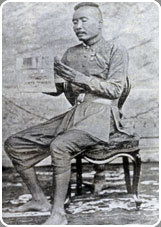
English newspapers reached the Siamese royal court. Krom Muen Aksornsasansophon
reading The Illustrated London News
Image from: Krairerk Nana. Siam Regained Its Independence: Solutions and Approaches to National Problems Arising from the Royal Strategies of the King. Bangkok: Matichon, 2007. p. 5.
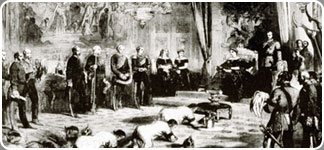
The Illustrated London News, issue dated 5 December 1857 (inside news image): the first diplomatic mission of the Rattanakosin Kingdom, consisting of 28 envoys and attendants, led by the chief envoy Phraya Montri Suriyawong (Chum Bunnag), traveled by ship and arrived at Portsmouth, England, on 28 October 1857. The mission was granted an audience to present the royal letter of King Rama IV into the hands of Her Majesty Queen Victoria at Windsor Castle on 19 November 1857.
Image from: Krairerk Nana. Illustrated Album of the Reign of King Rama IV: Crisis and Opportunities of Rattanakosin over 150 Years. Bangkok: Matichon, 2007. p. 60.
Krairerk Nana (2007) stated that “…he followed international developments, as evidenced in a royal letter sent to Chao Phraya Montri Suriyawong (Chum Bunnag), who was traveling to England, stating that ‘…having been away for many months, I must follow the news from foreign newspapers (The Illustrated London News)…,’ which he subscribed to in order to keep abreast of current affairs.”
Sir John Bowring brought the inscription of King Ramkhamhaeng the Great, discovered by King Mongkut, to be published in England in B.E. 2400. In Germany, Mr. Bastian published it in B.E. 2408, and in France, Mr. Four Nerot published it in B.E. 2434 (Sompong Kriangkraiphet, 1967, p. 195).
Dr. Bradley purchased the copyright of Nirat London, composed by Mom Rajawongse Kratai Isarangkun (Mom Rachothai), for 400 baht. This is regarded as the first instance of a copyright sale in the history of Thai literature, and it was first printed in the Year of the Rooster, B.E. 2404 (Ophas Sawikun, 1970, p. 165).
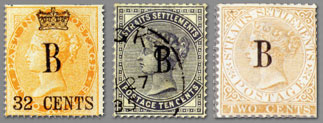
Postage stamps of India and the Straits Settlements used at the British Consulate, overprinted with the letter “B” representing Bangkok.
Image from: Thailand Post Company Limited. 125 Years of Thai Postal Service. Bangkok: Thailand Post, 2008. p. 30.
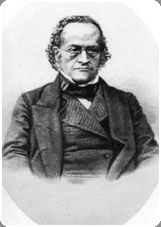
Sir John Bowring, or Phraya Siam Manukunakit Siam Mitra Mahayot (B.E. 2335–B.E. 2415).
Image from: Collection of Historical Images of the Reign of King Mongkut. Bangkok: Fine Arts Department, 2005. p. 167.
In B.E. 2410, the British Consulate introduced a postal mail system for communication between Bangkok and Singapore, as the number of Western residents settling in Siam increased. Consulates were established in Bangkok to supervise their nationals and commercial activities, resulting in increased commercial correspondence between Siam and foreign countries. In the initial period, Indian postage stamps were used to pay postage fees; later, postage stamps of the Straits Settlements and Hong Kong overprinted with the letter “B,” representing Bangkok, were affixed to postal items instead. In addition, some mail was sent through private shipping companies acting as maritime agents without passing through the British Consulate post office in Bangkok. This is evidenced in memoirs in which Somdet Krom Phraya Damrong Rajanubhab recounted that “…the sending of international mail between Siam and foreign countries… had to rely on the British Consulate … to forward it to the postal authorities in Singapore or Hong Kong … but official government correspondence, the Harbour Department would assign ship captains to deliver it to the Siamese Consulate and deposit it at the post office in Singapore…” (Thailand Post Company Limited, 2008, pp. 28–30).
Foreign Affairs
He appointed a Western plenipotentiary ambassador, Sir John Bowring, who had previously served as the British plenipotentiary ambassador negotiating with Siam, to become the first ambassador representing Siam during his reign. Accordingly, a royal proclamation was issued appointing Sir John Bowring as Envoy Extraordinary and Minister Plenipotentiary of Siam effective from 3 June B.E. 2410. On 30 August B.E. 2410, His Majesty graciously conferred upon Sir John Bowring the noble title “Phraya Siam Manukunakit Siam Mitra Mahayot.” On 27 March B.E. 2411, His Majesty further graciously ordered that two identical diplomatic seals be sent to be bestowed upon him, one larger for affixing to documents and the other smaller for sealing wax. The seal bore the Great Crown at the top, with an elephant standing on a pedestal beneath the crown; below the pedestal appeared a Latin inscription reading “Legatus Regius Negatev Regni Siamenst” (Suwan Phetnil, 2004, pp. 14–15; Sanguan Ankhong, 1959, pp. 30–43).
In addition to Sir John Bowring, Anek Nawikmun (2006, pp. 67–83) stated that “His Majesty appointed Mr. Edward Fowle as Luang Siam Anukroh, Consul of Siam with full powers stationed in Rangoon in B.E. 2406 (Mr. Fowle being the person who supervised the Siamese diplomatic mission to England), to coordinate matters concerning British Burma and the Court of Ava with Siam. Subsequently, Luang Siam Anukroh sent a letter respectfully petitioning King Mongkut to construct a pavilion near the Shwedagon Pagoda in Rangoon to serve as accommodation for pilgrims. Upon being informed, His Majesty graciously ordered that a request for land be submitted to the British government; once permission was granted, royal funds were bestowed to construct the pavilion as proposed.”
Agricultural Aspects
After the Bowring Treaty, cultivated land for rice farming was expanded extensively, particularly in the central region, due to the increasing global demand for rice and the efficiency of maritime transportation. As a result, agricultural production shifted from subsistence farming to production for export. The economic system changed from a monopolistic system to free trade. The king promoted wage labor and sought to reduce the practice of corvee labor registration as much as possible.
Chullada Phakdephumin (2008, pp. 181–185) stated that during the reign of King Rama IV, seeds of Western flowers, such as dahlias and globe amaranth, were imported for cultivation.
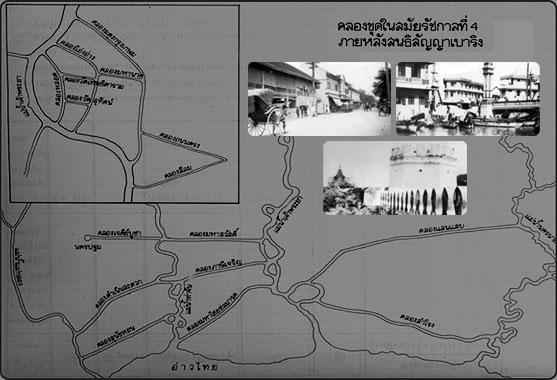
Map showing the excavated canals, Phadung Krung Kasem Canal, Charoen Krung Road, and Fort Rittiruthromran along the southern side of the Sutthaisawan Throne Hall (photograph from the reign of King Rama V).
Image from: Collection of Historical Images of the Reign of King Mongkut. Bangkok: Fine Arts Department, 2005. pp. 125–129.
Public Utilities
Roads. His Majesty graciously ordered the commencement of the construction of Charoen Krung Road, Bamrung Mueang Road, and Fueang Nakhon Road, and the excavation of Phadung Krung Kasem Canal, Wat Traimit Canal, Silom Canal, Wat Sutthi Wararam Canal, Khlong Khwang, and Maha Sawat Canal. Bridges. Chullada Phakdephumin (2002) stated regarding canal bridges that “in the early period, before the reign of King Rama IV and into the early part of his reign, bridges crossing the inner-city moat canals (Bang Lamphu–Ong Ang Canal, excavated during the reign of King Rama I) and bridges crossing Phadung Krung Kasem Canal (the outer-city moat canal excavated during the reign of King Rama IV in B.E. 2395) were all wooden bridges. It was not until B.E. 2404 that two iron bridges were constructed for the first time: an iron drawbridge crossing the Bang Lamphu–Ong Ang Canal, connecting Charoen Krung Road inside the city wall with the area outside the city wall, designed to be opened and closed because royal ceremonial boat processions were still held at that time; and the royal order to dismantle the former Han Bridge, which was a wooden swing bridge, and rebuild it as another iron bridge of the same type.” These developments were intended to facilitate transportation and trade, and to accommodate the needs of Western residents who had settled in Bangkok.

Fire extinguisher nozzle made of brass, with a diameter of 1.8 inches and a length of 1.33 meters (extendable to 2 meters). It could spray water a distance of 50–60 meters, reaching the height of a three-story building.
Image from: URL: http://i176.photobucket.com/albums/w176/mrtbtt/35.jpg
Fire prevention. His Majesty issued royal letters instructing Siamese envoys sent to cultivate friendly relations with Britain to purchase fire-fighting equipment for use in the Grand Palace (Phaothong Thongchuea, 2007). Public health. He issued proclamations prohibiting the public from discarding animal carcasses into waterways, as the use of unclean water was a cause of various diseases, and warned the populace to exercise caution regarding fires, especially those originating from stoves, recommending the construction of stoves using brick and mortar (Kanokwali Chuchaiya, 2004, p. 64). In addition, when Chao Phraya Thiphakorawong served as chief supervisor of the excavation of Khlong Maha Sawat, he constructed shelters along the canal at intervals of approximately 100 sen per shelter and had medical treatises for treating various diseases written and displayed there as acts of merit; these shelters came to be called “sala ya” (medicine pavilions). He also built another pavilion to serve as the site for his own funeral rites, known as the “sala tham sop” (funeral pavilion) (Sompong Kriangkraiphet, 1965, pp. 178–179). Regarding modern medicine, His Majesty favored the services of Dr. Bradley and Dr. House, who practiced Western medicine, used Western pharmaceuticals, and produced artificial dentures (Office of the Library, King Mongkut’s University of Technology Thonburi, 2005; Prayut Sitthiphan, 1973, pp. 158–162). Records also note that Bishop Pallegoix ordered the purchase of Semen Contra to prepare medicinal lozenges distributed to children for the treatment of intestinal parasites (Somsri Boonarunraksa, 2007, p. 175).
Tourism and Hospitality
According to the course Principles of Hotel Management of Mahasarakham Rajabhat University, “the hotel business in Thailand began during the reign of King Rama IV. There were three hotels in operation: the Union Hotel, Fisher’s Hotel, and the Oriental Hotel. Most guests were foreigners traveling to Thailand. After fires broke out at Fisher’s Hotel and the Oriental Hotel, a seaside resort hotel was later constructed at Ang Sila, Chonburi Province, to serve foreign visitors seeking recreation.” This corresponds with the accounts of Ekachart Chanurairat (2008, pp. 86–87) and Phaothong Thongchuea (2006, p. 24), who stated that “…Thailand’s first seaside resort emerged during the reign of King Rama IV, after foreigners were granted permission to build it at Tambon Ang Hin, Mueang Chonburi.” In addition, around B.E. 2404, Bishop Pallegoix traveled to Chanthaburi for a seaside holiday and medical treatment for his eyes, staying there for a period of one month (Somsri Boonarunraksa, 2007, p. 179).
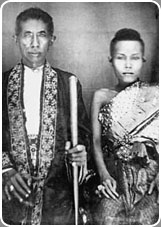
King Mongkut and Queen Thepsirintra Borommarachini, photographed in B.E. 2399.
Image from: Collection of Historical Images of the Reign of King Mongkut. Bangkok: Fine Arts Department, 2005. p. 33.
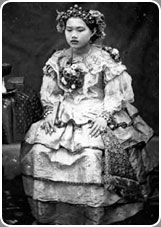
Somdet Phra Piyamavadi Sri Patcharinmata (Chao Khun Chom Manda Piam) (B.E. 2382–B.E. 2447).
Image from: Collection of Historical Images of the Reign of King Mongkut. Bangkok: Fine Arts Department, 2005. p. 38.
Photography. In the early period, His Royal Highness Prince Damrong Rajanubhab explained this matter, stating that “…when photographers first appeared, few people were willing to have their photographs taken.” Later, however, King Mongkut ordered that photographers take a royal portrait of Himself together with Queen Thepsirintra Borommarachini and send it, along with royal gifts, to Queen Victoria of England, Napoleon III of France, and the President of the United States. At present, these royal gifts are preserved at Windsor Castle in England, the Palace of Fontainebleau in France, and in the United States. All three countries were experiencing political difficulties with Siam during that period, and this action may be regarded as a pioneering policy of King Mongkut. He also ordered that photographs be taken of Chao Chom Manda Piam and Chao Chom Manda Samli, royal consorts of the Inner Court, dressed in Western women’s attire, and that these images be sent abroad to publicize that Siam had adopted Western culture, so that people on the other side of the world might recognize the appearance of the people and perceive the atmosphere of modernity in Siam, which had incorporated science into daily life, including photography, photo processing, and publication in newspapers (Krairerk Nana, 2007).
Entertaining and receptions. Opas Sewikul (1970, pp. 111, 165) stated that “…on the occasion of the royal visit to Wa Ko to observe the solar eclipse, the food served was prepared by a French chef, with an Italian head attendant pouring wine or champagne, which was an extremely rare luxury at that time, chilled with ice until cold … and women of the Inner Court, as well as royal sons and daughters, were graciously invited to participate in the banquet.”
Military and Police Affairs
Ophat Sewikun (1970, pp. 276–282) and Suwan Phetnil (2004, p. 97) state that, in addition to His Majesty graciously ordering the excavation of Khlong Phadung Krung Kasem to facilitate transportation and expand areas for cultivation, the canal also served as the outer city moat for defense against enemy forces. After the excavation was completed, His Majesty graciously appointed Chao Phraya Si Suriyawongse as the chief commander in charge of constructing a series of forts along the outer moat, namely Fort Pongkan Patchamit, Fort Pit Patchanuek, Fort Huek Hiamhan, Fort Phlan Phairiap, Fort Prap Sattru Phai, Fort Thamlai Raeng Prorapat, Fort Hak Kamlang Datsakon, and Fort Mahanakhon Raksa. A few years after His accession to the throne, He further graciously ordered the organization of the armed forces and the training of troops in the Western style, establishing an infantry regiment, an artillery regiment, and a Marine corps, one regiment each. He ordered the construction of sailing vessels as warships and merchant ships in several numbers. Later, with the advent of steamships, He graciously ordered the construction of the Siam Orasomphon as the first vessel, as well as steam-powered warships with naval officers and gunners assigned in accordance with British naval traditions, for the defense of the realm, including ships such as the Siamupasatham and the Rukran Phairi, among others. The Royal Thai Police (2008, pp. 1–21), Lamjun Huapcharoen (2007, p. 280), and Jutarat Uea-amnuay et al. (2008, pp. 104–111) state that “…during the reign of King Mongkut, His Majesty conceived reforms of police affairs due to circumstances that required improvements in the suppression of criminals and the maintenance of public order in both the capital and the provinces in a modern manner. This was due to pressure from Britain and France in the case of extraterritoriality, which granted subjects of Britain, France, America, Denmark, Portugal, and other countries special privileges exempting them from Thai courts. This greatly affected Thailand’s judicial system and became an important accelerating factor that led King Mongkut to conceive the establishment of a police force similar to those in Singapore and India, which had organized police systems following the British model. His Majesty graciously employed Captain Samuel Joseph Bird Ames to establish the ‘Police Constable Corps’ in 1860, recruiting Malay and Indian personnel as police officers known as ‘constables,’ whose duty was to maintain public order within the capital under the authority of the Metropolitan Police. This is regarded as the beginning of a unified modern police institution.”
It can thus be stated that the changes in various aspects mentioned above constituted a part of the factors that enabled Thailand to survive the crisis of encroachment by imperial powers that sought to occupy territories (colonialism). This was due to the wisdom and ability of King Mongkut, who employed diplomatic strategies that led the great powers to recognize and respect Siam as an equal to other civilized nations of the time.