

King Mongkut Studies Project
His genius in science and technology
When referring to the genius in science and technology of King Mongkut, everyone recalls the occurrence of a total solar eclipse on 18 August 1868 at Wa Ko Subdistrict, Prachuap Khiri Khan Province, which His Majesty calculated with complete accuracy and predicted as early as two years in advance. This was later verified by modern astronomers using contemporary methods, including computer analysis and documentary evidence. The astronomer concerned stated that His Majesty carried out the calculations himself and by his own methods, with a level of detail exceeding that of the calculations and predictions made by Western scientists. His Majesty did not copy or rely upon the data or evidence of Western scientists.
He thus refuted the allegations made by Jesuit priests and certain groups of Thai people.
The discovery of the total solar eclipse by His Majesty was a demonstration of the scientific genius of the Thai people to the world, clearly showing His ability in precise calculation. It refuted the allegations made by Jesuit priests who came to propagate Christianity during the reign of King Narai the Great, who had recorded that “the Siamese possess a fair amount of knowledge about eclipses, being able to roughly calculate the time of a lunar eclipse, but with regard to calculating the time of a solar eclipse, the Siamese have no knowledge of this matter at all.” At the same time, it also dispelled the belief held by some Thai people who had claimed that a total solar eclipse did not exist. King Mongkut demonstrated to the Thai people of his time that the phenomenon of a total solar eclipse can indeed occur.
B.E. 2403B.E. 2404B.E. 2405B.E. 2406B.E. 2407B.E. 2408B.E. 2411 |
Wednesday, the 9th lunar month, waxing moon, day 14Monday, the 8/8 lunar month, waxing moon, day 1Monday, the 12th lunar month, waxing moon, day 9Date not specifiedMonday, the 8th lunar month, waxing moon, day 1, AthakharatTuesday, the 12th lunar month, waxing moon, day 10Thursday, the 7th lunar month, waxing moon, day 15Thursday, the 7th lunar month, waning moon, day 14Friday, the 12th lunar month, waning moon, day 15Saturday, the 1st lunar month, waxing moon, day 15Sunday, the 2nd lunar month, waxing moon, day 1Date not specifiedDate not specifiedDate not specifiedMonday, the 7th lunar month, waxing moon, day 15Friday, the 6th lunar month, waxing moon, day 1Wednesday, the 11th lunar month, waxing moon, day 14Tuesday, the 10th lunar month, waxing moon, day 1, Year of the Dragon, Samritti Saka |
A lunar eclipse occurredA solar eclipse occurredThe planet MercuryA comet was observedA solar eclipse occurredThe planet MercuryA lunar eclipse occurredA solar eclipse occurredA solar eclipse occurredA lunar eclipse occurredA solar eclipse occurredA solar eclipse occurredA solar eclipse occurredA lunar eclipse occurredA lunar eclipse occurredA solar eclipse occurredA lunar eclipse occurredA solar eclipse occurred |
Seen in SiamSeen in SiamSeen in SiamSeen in SiamSeen in SiamSeen in SiamNot seen in SiamNot seen in SiamNot seen in SiamNot seen in SiamSeen in SiamNot seen in SiamNot seen in SiamNot seen in SiamSeen in SiamSeen in SiamNot seen in SiamSeen in Siam |
Announcement No. 182Announcement No. 199Announcement No. 203Announcement No.204Announcement No.207Announcement No.212Announcement No.230Announcement No.240Announcement No.261Announcement No.302 |
He employed a scientific approach.
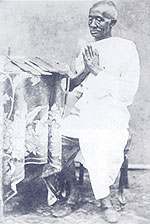
King Mongkut devoted himself to the pursuit of knowledge, favoring the investigation of facts to answer questions that aroused his curiosity. He believed in reason and preferred conducting experiments by himself, in accordance with Buddhist teachings that advise against belief without personal practice leading to true understanding and self-learning. These characteristics are qualities of a scientist. At the same time, he encouraged the people to rely on reason and not to believe rumors, such as the belief that the appearance of comets was dangerous; he explained that comets are natural phenomena visible in many countries and pose no harm to anyone. His interest in science began while he was still in the monkhood, during which he diligently studied the Magadha language until he became proficient, in order to seek answers from the Tripitaka. He later became skilled in Western languages, such as English, and studied modern Western sciences, while also exchanging knowledge and learning together with foreign missionaries. When he learned that solar eclipses could be calculated in advance by scientists, he devoted his time to studying and researching the subject himself, becoming well versed in both astronomy and mathematics. He was capable of using astronomical instruments and time-measuring devices, and during his journeys to provincial areas, in addition to listening to the well-being and hardships of the people, he employed scientific instruments to measure the sun and the stars in order to determine his location on the globe at that time. His sustained interest in the study of science led to his calculation of a solar eclipse; therefore, the praise bestowed upon him by foreigners, acclaiming him as a highly capable calculator and an outstanding astronomer, was not beyond the truth.
He calculated it himself.
In the reign of King Mongkut, there were no computers in use. Therefore, the calculation of a total solar eclipse, which required the use of logarithmic trigonometry involving complex procedures, such as solving equations of spherical trigonometry of the celestial sphere—the core of eclipse calculation—demonstrates His Majesty’s extraordinary capability in that he was able to carry out the calculations himself.
Associate Professor Dr. Khao Mueangwong, a distinguished and widely recognized astronomer of the present day, verified this by examining relevant documents and using computer-assisted calculations. He found that His Majesty must have calculated the occurrence of this solar eclipse by himself, from beginning to end, without using data from foreign nautical almanacs. This was because foreign documents did not provide the opportunity to do so, as they did not contain the necessary values required for such calculations. There was no possibility that His Majesty could have taken any preliminary data from others to use as a basis for further calculation, especially since the calculation was made two years in advance; no one could have delivered such documents in such a short time. Moreover, His Majesty’s calculations went beyond those undertaken by foreign countries.
Calculated two years in advance.
Chao Phraya Thiphakorawong recorded that King Mongkut calculated it in the Year of the Tiger, Atthasok (corresponding to Chulasakarat 1228 or B.E. 2409), or two years before the occurrence of the total solar eclipse, that in the Year of the Dragon, Samritti Saka, Chulasakarat 1230, there would be a total solar eclipse on the first day of the waxing moon of the tenth lunar month. Subsequently, Nongyao Kanchanacharee studied the feasibility based on various documents and accepted that the calculation of the solar eclipse as much as two years in advance was possible, as preparations had to be made for the royal journey to observe the total solar eclipse. These included the construction of a royal pavilion and encampment, a three-story wooden residence, and the invitation of foreign guests such as Sir Harry Orde, a French astronomer, who had to be invited well in advance because transportation at that time relied on ships. In addition, arrangements were made to prepare suitable food to entertain foreign guests, including hiring a French chef with assistants, and ordering food, wine, and ice from Singapore, all of which required considerable time for preparation, to the extent that foreign guests did not expect to find such well-provisioned accommodations in the forests of Siam.
He calculated it with complete accuracy and precision.
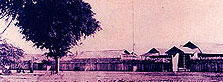
Wa Ko Subdistrict
He calculated as early as the Year of the Tiger, Atthasok, that a total solar eclipse would occur in the Kingdom of Siam at Wa Ko Subdistrict, Prachuap Khiri Khan Province, on Tuesday, the 10th lunar month, waxing moon, day 1, Year of the Dragon, Samritti Saka, corresponding to Chulasakarat 1230 or 18 August B.E. 2411 . Total darkness would be visible from Pranburi to Chumphon. The Moon would begin to cover the Sun from the northwest at 10:06 a.m. and exit to the southeast at 1:36 p.m. The Sun would be totally obscured for six minutes, with totality occurring at 11:42 a.m.
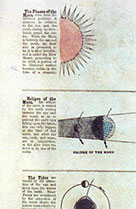
On 18 August B.E. 2411 (1868), at 10:06 a.m., the sky was overcast with thick clouds. At 10:16 a.m., the clouds thinned and the sky brightened, revealing the Sun being covered from the west, and the sky gradually grew dim. By 11:20 a.m., the sky had darkened to the point that stars were visible. At 11:36:10 a.m., a total solar eclipse occurred, lasting 6 minutes and 45 seconds, and the eclipse ended completely at 1:37:45 p.m.
Subsequently, Associate Professor Dr. Khao Mueangwong demonstrated that on 18 August B.E. 2411, a central total solar eclipse did indeed occur at 11:42 a.m., exactly as His Majesty had calculated.
He laid the foundations of science.
1. Establishment of Standard Time
Assoc. Prof. Dr. Khao Mueangwong expressed the view that His Majesty’s ability to calculate the occurrence of a solar eclipse demonstrates that he truly followed the scientific method. Such calculations indicate that Siam must have had a standard time system and a reliable method of maintaining standard time comparable to those of civilized nations, to the extent that it could be used to determine geographic positions on the Earth.
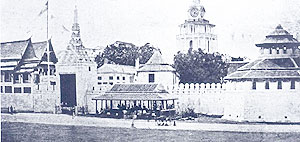
Phu Wadon That Nai Throne Hall
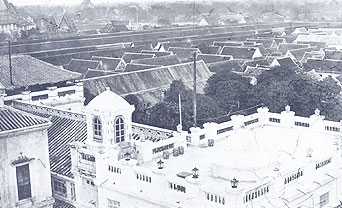
The roof of Phanumart Chamrun Throne Hall in the Phra Aphinao Niwet complex, photographed from Phuwadon That Nai Throne Hall, with the outer palace structures visible, circa 1864.
According to the evidence, in 1852 His Majesty ordered the construction of a royal residence named Phra Aphinao Niwet, comprising Phuwadon That Nai Throne Hall, a five-storey building. The top floor was fitted with large clocks on all four sides to indicate the standard time of Siam, and royal permission was granted to appoint officials to maintain the standard time. Phanthiwathit was responsible for calibrating time during the daytime when the sun passed the meridian of the clock tower, while Phanphinit Chanthra was responsible for calibrating time at night when the moon passed the meridian of the clock tower. These may be regarded as the first scientific positions in Siam. Therefore, the standard time of Siam at that time should have been based on the meridian of this royal clock tower, which was likely the meridian His Majesty used in calculating the solar eclipse. This establishment of a standard time system preceded the British Parliament’s proclamation of a standard time system in 1880.
2. Calculation of the intercalary month system
His Majesty observed that from the Year of the Pig, Chulasakarat 1093, to the Year of the Rabbit, Ek Saka, Chulasakarat 1301, every period of 19 years contained seven intercalary months. For example:
– From the Year of the Pig, Tri Saka, Chulasakarat 1093, to the Year of the Snake, Ek Saka, Chulasakarat 1111, there were seven intercalary months (a 19-year interval).
– From the Year of the Horse, Tho Saka, Chulasakarat 1112, to the Year of the Rat, Samritti Saka, Chulasakarat 1130, there were seven intercalary months (a 19-year interval), and so forth. He therefore proclaimed that within a 19-year cycle there are seven intercalary months, occurring in years 3, 6, 9, 11, 14, 17, and 19, or remembered by the sequence 33, 32, 332. Alternatively, the calculation method was to take the Chulasakarat year, subtract 8, and divide by 19; if the remainder was 3, 6, 9, 11, 14, or 17, that year would have an intercalary month with a second eighth lunar month, while other remainders indicated a normal year.
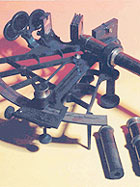
Sextant
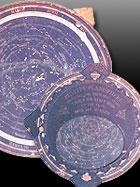
Star map
3. Establishment of a unit for measuring rainfall
Queen Victoria of the British Empire sent a rain gauge to His Majesty King Mongkut. This instrument used the English inch as its unit of measurement, which was more precise than traditional Thai units, allowing even very light rainfall to be measured. His Majesty therefore defined new units of measurement to make them easier to understand, as follows:
1 English inch was divided into 100 parts, each part called a satang.
10 satang = 1 thosang.
10 thosang = 1 inch. By contrast, 1 Thai inch = 10 krabiet, and so forth.
Adoption of Western technology
His Majesty was aware of the progress and advancement of Western countries and therefore conceived the idea of adopting Western technology and adapting it to improve and reform the country so that it would gain international acceptance. He selectively adopted technologies that were useful and appropriate to the actual conditions of society at that time. For example, when he commanded Khun Mahasitthiworahan to study newspaper publishing and Chamuensakrawichit to learn clock repair abroad, he instructed them to consider adopting whatever would make “things that were formerly difficult become easier, and things that were formerly not very good become better.” Accordingly, he introduced Western technology in various fields, as follows:
Transportation: He ordered the construction of roads and bridges and the digging of canals to facilitate faster and more convenient transportation.
Medicine: He accepted medical treatment from missionaries, allowed Western medical practices to be used among the people, and himself had a set of dentures made from sappanwood.
Finance: He ordered the establishment of a mint to produce coins in place of bullet money and issued banknotes or royal payment notes for the payment of stipends to officials.
Industry: He introduced machinery to improve efficiency and speed, such as steam-powered rice mills, sawmills, and sugar factories.
Printing: He ordered the purchase of printing presses to print prayer books, religious teachings, and the Royal Gazette.
Geography: He hired experts to produce maps of the eastern part of the Kingdom of Siam.
Architecture: He ordered the construction of Western-style palaces, with observatories and Western-style kitchens.
Public relations: He ordered royal photographs to be taken and sent to cultivate friendly relations with Western nations.
Military affairs: He ordered the purchase of firearms for the defense of the capital.
Commerce: He ordered the construction of steamships for the transportation of goods for trade.