
The King Mongkut Studies Project
Opening Siam Through Architecture: Tracing Key Sites from the Reign of King Rama IV
The offering of alms to palace monks

Royal merit-making by offering food to palace monks on duty
From Royal merit-making by offering food to palace monks on duty, by Paisan Piammettawat, 2015, Siam through the Lens of John Thomson 1865–69, including Angkor and China’s Coastal Cities, p. 67
พระที่นั่งสุทไธสวรรย์ เป็นพระที่นั่งองค์ใหญ่อยู่ทางทิศตะวันออกของหมู่ พระอภิเนาว์นิเวศ พระบาทสมเด็จพระจอมเกล้าเจ้าอยู่หัว ทรงบูรณะปฏิสังขรณ์ ใน พ.ศ. 2396 และทรงใช้เป็นที่บำเพ็ญพระราชกุศลเลี้ยงพระเวรประจำวัน ในภาพทรงพระกรุณาโปรดเกล้าให้พระเจ้าลูกยาเธอ พระองค์เจ้าทองแถมถวัลยวงศ์ เสด็จแทนพระองค์มาในทางนี้
Sutthai Sawan Thorne Hall is section of the throne hall with in the Para Aphinao Niwet complex. In 1853 king RAMA IV renovated the building and use to offering lunch to Buddhist monks. In the picture king RAMA IV is precoding over the ceremony and has been identified as Prince Thongtaem.
Aphorn Phimok Prasat Pavilion
พระที่นั่งอาภรณ์ภิโมกข์ปราสาทที่รัชกาล ที่ 4 โปรดเกล้า ฯ ให้สร้างเป็นที่ทรงเปลี่ยนฉลองพระองค์สำหรับการพระราชพิธีที่ต้องประทับพระรางยางใน การเสด็จพระราชดำเนินโดยกระบวนราบในวโรกาสต่างๆเช่น การเลียบพระนครโดยกระบวนพยุทยาตราสกลมารดในงานพระราชพิธีบรมราชาภิเษก ลักษณะสถาปัตยกรรมเป็นปราสาทโถงจัตุรมุขไม้องค์เล็กบนกำแพงแก้วพระที่นั่งดุสิทฯ
This photograph is the Aporn Phimok pavilion, which was built by King Rama IV as a place to change his robes when taking part in land procession.

Aphorn Phimok Prasat Pavilion.
From “Aphorn Phimok Prasat Pavilion,” by Paisan Piemmettawat, 2015, Siam through the Lens of John Thomson, 1865–1866, Including Angkor Wat and Coastal Cities of China, p. 75.
Phra Merumas of King Pinklao.

The Royal Crematorium of King Pinklao.
From “The Royal Crematorium of King Pinklao” by Paisan Piammettawat, 2015, Siam through the Lens of John Thomson 1865–69, including Angkor Wat and Coastal Cities of China, p. 77.
พระเมรุมาศเป็นสถาปัตยกรรมเฉพาะกิจในการถวายพระเพลิง พระมหากษัตริย์ และพระราชวงศ์ไทย ตามคติโบราณ เมื่อสวรรคตแล้วกลับขึ้นสู่สรวงสวรรค์อันเป็นประทับอยู่เดิม
ลักษณะของพระเมรุมาศองค์นี้สร้างเป็นพระเมรุมาศองค์ใหญ่ ทรงปราสาทจัตุรมุขยอดปรางค์มีชั้นเชิงกลอน 7 ชั้น สูง 40 เมตร มีปรางค์ทิศทั้ง 4 ทิศ ประดับด้านบนชั้นเชิงบาตรระหว่างเมรุมาศทิศตะวันออกและตะวันตกทิศใต้มีพระที่นั่งทรงธรรม สำหรับรัชกาลที่ 4 และเจ้านายวังหลวง ทิศเหนือมีพลับพลาทรงธรรมของเจ้านายฝ่ายวังหน้า ถือว่าเป็นพระเมรุมาศองค์เดียวในประวัติศาสตร์ที่มีสิ่งก่อสร้างแยกวังหลวงและวังหน้า
The construction of wooden meru for royal cremations is a long-standing Thai tradition. In Thai cosmology the meru upsent Mount Meru. The King’s urn is housed inside.
The angle is slightly different and so the main meru and the smaller east directional Phra Meru appear twice in all there were four directional meru. On the left of Photograph is the Phra Thinang Song Than where the King would listen to sermons together with his immediate family
Golden Mount (Phu Khao Thong)
พระเจดีย์ภูเขาทององค์นี้สร้างขึ้นตามพระราชดำริของรัชกาลที่ 3 ทรงมีพระราชประสงค์สร้างพระเจดีย์เหมือนวัดภูเขาทองที่กรุงศรีอยุธยา รูปแบบปรางค์ฐานสี่เหลี่ยมแบบย่อไม้สิบสองอันเป็นพุทธสถาปัตยกรรมขุดรากลึกลงในดินวางท่อนซุงเรียงเป็นแพอัดแน่น ถมดินและหินศิลาแลง ก่ออิฐสอปูนไว้ชั้นนอก ปรากฏว่าฐานล่างองค์เจดีย์รับน้ำหนักที่ถางไม่ได้ ส่วนบนยอดเจดีย์จึงทรุดลง ไม่สามารถแก้ไขได้และไม่ได้สร้างต่อให้แล้วเสร็จ
รัชกาลที่ 4 โปรดเกล้า ฯ ซ่อมสร้างเจดีย์ภูเขาทองที่ล้างต่อ โดยซ่อมแก้ไขปรางค์ทำบันไดเรียนสองข้างจนถึงยอด เดือนพฤษภาคม 2408 โปรดเกล้า ฯ ให้ก่อพระเจดีย์ทรงระฆังคว่ำไว้บนยอดเขา เมื่อแล้วเสร็จพระราชทานนามใหม่ว่า บรมบรรพต
The construction of this temple was ordered by King RAMA III Who wanted to mimic the Golden Mount, which had existed at Ayutthaya. When it was first built it had a prang on a enormous, square redented base. The dup Foundations were lined with teak logs overlaid with laterite, brick and rubble. However, as construction progressed the weight of the brick walls were too great for the foundations and work was abandoned
In the Fourth Reign, the King ordered that work be us tarted but modified the design by enclosing the massive base, creating two circular staircases, and building a bell-shaped stupa on the top

Golden Mount
From “Golden Mount” by Paisal Piammettawat, 2015, Siam through the Lens of John Thomson 1865–69, including Angkor Wat and Coastal Cities of China, p. 109
Wat Chumphon Nikayaram, Bang Pa-In, Phra Nakhon Si Ayutthaya

Wat Chumphon Nikayaram, Bang Pa-In, Phra Nakhon Si Ayutthaya
From “Wat Chumphon Nikayaram, Bang Pa-In, Phra Nakhon Si Ayutthaya” by Paisan Piammettawat, 2015, Siam through the Lens of John Thomson 1865–1866, including Angkor and Coastal Cities of China, p. 112.
พระอุโบสถวัดชุมพลนิกายาราม ตั้งอยู่หัสเกาะบางปะอิน วัดนี้สร้างโดย พระเจ้าปราสาททอง เมื่อ พ.ศ. 2175 วัดนี้ได้รับการบูรณยปฏิสังขรณ์ครั้งใหญ่ในสมัยรัชกาลที่ 4 พ.ศ. 2406 ในภาพจะเห็นพระอุโบสถที่มีลักษณะตามพระราชนิยมในรัชกาลที่ 4 ขนาดไม่ใหญ่มาก ล้อมรอบด้วยกำแพงแก้วเตี้ยๆ มีมุขเด็จด้านหน้า และหลังตรงประตูทางเข้า ซุ้มประตูและหน้าต่างทำเป็นปูนปั้นปิดทองประดับขกระจกทรงมณฑปยอดปรางค์ มีหน้าเด็กๆ ประดิษฐานพระบรมราชสัญลักษณ์พระมหาพิชัยมงกุฎพระราชลัญจกรในรัชกาลที่ 4
King Rama IV ordered the restoration of Several temples the ubosot is next to the royal place of Bang Pa-in and was built by King Prasat Thong in 1632 the style is typical of Fourt Reign temples with a low well and two smaller porches at the front and back. The window surrounds are in Prasat style topped by a thin prang and with small pediments bearing the emblem of King Mongkut.
Chomklao Bridge, Phetchaburi Province
สะพานนี้เป็นสะพานใช้ข้ามแม่น้ำเพชรบุรี สร้างในสมัยรัชกาลที่ 4 เดิมเรียกว่าสะพานหัวช้างและเพื่อเป็นการเทิดพระเกียรติแต่รัชกาลที่ 4 ที่ทรงมีคุณูปการแก่ชาวเมืองเพชรบุรี ทางการจึงเปลี่ยนชื่อเป็นสะพานพระจอมเกล้า
ลักษณะเป็นสะพานคอนกรีตเสริมเหล็กมีเสาตอมอใหญ่สาบต้นไม้แม่น้ำและมีบันไดท่าน้ำทั้งสองฝั่งสำหรับลำเลียงขนส่งสินค้าจากเรือขึ้นบก
The construction of this temple was ordered by King RAMA III Who wanted to mimic the Golden Mount, which had existed at Ayutthaya. When it was first built it had a prang on a enormous, square redented base. The dup Foundations were lined with teak logs overlaid with laterite, brick and rubble. However, as construction progressed the weight of the brick walls were too great for the foundations and work was abandoned
The bridge was bridge was Bulit of reinforced concrete with three large piers standing in the river. It was lere that the wooden barges with bamboo roof such as those shown would moor to lead and unload their carge,

Chomklao Bridge, Phetchaburi Province
From Chomklao Bridge, Phetchaburi Province by Paisan Piammettawat, 2015, Siam through the Lens of John Thomson 1865–69, Including Angkor and Coastal Cities of China, p. 112.
Wat Ratchapradit Sathit Maha Simaram Ratchaworawihan

Wat Ratchapradit Sathit Maha Simaram, aerial photograph, 1946
(Image from Wat Ratchapradit Sathit Maha Simaram, by Mom Rajawongse Nengnoi Saksri, 2006, Phra Abhinau Niwet, the royal residence of King Mongkut, p. 168)
ได้ทรงสร้างขึ้นเมื่อปี พ.ศ. 2407 โดยทรงซื้อที่สวนกาแฟเดิมซึ่งเป็นที่ดินของหลวงด้วยพระราชทรัพย์ส่วนพระองค์ ใน วัดนี้มีสถาปัตยกรรมที่สร้างขึ้นอย่างตะวันตก ซึ่งแสดงความหมายตามพระนามาภิไธยขององค์ผู้สร้าง มีการตกแต่งโคมระย้าภายในพระอุโบสถ และหอไตรเดิมมีลักษณะเป็นปราสาทยอดแบบจำลองพระที่นั่งดุสิตมหาปราสาทพระราชทานนามว่า “วัดราชประดิษฐสถิตมหาสีมาราม”
This temple was constructed in 1864 after King Mongkut purchased a former coffee plantation, which was royal land, using his personal funds. The temple features Western-style architecture that reflects the meaning of the founder’s royal name. The interior of the main sanctuary (ubosot) is adorned with chandeliers, and the original Tripitaka Hall (ho trai) was designed as a miniature replica of the Dusit Maha Prasat Throne Hall. The temple was royally named “Wat Ratchapradit Sathitmahasimaram
Phra Nakhon Khiri (Khao Wang)
เป็นโบราณสถานเก่าแก่คู่เมืองเพชรบุรี พระราชวังฤดูร้อน ที่สร้างขึ้นในสมัยพระบาทสมเด็จพระจอมเกล้าเจ้าอยู่หัว รัชกาลที่ 4 ตั้งอยู่บนยอดเขาใหญ่ 3 ยอด และได้ทรงพระราชทานนามไว้ว่า “พระนครคีรี” แต่ชาวบ้านส่วนใหญ่กลับนิยมเรียกกันติดปากว่า “เขาวัง” มาจนถึงปัจจุบัน พระราชวังพระนครคีรีนี้เป็นที่เชิดหน้าชูตามาตั้งแต่ครั้งอดตี ในปีพ.ศ. 2404 ได้รองรับราชทูตจากรัสเซีย เข้ามาเจริญสัมพันธไมต
Phra Nakhon Khiri (Khao Wang) is an ancient historical site and a landmark of Phetchaburi province. This summer palace was constructed during the reign of King Mongkut (Rama IV) on the summit of three large hills. The King bestowed the name “Phra Nakhon Khiri,” meaning “Holy City Hill,” but the local people have long preferred to call it “Khao Wang,” Phra Nakhon Khiri Palace has been a prominent and esteemed site since ancient times. In 1861, it notably welcomed a Russian envoy who came to establish diplomatic relations.
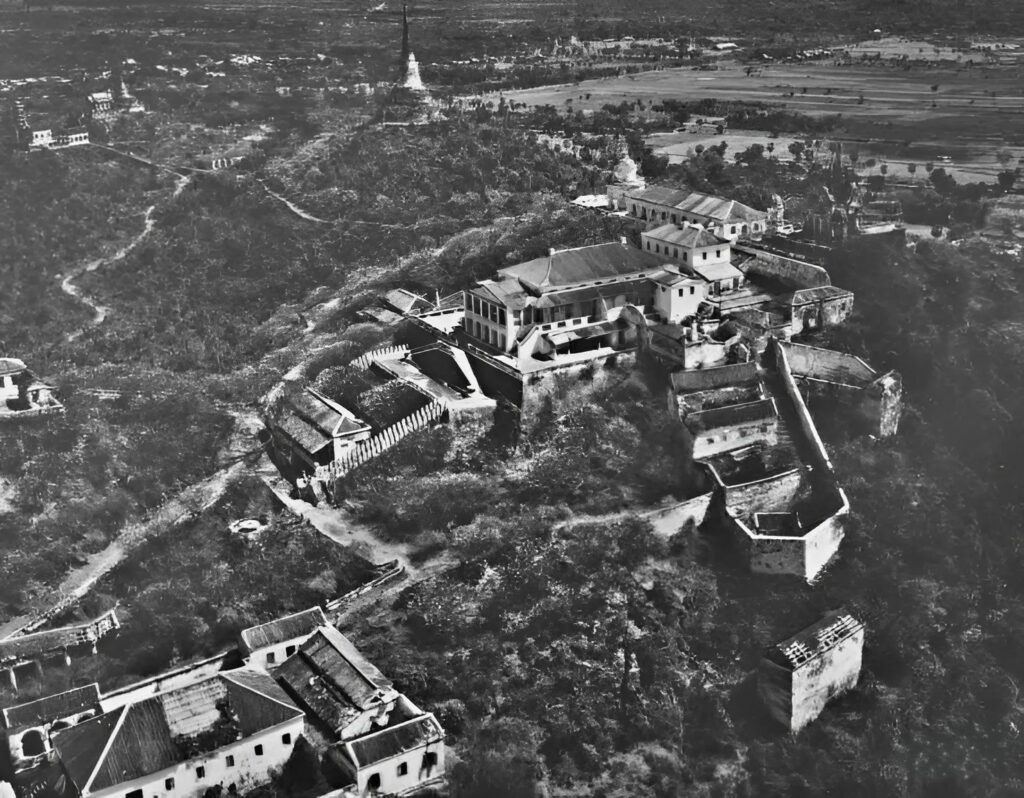
Phra Nakhon Khiri (Khao Wang)
Phra Nakhon Khiri, aerial photograph taken in 1946 (Source: National Archives of Thailand)
Phra Pathom Chedi, Nakhon Pathom Province
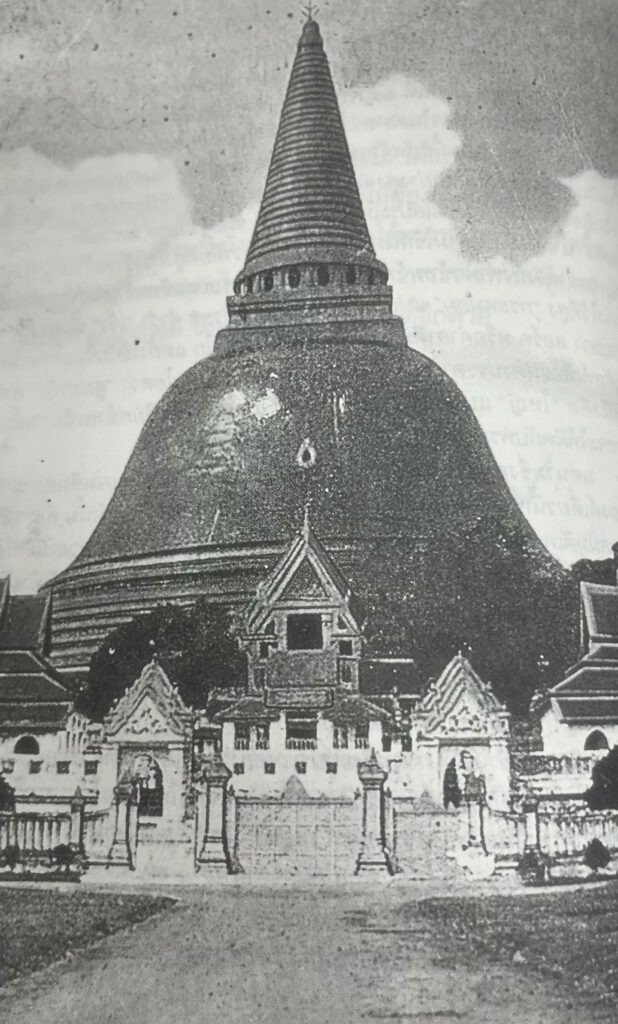
Phra Pathom Chedi, Nakhon Pathom Province
(Image from Sadet Hua Mueang by S. Plai Noi, 2001, King Mongkut of Siam, p. 59)
พระปฐมเจดีย์องค์แรกนั้น นักโบราณคดีสันนิษฐานว่าสร้างขึ้นในสมัยที่นครปฐมยังเป็นเมืองศรีวิชัยของอาณาจักรทวารวดี มีการสร้างพระเจดีย์ขนาดใหญ่ขึ้นเพื่อประกาศความยิ่งใหญ่ของพระพุทธศาสนา ต่อมาในรัชสมัยพระบาทสมเด็จพระจอมเกล้าเจ้าอยู่หัว (รัชกาลที่ 4) ในช่วงที่ทรงผนวชเป็นพระภิกษุ พระองค์ได้เสด็จธุดงค์มาพบพระปฐมเจดีย์ และทรงมีพระดำริว่า เจดีย์นี้น่าจะเป็นโบราณสถานสำคัญ ซึ่งบรรจุพระบรมสารีริกธาตุไว้ตั้งแต่สมัยโบราณแต่กลับถูกทิ้งร้าง จึงทรงดำริให้มีการบูรณะขึ้นใหม่ โดยสร้างครอบองค์เจดีย์เดิมไว้ภายใน และเรียกพระเจดีย์นี้ว่า “พระประธมเจดีย์”
Archaeologists hypothesize that the original Phra Pathom Chedi was constructed during the era when Nakhon Pathom was the Sri Vijaya city of the Dvaravati Kingdom. A large stupa was built to proclaim the grandeur of Buddhism. Later, during the reign of King Mongkut (Rama IV), while he was a monk, he journeyed to Phra Pathom Chedi on a pilgrimage. He surmised that this chedi was likely a significant ancient monument enshrining relic of the Buddha from ancient times but had been abandoned. Consequently, he initiated its restoration, building a new, larger chedi to encompass the original one. He then named this chedi “Phra Prathom Chedi.”
Ananta Samakhom Throne Hall
พระที่นั่งอนันตสมาคมเดิมเป็นนามของพระที่นั่งองค์หนึ่งในหมู่พระอภิเนาว์นิเวศน์ สร้างในสมัยพระบาทสมเด็จพระจอมเกล้าเจ้าอยู่หัว รัชกาลที่ 4 โดยพระราชกิจที่ทรงปฏิบัติที่พระที่นั่งอนันตสมาคมในพระอภิเนาว์นิเวศน์ที่สำคัญคือ เสด็จออกรับทูตที่เดินทางมาทำหนังสือสัญญาเจริญพระราชไมตรีหรือเสด็จออกรับผู้แทนของประเทศต่างๆ ที่ถวายเครื่องราชอิสริยยศ
The original Ananta Samakhom was the name of a throne hall within the Phra Aphinao Niwet complex, constructed during the reign of King Mongkut (Rama IV). Significant royal duties performed by the King at the Ananta Samakhom Throne Hall in Phra Aphinao Niwet included receiving envoys who came to present treaties of friendship and receiving representatives from various countries who offered royal decorations.
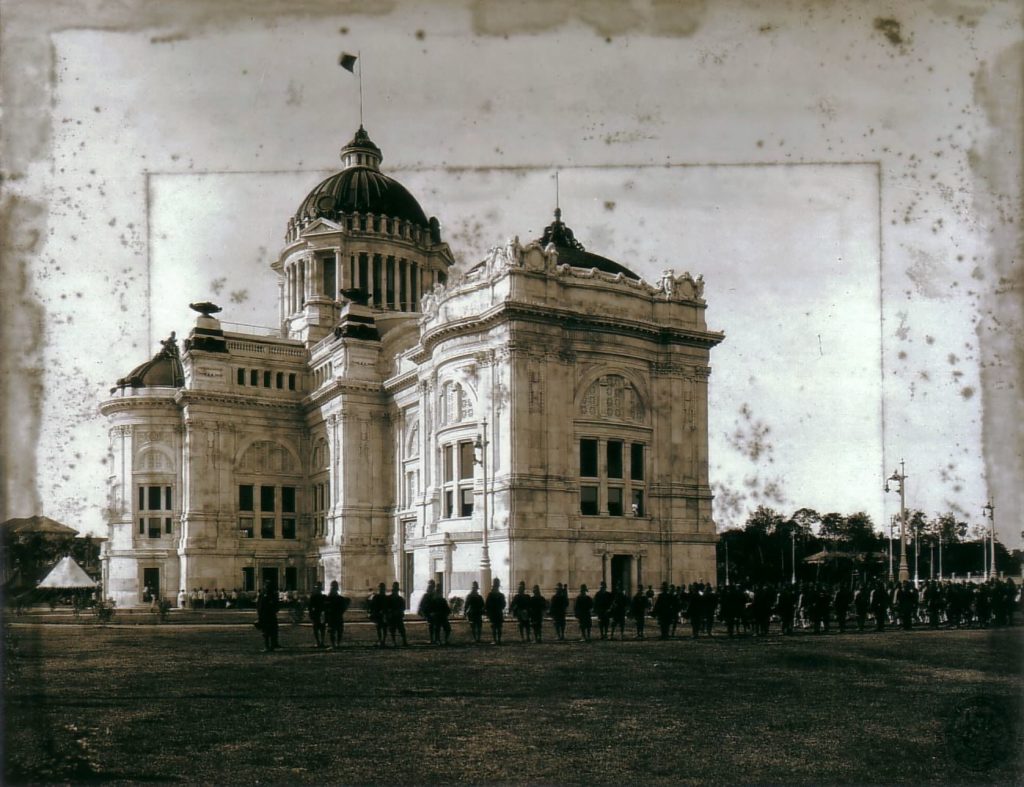
Ananta Samakhom Throne Hall
(Photo from the National Archives of Thailand, Fine Arts Department)
Phra Thinang Prapas Pipitaphan
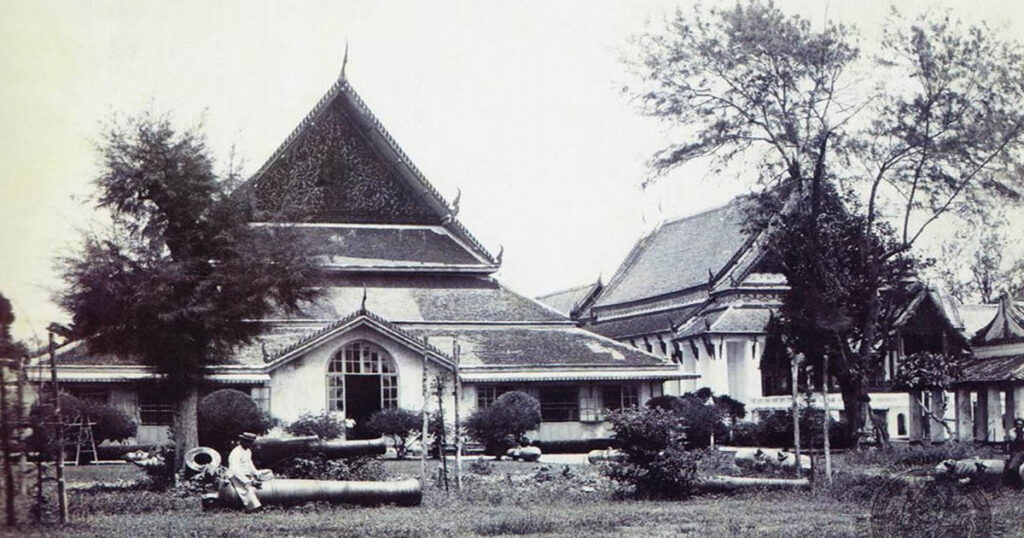
The National Museum Bangkok (Source: Sarakadee)
พิพิธภัณฑสถานแห่งชาติ พระนคร นับเป็นพิพิธภัณฑสถานสำหรับประชาชนแห่งแรกของประเทศไทย จัดตั้งขี้นเมื่อ พ.ศ. 2402 แต่เดิมเป็น “พระราชวังบวรสถานมงคล” หรือวังหน้า ในรัชสมัยพระบาทสมเด็จพระจอมเกล้าเจ้าอยู่หัว ได้ทรงจัดตั้งพิพิธภัณฑ์ส่วนพระองค์ขึ้นที่พระที่นั่งประพาสพิพิธภัณฑ์ เพื่อเก็บรักษาโบราณวัตถุ ศิลปวัตถุ ซึ่งเป็นเครื่องราชบรรณาการต่าง ๆ
The National Museum Bangkok holds the distinction of being Thailand’s first public museum. Established in 1859, it was originally the “Bowon Sathaan Mongkhon Palace” or the Front Palace. During the reign of King Mongkut (Rama IV), he established a private museum within the Phra Thinang Prapas Pipitaphan (a hall or building named “Prapas Pipitaphan”) to preserve antiquities and artifacts, including royal tributes.
Wa Ko, Prachuap Khiri Khan
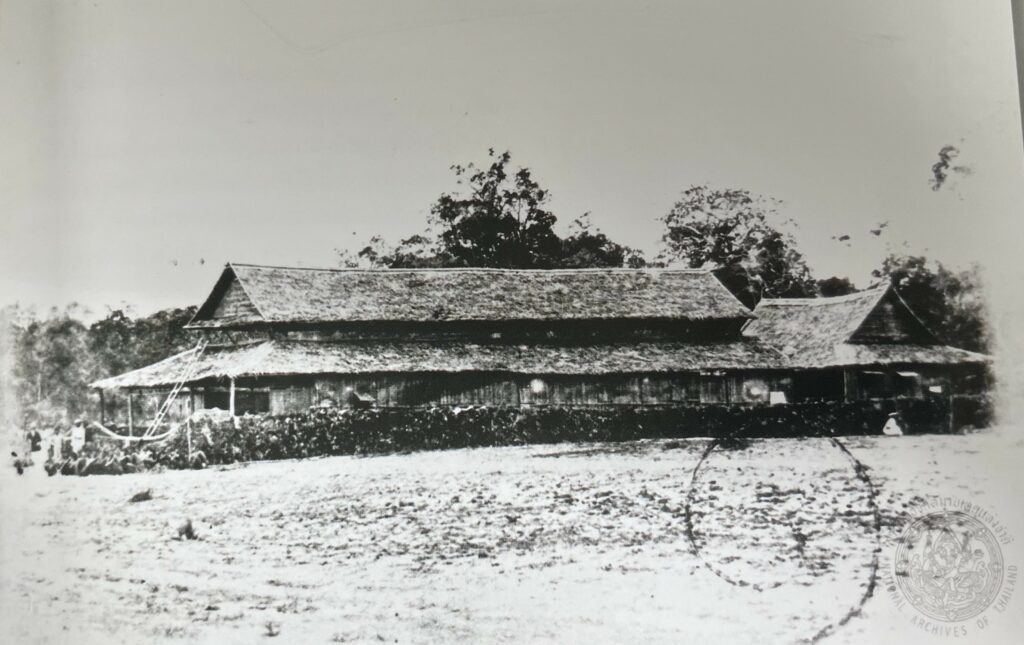
เรือนรับรองของเซอร์แฮร์รี่ ออร์ดและคณะ เรือนรับรองสร้างขึ้นจากไม้ไผ่ผ่าซีกมุงด้วยใบจากหรือใบตาลแห้ง มีความยาวประมาณ 140 ฟุต กว้าง 50 ฟุต แบ่งออกเป็น 2 ส่วน ส่วนใหญ่ใช้เป็นห้องโถงกินข้าว จุคนได้ราว 50 คน ปีกทั้งสองยกพื้นสูง 3 ฟุต แบ่งเป็นห้องเล็ก ๆ รวม 12 ห้อง ท้ายเรือนมีเรือนเล็กอีกหลัง มีห้องนอนและห้องแต่งตัวอย่างละ 2 ห้อง พร้อมเฉลียงที่ใช้เป็นห้องนั่งเล่นและรับแขก พื้นและฝาเรือนส่วนนี้ทำด้วยไม้ทั้งหมด
ฝ่ายสยามให้การต้อนรับอย่างดีเยี่ยม ส่งพ่อครัวชาวฝรั่งเศสและอิตาเลียนพร้อมลูกมือชาวไทยมาคอยบริการอาหารตลอดวัน ทั้งอาหารรสเลิศจากกรุงเทพฯ และสิงคโปร์ ไวน์หลากชนิด และน้ำแข็งปริมาณมาก คณะจากสิงคโปร์ต่างประหลาดใจในความหรูหราที่ไม่คาดคิดว่าจะพบในพื้นที่ห่างไกลเช่นนี้
The residence of Sir Harry Ord and his delegation was constructed from split bamboo and roofed with dried palm or nipa leaves. It measured approximately 140 feet in length and 50 feet in width, divided into two main sections. The larger section served primarily as a dining hall, accommodating around 50 people. Both wings of the structure were raised about 3 feet off the ground and divided into 12 small rooms. At the rear of the main building stood a smaller house, which contained two bedrooms and two dressing rooms, along with a veranda used as a sitting and reception area. The floors and walls of this section were made entirely of wood.
The Siamese hosts extended exceptional hospitality, providing French and Italian chefs, assisted by Thai staff, to serve meals throughout the day. These included exquisite dishes brought from Bangkok and Singapore, a variety of wines, and generous quantities of ice. The delegation from Singapore was astonished by the unexpected luxury found in such a remote location.
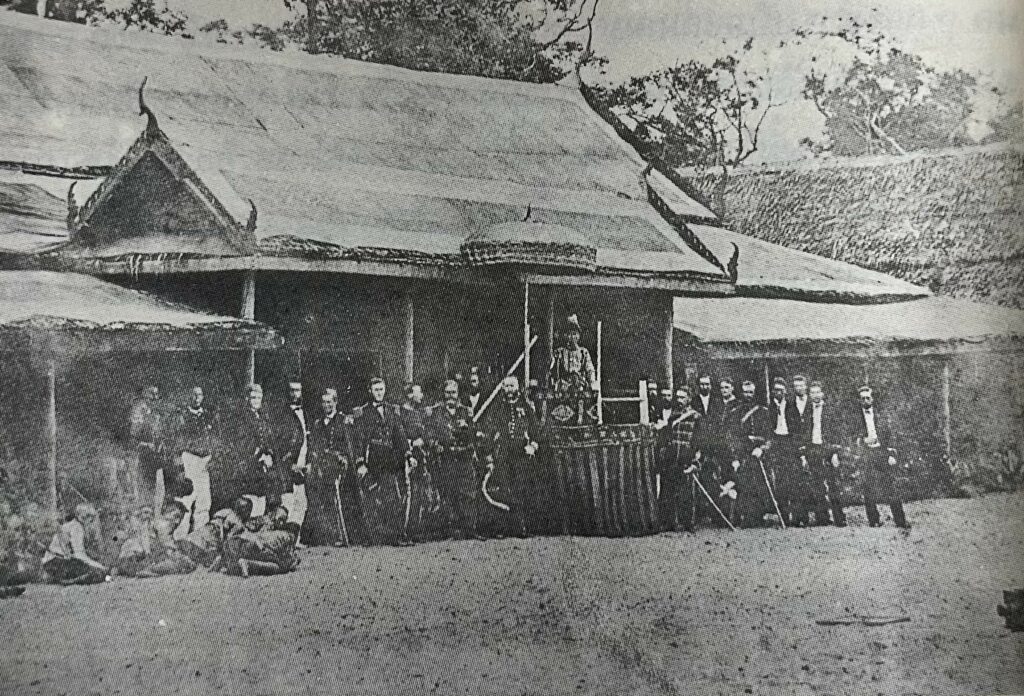
King Mongkut (Rama IV) seated at the landing of the royal pavilion
Image from The Solar Eclipse at Wa Ko by S. Plainoi, 2001, King Mongkut of Siam, p. 242