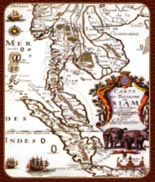

King Taksin the Great
Chapter 10: Military Duties of King Taksin
Somdet Phra Chao Taksin the Great carried out military affairs with three principal resolutions:
1. Suppressing the various factions within the country that arose when Ayutthaya fell to the Burmese. The important Thai towns had set themselves up as independent powers and had to be subdued in order to unite the realm into a single kingdom.
2. Defending the kingdom, as further warfare was certain to occur because external enemies had not yet been decisively driven off.
3. Extending royal authority by enlarging the kingdom and expanding Thai power throughout the Indochinese peninsula.
10.1 Which factions did King Taksin suppress?
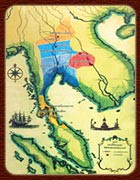
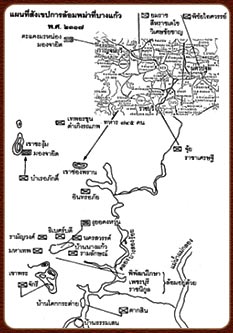
A map showing the locations of the influential factions in the early Thonburi period
(from the book Useful Facts about Thonburi)
The suppression of the four factions to unify the nation
To rebuild the Thai kingdom into a solid whole, it was necessary to suppress the various factions. Although King Taksin was at a disadvantage compared with the other groups, having no territory of his own (his base was then at Chanthaburi) and lacking the rank of a prince or a prominent noble, he nevertheless held the advantage of being in his prime, quick in both determination and thought.
10.1.1 How did King Taksin plan to unify the various factions?
At first, King Taksin of Thonburi intended to attack the strongest faction before the others, hoping that if he could defeat the most powerful group, the weaker ones would fear him and accept his authority without resistance. However, events did not unfold as expected. Therefore, he later changed his royal policy, choosing instead to gather the weaker factions first in order to strengthen his own forces, and then return to subdue the stronger faction.
The process of unification
Step 1: Marching to suppress the faction of Chaophraya Phitsanulok (Rueang) In 1768, King Taksin of Thonburi led his forces with the intention of subduing the faction of Chaophraya Phitsanulok. When he reached Koei Chai in the Nakhon Sawan region, his troops clashed with those of Chaophraya Phitsanulok. King Taksin was shot in the left shin and therefore ordered a retreat. Chaophraya Phitsanulok then proclaimed himself king, but after about seven days he developed an abscess in his throat (Prasert Na Nakhon, 1991: 22) and died. His brother, Phra Inthaarak, succeeded him, but not long after, the ruler of Phang brought his army down to attack, and Phra Inthaarak was executed at Phitsanulok (Useful Facts about Thonburi, 2000: 141).
Step 2: Marching to suppress the Phimai faction In 1768, after King Taksin the Great had firmly established his capital, he aimed to suppress the Phimai faction. He first led his forces to attack Nakhon Ratchasima and won a decisive victory. When the ruler of Phimai learned of this, he avoided battle and fled with his family and followers toward the territory of the Kingdom of Sri Sattana Khanahut, but Khun Chana, an official of Nakhon Ratchasima, captured him and presented him to King Taksin. The ruler of Phimai, also known as Krom Muen Thepphiphit, was executed, while Khun Chana was rewarded with the title Phraya Kamphaeng Songkhram and became governor of Nakhon Ratchasima (Useful Facts about Thonburi, 2000: 132–133).
Step 3: Suppressing the Nakhon Si Thammarat faction. In 1769, King Taksin of Thonburi led both land and naval forces to subdue the Nakhon Si Thammarat faction. The ruler realized he could not resist the royal army and fled with his family and followers to Pattani, but was captured by Phraya Pattani and sent back to the new ruler of Nakhon Si Thammarat, Chao Nara Suriyawong. Later, King Taksin wished to bring the former ruler to Thonburi for judgment. Upon arrival, the king pardoned him and granted him the oath of loyalty to serve as an official, along with a residence. The former ruler, known as Chao Nakhon Si Thammarat (Nu), offered his daughter, Chim, as a court lady.
By the end of 1776, Chao Nara Suriyawong, who ruled Nakhon Si Thammarat, passed away, and King Taksin graciously allowed Chao Nakhon (Nu) to return to govern Nakhon Si Thammarat, bestowing the title of a vassal prince as ruler of Nakhon Si Thammarat.
Note: By 1785, during the reign of King Rama I, the former ruler faced multiple accusations from Chao Phat, his son-in-law. King Phutthayotfa Chulalok summoned him to clarify the charges. The former ruler lost the case and requested to serve in Bangkok, where he remained for nearly a year before passing away. Chao Phat was then appointed as the new ruler of Nakhon Si Thammarat.
Step 4: Suppressing the Chao Phraya Fang faction. After Ayutthaya fell to the Burmese, Maha Rueang gathered people from several cities and declared himself ruler, adopting red robes instead of ordination garments, and became known as Chao Phraya Fang, forming a major northern faction. In 1768, learning of Chao Phraya Phitsanulok’s death and Phra Intharakorn’s succession, he marched to attack Phitsanulok, aided by locals opposed to Phra Intharakorn, capturing the city successfully, executing Phra Intharakorn, seizing property and weapons, and relocating people to Fang.
In 1770, Chao Phraya Fang’s misconduct increased, involving excessive drinking and immoral acts despite still being in monk’s robes. Rogue monks who served as commanders plundered local villagers. When King Taksin learned of this, he ordered a military campaign. Chao Phraya Fang fought for three days but fled with his followers and a newborn white elephant. The Thonburi forces captured only the white elephant, while Chao Phraya Fang disappeared.
“Mom Ratchawong Sumnachat Sawasdikul remarked on King Taksin the Great’s skill in suppressing various factions in the work “King of Thonburi” and in the journal “Mahawitthayalai,” volume 15, issue 2, 1937, stating
“The wisdom and ability of King Taksin in fully restoring Ayutthaya to independence is highly commendable. When considering the king’s position compared to other powerful figures of the same era, it is clear that King Taksin had the least advantage in saving the nation. Chao Phraya Phitsanulok had a strong and established base with solid military forces. Chao Phraya Fang enjoyed great popular support because he was believed to possess magical powers. The ruler of Nakhon Si Thammarat was both strong and skilled, capable of maintaining independence without relying on anyone. Chao Phimai belonged to a royal lineage and was highly respected by the people for his merit and extraordinary abilities. Phraya Na Kong (called Sukyi by the Burmese, meaning commander, which the Thais adopted as the name Suki) and Chao Thong In, referred to in chronicles as Nai Boonsong, were backed by Burmese forces. King Taksin alone had the lowest status, commanding only five hundred soldiers with a single firearm, without a permanent residence, forced to move from place to place under extreme hardship.
His decision to establish a base in Chanthaburi was not according to his original plan but compelled by necessity. Unlike others, King Taksin had to rely entirely on his own ability and intelligence, aided by youthful vigor and administrative skill.”
“Major General Luang Wichitwathakan wrote about the suppression of the remaining four factions—Chao Phraya Phitsanulok, Chao Phraya Fang, Nakhon Si Thammarat, and Phimai—in the book “Siam and Suvarnabhumi” (Praphat Trinarong: Thai Journal 20(72): October – December 1999: 16), stating
“He suppressed each faction one by one with the assistance of two heroes, King Phutthayotfa Chulalok and Krom Phra Ratchawang Bowon (Chao Phraya Surasi). Within a period of three years, all the factions were subdued, and Siam was reunited into a single kingdom in 1770, restoring the kingdom to a consolidated state once again.”
10.2 What royal duties did King Taksin the Great carry out in protecting the kingdom?
The protection of the kingdom included waging war against Burma and eliminating Burmese influence entirely from Lanna.
10.2.1 War with Burma, After restoring Ayutthaya, the first and most important royal duty of King Taksin was to protect the kingdom from Burmese threats. Following his victory against the Burmese at the Pho Sam Ton camp in November 1767, Siam fought the Burmese nine more times during King Taksin’s reign, as detailed below.
First War: The Battle of Bang Kung | Year of the Pig 1767
When King Taksin recaptured Ayutthaya from the enemy (during the attack on Pho Sam Ton camp, Sukyi Phraya Na Kong was killed in the battle), his reputation spread widely, and his honor was recognized as the one capable of saving the Thai kingdom from Burma. King Taksin established his base in Thonburi and conducted the coronation ceremony in the Year of the Pig 1767. All major and minor cities rejoiced, and many people submitted to him, including foreign traders such as the Chinese, who acknowledged him as the ruler of Siam.
After his coronation and proclamation as king of Ayutthaya in the ancient royal tradition, King Taksin rewarded generals and officials for their merit. At that time, Nai Sud Chinda was appointed as Chief Minister in charge of the police department. He then invited Luang Yok Krabat, the elder brother from Ratchaburi (who later became King Phutthayotfa Chulalok of the Chakri dynasty), to serve in the royal administration, and he was appointed as Phra Waring, Chief of the Police Department.
The administration of all cities, as recorded in the Royal Chronicles, states that after King Taksin’s coronation, he appointed officials to govern all major and minor cities. However, according to the chronicles, only a few cities had enough population remaining to be quickly organized into functioning cities. Counting the cities mentioned, the northern cities included Ayutthaya, Lopburi, and Ang Thong; the eastern cities included Chachoengsao, Chonburi, Rayong, Chanthaburi, and Trat; the western cities included Nakhon Chai Si, Samut Songkhram, and Phetchaburi. These 11 cities were the ones with sufficient population to establish functioning administrations, yet it was necessary to appoint governors as before throughout all cities.
In each city, King Taksin stationed soldiers in various locations. The chronicles mention that Chinese troops were assigned to establish a camp at Bang Kung in Samut Songkhram, near Ratchaburi. It is believed that similar forces were stationed elsewhere, though not specifically recorded.
When King Taksin recaptured Ayutthaya, the ruler of Vientiane, who had aligned with Burma at that time, reported to King Ava that he had learned that King Taksin had established himself as ruler and restored Ayutthaya as the capital. At that time, King Ava was concerned about potential war with China and did not consider the situation in Siam to be significant, noting that the country had been devastated and the population greatly reduced. He merely instructed Maung Ki Ma Ya, the governor of Tavoy, to send forces to inspect Siam and suppress any uprising.
At that time, Kanchanaburi and Ratchaburi along the Burmese invasion route were still abandoned. Burmese warships remained at Sai Yok, and the Burmese fortifications along the riverbank in Ratchaburi had not yet been dismantled. Phraya Tavoy advanced his army at will. When he reached Bang Kung and saw the Chinese troops of King Taksin stationed there, he ordered his forces to surround them. King Taksin commanded Phra Maha Mantri to lead the vanguard while he led the main army to Samut Songkhram and attacked the enemy. Seeing that he could not continue to fight, Phraya Tavoy withdrew his forces back to Tavoy. At the Chao Khwao checkpoint (located in Ratchaburi along the Pa Chi River), the Thai army captured all Burmese warships as well as a large amount of weapons and provisions.
The Second War: Burmese Attack on Sawankhalok | Year of the Tiger 1770
This war occurred when King Taksin expanded the kingdom’s territory up to the Burmese frontier in the north. He had recovered all former Ayutthaya territories within his realm, except for Tanaw Sri and Mergui, which remained under Burmese control, along with Cambodia and Malay states still holding semi-independent status. King Taksin resided in the northern cities throughout the rainy season, persuading the dispersed population to return to their original homes and surveying the total number of northern inhabitants. Phitsanulok had 15,000 people, Sawankhalok 7,000, Phichai (including Sawangkhaburi) 9,000, Sukhothai 5,000, and Kamphaeng Phet and Nakhon Sawan slightly over 3,000 each.
He then appointed officials who had distinguished themselves in the campaign: Phraya Yommarat (Krom Phra Ratchawang Bowon Maha Surasinghanat) as Chao Phraya Surasi Phitsanuwathirat to govern Phitsanulok; Phraya Phichai Racha as Chao Phraya to govern Sawankhalok; Phraya Siharaj Dechochai as Phraya Phichai; Phraya Tha Yai Nam as Phraya Sukhothai; Phraya Surabodin of Chainat as Phraya Kamphaeng Phet; and Phraya Anurak Phuthorn as Phraya Nakhon Sawan. He also appointed Phraya Aphaironrit (later Rama I of Rattanakosin) as Phraya Yommarat and head of the Ministry of Interior, replacing the Samuhakarn who had been removed for weakness in war. After organizing the northern cities, he returned to Thonburi.
At that time, Burma still controlled Chiang Mai. King Ava appointed Aphai Kamani, promoted to Pomayungwan, as ruler of Chiang Mai from the old capital. When the Thonburi army advanced to attack Sawangkhaburi, some of Chao Phraya Fang’s followers fled to seek Burmese protection in Chiang Mai. Pomayungwan took the opportunity to extend his territory southward, as the local population of Sawangkhaburi had allied with him. He then sent an army to attack Sawankhalok in the third month of the Year of the Tiger 1770. At that time, Chao Phraya Phichai Racha had only recently taken up residence in Sawankhalok, less than three months, and his forces were still small. However, the city had strong fortifications built long ago. Chao Phraya Phichai Racha defended the city and requested reinforcements from neighboring cities. The Burmese army sent to attack Sawankhalok was led by Chiang Mai’s commander, mostly composed of local conscripts under Burmese supervision. Seeing that the locals of Sawankhalok resisted, they laid siege to the city. When Chao Phraya Surasi, Phraya Phichai, and Phraya Sukhothai arrived with reinforcements and attacked from both sides, the Burmese forces were completely defeated and fled. In this campaign, the Thonburi army suffered no significant hardship.
The Third War: The First Thai Attack on Chiang Mai | Year of the Rabbit 1771
The reason King Taksin launched this campaign against Chiang Mai was based on his consideration that the Burmese forces in Chiang Mai were not very strong, and the Ava Kingdom was engaged in conflict with China and could not send reinforcements. The Burmese in Chiang Mai had only recently separated from Sawankhalok and were still fearful. If the army advanced promptly, it might be possible to capture Chiang Mai. Moreover, the forces for the campaign, including both the royal army and provincial troops, were already assembled. Even if Chiang Mai could not be taken, the campaign would still weaken the Burmese and provide valuable knowledge of the terrain for future planning. It was likely due to this reasoning that he led the army to attack Chiang Mai in the early months of the Year of the Rabbit 1771.
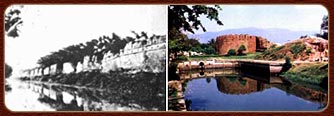
Ruins of the fortress and city walls within Chiang Mai (original) which have now been preserved
(Image from Daily News; www.chiangmaihandicrafts.com/. ../wallandmoat.htm)
The army of King Taksin of Thonburi marched to attack Chiang Mai this time, assembling troops at Phichai, totaling 15,000 men. Chaophraya Surasi was appointed as the vanguard commander, while the king himself led the main army. They advanced to Lamphun without difficulty. Seeing the enemy move swiftly, Phomayungwan did not engage in open battle but merely set up forces outside the city. Chaophraya Surasi’s army attacked and broke that camp, forcing Phomayungwan to withdraw into the city and strengthen its fortifications. The Thonburi army then laid siege to the city and raided it once, fighting through the night from 3 a.m. until dawn. Unable to enter the city, they had to withdraw. King Taksin said that Chiang Mai’s fortifications were strong and ordered a retreat. According to tradition, any king attacking Chiang Mai for the first time would likely fail and only succeed on a second attempt, which may have influenced King Taksin’s decision to withdraw.
Seeing the Thonburi army retreat, Phomayungwan sent forces to pursue. The Burmese attempted to ambush the rear troops, causing confusion, but when they reached the main army, King Taksin personally led the rear guard and engaged in combat with his sword. The troops fought fiercely until the enemy could not withstand them and fled. King Taksin then returned to the royal vessel at Phichai and sailed down to the capital. (For details, see section 10.2.2: Eliminating Burmese influence from Lanna Thailand.)
War 4: First Burmese attack on Phichai | Year of the Dragon, B.E. 2315
The next two wars (4th and 5th) were minor skirmishes. They occurred because the Burmese commanders were arrogant, not because Burma intended a large-scale war. In the Year of the Rabbit, B.E. 2314, in the Lan Xang region, Prince Suriyawong of Luang Prabang clashed with Prince Bunsan of Vientiane. Luang Prabang sent troops to attack Vientiane. Vientiane appealed to King Ava for reinforcements, so the Ava king sent Chikchingbo as vanguard and Posuphla as commander. Learning this, the Luang Prabang forces retreated to defend their city. Posuphla’s troops moved to attack Luang Prabang.
He then advanced toward northern Siam. In trying to show his military prowess over Phomayungwan, the ruler of Chiang Mai, Posuphla divided the Burmese forces: Chikchingbo as vanguard would attack Siam at the frontier. Chikchingbo captured Lablae (modern Uttaradit Province) without resistance. As Burmese resources and captives were insufficient, he advanced to attack Phichai during the dry season at the end of the Year of the Dragon. At that time, Phichai’s forces were small. Chaophraya Phichai defended the city and requested reinforcements from Phitsanulok. Chaophraya Surasi quickly raised troops and marched to Phichai. The Burmese set up a camp at Wat Eka. The Phitsanulok forces attacked it, while Chaophraya Phichai attacked from the other side. After fierce fighting, the Burmese were defeated and fled to Chiang Mai.
This war is not mentioned in the Burmese chronicles. According to the Royal Chronicles, Posuphla himself led the campaign. Chaophraya Damrong Rachanuphap analyzed the battle and considered it minor; the main Burmese army likely did not participate. Posuphla later led another expedition, which will be described further.
War 5: Second Burmese attack on Phichai | Year of the Snake, B.E. 2316
At the beginning of the Year of the Snake, factions in Vientiane quarreled. One side requested support from Posuphla. He sent an army to suppress the dispute, staying through the rainy season. Suspecting Prince Bunsan of Vientiane, he forced the prince to send children and senior officials as hostages to Ava. After the rainy season, Posuphla returned and advanced to attack Phichai.
Posuphla’s attack likely had two reasons.
The First reason, he sought intelligence from Ava regarding King Mangkra’s planned offensive against Thonburi. Second, he wished to test the Thai troops at Phichai, believing his forces, having conquered Luang Prabang, would be able to challenge them.
The second reason may have been that Posuphla felt humiliated when his troops had fled from Phichai in the Year of the Dragon, so he came to redeem himself.
According to the Royal Chronicles, after the rainy season of B.E. 2316, Posuphla again advanced his army toward Phichai. This time, the Thai forces were prepared. Chaophraya Surasi and Phaya Phichai set an ambush along the route. When the Burmese army arrived, the Thai forces attacked and scattered Posuphla’s army on Tuesday, the 7th waning day of the second month, Year of the Snake, B.E. 2316. In this battle, Phaya Phichai fought with a two-handed sword, striking down the Burmese until his sword broke. From then on, he was famously known as “Phaya Phichai the Broken Sword.”
War 6: Second Thai attack on Chiang Mai | Year of the Horse, B.E. 2317
King Taksin decided to continue the campaign. Upon learning that the Mon were rebelling against the Burmese and that the rebellion had grown serious, he realized the Burmese would have to suppress the Mon and could not yet send troops to attack Siam. He saw an opportunity to strike Chiang Mai and weaken the Burmese. The army moved through Kamphaeng Phet and assembled at Ban Ra-nga (the present site of Tak). News then arrived that King Ava had sent Ahsah Wun-kee as the main commander to suppress the Mon rebels who had attacked Rangoon. The Mon forces were defeated and fled from the Burmese. King Taksin then ordered Chaophraya Chakri (later Rama I) to lead the northern forces against Chiang Mai alongside Chaophraya Surasi. The main army would wait at Tak for news from Martaban. Chaophraya Chakri and Chaophraya Surasi advanced toward Nakhon Lampang.
When Chaophraya Chakri reached Nakhon Lampang, King Taksin remained at Ban Ra-nga. Mon refugees fleeing the Burmese arrived via the Tak checkpoint. Khun Inthakiri, the local officer, brought forward the cook, Siming Su-hrai, for questioning. The king learned that the Mon had been defeated by the Burmese at Rangoon and were retreating, moving families into Siam in large numbers. King Taksin realized that the Chiang Mai campaign was timely and ordered the army from Thonburi to station an ambush at Tha Din Daeng to intercept the Mon entering via Chedi Sam Ong, assigning Phaya Kamhaeng…
Vichit commanded the army stationed at Ban Ra-nga to intercept the Mon families entering via the Tak checkpoint from another route. He then led the main army from Ban Ra-nga in the fifth waning day of the first month, Year of the Horse, B.E. 2317, following Chaophraya Chakri’s forces toward Chiang Mai.
Chaophraya Chakri’s army advanced from Nakhon Lampang to Lamphun, where they encountered the Burmese army entrenched along the old Ping River north of Lamphun. The Burmese camp was attacked and heavy fighting ensued for several days. When the royal army reached Lamphun, Chaophraya Chakri, Chaophraya Surasi, and Chaophraya Sawankhalok defeated the Burmese, who fled back to Chiang Mai. The main army remained stationed at Lamphun, while Chaophraya Chakri’s forces continued to lay siege to Chiang Mai.
Posuphla and Pomayungwan, the Burmese commanders defending Chiang Mai, saw the Thai army encamping around the city. They sent troops out to harass the Thai camp repeatedly, but were repelled and suffered heavy casualties each time, forcing them to retreat back into the city. Meanwhile, many residents of Chiang Mai who had hidden in the forests joined the Thai forces, and those remaining in the city fled to join them in large numbers.
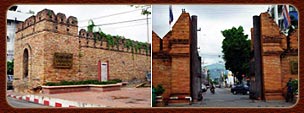
The White Elephant Gate was rebuilt once again between B.E. 2509–2512. Tha Phae Gate was reconstructed in B.E. 2528–2529 by the Chiang Mai Municipality and the Fine Arts Department, based on historical and archaeological evidence, along with photographic records.
(Image from the book Seen: Architectural Forms of Northern Siam and Old Siamese Fortifications)
On Saturday, the 3rd day of the waxing moon in the second month, King Taksin led the royal army from Lamphun and encamped at the royal camp by the river near Chiang Mai. He inspected the camps surrounding Chiang Mai, intending to expedite the capture of the city. On that day, Chao Phraya Chakri attacked the Burmese camps outside the city on the southern and western sides, defeating them completely. Chao Phraya Surasi also attacked three Burmese camps outside the eastern side at Tha Phae Gate. That night, Po Supla and Po Ma Yuanguan abandoned Chiang Mai, evacuating the people through the White Elephant Gate to the north, facing Chao Phraya Sawankhalok.
Since the encirclement of the city was not yet complete, the Thai forces broke through, pursued the enemy, recovered many families, and inflicted heavy casualties on the Burmese.
The next day, Sunday, the 4th day of the waxing moon in the second month, King Taksin entered Chiang Mai with the royal procession. Upon securing Chiang Mai, news from Tak reported that another Burmese force was advancing following the Mon families. King Taksin ordered Chao Phraya Chakri to manage the city, while he himself stayed in Chiang Mai for seven days before returning with the royal army to Tak.
Chao Phraya Chakri oversaw the city, sending envoys to persuade the people and households to return to their original homes. The local people of Lanna, who had been under Burmese control, submitted willingly without the need for force. Chao Phraya Chakri also convinced the prince of Nan to pledge allegiance, bringing the cities of Chiang Mai, Lamphun, Lampang, Nan, and Phrae back under the Siamese kingdom at that time. (For details, see 10.2.2)
War 7: Battle at Bang Kaeo, Ratchaburi (Thailand besieges the Burmese, causing their troops to start starving) | Year of the Horse, 2317 BE
King Taksin returned from Chiang Mai to the capital. Upon arrival, he received news that the Burmese army had advanced via the Three Pagodas Pass and attacked the forces of Phra Yai Yomrach Khaek, who had been stationed at Tha Din Daeng, causing them to retreat to Pak Phraek (present-day Kanchanaburi). At that time, the royal army that had followed him to attack Chiang Mai was still returning by boat and had not yet reached Thonburi. King Taksin therefore ordered the rapid conscription of troops in the capital. Prince Chui, his son, and Phraya Thibetsaradee were assigned to lead 3,000 men to defend Ratchaburi, while Chao Ramlak, his nephew, led an additional 1,000 men as reinforcements. Orders were also given for the northern army to advance and to hasten the troops still en route to join quickly.
According to the Burmese chronicles, A-Za Hwon-ki sent Ngui Akong Hwon (also called Chab Phya Kong Bo or Chab Kung Bo) to invade Thailand, intending only to capture the Mon families and, if unsuccessful, to retreat. Confident from previous victories over the Thai, Ngui Akong Hwon advanced to Pak Phraek after Phra Yai Yomrach Khaek’s forces were defeated at Tha Din Daeng. Phra Yai Yomrach Khaek abandoned the camp and regrouped at Dong Rang Nong Khao. Seeing the Thai not resisting, Ngui Akong Hwon split his forces into two groups: one under Mong Jaiik to encamp at Pak Phraek and plunder the provinces of
Kanchanaburi, Suphanburi, and Nakhon Chaisi, while the other plundered Ratchaburi, Samut Songkhram, and Phetchaburi under Ngui Akong Hwon’s direct command. Upon reaching Bang Kaeo, they learned that Thai forces had positioned themselves in Ratchaburi, so Ngui Akong Hwon established three fortified camps at Bang Kaeo.
Prince Chui, stationed in Ratchaburi, learned of the Burmese camps at Bang Kaeo. Confident in their ability to fight and with reinforcements from the capital approaching, he advanced to Khok Kratai in Thung Thammasen, approximately 80 sen (7.8 km) from the Burmese camps. He instructed Luang Maha Thep to lead the vanguard to set up a camp to block the Burmese from the west, while Chao Ramlak’s troops established a camp to encircle from the east. He then sent word back to the capital.
King Taksin ordered Phraya Phichai Aisawan to defend Nakhon Chaisi, while he personally led the army to Ratchaburi to inspect the camps surrounding the Burmese at Bang Kaeo. After studying the terrain, he commanded his generals to establish additional camps to fully encircle the Burmese. He also instructed Chao Phraya Inthraphai to secure the swamp at Khao Chua Pruan, which the enemy used to keep elephants, horses, and other transport, as well as for supplying their provisions. Phraya Ramanyawong was assigned to lead the Mon forces to guard the swamp at Khao Changum, located along the northern supply route of the enemy, about 120 sen (11.7 km) away.
Seeing that the Thai forces had established strong encirclements, Ngui Akong Hwon attempted to raid Chao Phraya Inthraphai’s camp one night. The Thai forces repelled him, and the Burmese tried again three times that same night but were defeated each time. Many Burmese were killed, and others captured. Observing the Thai strength, Ngui Akong Hwon requested reinforcements from the forces at Pak Phraek, prompting A-Za Hwon-ki to send Mong Jaiid to support him. (A-Za Hwon-ki remained at Mottama and, seeing Ngui Akong Hwon absent, followed him, arriving at Pak Phraek just as the news reached him.)
Chao Phraya Chakri returned from Chiang Mai to assist. The Burmese were besieged for a long time, running low on food, and heavy Thai gunfire caused substantial casualties. Eventually, the Burmese commander surrendered to King Taksin. Meanwhile, A-Za Hwon-ki had returned to Mottama. With the capture of the Burmese camp at Bang Kaeo secured, King Taksin ordered Chao Phraya Chakri to attack the camp at Khao Changum. At midnight, the Burmese at Khao Changum executed a stealth maneuver (known as Vhilarn—gradually advancing toward the Thai camp to launch a sudden all-around assault, as described by Samak Chai Komin in 2543 BE:10) to raid the Thai camp at Phra Maha Songkhram, intending to assist their comrades at Bang Kaeo. This time the Burmese fought more fiercely than before, likely having learned that the Bang Kaeo camp was close to falling. They set fire to Phra Maha Songkhram, but Chao Phraya Chakri intervened in time, recaptured the camp, and forced the Burmese back. During the night, the Burmese at Khao Changum abandoned their camp and retreated north, pursued by Thai forces with heavy casualties inflicted. The Burmese generals fled to Pak Phraek. Recognizing the total defeat of the Burmese, Takkhang Mornong (the Thai commander at Pak Phraek) did not engage further and withdrew to A-Za Hwon-ki at Mottama. King Taksin then ordered the Thai army to pursue the fleeing Burmese to the edges of the kingdom and subsequently return to the capital. Rewards and promotions were granted to all generals and officers, both senior and junior, in recognition of their contributions to the victory.
The Battle of Bang Kaeo serves as an important example of the strategy of confronting enemy forces outside the capital during the Thonburi period, encompassing both offensive (offensive strategy) and defensive (defensive strategy). The significance of this battle might seem less prominent if one follows the assumption made by Somdet Phra Krom Phraya Damrong Rachanuphap in Thai-Rob-Pama that the Bang Kaeo engagement was merely a minor encounter, arising as a consequence of pursuing the Mon families who had fled into Thai territory under Ngui Akong Hwon, particularly the supreme commander
A-Za Hwon-ki. He had no intention of waging a protracted war against Thailand, as he had not yet received orders from King Mangra to invade Thai cities.
However, it is noteworthy that both Thai and Burmese sources consistently confirm that, in fact, the Burmese demonstrated a clear determination to engage in battle directly with Thai forces. The clash was not merely incidental or a byproduct of pursuing the Mon refugees.
Map illustrating the encirclement of the Burmese at Bang Kaeo, B.E. 2317
(Image from the book Somdet Phra Chao Taksin Maharat)
The royal chronicles in the Phra Ratcha Hatthaleika edition record that King Mangra even sent officials to urge Alaung Hpone Kyaw’s army, then stationed at Mottama, to pursue the Mon rebels and invade Thai territory. Alaung Hpone Kyaw accordingly organized his forces, both the vanguard and the support army, with the vanguard attacking the Thai forces positioned at Thadin Daeng.
Burmese sources, such as the Anwa accounts, state that in the year 1136, Alaung Hpone Kyaw led the army to attack Ayutthaya. The vanguard reached Ratchaburi, and the Thai forces encircled them. Similarly, the Ho Kaew Chronicle and the Konbaung Dynasty Chronicle explicitly record that King Mangra commanded Alaung Hpone Kyaw to invade Thailand and achieve a decisive victory.
Thus, the Battle of Bang Kaeo should be regarded as a major engagement, not merely a minor skirmish intended to capture Burmese troops who had followed the fleeing Mon, or to seize plunder and captives at will.
Thai and Burmese sources both confirm that the main objective of the Burmese commanders in the Battle of Bang Kaeo was to capture Ratchaburi. Therefore, Ratchaburi was a strategically crucial point in the battle. However, this does not mean that the city’s military strategic importance emerged only during the Battle of Bang Kaeo. Its significance had been evident since the Alawun Pya campaign (B.E. 2303), resulting from the rerouting of Burmese army movements along the Thawai route, which required them to advance via Phetchaburi, Ratchaburi, and Suphanburi. This rerouting effectively made Ratchaburi a strategic gateway.
Nevertheless, the city’s importance was not merely as a waypoint among other cities. From the perspective of Thai and Burmese military strategists, Ratchaburi was a key strategic fortress, serving as the “last line of defense” before enemy forces could penetrate the central power of the Thai state. Historical evidence shows that Ratchaburi was used as a defensive stronghold against Burmese attacks since the Alawun Pya campaign. During the Fall of Ayutthaya in B.E. 2310, Thai forces advanced to block Mang Maha Naratha’s army approaching from the south at Ratchaburi. Once captured, the city became a base for splitting forces to attack Ayutthaya along two axes:
One force blocked the western cities, including Kanchanaburi and Suphanburi.
Another force blocked the southern approach to Ayutthaya, targeting Thonburi and Nonthaburi.
Ratchaburi’s strategic military importance increased during the Thonburi period, even though the Burmese had shifted their route to the Phra Chedi Sam Ong pass. The heightened importance was also due to internal Thai adjustments. As Sri Sakra Vallipodom observed, during the Thonburi and Rattanakosin periods, the kingdom’s capital moved south to Thonburi and Bangkok, below Ayutthaya. This changed army routes: to attack Bangkok (or Thonburi), forces no longer needed to pass through Kanchanaburi, Phanom Thuan, Suphanburi, and Ang Thong. Instead, the route could pass Kanchanaburi down to Ratchaburi and Nakhon Pathom, then to Thonburi—accessible by land or by waterways, particularly via the Khlong Noi river to Pak Phraek and then along the Mae Klong to Ratchaburi.
Hence, the offensive and defensive strategy against the Burmese in the Thonburi era shifted from the traditional focus on the capital. Victory depended on control over strategic locations in key provinces rather than solely defending the royal city.
In the case of the Battle of Bang Kaeo, the decisive factor was control and defense of Ratchaburi. It was therefore unsurprising that King Taksin acted rapidly and decisively to secure the city as a base of operations.
Chronicles record that upon learning of a Burmese advance via the Phra Chedi Sam Ong pass, the king commanded Prince Chui, with Phraya Thibethdi, to lead 3,000 troops to set up a camp at Ratchaburi, and additionally ordered Chao Ram Laks to take 1,000 troops as reinforcements.
One force — while the main army that had accompanied His Majesty to attack Chiang Mai and was returning by river to the capital — was ordered to send police boats to fetch them: “Do not allow anyone to stop at a house on the way. Whoever stops at a house shall be executed.” When the vessel carrying Prince Chui, his son, and Phraya Thibethdi with all the officials hurriedly arrived in front of the royal pavilion, after paying respects they were waved on with the command to hurry to Ratchaburi.
It is clear that this military operation was an urgent campaign fought against time; anyone who disobeyed the royal command and caused delay would be severely punished. Records show that when Phraya Theppayotha paused his boat to call at a house, His Majesty, on learning of it, personally ordered his execution, beheading him with his own hand, and further commanded that “the police take the head and display it at the front of Wichaiprasit Fort, and the corpse be thrown into the water so that no one may imitate the act.”
The army ordered out to meet this threat included Mon contingents under Phraya Ramanyawong, as well as the forces of Chaophraya Chakri and the provincial armies from the north and east. King Taksin himself also led the main army to join the others with a force of 8,800 men, proceeding directly to the fortified camp at Ratchaburi.
On the Burmese side, Alaung Hpone Kyaw — an experienced commander — understood the strategic necessity of capturing Ratchaburi as a base before the main Thai forces could arrive. Part of his defeat at Bang Kaeo resulted from his failure to seize Ratchaburi: the vanguard he sent forward was fixed in place by Thai forces, and with the vanguard neutralized, the main army massed at Mottama found it difficult to move down to support them.
Although the Phra Chedi Sam Ong pass chosen by Alaung Hpone Kyaw provided a shorter route for striking Thonburi than other approaches, it was rugged and difficult. If the march was delayed and the opponent seized and blocked key terrain and cut supply lines, the advancing army — especially the main force with its large numbers that required wide areas for quartering troops and establishing camps — would face severe hardship.
Burmese sources reflect Alaung Hpone Kyaw’s attempts to organize a sudden attack against the Thai forces. However, internal divisions within his army caused delays. Initially, Alaung Hpone Kyaw ordered the senior commander Minye Zeya Kyaw, who commanded 3,000 royal guards, to break through the Thai positions blocking the Burmese route. Minye Zeya Kyaw refused, claiming insufficient strength. Alaung Hpone Kyaw reported this to King Mangra. Upon learning of the situation, Minye Zeya Kyaw withdrew his forces to Mottama. Alaung Hpone Kyaw then sent Thabyay Kongbo (also called Nguy Akong Hpone in Thai sources) to act in his place, but it was too late. By the time the Burmese vanguard reached Pak Phraek and Ban Bang Kaeo, the Thai forces had already established strong defensive positions at Ratchaburi.
This failure forced Alaung Hpone Kyaw to change his strategy, opting to advance along the northern route toward Phitsanulok, similar to the campaigns of King Bayinnaung and Nemyo Sithu. Strategically, the Battle of Bang Kaeo was a continuation of Alaung Hpone Kyaw’s operations. It was not only the largest and most significant battle of King Taksin’s reign but also a test of the Thai defensive strategy, which had been adapted from lessons learned during the Fall of Ayutthaya in B.E. 2310.
During the Thonburi to early Rattanakosin periods, strategically located provincial towns became decisive battlefields. Ratchaburi was one such critical town. In essence, the Battle of Bang Kaeo was a battle to seize Ratchaburi, just as Alaung Hpone Kyaw’s campaign had aimed to capture Phitsanulok.
Victory or defeat in these battles did not merely determine control over key provinces but could also decide the outcome of the war and the fate of the kingdom itself.
Sri Chollalai (pen name) in 2482, in the work Thai Must Remember, wrote in praise of King Taksin the Great.
King Taksin the Great was not only the foremost Thai warrior, but he also endeavored to show the world that Thailand was a nation of warriors who upheld the highest virtues. This was evident when the Burmese sent an army to invade through Kanchanaburi, Ratchaburi, and Nakhon Chai Si in the Year of the Horse, B.E. 2317 (the 7th year of the Thonburi period). At that time, King Taksin the Great had just returned from suppressing Chiang Mai, and by chance, His Majesty the Queen Mother was seriously ill. Nevertheless, King Taksin the Great set aside his personal concern and urgently proceeded to confront the Burmese army at Ratchaburi, because he did not wish the Burmese to trample the outskirts of the capital and bring dishonor to the Thai nation, nor did he wish the Thai people to lose heart further. After only nine days, Khun Wiset O-sot hastened to report the serious condition of the Queen Mother. Upon hearing this, King Taksin the Great declared that, since her illness was severe, she might not live to see him; yet this campaign was of great magnitude, and at this time there was no one else trustworthy to resist the enemy. Ultimately, King Taksin the Great did not return, because he was concerned for the kingdom. He persevered and contended with the Burmese army. His Majesty the Queen Mother passed away. King Taksin the Great attempted to continue the siege and blockade of the Burmese army. When there was no way for the Burmese to break out, he could have ordered a mass volley of fire into the enemy camp to kill all the Burmese, but he did not approve of such action, in order to preserve the honor of Thai warriors. When the enemy was completely unable to fight, the Thai warriors
refrained from harming them. In the end, the Burmese army exhausted its strength and submitted to fealty on March 31 of that year. Therefore, March 31 should be remembered as a highly significant day for Thai soldiers, representing the highest level of virtue, and is a day of pride and joy to recall that
- Thai soldiers place the affairs of the nation above all else, willingly sacrificing personal matters even in the face of deep grief, so long as the work of the nation is successfully accomplished.
- The Thai nation does not invade other nations. If any nation dares to invade, Thai soldiers will not allow the enemy to escape.
- Even when the enemy is completely surrounded and defenseless, Thai soldiers may fire volleys to kill, but they do not wish to harm an opponent who has no means of fighting, so as not to compromise their honor in any way.
- When the opponent submits, the Thai show care and nurture proportionate to the situation, without exhibiting resentment or hostility further.
- Every inch of Thai land stands independent because the Thai are strong warriors.”
(Praphat Trinarong,Thai Journal , vol. 20(72), October–December 1999: 18–19)
War 8: the campaign of Aza Wun Gyi against the northern cities | Year of Ma-Me, B.E. 2318
This war was even greater than any previous campaign during the Thonburi period. In this campaign, Aza Wun Gyi declared to his generals that the Thais were no longer like before, meaning that from now on Burma could not defeat Thailand. The cause of this war was that when King Taksin of Thonburi restored Thailand’s independence, Burma was engaged in a war with China. After finishing the war with China in the Year of the Tiger, B.E. 2314, the King of Ava intended to attack Thailand again. He planned to send Phosu Phla as the commander from Chiang Mai and Pa Kan Wun as the commander to advance via the Three Pagodas Pass to besiege Thonburi, just as in the previous campaign against Ayutthaya. However, both routes were blocked. The Thais had already advanced to capture Chiang Mai, and when the army at Mottama tried to move, the Mon people rebelled in great turmoil. Therefore, the plan to attack Thailand could not succeed as the King of Ava had intended.

Shwedagon Pagoda, Rangoon (Yangon)
(Image from www.trekkingthai.com/cgi-bin/webboard/generat…)
In the Year of Ma-Me, B.E. 2317, the King of Ava proceeded to place the umbrella atop the sacred relic of Shwedagon Pagoda in Rangoon. At that time, Aza Wun Gyi had already suppressed the Mon rebels, but he was still awaiting the Burmese army that had followed the Mon household to Mottama. The King of Ava, seeing that a large army was already stationed at Mottama, ordered that the plan to attack Chiang Mai should be further considered by Aza Wun Gyi.
Aza Wun Gyi returned to Mottama with the King of Ava’s orders in the fifth month of the Year of Ma-Me, B.E. 2318. When the army of Ta Khaeng Ma Nong fled from the Thais and reported the Burmese army’s defeat, the Thais captured the army of Nguyokong Wun, and another Burmese force was completely routed at Khao Changum. Ta Khaeng Ma Nong then had no choice but to retreat.
Aza Wun Gyi planned the attack on Siam following the model of King Bayinnaung of Hongsawadi: he would lead a large army to strike the northern cities to weaken Thai forces first, then hold the northern cities as strongpoints, and afterward send both land and naval forces down to attack Thonburi via the Chao Phraya River in that single approach; he then ordered a period of rest and replenishment.
The troops were stationed at Mottama, and orders were sent to Po Supla and Po Mayungwaun, who had retreated from the Thais to settle at Chiang Saen, to march back and capture Chiang Mai during the rainy season. They were also instructed to prepare warships, transport ships, and gather provisions to supply Aza Wun Gyi’s army, which would advance at the beginning of the dry season. Po Supla and Po Mayungwaun then assembled their forces and marched to attack Chiang Mai in the tenth month of the year of Ma-Me, 2318 BE.
After the victory at Bang Kaeo, Thonburi had a free period of five to ten months, during which news arrived that Po Supla and Po Mayungwaun would advance to attack Chiang Mai. King Taksin therefore issued an order to Chao Phraya Surasi to lead the northern forces to support Chiang Mai and instructed Chao Phraya Chakri to command the reinforcement army. The command was also given that if the Burmese retreated from Chiang Mai, they should continue to pursue and capture Chiang Saen.
Po Supla and Po Mayungwaun advanced their Burmese army to attack Chiang Mai ahead of the Thai forces, setting up camps nearby in preparation to assault the city. However, the forces they had assembled were not particularly strong. When news arrived that the Thai army was marching up, the Burmese retreated to Chiang Saen, avoiding further engagement.
Aza Wun Gyi prepared his main army, and by the eleventh month he dispatched Kalabo and Mang Yayangu, his younger brother, to command the vanguard from Mottama, while Aza Wun Gyi himself led the main army to reinforce. The Burmese troops marched through Mae Lamao Pass into Tak, then followed the route to Ban Dan Lan Hoi and on to Sukhothai. The vanguard set up at Ban Kong Thani by the new Yom River, while the main army rested at Sukhothai.
Chao Phraya Chakri and Chao Phraya Surasi, stationed at Chiang Mai, were preparing to march to attack Chiang Saen. When they received news that a large Burmese army was advancing through Mae Lamao Pass, they immediately returned their forces via the northern cities.
Sawanlok, Phichai City
When they arrived at Phitsanulok, the two Chao Phrayas consulted on how to confront the enemy. Chao Phraya Chakri observed that the Burmese army was very large, while the Thai forces in the north were comparatively few. He advised to defend at Phitsanulok and await reinforcements from Thonburi. Chao Phraya Surasi also wanted to strike the Burmese first, so he gathered the northern city troops and advanced to fight the Burmese at Ban Kong Thani. Chao Phraya Surasi positioned his forces at Ban Krai Pa Faek. The Burmese attacked and defeated the Phayu Sukhothai forces, then pursued them to Chao Phraya Surasi’s camp, where a battle lasted three days. Seeing that the Burmese greatly outnumbered them, they retreated back to Phitsanulok.
Alaungshwungyi divided the Burmese army to guard Sukhothai and personally led troops to Phitsanulok, establishing camps along both banks of the Chao Phraya River. The Thais organized effective city defenses. While Alaungshwungyi besieged Phitsanulok, he inspected the camps and surrounding terrain daily.
Upon learning that Alaungshwungyi had led a large army into the northern cities, the Thonburi side also received reports that another Burmese force was advancing from Tanaw Sri in the south. King Taksin, wary of a two-front threat, commanded forces to defend Phetchaburi against the southern advance. After securing the southern defense, he personally led the main army of over 12,000 men northward on Tuesday, the 11th day of the waxing moon of the second month, to confront the northern enemy.
Battle Formation Part 1
When King Taksin arrived at Nakhon Sawan, he first organized transportation routes to allow the main army to link up conveniently with Chao Phraya Chakri’s forces at Phitsanulok. He ordered Phraya Rajasethi to command the Chinese troops stationed at Nakhon Sawan to guard the supply lines and watch for enemies advancing along the Ping River. The king then led the main army up the Khwae Yai River to Pak Ping in Phitsanulok, establishing the royal camp there, as it was a key canal junction. Between the Khwae Yai River at Phitsanulok and the Yom River at Sukhothai, a day’s journey downstream, he commanded officials, generals, and officers to establish camps along both riverbanks up to Phitsanulok.
– Stage 1: Camped at Bang Sai, commanded by Phraya Rachasuphawadi
– Stage 2: Camped at Tha Rong, commanded by Chao Phraya Inthara Phai
– Stage 3: Camped at Ban Kradad, commanded by Phraya Rachaphakdi
– Stage 4: Camped at Wat Chulamanee, commanded by Chao Muen Samoechai Racha
– Stage 5: Camped at Wat Chan at the back of Phitsanulok, commanded by Phraya Nakhon Sawan
Patrol units were to be sent to monitor and secure transportation routes at every stage, and conscripted artillery units were to be prepared at the front to assist any camp quickly. Phraya Si Krailas was assigned 500 men to clear a path along the river from Pak Ping through all the camps up to Phitsanulok.
When the main army linked with the forces defending Phitsanulok, Alaungshwungyi immediately advanced to engage the Thonburi army.
According to the chronicles, after the Thai camps were established along both riverbanks as described, Alaungshwungyi positioned Burmese troops directly in front of Chao Muen Samoechai Racha at Wat Chulamanee on the west bank with three camps. Another Burmese unit moved down to scout and confront Thai forces along the west bank, fighting from Stage 3 down to Stage 1 at Bang Sai. King Taksin dispatched 30 conscripted artillery pieces to assist Phraya Rachasuphawadi in defending the camp. The Burmese fought until evening, then withdrew. On Thursday, the 12th day of the waxing moon in the 3rd month, King Taksin ordered Phra Thamtrai Lok, Phraya Rattanaphimol, and Phraya Chonburi to defend the royal camp at Pak Nam Ping, then led the main army to the east bank of Bang Sai to assist Phraya Rachasuphawadi. That evening, the Burmese attacked the west bank, targeting Chao Phraya Inthara Phai’s camp at Stage 2, Tha Rong. Fierce fighting ensued. King Taksin dispatched 200 conscripts with artillery to assist, but the Burmese failed and withdrew.
At this point, Alaungshwungyi realized that the Thai forces advancing from the south were stronger than expected. He feared that dividing the troops besieging Phitsanulok to attack the southern Thai army would allow the Chao Phrayas to counterattack from the north. Therefore, he halted the offensive against the Thonburi forces and sent instructions to the reinforcement army stationed at Sukhothai: 5,000 troops to advance and intercept the Thai supply lines, 3,000 to cut Thonburi logistics, and the remaining 2,000 to assist in the fight at Phitsanulok.
Battle Phase 2
Seeing that the Burmese army which had attacked the camps had withdrawn back toward Phitsanulok, King Taksin of Thonburi prepared to attack the Burmese forces besieging Phitsanulok. On Wednesday, the 13th day of the waxing moon in the 3rd month, he ordered Phraya Ramanyawong to lead the Mon troops through Phitsanulok city to camp close to the Burmese positions on the northern side. Chao Phraya Chakri and Chao Phraya Surasi were assigned to reinforce and establish camps close to the Burmese on the eastern side, while Phraya Nakhon Sawan, stationed at Wat Chan at the back of Phitsanulok, was to extend his flanking camps toward the Burmese on the southern side. The Burmese attacked the Mon camps, but the Mon forces fired volleys that inflicted casualties, forcing the Burmese to retreat back into their camps. The Mon established their camps successfully. The forces under Chao Phraya Chakri and Chao Phraya Surasi initially lost some camps to the Burmese but managed to recapture them and set up positions close to the Burmese across all sides. Whenever the Burmese attacked, they were repelled. The Burmese dug multiple trenches to protect themselves while attacking Thai positions, and the Thais dug connecting trenches to break through. Fierce trench battles occurred across all camps for several days, yet the Thai forces could not breach the Burmese camps.
On Tuesday, the 2nd day of the waning moon in the 3rd month, King Taksin arrived at the Wat Chan camp at 10 p.m., ordering all commanding officers at the front lines to prepare their units. At 5 a.m., the signal was given for all Thai forces to simultaneously assault the Burmese camps on the eastern side of the city. The fighting continued until morning, but the Thais could not capture the Burmese camps and had to withdraw. Alaungshwungyi, observing the Thai positions on the eastern side for several days, anticipated the attack and, with superior forces, reinforced his troops.
As the Thai assault on the Burmese camps did not succeed, the next day King Taksin summoned all commanders at the Wat Chan camp to discuss the next strategy. It was decided that Chao Phraya Chakri and Chao Phraya Surasi would combine forces and attack the Burmese camps specifically on the southwest side. Another Thai unit from the main army would flank and attack the Burmese from behind, aiming to break them through an encirclement maneuver in succession. After planning, King Taksin returned to position the main army at Tha Rong camp (Stage 2), while the camps from Pak Ping upward remained in place.
The next day he ordered the army of Phraya Nakhon Sawan, then encamped at Wat Chan, to fall back to the main royal army, and to bring up the forces of Phraya Horathibodi and the Mon troops of Phraya Klang from the Bang Sai camp, then combine them into a single army of 5,000 men with Phraya Nakhon Sawan as the vanguard. He instructed them to lie in ambush behind the Burmese camps on the western side, and if the Burmese became engaged with Chao Phraya Chakri’s forces, to strike in and envelop them; he also commanded that additional artillery from Thonburi be brought up by Phra Ratchasongkhram.
The Burmese force stationed at Sukhothai received orders, and Alaung Hpone Kyaw divided his troops and sent an army down via Kamphaeng Phet intending to cut the Thai army’s supply lines and to advance on Phitsanulok as ordered. The scouts of Phraya Sukhothai learned that the Burmese were advancing by those two routes and reported to King Taksin. The king therefore revised the deployment: he ordered Phraya Rachaphakdi and Phraya Phiphatkos, who were encamped at Ban Kradad, to move down to assist Phraya Rachasethi in defending Nakhon Sawan, and ordered Phraya Weng’s Mon contingent to join the royal main force Phakdi Songkhram and hasten to reconnoiter the enemy at Ban Lan Dok Mai in Kamphaeng Phet to learn which route the Burmese would take; if they could engage the enemy, they were to attack, otherwise to withdraw. As for the army of Phraya Maha Mantian, which had been sent to ambush and envelop the Burmese, it was to proceed, with Phraya Thamma to support with another detachment.
Chao Phraya Chakri and Chao Phraya Surasi marched out to attack the Burmese camps besieging the city on the southwest side and fought the Burmese, but they could not break the Burmese camps because the reinforcement force intended to envelop from the other direction did not arrive on schedule. The vanguard of Phraya Maha Mantian, namely Phraya Nakhon Sawan, had advanced to Ban Som Poi and become engaged with the Burmese, thus becoming fixed there. Chao Phraya Chakri and Chao Phraya Surasi therefore had to hold their fortified positions. What actions Phraya Maha Mantian’s main force took thereafter are not recorded in the Royal Chronicles; it is only noted that the army of Phraya Nakhon Sawan returned to encamp at Ban Kaek.
It is thus understood that when King Taksin saw that it was no longer possible to envelop the Burmese without being detected, he recalled both the armies of Phraya Nakhon Sawan and Phraya Maha Mantian.
Battle Phase 3
Seeing that the Thai forces which had camped along the river south of Phitsanulok had been redeployed, Alaungshwungyi ordered Kalabo to lead an army to cut off the supply lines feeding into Phitsanulok. The Burmese succeeded in raiding the supplies several times.
On Friday, the 12th day of the waning moon in the 3rd month, news arrived from Thonburi that the Burmese had advanced via the Singkhon Pass and attacked Kui and Pran cities, destroying them. Krom Khun Anuraksangkharm, defending Phetchaburi, dispatched troops to block the enemy at the narrow pass. King Taksin, fearing another Burmese advance toward Thonburi, ordered Chaophraya Prathumphaichit to lead a force back to defend the capital. The main army also withdrew accordingly.
The Mon troops under Phraya Jeng, stationed at Kamphaeng Phet to intercept the Burmese, attacked successfully when the Burmese arrived from Sukhothai unexpectedly, capturing enemy weapons. However, the Burmese forces were numerically superior, and when the rear elephant units arrived, Phraya Jeng had to retreat and hide while continuing to gather intelligence on the enemy. The Burmese force advancing toward Kamphaeng Phet was ordered by Alaungshwungyi to move against Nakhon Sawan, the Thai supply base, aiming to weaken the Thai forces aiding Phitsanulok. King Taksin, realizing the Burmese plan, ordered Phraya Ratchaphakdi and Phraya Phiphatkos to retreat and join Phraya Ratcha Setthi to defend Nakhon Sawan. When the Burmese reached Kamphaeng Phet and discovered Nakhon Sawan well-defended, they halted, established camps at Kamphaeng Phet, and sent a detachment through the western forest to bypass Nakhon Sawan toward Uthai Thani.
On Saturday, the 13th day of the waning moon in the 3rd month, King Taksin received news that the Burmese at Kamphaeng Phet had set up camps at Ban Non Sala, Ban Thalok Bat, and Ban Luang, with one detachment having raided Old Uthai Thani. Their exact movement was unknown.
On Tuesday, the 2nd day of the waxing moon in the 4th month, Phraya Rattanaphimol at the Pak Ping camp reported that Burmese scouts were clearing a position in Khlong Ping, about three bends inland. King Taksin ordered Luang Wisut Yothamat and Luang Ratchayothathep to bring eight cart-mounted cannons to reinforce the western side of Pak Ping camp. That day, the Burmese set up four camps opposite Phraya Thamma and Phraya Nakhon Sawan at Ban Kaek and began advancing to encircle.
On Wednesday, the 3rd day of the waxing moon, King Taksin personally inspected the area from Tha Rong camp to Ban Kaek, where the Burmese were establishing encircling camps. He ordered Phraya Siharatdechochai and Krom Muen Thipsena to reinforce Phraya Nakhon Sawan and then returned to Tha Rong camp. He summoned Chao Phraya Chakri to discuss military strategy. During this consultation, the Burmese attacked the Pak Ping camp. King Taksin ordered Chao Phraya Chakri to defend the main camp while he personally led the naval forces from Tha Rong to assist Pak Ping. By morning, seeing the Burmese did not advance further, he assigned Phraya Thep Arachun and Phraya Phichit Narong to manage the situation and returned to Phitsanulok.
That night, King Taksin returned to Pak Ping. At 5 a.m., the Burmese attacked the Khlong Kra Phuang camp, defended by Phraya Thamma Trilok and Phraya Rattanaphimol. The fighting continued until dawn. King Taksin crossed a pontoon bridge to the western side, directing forces to assist in the defense. Phraya Sukhothai reinforced and built connecting trenches, while the main royal troops defended. Luang Phakdisangkharm established positions near the Burmese on the Khlong Kra Phuang side, and Luang Senaphakdi led troops to attack the Burmese rear.
On Saturday, the 6th day of the waxing moon, Phraya Sukhothai, the main royal troops, and Luang Senaphakdi simultaneously attacked the Burmese camps at Khlong Kra Phuang, engaging in fierce combat with short weapons, but the Thais could not break the enemy due to the larger Burmese numbers.
On Sunday, the 7th day of the waxing moon, King Taksin ordered Chao Phraya Inthraphai, stationed at Tha Rong, and the Mon troops under Phraya Klang Mueang to move down to assist at Khlong Kra Phuang. He ordered an extension of the flanking camp by 22 sen (2.15 km). As dusk approached, the Burmese attacked the Thai positions but failed to capture them. King Taksin then summoned Phraya Yamachart from Wat Chan camp to take command and coordinate all Thai forces engaged against the Burmese at Khlong Kra Phuang.
Around Tuesday, in the fourth month on the ninth waxing day, Azaewunki ordered Kalabo to command forces to attack another Thai camp situated above Pak Phing. Kalabo advanced with his army and established a camp close to the camp of Phraya Nakhon Sawan, which stood on the western bank of the Kwae Yai River at Ban Khaek. Then, on Thursday night, Kalabo sent his troops across the river to raid the camp of Krom Saeng Nai, which was located at Wat Prik on the eastern bank. The two hundred and forty men of Krom Saeng who defended the camp were unable to withstand the Burmese assault, and the Burmese captured all five camps on the eastern side.
On Friday, in the fourth month on the twelfth waxing day, Phraya Nakhon Sawan, who was stationed at Ban Khaek, reported that the Burmese had established camps encircling down to the riverbank and had crossed over to attack the five camps at Wat Prik, all of which had fallen. Seeing that the Burmese seemed prepared to attack from the rear, he requested permission to withdraw his forces to establish positions on the eastern bank. King Taksin of Thonburi therefore ordered the royal army guarding the palace together with the astrologer-royal’s forces stationed at Khok Salut, and the army of Phraya Nakhon Chaisi stationed at Pho Prathap Chang to advance to Pak Phing. He also ordered the Mon troops of Phraya Klang Mueang and the astrologer-royal’s forces to join them, along with the forces of Phraya Thep Aratchun and Phraya Wichit Narong stationed at Tha Rong, who were combined into the army of Phraya Yommarat and sent to fight the Burmese at Wat Prik. As soon as the camps were established, Kalabo launched an assault. The Thai troops were not yet fully prepared, and the Burmese seized the camp. When Phraya Yommarat arrived with fully assembled forces, he advanced to attack the Burmese and recaptured the camp. The Burmese withdrew to their former positions, and both sides fortified themselves in continued fighting.
At that time, Azaewunki sent Mang Yae Yangu, his younger brother, to command another Burmese force to cross over and encircle the rear of the royal army at Pak Phing from the eastern side. They established several camps in close proximity to the royal army. Fighting continued for many days, but the Thais could not break the Burmese lines. King Taksin, seeing that the enemy forces were too numerous and that remaining in battle at Pak Phing would lead to disadvantage, decided on Thursday, in the fourth month on the tenth waning day, to withdraw the royal army from Pak Phing to establish a defensive position at Bang Khao Tok in the Pichit region. The government troops stationed at various points of defense also withdrew in order, following the royal army.
The fourth phase of the campaign
As for Chaophraya Chakri, after he had met with King Taksin of Thonburi and returned to Phitsanulok, he conferred with Chaophraya Surasi and agreed that it was no longer possible to defend the city, as provisions were extremely scarce. They therefore decided to prepare to abandon Phitsanulok, ordering the soldiers in the outer camps facing the Burmese to withdraw back into the city. The Burmese followed and closed in on the city walls. The defenders stationed along the battlements fired cannons in resistance. Unable to enter the city, the Burmese withdrew and positioned their artillery to exchange fire.
On Friday, in the fourth month on the eleventh waning day, the two Chaophrayas learned that the royal army had retreated since the previous day. They therefore ordered the defenders to intensify their cannon fire more than usual, and brought the piphat ensemble up onto the bastions to deceive the Burmese into believing that preparations were being made to hold the city for many more days. They then arranged the troops into three formations. When the formations were fully organized, at 9 p.m., the city gates were opened and the army marched out to attack the Burmese camps on the eastern side. The Thais broke through the Burmese camp and opened a passage. The two Chaophrayas then quickly led their troops toward Ban Mung Don Chomphu, but the civilian families who followed them were scattered—some reached the royal army at Bang Khao Tok, while others, exhausted and weary, were captured by the pursuing Burmese. The two Chaophrayas led their troops across the Banthat mountain range and regrouped their forces at Phetchabun. The Burmese continued besieging Phitsanulok for four months before finally taking the city.
Azaewunki, upon learning that the Thai army had broken through and fled, moved in and occupied Phitsanulok. Seeing that provisions were severely lacking, he dispatched two forces: one under Mang Yae Yangu to Phetchabun to gather food supplies from Phetchabun and Lom Sak for transport back, and possibly also to attack the forces of the two Chaophrayas; the other under Kalabo, ordered to move toward Kamphaeng Phet to patrol for provisions. After these forces had separated, Azaewunki received a royal order reporting that the King of Ava had died and that Jingguja, the royal prince, had ascended the throne, commanding Azaewunki to return to Ava immediately. Shocked, Azaewunki wished to send messengers to recall Mang Yae Yangu’s army but could not reach them in time. Fearing punishment if he delayed, he gathered all valuables and herded together the families they had captured, then marched his army back through Sukhothai and Tak, exiting at the Mae Lamao pass along the route they had come. He ordered Kalabo’s forces to remain in Thai territory and wait to return together with Mang Yae Yangu. For this reason, two Burmese armies were left behind, and the Thais had to continue suppressing them for many more months. The armies sent to pursue the Burmese were led by Phraya Phon Thep and Phraya Ratchaphakdi, who marched toward Phetchabun and encountered Mang Yae Yangu’s army at Ban Naim, south of Phetchabun. The Thai forces launched a concentrated attack, causing the Burmese to flee northward into Lan Chang territory and then back into Burma through Chiang Saen.
When King Taksin of Thonburi traveled to the royal camp at Chai Nat, he ordered Krom Khun Anurak Songkhram, Krom Khun Ramphubet, and Phraya Mahasena to march and attack Kalabo’s army stationed at Nakhon Sawan, and then advanced with the royal army in support. Yet for reasons unknown, on Wednesday, in the eighth month on the third waxing day, he returned to Thonburi.
The army of Krom Khun Anurak Songkhram, Krom Khun Ramphubet, and Phraya Mahasena advanced to attack the Burmese camp at Nakhon Sawan. The Burmese had established a camp of roughly more than one thousand troops. The Thai army attacked the camp, and the Burmese resisted fiercely, with fighting continuing for many days. King Taksin of Thonburi then marched with the royal army once again from Thonburi. When he arrived at Chai Nat, he received word that the Burmese had abandoned their camp at Nakhon Sawan and fled toward Uthai Thani. King Taksin therefore ordered the armies of Phraya Yommarat and Phraya Ratchasuphawadi, along with the Mon forces under Phraya Ramanwong, to join the army of Chao Anurutthewa, who had previously marched ahead, so that they might pursue and decisively defeat the Burmese. The Thai forces caught up with the Burmese at Ban Doem Bang Nang Buat in Suphanburi, engaged them in battle, and the Burmese, unable to withstand the assault, retreated toward the Three Pagodas Pass.
On Thursday, in the ninth month on the second waning day, King Taksin marched with the royal army from Chai Nat up to Tak, ordering officers to pursue the Burmese. More than three hundred were captured alive. The Burmese then fled beyond the borders of the kingdom, and so the king returned to Thonburi.
The war of Azaewunki’s northern campaign lasted from the first month of the Year of the Goat, 1775, until the tenth month of the Year of the Monkey, 1776, a span of ten months before hostilities ceased. The outcome of the war should be concluded as showing that neither side gained a decisive victory.
As for the campaign of Azaewunki in 1775–1776, the historical records remain inconsistent. Prince Damrong Rajanubhab expressed the view that neither side was victorious. Professor Khachon Sukpanich, however, presented evidence from the Glass Palace Chronicle of Burma and from the History of Burma written by Sir Arthur Phayre, the British Governor of Burma, as well as accounts recorded in memoirs. When these three additional sources presented by Professor Khachon Sukpanich are considered together, they indicate that the result of the war was not, as long believed, a stalemate. Specifically:
The Glass Palace Chronicle records that after taking Phitsanulok, Azaewunki engaged the army of King Taksin of Thonburi at Thung Song on the riverbanks. But Azaewunki then received the royal order reporting that King Hsinbyushin had died and that Jingguja (Sinkumin), the royal prince, had ascended the throne, commanding the Burmese forces to return urgently to Ava. Upon arrival, Azaewunki, despite his long-standing fame and merit dating back to his victory in the war with China, was punished and removed from his position for poor command, for allowing disorder in the army, and for ineffective military strategy against the Thais. This aligns with the evidence of Sir Arthur Phayre, who wrote:
“…When the rains ended, Maha Siyasu (Azaewunki) led his forces through the Raheng Pass and encountered only weak resistance. But internal conflict arose within the Burmese army. The deputy commander, Zeya Kyo, disagreed with the battle plan, but Maha Siyasu proceeded with it. He captured Phitsanulok and Sukhothai, yet suffered a tremendous defeat and was forced into a shameful retreat back to the frontier…Many officers were executed, and Maha Siyasu himself was stripped of rank and deeply disgraced…” The Thai memoirs record:
“…In the Year of the Dragon, Martaban fell, and Phraya Jeng fled with his people to seek royal protection. Phraya Cha Ban held his city firmly and would not come down. The king marched to attack but could not take it and withdrew to the hillside. He later marched to attack Chiang Mai and then came down again. At the end of the year, the Burmese advanced in pursuit by five routes, each of ten thousand troops. Fighting continued for three years. Phitsanulok was lost, but the Thais dug tunnels to attack the Burmese camp, which was broken. The Burmese tore down their encirclement in the fields, and a major Burmese commander was captured along with many tens of thousands of troops. The Burmese were defeated and retreated…”
These various sources show that although Azaewunki captured Phitsanulok, he was ultimately defeated by King Taksin of Thonburi (Paradee Mahakhan, 1983: 24–25).
Note: Azaewunki is a Burmese noble title. In Burmese chronicles it appears in two forms: one by official rank, Atehwunkyi, meaning Grand Minister responsible for collecting military levies, and another by court title, Hwunkyi Maha Siha Sura.
In the Thonburi period, the Burmese chronicles state that Azaewunki was an important royal-blooded Burmese commander. Earlier, in 1774, when King Hsinbyushin prepared to invade Thonburi, Mon laborers were conscripted to build roads. Dissatisfied, the Mon rose in rebellion, seized Martaban, gathered their people into a great force, captured Sittaung and Hongsawadi, and were preparing to advance on Rangoon. Azaewunki then marched to suppress them, pursuing the Mon down to Martaban, but Phraya Jeng and the Mon leaders fled into Siam through the Three Pagodas Pass.
Later, King Hsinbyushin ordered Azaewunki to plan the invasion of Siam. Azaewunki prepared his forces and divided them into two groups, advancing through Tak and pursuing the Thais as far as Sukhothai. He then attempted for a long time to capture Phitsanulok, which was at that time under the defense of Chaophraya Chakri. Azaewunki admired Chaophraya Chakri’s military skill so much that he even requested to see him. In the end, the Thais were forced to abandon the city due to a shortage of provisions, but at the same moment King Hsinbyushin died, and Prince Jingguja ascended the throne and ordered Azaewunki to withdraw his army.
The accounts of Azaewunki’s later life differ, but according to the Thai Historical Encyclopedia, after Prince Jingguja ordered Azaewunki to return, he then sought grounds to strip Azaewunki of his rank and titles.
Later, Azaewunki cooperated with Atwanhwun to overthrow King Jingguja and offered the throne to Mang Mong. But Mang Mong ruled for only eleven days before King Bodawpaya executed him. When King Bodawpaya ascended the throne, he appointed Azaewunki as Viceroy and administrator of the southern provinces, residing at Martaban until his death in 1790 (Thonburi Knowledge, 2003: 173–174). The Ninth War
The Burmese Attack on Chiang Mai in the Year of the Monkey, 1776
The cause of this war stemmed from the desire of King Jingguja, newly enthroned as King of Ava, to attack Chiang Mai, which was one of the fifty-seven cities of the Lanna domain. He assembled a Burmese-Mon army under Amlokhwun as commander, with Tawhun and Phraya U Mon as deputy commanders, marching from Burma to join the forces of Po Ma Yung Nguan, who was stationed at Chiang Saen, and together they advanced to attack Chiang Mai.
At that time, Phraya Cha Ban, whom King Taksin of Thonburi had appointed as Phraya Wichian Prakan, had governed Chiang Mai since the Thais had taken it from the Burmese. Seeing that the approaching Burmese army was too powerful to resist, he sent a report to Thonburi and then evacuated the city, fleeing with the population to Sawankhalok. When King Taksin learned that the Burmese were attacking Chiang Mai and that Phraya Wichian Prakan had abandoned the city, he ordered that Phraya Wichian Prakan be summoned to Thonburi, and he issued a royal order for Chaophraya Surasi to lead the northern provincial forces to join with Phraya Kawila, ruler of Nakhon Lampang, to march and retake Chiang Mai. When the Thai forces advanced, the Burmese were unable to resist, abandoned Chiang Mai, and retreated.
When the Burmese withdrew from Chiang Mai, King Taksin of Thonburi reflected that the city had become greatly disordered and its population scattered. It would be difficult to restore it to its former state, and there were not enough people left to defend it. If the Thai army were to withdraw and the Burmese were to return, Chiang Mai would surely be lost again. He therefore ordered the city to be abandoned. From that time onward, Chiang Mai remained deserted for more than fifteen years, until it was reestablished during the reign of King Rama I of the Rattanakosin Kingdom.
This ninth war was the last conflict between Siam and Burma during the Thonburi period (from Thai-Burmese Wars, authored by Prince Damrong Rajanubhab) (excerpted from Somdet Phra Chao Taksin Chom Badin Maha Rat, Sanan Silakon, 1988: 66–88).
10.2.2 The elimination of Burmese influence from Lanna Thai
The Lanna Thai kingdom was a territory that connected the northern Thai kingdoms with Burma, comprising Chiang Mai, Lampang, Lamphun, Phrae, and Nan, which were autonomous principalities governed by local rulers. It held strategic importance for both Thailand and Burma, with both sides competing for influence.
In order to exert influence over this region, the kingdom was at times ruled by the Burmese and at times by the Thais (Ayutthaya), depending on which side was stronger at any given period. After Chiang Mai fell to the Burmese during the reign of King Bayinnaung in 1558, there were intermittent movements within Chiang Mai to “revive the Man” (resist Burmese rule), some of which achieved temporary success during periods of internal political turmoil in Burma, such as between 1727–1763 under the leadership of Thepsing of Yuam, but the Burmese soon reconquered the region each time (Somchot Ongsakul, 2002: 1).
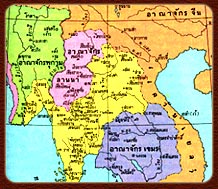
Map showing the Lanna Thai kingdom
(Image from the book Maps–Geography: Lower and Upper Secondary Level)
In the reign of King Taksin the Great, after he had unified the various provinces into a single kingdom in 1770, he led an expedition to attack Chiang Mai in order to eliminate Burmese influence completely.
It was recorded that Po Ma Yung Nguan led the Chiang Mai forces to besiege Sawankhalok in the third month of the Year of the Tiger, 1770, continuing into the fourth month of that same year. Upon learning of this, King Taksin departed from the capital to attack Chiang Mai. From the sequence of events, it can be inferred that when Phraya Phichai Racha received news that the Burmese were advancing, he must have sent a report to Thonburi. When the Burmese reached Sawankhalok, another report was likely sent immediately. This report probably reached Thonburi in the third month, at a time when King Taksin had only recently returned from his northern campaign and arrived back in the capital. The troops and logistics of the royal army were likely still assembled and not yet dispersed. Upon learning from the report that Po Ma Yung Nguan, the ruler of Chiang Mai, had personally marched south, the king became concerned, since the northern towns had only recently been subdued and their populations were not yet firmly loyal or dependable.
For this reason, he quickly assembled men into the royal army and marched north again in the fourth month of the Year of the Tiger. When he reached the middle of the route—likely near Nakhon Sawan—he received news that the northern inhabitants had united to repel the Burmese, forcing them to flee. King Taksin therefore did not return to the capital but instead proceeded to Phichai, summoned the provincial forces to join him, and then advanced to attack Chiang Mai.
The reason King Taksin undertook this first campaign against Chiang Mai appears to have been his assessment that the Burmese forces stationed in Chiang Mai were not very strong, and that the Ava court, preoccupied with war against China, would not be able to send reinforcements. Since the Burmese of Chiang Mai had just been defeated at Sawankhalok, their morale was shaken; pursuing them immediately might allow the Thais to capture Chiang Mai. Moreover, the armies needed for such a campaign—both the royal army and the provincial forces—were already assembled and did not require new levies. If the Thais succeeded in capturing Chiang Mai, it would be of great strategic benefit, weakening Burma’s ability to attack Siam as it had done in the Ayutthaya period. Even if they failed to capture the city, it would still be useful to gain knowledge of the terrain for future operations. Therefore, King Taksin marched to attack Chiang Mai in early 1771, the Year of the Rabbit.
The army of King Taksin that first marched to attack Chiang Mai proceeded by river route from the capital to assemble forces at Phichai, totaling 15,000 men including Thais, Chinese, Indians, and Europeans. Chaophraya Surasi was appointed as the vanguard commander, leading the provincial troops ahead, while King Taksin followed as the supreme commander with the main army, marching via Sawankhalok, Thoen, and Li.
At that time, Chaomangchai, the ruler of Phrae, brought his officials and subjects to pay homage, requesting to become a vassal. The king graciously appointed him as Phraya Srisuriyawong, integrating his forces into the army, and ordered Chaophraya Chakri Khaek and Phraya Maharaj Khru Prarohitajari to oversee the fleet at Phichai. The king then proceeded with the main army by land route, riding on his royal elephant, camping along the way for several days. Upon reaching the area of Khum Luang, he halted at a pavilion built in the foothills of Ma Plad Hill. The guide reported that crossing the mountain to the opposite foothills would be a long distance without water sources, risking the troops suffering from thirst due to the harsh terrain. King Taksin listened and said that this was his concern alone. He commanded that no drum or gong signals be sounded that night, only the clock be used, and that by 11 p.m. rain would be sent down.
He then instructed Phraya Ratchaprasit to construct a ceremonial altar and perform offerings to the deities on the mountain. After the rituals, he made a solemn vow, invoking the accumulated merit of his past and present life as a refuge for his troops, and called upon the power of the deities to cause rain to fall that night. On that day, the sky had been clear and cloudless, but by the power of his vow and the deities, at 10:48 p.m., a heavy downpour fell, flooding the forest miraculously. By morning, King Taksin rode his royal elephant, leading the army across the mountain along the established land route, traveling smoothly as far as Lamphun.
Pomayunguan, the ruler of Chiang Mai, seeing the enemy advance so swiftly, did not confront them on the way but only arranged his forces to camp outside the city. Chaophraya Surasi’s army reached the site and attacked, defeating Pomayunguan’s troops. Pomayunguan then withdrew his forces into the city and secured the fortifications firmly.
The vanguard army advanced first, entering the outer earthen walls and establishing camps surrounding the inner walls, while the main army moved in to set up the large camp within the earthen walls. King Taksin then commanded both the vanguard and the main army to raid the city, placing ladders to scale the inner walls during the night for about three watches to assess the enemy’s strength. Burmese soldiers and local defenders stationed at the parapets fired small cannons and engaged with weapons, resisting effectively. Fighting continued until dawn, but the Thai troops could not capture the city. King Taksin then said, “Chiang Mai’s fortifications are very strong; as the old saying from the Ayutthaya era goes, whichever king attacks Chiang Mai first will fail, only the second attempt may succeed…” The army, lacking sufficient troops and provisions to storm the city, withdrew immediately, fulfilling the prophecy. King Taksin remained in Chiang Mai for nine days, then ordered the main army to retreat a day in advance, followed later by the vanguard army.
At that time, Pomayunguan, ruler of Chiang Mai, seeing the Thai retreat, sent forces to pursue and attack. The Burmese troops attempted to intercept and harass the rear, causing disorder, but when they approached the main army, King Taksin, the heroic monarch, personally led the rear guard, unsheathing his sword and engaging the enemy himself. The soldiers regained morale and fought fiercely; many Burmese were killed, and the enemy, unable to resist, retreated. Thereafter, the Thai army was able to return safely. King Taksin then returned to his royal barge at Phichai and sailed back to the capital.
The Second Attack on Chiang Mai
Later, in 1773, Pakun Hoon, governor of Pegu who had been promoted to ruler of Mottama, the administrator of the southern Mon border region, received orders from King Mangra to recruit 3,000 Mon soldiers from border towns adjacent to Thailand, with Paekija and 500 Burmese troops preparing the route. The army planned to advance via the Three Pagodas Pass. Since the route required crossing the rugged Banthat Mountains, they arranged granaries to store supplies at intervals from the foothills on the Burmese side to Sam Sop and Thadin Daeng in Thai territory, reducing the logistical burden on the advancing troops.
The Mon people naturally harbored resentment toward the Burmese, having long been oppressed by them. When the Burmese conscripted them to build the route, they were compelled to comply reluctantly. Four Mon leaders were involved: Phraya Jeng, ruler of Terin, who was the chief among them, Phraya U, Talasiang, and Talaklep. While these Mon laborers were working in the forests of Mottama, Pakun Hoon conscripted another group of Mon into the army. Some tried to escape, so the Burmese captured their households as hostages, taking the children and relatives of the Mon laborers, forcing them into severe hardship. Those who managed to flee informed the Mon working on the route, provoking outrage that the Burmese not only exploited them but also oppressed their families left behind. In response, the Mon conspired together, killing Paekija and the accompanying Burmese soldiers at Thadin Daeng in Thai territory. They then united as an army and returned to Mon territory.
High-ranking Mon lady
(Image from the book Burmese King Bayinnaung and Yodin Naratha)
The Mon people in the surrounding towns, upon learning of these events, came to join Phraya Jeng in large numbers. Seeing their growing strength, the rebellious Mon advanced directly to attack Mottama, raiding the city during the night and feigning Thai war cries to deceive the Burmese into thinking the Thai army had arrived. Pakun Hoon and all the Burmese officials, caught unaware, panicked and did not resist, fleeing Mottama by boat back to Rangoon. The Mon thus reclaimed Mottama. Phraya Jeng and the Mon leaders saw this as an opportunity to consolidate Mon towns into a unified force. They organized their troops, recruiting Mon from Mottama and nearby towns, eventually amassing a large army under Phraya Jeng’s command. They then marched to attack the cities of Sittoung and Pegu, capturing both without resistance since the local population was Mon and did not fight. Emboldened, they advanced to attack Rangoon, engaging the Burmese in full-scale combat.
When the Thonburi forces learned that the Burmese were preparing to march against Siam, King Taksin had already resolved to resist. Upon learning that the Mon had rebelled against the Burmese on a large scale, he realized that the Burmese would be preoccupied suppressing the Mon uprising for some time and could not immediately invade Siam. This created an opportunity to strike Chiang Mai, thereby weakening the Burmese before they could reach the north. The royal command was issued to gather 20,000 troops from the northern cities to await the king at Ban Raheng, in the district of present-day Tak, while a royal army of 15,000 men was recruited from Bangkok and the inner provinces. King Taksin personally embarked on a long ten-wa royal barge, with forty rowers, accompanied by Thai, Chinese, and foreign officials, soldiers, and civilians, leading the main naval and land forces. The expedition set out from Thonburi by water on Tuesday, the 11th waning day of the 12th month, Year of the Horse, B.E. 2317 (1774). They traveled along the route, resting along the way, and arrived at Kamphaeng Phet on Wednesday, the 4th waxing day of the 1st month, before proceeding to Ban Raheng in Tak, where the king held his headquarters at the royal mango garden and assembled the army.
While King Taksin gathered his forces in Tak, news arrived that King Mangrai had sent Maha Sithu (Ahsawunghi), a royal prince, as the main commander to suppress the rebellious Mon who had attacked Rangoon. The Mon, unable to resist, were defeated and fled back to Siamese territory. King Taksin, noting the narrow window of opportunity to capture Chiang Mai before the Burmese forces could march south, understood that hesitation could waste the strategic advantage. If Chiang Mai was captured quickly, it would cut off Burmese reinforcements moving north. If delayed, the Burmese could invade the rear, striking Thonburi through Kanchanaburi or cutting the northern routes through Tak.
Therefore, King Taksin resolved to rapidly advance on Chiang Mai. He ordered Chao Phraya Chakri (Nai Thongduang) as the supreme commander of the northern provincial forces to march against Chiang Mai, alongside Chao Phraya Surasi (Nai Sudchinda), while the main royal army remained in Tak to monitor Burmese movements. The forces under Chao Phraya Chakri and Chao Phraya Surasi then advanced through Thoen and Lampang, following the king’s orders.
When Pho Suphla learned that the Thai army had advanced, he ordered Pho Ma Yung Wan, the ruler of Chiang Mai, to defend the city and organized an army in the following way: Phra Ya Cha Ban and Phra Ya Kawi La, leading 1,000 local men, were sent ahead as the vanguard, while Pho Suphla himself commanded a force of 9,000 men to follow, intending to confront the Thai army at Nakhon Lampang. Phra Ya Cha Ban and Phra Ya Kawi La, both Lanna Thais forced to serve under the Burmese, reached Nakhon Lampang and discovered that the southern Thai forces were strong enough to provide support. They then pledged allegiance to Chao Phraya Chakri, swearing the royal oath, and led the Lanna troops to join the Thai army advancing on Chiang Mai. When Pho Suphla reached the midway point and learned that Phra Ya Cha Ban and Phra Ya Kawi La had switched allegiance, he was alarmed and quickly retreated to defend Chiang Mai. The Burmese set up a defensive camp along the old Ping River north of Lamphun, while Pho Suphla and Pho Ma Yung Wan prepared to resist at Chiang Mai itself.
According to King Damrong Rajanubhab’s account in Thai Wars with Burma, when Pho Ma Yung Wan was appointed ruler of Chiang Mai by the King of Ava
There were four principal officials in the city: Phra Ya Saen Luang, Phra Ya Sam Lan, Phra Ya Cha Ban, and Phra Ya Kawi La, the ruler of Nakhon Lampang.
When Pho Ma Yung Wan assumed power, he reduced the authority and benefits of these local leaders, causing dissatisfaction, but they dared not act due to fear of Burmese power. Later, when the Chinese attacked Burma, the King of Ava conscripted Chiang Mai’s forces, including Phra Ya Cha Ban and Phra Ya Kawi La, to help defend Burmese territory. After the campaign, they petitioned King Mangrai (Mang Ra) to restore their previous authority and privileges. The king, recognizing their loyalty and achievements, granted their request, issuing a formal decree carried by Phra Ya Cha Ban upon his return to Chiang Mai.
When Chiang Mai sent the king’s younger brother to deliver the royal decree to the city square, Pho Ma Yung Wan, already displeased, refused to accept it, claiming that Phra Ya Cha Ban had failed to present the decree personally, which violated protocol and insulted the prestige of the King of Ava. Pho Ma Yung Wan then ordered his officials to seize Phra Ya Cha Ban, but he resisted, resulting in a violent clash in which many were killed on both sides. Phra Ya Cha Ban fled Chiang Mai and went to Pho Suphla, the Burmese commander encamped at Vientiane in 2316 BE, reporting Pho Ma Yung Wan’s oppressive actions. Pho Suphla, who already disliked Pho Ma Yung Wan, accepted Phra Ya Cha Ban into his army and allowed him to return to Chiang Mai. Pho Ma Yung Wan reported the alleged offenses of Phra Ya Cha Ban and Phra Ya Kawi La to Ava, claiming they had caused trouble since returning from Burma. When the Thai army advanced, Pho Suphla assigned Phra Ya Cha Ban to manage river obstructions to prepare the waterways for the Thai navy. Pho Ma Yung Wan objected, insisting that Phra Ya Cha Ban should be sent to Ava to answer charges. Pho Suphla refused, explaining that Phra Ya Cha Ban was needed to oversee local laborers, and Phra Ya Kawi La was assisting Burmese forces in Nakhon Lampang. Unable to secure Phra Ya Cha Ban and Phra Ya Kawi La, Pho Ma Yung Wan seized Prince Kaew, the father of Phra Ya Kawi La, along with the families of Phra Ya Cha Ban, as hostages to send to Ava. Phra Ya Cha Ban, who was at Hod, learned of this and quickly informed Phra Ya Kawi La. Coordinating their actions, they killed the supervising Burmese troops and brought their families safely under Thai protection. Following this, Phra Ya Cha Ban led his forces to pledge allegiance to Chao Phraya Chakri and advanced the Thai army to Nakhon Lampang. Phra Ya Kawi La, upon learning that the Burmese had captured his father, killed the Burmese commander in Nakhon Lampang and hurried with his forces to rescue his father and the families of Phra Ya Cha Ban. Once Chao Phraya Chakri’s army reached Nakhon Lampang, Phra Ya Kawi La formally submitted to Thai authority, welcomed the Thai forces into the city, and volunteered to continue fighting against the Burmese.
When Chao Phraya Chakri captured Nakhon Lampang, King Taksin was at Ban Ra-haeng in the Tak district. At that time, a group of Mon families fleeing the Burmese via the Tak frontier arrived. Khun Inthakiri, the local frontier chief, brought the Mon leader, called Sming Suhrai Klan, to report. The king learned that the Mon had been defeated by the Burmese, who pursued them from Rangoon, and that many Mon families were attempting to enter Siamese territory. King Taksin, realizing this news coincided with the report from Chao Phraya Chakri that Phra Ya Cha Ban and Phra Ya Kawi La had brought forces from Chiang Mai and Nakhon Lampang to join the Thai side, concluded that the situation in the Chiang Mai campaign was advantageous for the Thais. He then ordered from Bangkok that Phra Yaomarat Khaek lead an army to establish a blockade at Tha Din Daeng in the Tha Khanun district near the Sai Yok River to intercept Mon families arriving via the Phra Chedi Sam Ong route. He also ordered Phra Ya Kamhaeng Wichit to command 2,000 troops stationed at Ban Ra-haeng to receive Mon families entering through the Tak frontier.
On Friday, the 5th waning of the first lunar month, during a heavy rainstorm, King Taksin rode his elephant, Phang Thep Lila, to lead the royal army along the overland route. They traveled several stages, reaching Pa Miew Nuea in Nakhon Lampang, then continued to Lamphun by Tuesday, the 2nd day of the second lunar month, where he ordered a camp to be established. Meanwhile, Chao Phraya Chakri’s army reached the river near Chiang Mai. The Burmese troops had dug trenches along the riverbank to block the crossing. It was impossible to advance, so Muen Sri Hathep reported the situation to King Taksin. The king ordered artillery to be set up to break the Burmese forces, after which the army could cross the river. Following the Thai army’s successful engagement, the Burmese retreated to Chiang Mai.
The royal army established itself in Lamphun, while the forces under Chao Phraya Chakri, Chao Phraya Surasih, and Chao Phraya Sawankhalok pursued the Burmese, surrounding Chiang Mai with thirty-four camps connected across three sides. The northern sector, under Chao Phraya Sawankhalok, was not yet fully completed, so Chao Phraya Chakri sent Phra Ya Thibesr Bodi to report the status to King Taksin.
The king, pleased with the progress, rewarded Chao Phraya Chakri with a royal horse and one short firearm and granted two additional short firearms to Chao Phraya Surasih and Chao Phraya Sawankhalok, one each. The situation in the north and south became increasingly intertwined. Soon after King Taksin arrived in Lamphun, he received news from Tak that the Burmese had sent a force of about 2,000 to follow the Mon families entering via Ban Na Ko Dok Lek in the Tak district. The king ordered 1,800 troops from the royal army to be assigned under Chao Ram Laks, his nephew, to move toward Ban Chom Thong to confront the Burmese entering via that route. Later reports from Tak stated that Mon leaders Suwannadeva and Thamumuey, leading Mon families from Mueang Reng, had reached Tak with roughly 1,000 people, but the Burmese were in pursuit.
They fought fiercely and killed Jakkai Waw, a Burmese commander, and the enemy scattered and fled toward Ban Na Ko Dok Lek. The king learned of this and judged that the Burmese force pursuing the Mon families was likely not as strong as earlier reported from Tak, so he ordered Chao Ramlak’s detachment to return and assist in the fighting at Chiang Mai, and he also sent a royal missive to Phraya Kamhaeng Wichit directing him to detach forces at Tak to establish a camp guarding Ban Na Ko Dok Lek to receive the remaining Mon families that would follow.
On the Chiang Mai front, Chao Phraya Chakri sent Phraya Wichitnavee to report that once the northern camps were established they could simultaneously storm Chiang Mai. King Taksin disagreed, saying that the Burmese had dug in within the city and that a headlong charge would be risky and could cause the troops to rout; instead he ordered that, once the city was encircled, assaults should be concentrated at specific points where the defenses were weakest, and that all camps should dig moats to impede the enemy. For those camps nearest the city, he commanded canals to be dug as gun emplacements; wherever a camp could approach close to the walls, a canal and batteries should be prepared so that if the enemy sallied out to break a camp, the attackers would be driven back and immediately pressed into the city. Phraya Wichitnavee returned to inform Chao Phraya Chakri, who carried out the king’s instructions in full.
Po Suphla, Po Ma Yung Wan, and the Burmese commanders defending Chiang Mai saw the Thai forces establishing camps around the city and formed their own close camps, making multiple sorties to plunder the Thai camps. Each time they were repulsed by Thai artillery and rifle fire, suffering heavy casualties and forced back into their lines. On one occasion the Burmese attacked Chao Phraya Chakri’s western camp in daylight, but Chao Phraya Chakri, unconcerned, sat playing chess in his camp and ordered the artillery and guns to be brought out to fire on the Burmese; many fell to the guns and the attackers withdrew, unable to take the camp, and thereafter the Burmese grew demoralized and confined themselves to defending the city. Meanwhile, the townspeople of Chiang Mai who had fled and hidden in the forests came out in large numbers to join the Thai army, and many who remained in the city slipped out to the Thai lines, so that more than 5,000 Chiang Mai civilians came over to the Thai camp.
At dawn on Saturday, the 13th waxing of the second month, King Taksin donned full battle regalia and took up royal arms, mounting his war elephant Phlai Kachet Thabryong as his mount, and led the royal army from the camp by Lamphun toward Chiang Mai, halting to encamp at Phlab Pla Chai some 352 sen (34.33 kilometers) from Chiang Mai, then advancing the royal army to a fortified camp on the Ping River near the city. He reviewed the siege works surrounding Chiang Mai, intent on capturing the city quickly. On that day Chao Phraya Chakri assaulted the Burmese camps outside the city, and the camps to the south and west were routed and broken.
Chao Phraya Surasih then led his army to attack the Burmese camps positioned outside the Tha Phae Gate on the east side, successfully capturing all three camps. That evening, Po Suphla and Po Mayungwan abandoned Chiang Mai, evacuating the population via the Chang Phueak Gate, which was under the direction of Chao Phraya Sawankhalok. Since the northern encampment was still incomplete, the Thai forces were able to break through. The Thai army pursued the retreating Burmese, inflicting heavy casualties and recovering captured civilians.
The next day, Sunday, the 14th day of the second lunar month, BE 2317, King Taksin, fully dressed in ceremonial war attire and armed with royal weapons, rode his main war elephant, Phlai Kachenthrabanyong, to lead the royal army from the Lamphun riverside camp toward Chiang Mai. He halted for the night at Plap Pha La Chai, about 34.33 kilometers from Chiang Mai, then proceeded to establish a main camp along the Ping River near the city. He personally inspected the encirclement of Chiang Mai, wishing to capture the city swiftly. On that day, Chao Phraya Chakri led an assault on the Burmese camps positioned outside the city on the south and west sides, defeating them completely. The Thai forces under Chao Phraya Surasih attacked the Burmese camps at the city’s east side near Tha Phae Gate, capturing all three camps. That night, Po Suphla and Po Mayungwan abandoned Chiang Mai, fleeing with the population via Chang Phueak Gate. The encirclement of the northern side, still incomplete under Chao Phraya Sawankhalok, allowed the Thai army to press the advantage, killing many Burmese and liberating captured civilians. On the following day, King Taksin entered Chiang Mai with a grand procession, riding his royal elephant and inspecting the encircling camps. All the local commanders and generals came to pay homage. The king asked whose strategy had caused the Burmese to flee. Chao Phraya Chakri and the commanders reported that the flight was due to a remarkable sign—the local monks had informed them that on the night of Friday, the 12th day of the fourth lunar month, a miraculous earthquake had occurred in Chiang Mai. By morning, the royal army had arrived, causing the Burmese to flee. Pleased, King Taksin rewarded Chao Phraya Chakri and Chao Phraya Surasih with ceremonial clothing and sashes equally. However, he punished Chao Phraya Sawankhalok, whose failure to complete the northern camp had allowed the Burmese to escape, ordering him to receive fifty lashes and be held accountable.
Upon capturing Chiang Mai, the Thai forces seized significant spoils of war, including 2,110 firearms, 220 horses, 32 gongs, 500 Mon families, and over 500 families from Sawankhalok. King Taksin was especially delighted, as the campaign exceeded expectations. He had taken a calculated risk: if the campaign had failed or stalled, Burmese forces could have counterattacked both Tak and Bangkok, but the decisive Thai advance into Chiang Mai prevented this. Throughout the campaign, King Taksin continuously monitored the battles, receiving detailed reports from envoys about Chao Phraya Chakri’s and Chao Phraya Surasih’s attacks. When it was reported that the southern and western Burmese camps had been defeated, another envoy arrived to inform that Chao Phraya Surasih had captured the eastern Tha Phae Gate camps, completing the encirclement.
When the news reached King Taksin that the eastern Tha Phae Gate camps had all fallen, he raised his hands, clapped both sides of his cheeks, and exclaimed, “Which should I praise more, elder or younger brother this time?” This expressed his immediate relief and satisfaction, knowing that the Burmese had no means of resistance and that Chiang Mai would certainly fall within a day or two—exactly as he had intended.
On Wednesday, the 2nd day of the waning second lunar month, in the early morning, King Taksin proceeded to pay homage to the Phra Phuttha Sihing Buddha image in Chiang Mai and observed the residence of Po Mayungwan, the former ruler.
On Thursday, he held court at the royal hall, where all the local civil and military officials came to pay respects. He graciously appointed Phraya Cha Ban as Phraya Wichianprakarn, granting him authority to govern Chiang Mai, and appointed Phraya Kawila with full authority over Nakhon Lampang. Phraya Lamphun was reinstated as Phraya Waiwongsa with authority over Lamphun. All lower-ranking officials were appointed as well, and Chao Phraya Chakri was tasked to help administer the city efficiently and orderly.
A few days after capturing Chiang Mai, a report arrived from Tak stating that another Burmese army had crossed the border following the Mon families. With his administrative orders in place, King Taksin, who had been staying in Chiang Mai for seven days, departed on Friday, the 4th day of the waning second lunar month, in the early morning. He stopped at Nakhon Lampang to pay respects at the pagoda, offering golden and silver flowers, then quickly led the royal army back to Tak.
Meanwhile, Chao Phraya Chakri remained in Chiang Mai, sending local lords to persuade the scattered populace, who had fled and hidden in the forests and mountains, to return to their original homes. The local Lanna people, who had previously been under Burmese control, were pleased to submit to Thai authority without force once the southern Thais had taken power. At that time, Chao Phraya Chakri also negotiated with the ruling prince of Nan, who willingly came to submit, thereby extending Thai influence further. Thus, with King Taksin’s campaign to capture Chiang Mai in BE 2317, Siam successfully expelled Burmese power from the northern Tai regions. Chiang Mai, Lamphun, Nakhon Lampang, Nan, and Phrae were restored under Siamese rule, remaining part of the kingdom from that year onward.
King Taksin stayed overnight at the city of Tak, where he had once served as governor during his service in Ayutthaya. He visited Wat Khoi Khao Kaew and Wat Klang to pay homage to the Buddha image at Wat Klang, and he also visited the monks and novices. He spoke with them about the past, recalling the time when he had taken solemn oaths and tested his fortune and merit. The monks all offered their blessings, saying, “Truly as Your Majesty has spoken.” On Thursday, the 9th day of the waxing third lunar month, King Taksin embarked on the royal barge and traveled down the waterways. After a five-day journey, he arrived at the capital, Krung Thonburi.
Note
When King Ava appointed Po Ma Yung Wan as the ruler of Chiang Mai, there were four principal lords in Chiang Mai: Phra Ya Cha Luang, Phra Ya Sam Lan, Phra Ya Cha Ban, and Phra Ya Kawi La, the ruler of Nakhon Lampang.
Lineage of Phra Ya Kawi La
Phra Ya Kawi La was the son of Chao Fa Chai Kaew, whom King Ava had appointed as the ruler of Nakhon Lampang, hence he was called Chao Fa Chai Kaew. He had seven sons, collectively known as the “Seven Princes,” and three daughters, making a total of ten children. The order of succession is as follows:
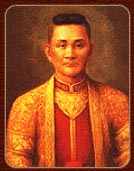
Phra Chao Kawi La, Ruler of Chiang Mai – First in Line
(Image from His Majesty the King in the Chakri Dynasty and Chiang Mai)
Note
When King Ava appointed Po Ma Yung Wan as ruler of Chiang Mai, there were four main lords in the city: Phra Ya Cha Luang, Phra Ya Sam Lan, Phra Ya Cha Ban, and Phra Ya Kawila, who was the ruler of Nakhon Lampang.
Lineage of Phra Ya Kawila
Phra Ya Kawila was the son of Chao Fa Chai Kaew, whom King Ava appointed as ruler of Nakhon Lampang. He had seven sons (known as Chao Jet Ton) and three daughters, totaling ten children. Their ranks and roles were as follows:
1. Kawila – When Po Ma Yung Wan became ruler of Chiang Mai, he did not fully trust Chao Fa Chai Kaew and ordered him to serve in Chiang Mai. Kawila later became the ruler of Chiang Mai during King Rama I’s reign and was promoted to the city’s main ruler.
2. Kham Som – Became the ruler of Nakhon Lampang during King Rama I’s reign.
3. Noi Tham – Became the ruler of Chiang Mai during King Rama II’s reign, known as Chiang Mai Chang Phueak because he presented a white elephant to King Phra Buddha Loetla Nabhalai.
4. Duang Thip – Became the ruler of Nakhon Lampang during King Rama II’s reign.
5. Siri Rojana – A daughter, called Chao Sri Anocha or Chao Dok Fa Sri Anocha by the people of the northern provinces, became the chief consort in the Department of the Royal Palace of Bowon Mahasurasinghanat (who was Chaophraya Surasi in the Thonburi period).
6. Sri Panya – A daughter who passed away at a young age.
7. Moo La – Became the ruler of Chiang Mai during King Rama II’s reign.
8. Kham Fan – Became the ruler of Chiang Mai during King Rama II’s reign, known locally as Chao Luang Setthi or Chao Luang Setthi Kham Fan.
9. Sri Bun Than – A daughter who passed away at a young age.
10. Bun Ma – Became the ruler of Nakhon Lamphun during King Rama III’s reign. (Sources: Sumakhin Chayakomin, 2000: 127–128; “Rulers of Chiang Mai,” Yupparaj College, http://www.yupparaj.ac.th/webpage/computer/student/topic9/index.html, accessed 10 Sep 2004)
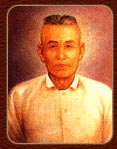
Chao Luang Setthi Kham Fan – Ruler of Chiang Mai, 3rd Generation (Image from the book: “His Majesty the King in the Chakri Dynasty and Chiang Mai”)
10.3 Which cities did King Taksin conduct military campaigns against to expand the Thai Kingdom?
The projection of royal power and the expansion of the Thai Kingdom during the Thonburi period.
10.3.1 Nakhon Si Thammarat
At the end of 1768 (B.E. 2311), after King Taksin had captured Nakhon Ratchasima and suppressed the Phimai faction, he had effectively expanded the eastern borders of the kingdom, restoring them to the extent they had been during the Ayutthaya period. He then issued royal orders to prepare the army to march south to attack Nakhon Si Thammarat and suppress the local rulers (the Nu faction).
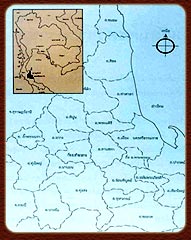
Map showing the boundaries of
Nakhon Si Thammarat Province
(Image from the book Research Report in Response to the Royal Initiative: Nakhon Si Thammarat)
When the army was fully prepared to suppress the local rulers (the Nu faction) in Nakhon Si Thammarat
King Taksin ordered Chaophraya Chakri Khak (formerly Luang Nai Sak, of Indian descent during the Ayutthaya period) to serve as the supreme commander. Phra Yommarat, Phraya Sriphipat, and Phraya Phetchaburi were assigned as deputy commanders to lead a land force of 5,000 men to attack Nakhon Si Thammarat around the fifth month of 1769 (B.E. 2312). At that time, King Taksin intended to wait in Thonburi to receive news of the campaign’s progress.
Chaophraya Chakri Khak’s army passed through Chumphon and Chaiya, where local officials surrendered peacefully. However, the commanders were disunited. Upon reaching Tha Mak in Lamphun district, Nakhon Si Thammarat, they encountered enemy camps. The uncoordinated attack failed, killing Phraya Sriphipat and Phraya Phetchaburi, while Luang Laksamana, Chaophraya Chakri Khak’s son, was captured. Chakri Khak then retreated to Chaiya.
Phraya Yamrach sent a letter reporting that Chaophraya Chakri Khak was neglectful in military affairs. When King Taksin learned this, he judged that the current army would likely fail to capture Nakhon Si Thammarat. At that time, the royal forces were also preparing to attack Cambodia. Meanwhile, news arrived that Siam Reap and Battambang had been seized by two key commanders, Phraya Aphaironrit (later R.1) and Phraya Anuchit Ratcha (later Chaophraya Surasi). King Taksin therefore decided to attack Nakhon Si Thammarat first and then proceed against Cambodia, issuing orders to organize a naval force of 10,000 men with all weapons, including artillery.
At the auspicious time, King Taksin boarded the royal barge Suwanpichai, 11 wa long and over 3 wa wide, manned by 29 rowers, accompanied by royal warships with all commanders. He led the naval expedition in a grand procession from Thonburi, traveling via the waterways, exiting at the mouth of Samut Songkhram into the open sea. On Sunday, the 3rd waning day of the 9th lunar month, 2312 BE, at 9 a.m., they reached Bang Thalu (present-day Hat Chao Samran, Phetchaburi), when a violent storm struck. Some warships of the royal fleet and supporting vessels capsized or were damaged, and others had to shelter in the bay. King Taksin ordered the fleet to anchor and build a temporary shrine onshore to perform offerings to the sea guardian deities. He lit incense and candles and made a solemn vow, invoking the Triple Gem and his accumulated merit, to calm the waves. Miraculously, the storm immediately subsided, allowing the fleet to continue safely. Upon reaching Chaiya, he anchored at Tha Phum Riang and stayed in a pavilion prepared by the vanguard army to bring auspiciousness to the city. He then ordered the troops to be organized: Phraya Yamrach would lead the vanguard, while Chaophraya Chakri Khak (Khak) and Phraya Phichai Racha would join as support, advancing by land. King Taksin personally commanded the naval forces, ensuring a simultaneous attack on Nakhon Si Thammarat by both land and sea. The land forces departed according to his instructions, while the King led the naval expedition himself, rapidly moving toward the target. (Prince Chulalongkorn later noted that this naval expedition was particularly challenging because the army had previously failed to advance from Chaiya, and traveling by royal barge was extremely arduous.)
The land army, led by Phraya Yamrach at the vanguard, crossed at Tha Kham and advanced to Lamphun. They attacked the Nakhon Si Thammarat forces stationed at Tha Mak, defeating them completely, and then moved to establish positions at Khao Hua Chang.
At that time, the local rulers realized that the Thonburi army was advancing by land only, just as in the previous campaign, without preparing to face the naval forces. King Taksin’s fleet suddenly arrived at Pak Phya, the river mouth.
On Thursday, the 6th day of the waning moon in the 10th month, the ruler of Nakhon Si Thammarat, alarmed by the approaching Thonburi forces, hastily mustered his people and stationed Uparat Chan with a defensive camp at Tha Pho, about 30 sen from the city. King Taksin’s army attacked and captured Tha Pho, taking Uparat Chan prisoner. The city’s soldiers fled, and the ruler, fearing the king’s power, abandoned the city with his relatives, fleeing to Songkhla. During this, Nai Khong, a soldier under Phraya Senaphimuk, captured the elephant Phlay Phet that the ruler rode and presented it to King Taksin, who rode it into Nakhon Si Thammarat. Only one casualty, Nai Phet, the chief of the royal guards, fell in battle. The king captured the ruler’s daughters, relatives, concubines, attendants, Uparat Chan, officials, and considerable wealth, thereby easily securing Nakhon Si Thammarat on that day.
The fleeing ruler took his family and possessions by boat to Songkhla, continuing to Thepha, a vassal of Songkhla. Meanwhile, the Thonburi army under Chaophraya Chakri Khak advanced by land. Phraya Yamrach, leading the vanguard, captured the Tha Mak camp and moved toward the city’s fortified camp at Khao Hua Chang. Before a battle could occur, enemy forces, demoralized by the news of the city’s fall, fled. Chaophraya Chakri Khak then hastily entered Nakhon Si Thammarat to join forces with the naval army. However, his land forces arrived eight days after the navy, and he reported the delay and requested pardon. King Taksin ordered Chaophraya Chakri Khak and Phraya Pichai Racha to lead forces by land and sea to capture the fleeing ruler. The king himself advanced from Nakhon Si Thammarat to Songkhla on Friday, the 6th day of the waning moon in the 11th month.
Chaophraya Chakri Khak and Phraya Pichai Racha reached Songkhla and learned that Phraya Phatthalung and Luang Songkhla had helped the ruler flee further south to Thepha, bordering Malay territory. They sent a formal letter to the Phraya of Pattani, instructing him to hand over the ruler and his followers. Fearing the Thai forces, the Phraya of Pattani captured the ruler, his son-in-law Chao Phat, Chao Klang, Phraya Phatthalung, Luang Songkhla, and their associates, and sent them to the Thonburi army.
Chaophraya Chakri Khak then disbanded his forces and returned to serve King Taksin at Songkhla. After King Taksin had organized Songkhla and Phatthalung, he returned to Nakhon Si Thammarat. Upon arrival on Friday, the 12th day of the waxing moon in the 12th month, the southern monsoon brought heavy seas and frequent rain, preventing the king from immediately returning to the capital. Thus, he had to remain in Nakhon Si Thammarat temporarily.
Note on King Taksin’s Campaign Against the Rebellion of the Phraya of Nakhon Si Thammarat
Suphat Sukonthaphirom at Phatthalung (1995: 203-204) commented on the campaign, stating that King Taksin’s victory over the Phraya of Nakhon Si Thammarat was achieved without the need for a bloody battle. The complete success was attributed to King Taksin’s great merit and prestige, which instilled fear in the Phraya of Nakhon Si Thammarat and the Sultan of Pattani. Additionally, his generals and commanders were renowned and highly skilled in military strategy.
Most importantly, King Taksin possessed exceptional knowledge in morale-building, inspiring his soldiers with confidence in his leadership and in their assured victory. This strategy, reinforced by belief in sacred powers, spells, and other auspicious rituals, greatly enhanced the courage and determination of his troops.
As a result, King Taksin achieved total success, accomplishing his objectives without resorting to extensive slaughter. This campaign represents a victory that was highly effective while minimizing loss and destruction.
What is particularly noteworthy are the yantra numerals and various sacred symbols inscribed on the prajead cloths that King Taksin distributed to his generals, subordinate officers, and village leaders, accompanied by sprinkling of holy water obtained from Wat Pho in Chaiya—a center of the ancient Srivijaya civilization in southern Siam since the 13th Buddhist century. These symbols and marks, known as “King Taksin’s Prajead Map,” contained crucial information about the organization of the royal army under King Taksin as the supreme commander. In this type of royal army formation, there was typically a vanguard, or “front army,” with its own appointed general, followed by a rear army, likewise commanded by its own general.
The organization of the royal army depicted on this prajead cloth, when closely examined for the symbols and marks forming its patterns, clearly represents the “Chaturongkasena” formation. This was the standard royal army arrangement commonly used during the reign of King Naresuan the Great (B.E. 2133–2143), the renowned elephant-mounted warrior of Ayutthaya.
Treasure map on the Prajied cloth of King Taksin
(Image from Silpa Wattanatham Journal)
Treasure map on King Taksin’s Prajied cloth and the deployment of the army in the Chaturongka Sena formation
(Image from Silpa Wattanatham Journal)
The term “Chaturongka Sena” comes from Sanskrit (Chatur + Anga + Sena) and means “army with four divisions”. It originally referred to the four divisions of soldiers assigned to protect each leg of a war elephant during battle, providing defense for the king’s war elephant or the Crown Prince’s elephant engaged in royal combat. Later, the Ayutthaya court adopted the concept of “four-division army” as a basis for ranking the king’s personal military attendants, establishing four hierarchical ranks with distinct royal titles.
1.The common soldiers consisted of 1. Ai In 2. Ai Chan 3. Ai Man 4. Ai Khong
2.The section leaders consisted of 1. Ja Ret 2. Ja Rong 3. Ja Yang 4. Ja Yo
3.The platoon officers consisted of 1. Nai Kuat 2. Nai Sane 3. Nai Le Aowut 4. Nai Sujinda (some sources call him Nai Sutjinda)
4.The company commanders consisted of 1. Luang Sak 2. Luang Sit 3. Luang Rit 4. Luang Det.
In the fourfold divisions of the army, or the army with four components, one may identify who stands in each position on the chart of this sacred cloth, which appears as follows:
1-2-3-4 = Luang Sak, Luang Sit, Luang Rit, Luang Det
5-6-7-8 = Ja Ret, Ja Rong, Ja Yang, Ja Yot
9-10-11-12 = Nai Kuat, Nai Sane, Nai Le Aowut, Nai Sujinda
13-14-15-16 = Ai In, Ai Chan, Ai Man, Ai Khong
17 = the front banner, which is the banner leading the royal procession and the front guard
18 = the rear banner, which follows behind the procession and the rear guard
19-20 = called Wachiraprakarn or Kamphaeng Phet, the protective ranks of His Majesty the King
21 = the tiger in the central chamber, representing King Taksin, who was born in the year 1096 of the Chulasakarat era, corresponding to the Year of the Tiger, 2277 of the Buddhist Era.
However, observe carefully and one will see that in the center of Kamphaeng Phet (numbers 19 and 20), both on the left and on the right, there is a long line of characters written in the Arabic script, clearly visible. Upon inquiring with a master well versed in sacred cloths and Arabic characters, Dato explained that the Arabic inscriptions are verses praising God and teachings of the Prophet Muhammad (peace be upon him), seeking protection, safety, and victory in battle.
During the period when King Taksin of Thonburi resided in Nakhon Si Thammarat, he carried out many royal duties related to governance and to religion. Certain events were recorded, such as his directing the extinguishing of a fire that had broken out in the city, and his royal command issued throughout the army forbidding all Thai and Chinese soldiers from killing cattle or buffalo and prohibiting the oppression of monks, Brahmins, and the populace, so that none would suffer harm.
His Majesty graciously ordered the transport of paddy rice to be loaded onto junks and brought in to be bestowed upon all government officials, both military and civil. Upon learning that some individuals possessed large amounts of wealth in reserve, His Majesty permitted gambling to be held, including fan-tan and cards, in front of the royal throne. It was recorded as being more entertaining than any previous occasion. Out of royal faith and devotion, His Majesty commanded the Sanghakari and Dhamma officers to invite all monks, novices, and nuns throughout the city of Nakhon Si Thammarat to assemble together. He offered each monk a bushel of rice and one baht in silver, and for those lacking robes or garments, He graciously provided them. Beggars and minstrels of every kind were each given one salung on every observance day. His Majesty then ordered more than a hundred additional warships to be constructed for use in future military service. Furthermore, He graciously employed officials and commoners to restore and renovate ordination halls, assembly halls, scripture halls, cloisters, pavilions, and monastic quarters in numerous temples, expending a great amount of royal treasure. Finally, He held a grand celebration and candlelight procession in honor of the Great Phra Mahathat Chedi of that city for three consecutive days.

Phra Mahathat Chedi, Nakhon Si Thammarat Province
(Photo from sunsite.au.ac.th/…/Thailand76/South/nakornsri/ )
After the celebration of the sacred relics was concluded, His Majesty gave a royal command for the ministers and judges to deliberate the punishment of the ruler of Nakhon. The ministers and judges unanimously advised a death sentence. Upon hearing this, His Majesty King Taksin of Thonburi graciously declared that He did not agree. The ruler of Nakhon had not yet been an official under us; he had set himself up as powerful while we considered ourselves supreme, and there was no yielding between them, which led to this conflict. If the ruler, once serving under us, were to conspire again, even if the ministers counsel death we would consent. The fighting itself cannot be treated as a crime. When he was captured he showed submission and was willing to become our subject, and therefore should be brought to the capital to enter royal service.
Thereupon His Majesty King Taksin of Thonburi graciously appointed His royal grandnephew Chao Narasuriyawong to govern the city of Nakhon Si Thammarat, and assigned Phraya Ratchsuphavadi and Phra Sri Klailat to assist in administration. He bestowed royal counsel to treat and support the ministers, the monastics and brahmins, and all the people with justice, according to the ancient customs of past kings. He also graciously ordered the appointment of officials to oversee the district administration of Nakhon in every town.
King Taksin of Thonburi realized that the city of Ayutthaya had been entirely burned and destroyed by the Burmese invaders, including the Tipitaka and many literary works. Therefore, He ordered that the Tipitaka from Nakhon Si Thammarat be loaded onto ships and brought to the capital. Once copies of all the scriptures had been made, they were to be respectfully returned to their original place. Furthermore, He commanded the Sangha officials to invite Phra Ajarn Sri of Wat Phananchoeng, who had fled from the Burmese to Nakhon Si Thammarat, to come reside in the capital along with the monks, novices, and disciples.
King Taksin remained in Nakhon Si Thammarat until the fourth lunar month of the Year of the Ox. When the monsoon season had ended, He ordered preparations for the army to return to Thonburi, the royal capital. The royal journey by water proceeded smoothly under His divine power and merit, without any danger or obstacle.
As for the ruler of Nakhon, after coming to reside in the capital, His Majesty graciously granted a royal pardon and allowed him to enter royal service in Thonburi. He was given the consecrated water of allegiance and provided with a residence to live in peace. During his service in the capital, he rendered meritorious service in the war against the Burmese invaders and also presented his daughter, Mom Chim, as a royal consort to King Taksin. Later, when Chao Narasuriyawong passed away, King Taksin, having full confidence in the ruler of Nakhon, graciously appointed him to resume his governorship of Nakhon Si Thammarat in 1776 (B.E. 2319). He was granted a royal document conferring upon him the title Phra Chao Nakhon Si Thammarat, Chao Khandsima, with honors equal to those of a tributary ruler, and the authority to appoint the four chief ministers for the city. His Majesty also granted permission for him to have a troupe of female performers, which was strictly forbidden to anyone other than the king himself. The ruler’s theatrical troupe was often summoned to perform at major royal festivals in Thonburi, competing with the royal troupe almost every occasion. King Chulalongkorn (Rama V) later remarked that when celebrating the Emerald Buddha, the ruler of Nakhon must be invited so that his actresses could be brought by royal barge to perform at the ceremony. The troupe of Nakhon must have been excellent and was likely not of the Chatri style, for its quality endured because the city had not fallen to the Burmese and the troupe remained intact. The royal troupe, however, had to be newly reestablished. (Thuan Boonyaniyom, 1970: 84–90)
10.3.2 Relations with Annam (Present-day Vietnam)
During the Thonburi period, relations between Siam and Annam can be divided into two phases.
In the first phase, Annam was friendly toward Siam, as it sought Siam’s assistance in resolving internal conflicts within its own country.
In the later phase, tensions arose between Siam and Annam over affairs in Cambodia, causing relations toward the end of the reign to become strained to the point of near warfare.
In early 1769 (B.E. 2312), a report from Chanthaburi informed that an Annamese naval force had arrived at Banteay Mas (in Cambodia), with rumors that they intended to attack Thonburi. King Taksin, distrusting their intentions, ordered defenses to be prepared at all four river mouths and appointed Phraya Phichai, or Phichai (a former Chinese officer promoted to Phraya Kosa Thibodi), to command the defenses. Before long, however, it became known that the Annamese army had no intent to invade Siam. Their movement had in fact been due to events in Cambodia, where Prince Ang Non, titled Phra Ram Racha, had contested the throne with Prince Ang Ton, titled King Narai Racha, who had sought Annamese support. Defeated, Phra Ram Racha fled to seek refuge under King Taksin, offering submission as a tributary vassal and requesting Siamese aid in restoring order in Cambodia, which Siam successfully accomplished.
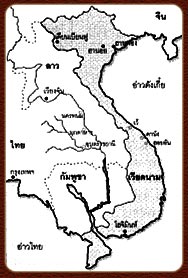
Map showing the territory of present-day Vietnam
(Photo from Silpa Wattanatham Journal)
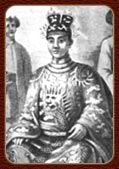
จักรพรรดิมิน หม่าง ( Emperor Minh-mang)
(ภาพจากหนังสือ Imperial Britain in South-East Asia)
In 1773 (B.E. 2316), the Tay Son Rebellion broke out in southern Annam. The government forces were defeated by the rebel troops. While the southern Annamese were occupied with suppressing the uprising, the Trinh forces from Tonkin took the opportunity to seize the city of Hue, while the rebels captured Saigon. Many members of the Nguyen family perished while resisting the rebels. Ong Chiang Chun, a younger brother of the deputy ruler of Hue, fled to seek refuge with Phraya Rachaseth at Banteay Mas. Later, when the rebels attacked and captured Banteay Mas, Phraya Rachaseth and Ong Chiang Chun fled with their families by boat to seek the royal protection of His Majesty at Thonburi. His Majesty King Taksin graciously received them and granted them residences.
However, Ong Chiang Chun, while residing in Thonburi under royal grace and favor, was not loyal in his submission and plotted to escape back to Annam. When King Taksin learned of this, he ordered Ong Chiang Chun, together with his wife, children, and more than fifty followers, to be executed. (Royal Autograph Chronicle Edition, printed in 1962, p. 411)
Another descendant of the Nguyen family who would later become significant to Annam was Ong Chiang Sue, a nephew of Ong Chiang Chun. (The Vietnamese chronicles refer to Ong Chiang Sue as Nguyen Anh.) At that time, he was only fifteen years old and fled from the rebels to the island of Pulo Panjang with the assistance of a French Catholic missionary named Pigneau de Behaine, who held the title Bishop of Adran. Ong Chiang Sue managed to gather supporters and fought against the rebels until he recaptured Saigon from the Tay Son forces. The officials in Saigon then proclaimed Ong Chiang Sue as the ruler of Saigon (known as King Gia Long of Vietnam). During this period, he also sent envoys to reestablish diplomatic relations with the Kingdom of Siam.
During that period, a rebellion broke out in Cambodia. The ruler of Champasak, Phatala Ha (Mu), revolted against Phra Ram Racha (Ngon Ang Non or Nonn), the Cambodian king appointed by Siam. Phatala Ha (Mu) then sought assistance from Annam. The remaining Cambodian royalty included only Ngon Ang, the son of King Narai Racha (Ang Ton), who was still a young child, aged four, ruling Cambodia under the regency of Phatala Ha (Mu), who sought to separate from Siamese influence. Therefore, in 1780 (B.E. 2323), King Taksin of Thonburi sent an army to Cambodia, with Somdet Chao Phraya Maha Kasat Suek appointed as the supreme commander, and His Royal Highness Prince Krom Khun Inthraphithak accompanying the army. His Majesty ordered that once Cambodia was pacified, Prince Krom Khun Inthraphithak should be ceremonially installed as the ruler of the Cambodian kingdom.
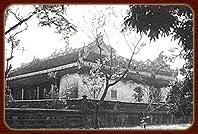
The former imperial palace of the Vietnamese emperor in Hue
(Photo from Silpa Wattanatham Journal)
Note: In this part of the Royal Chronicle, it is suggested by a scholar of archaeology that the reason King Taksin of Thonburi sent Prince Krom Khun Inthraphithak to be installed as king of Cambodia may have been due to considerations regarding the succession in the Thonburi dynasty. At that time, there were two important royal sons: one was Prince Krom Khun Inthraphithak, and the other was Prince Suphanwong, known as Chao Fa Men (who later became Krom Khun Kasat Anuchit in the reign of King Rama I). Although Prince Suphanwong was still young at that time, he was the grandson of King Phutthayotfa Chulalok. King Taksin intended Prince Suphanwong to be the heir to the throne, and therefore appointed Prince Krom Khun Inthraphithak to govern Cambodia to prevent conflicts in the succession. Somdet Krom Phraya Damrong Rajanuphap considered this reasoning to be plausible and recorded it accordingly.
He considered this conclusion reasonable and thus noted it down. (Somdet Krom Phraya Damrong Rajanuphap, Royal Chronicles of Rattanakosin, Reign of Rama II, 1916: 75–76)
Chao Phatala Ha (Mu) then relocated his family to Phnom Penh and humbly requested the Annamese army from Saigon to come to his aid. The Annamese dispatched their troops to station at Phnom Penh. Phraya Surasi led the Siamese army in pursuit of Chao Phatala Ha (Mu) and, upon learning that the Annamese forces were stationed at Phnom Penh, immediately reported to Somdet Chao Phraya Maha Kasat Suek and set up camp awaiting orders from the supreme commander, without engaging the Annamese in battle. (Setuean Suphasophon, 1970: 161–163) However, this campaign to Cambodia did not achieve its objective, as a rebellion broke out in Thonburi, forcing Somdet Chao Phraya Maha Kasat Suek to withdraw the army.
At that time, in Saigon, the rebels once again attacked the city, which had been under Ong Chiang Sue’s control. Ong Chiang Sue mobilized the Cambodian army to assist, and Phatala Ha (Mu) also organized forces to help, but they were unable to defeat the rebels. Ong Chiang Sue was forced to flee into the forests and islands of Cambodia, eventually seeking the protection of His Majesty in Bangkok at the end of 1782 (B.E. 2325). The Tay Son, having gained control of southern Annam, advanced northward and by 1785 (B.E. 2328) had occupied the entire country. The last king of the Hue (or Lao) dynasty fled to China and died there. The chaos and fragmentation of Annam opened the opportunity for Siam to manage Cambodian affairs without concern for Annamese interference, as evidenced by King Phutthayotfa Chulalok’s order to bring Ngon Ang Non to Bangkok for protection and to appoint Phraya Aphai Phubet (Baen) to govern Cambodia. (M.R. Saengsom Kasemsri and Wimon Pongpipat, 1980: 83–84)
10.3.3 King Taksin’s Restoration of Siamese Authority in Cambodia
Cambodia was a neighboring country with internal political instability, primarily caused by ongoing conflicts among its rulers. Whenever such conflicts arose, Cambodia would seek support from Siam and Annam. When Siam possessed stable authority, Cambodia would accept being a tributary state under Siamese suzerainty. Toward the end of the Ayutthaya period, Cambodia remained a tributary of Siam, but after Ayutthaya fell to the Burmese for the second time, Cambodia became independent. In 1769 (B.E. 2312), King Taksin of Thonburi sent a royal letter to King Narai Racha Thadevi, the Cambodian monarch, reminding him to send silver and gold trees as tribute, as had been done when Ayutthaya was the capital. However, the Cambodian king did not acknowledge King Taksin’s authority, as recorded in the Cambodian Royal Chronicles.
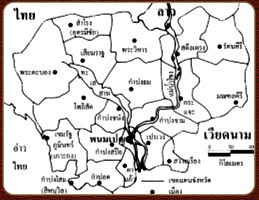
Map showing the country of Cambodia
(Photo from History of Cambodia book)
“King Taksin is merely a son of a Chinese Hai-Ng general from a commoner family who has set himself up as king. How can we bring royal tribute of gold and silver trees to offer and acknowledge him as sovereign?” Seeing this, in 1769 (B.E. 2312), King Taksin of Thonburi commanded the organization of an army to attack Cambodia in two divisions. Phraya Aphaironrit (Thong Duang) and Phraya Anuchit Racha (Bunma) led 2,000 troops via Nakhon Ratchasima, advancing through Chong Samet to attack Siam Reap. Phraya Kosathabodi led 2,000 troops via Prachinburi to attack Pursat. The Siamese army captured Pursat, Siam Reap, and Battambang; however, before reaching the Cambodian capital, rumors reached them that King Taksin of Thonburi had passed away in Nakhon Si Thammarat, prompting the Siamese army to withdraw.
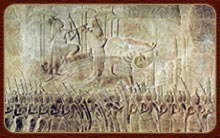
The Cambodian and Siamese armies
(Photo from History of Siamese Society and Culture, Thailand)
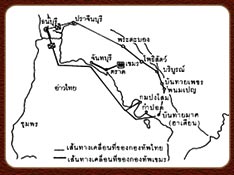
(Photo from King Taksin the Great book)
From the Cambodian side, after the Siamese army withdrew from Pursat and Siam Reap in early 1770 (B.E. 2313), King Narai of Cambodia anticipated possible developments in Siam and kept watch. Later, upon hearing that the Burmese were advancing from the north, he expected Siam might be defeated again. Seeing this as an opportunity, he ordered Phra Sothat, the governor of Piam and a member of the Cambodian royal family, to recruit people from the Phuthaimat region to attack Chanthaburi and Trat in Siam at the end of 1770 (B.E. 2313). At that time, King Taksin of Thonburi was campaigning in Chiang Mai, and the Siamese forces in Chanthaburi were able to defeat the Cambodian troops and force them to retreat.
When King Taksin returned from Chiang Mai, displeased with Cambodia, he commanded both land and naval forces in 1771 (B.E. 2314). Chao Phraya Chakri led 10,000 troops via Prachinburi, accompanied by Ngon Ang Non (or Non), the Cambodian prince who had sought refuge in Thonburi, to persuade the Cambodians. The Siamese army attacked cities along the way, capturing Pursat, Battambang, and Banteay Meas in sequence. Seeing that resistance at Banteay Meas was futile, King Narai abandoned the city and fled to Annam.
King Taksin personally led the royal navy with 200 warships, 100 seagoing vessels, and over 15,000 troops, appointing Phraya Kosathabodi to lead the vanguard. When the royal fleet reached Banteay Mas on Thursday, the 8th day of the 12th month, he attempted to persuade Phraya Rachasethi, the governor of Banteay Mas, to submit, but this failed. He then ordered the attack, capturing the city on the 10th day of the 12th month, though Phraya Rachasethi managed to escape. After taking Banteay Mas, King Taksin proceeded with the naval forces along the canals toward Phnom Penh.

Living conditions of the Cambodian people
(Photo from Siam Cyber Ed: Image Library: Cambodia http://www.cybered.co.th/library/combodia/level3.htm)
Note: It is suggested in the historical record of this period that King Taksin’s army stationed his troops at Wat Yothanimit (Wat Bot) to honor the former monarch. The authorities elevated Wat Yothanimit to the status of a third-class royal temple of ordinary rank in 1980 (B.E. 2523), and it remains the only royal temple in Trat Province. It is believed that the old ordination hall of this temple was used for the oath-taking ceremony of government officials in the past, and the old ordination hall has been registered as a historical site. (From Trat Province Book: 1989–1990, pp. 2192–2193)
The Siamese army was able to capture Banteay Meas, and King Taksin appointed Ngon Ang Non as king of Cambodia, giving him the title Phra Ram Racha Thirat or Phra Ramathibodi. King Narai Racha Thibodi fled to seek refuge in Vietnam, but at that time the political situation in Vietnam was too unstable to provide assistance. Wishing for peace in the country, King Narai Racha Thibodi agreed to step down to the rank of Maha Upayu Raja, allowing his younger brother to become king (1775, B.E. 2318), as desired by Siam. Thus, Siam regained influence over Cambodia as it had during the Ayutthaya period.
In 1780 (B.E. 2323), a rebellion broke out in Cambodia between Ngon Ang Non (Phra Ram Racha Thirat) and Ngon Ang Ton (King Narai Racha), vying for the throne. Later, they reconciled, and King Taksin appointed Ngon Ang Non as king of Cambodia, Ngon Ang Ton as Maha Upayu Raja, and Ngon Ang Tham as Maha Uparat. The Maha Uparat was later assassinated, and shortly after, the Maha Upayu Raja died of illness.
The nobles suspected it was a plot by Phra Ram Racha Thirat and executed him by drowning. Cambodia was then left under the rule of Ngon Ang Ton’s son, who was only four years old, with Phra Thaleha (Mu) serving as regent. Later, Phra Thaleha Mu aligned himself with Vietnam and refused to submit to Siam.
King Taksin ordered Somdet Chao Phraya Maha Kasat Suek and Chao Phraya Surasi to lead an army to suppress the rebellion and commanded the coronation of Somdet Chao Fa Krom Khun Inthraphithak, his eldest son, as king of Cambodia. Phra Thaleha Mu requested Vietnamese support. The Siamese army captured towns along the way until reaching Banteay Meas, the capital, while the Vietnamese army stationed at Phnom Penh. However, a rebellion broke out in Thonburi, so Somdet Chao Phraya Maha Kasat Suek withdrew the army. (Sanun Silakorn, 1988: 17–18)
10.3.4 Expansion of Power into the Lao Kingdoms
During the Thonburi period, the Lao kingdoms were divided into three major city-states:
In the north was Luang Prabang (Kingdom of Lan Xang), ruled by Chao Suriya Vongsa.
Further south was Vientiane (Sri Sattanakhanut), ruled by King Siribunsan.
In the south was Champasak, ruled by Chao O (O).
King Taksin expanded Siamese influence over the Lao kingdoms on two occasions.
1. In 1775 (B.E. 2318), the city of Nang Rong, a vassal of Nakhon Ratchasima, had a conflict with Nakhon Ratchasima and sought allegiance with Champasak. Chao O accepted them. King Taksin ordered Chao Phraya Chakri and Chao Phraya Surasi to lead armies to attack Nang Rong and Champasak. The Siamese forces captured Champasak, Khong City, and Attopeu in 1776 (B.E. 2319). During this campaign, the forested Cambodian cities of Talung, Surin, Sangha, and Khukhan submitted to Siamese authority, bringing the southern Lao territories under Siamese influence.
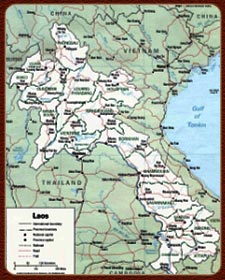
Map of the Lao People’s Democratic Republic
(Image from the book Laos)
2. Expansion of Power into the Lao Kingdom, in the area of Si-Sattanakhanhuth, In the period before Rattanakosin, the land that is now Ubon Ratchathani province and nearby provinces had small scattered settlements. Most were descendants of the Khmer, later called the Khha, Suay, Kuy, etc. Around the 20th Buddhist century, a struggle for the throne occurred in Si-Sattanakhanhuth (Vientiane). Villagers fled across the Mekong River to the western bank and established settlements along the way, continuing down to Nakhon Champasak. They settled in groups in fertile areas, and respected leaders of each group were recognized and accepted as heads to govern the people, ensuring peace and protection from invasions from Si-Sattanakhanhuth.
Later, in 1767, when Ayutthaya was about to fall to the Burmese, a civil war for the throne broke out again in Si-Sattanakhanhuth because King Ong Lo of Si-Sattanakhanhuth had passed away without leaving any sons to inherit the throne. Santhao Phraya, Nai Wo, and Nai Ta collectively brought one of two royal descendants (who had fled political danger to live with Nai Wo and Nai Ta when King Ong Lo sent forces to capture and execute Phraya Saen Mueang in 1732) to ascend the throne of Si-Sattanakhanhuth, taking the name “King Siribunsan.”
When King Siribunsan ruled Si-Sattanakhanhuth, he appointed his younger royal brother as Uparaja and also appointed Nai Wo and Nai Ta as ministers with royal ranks. This greatly displeased Nai Wo and Nai Ta because they had hoped to be Uparaja as they wished.Nai Wo and Nai Ta consequently relocated with their families and followers across the Mekong River to the western bank
Settling in Nong Bua Lamphu. They rebuilt and improved the city, constructed gates and forts to strengthen it, and renamed the city “Nakhon Khueankhan Karpkaeo Bua Ban,” or as mentioned in some documents, “Champanak Khwang Karpkaeo Bua Ban.”
King Siribunsan learned of the news about the new city built by Phra Wo and Phra Ta. He understood that the construction and development of the city by Phra Wo and Phra Ta was an act of hostility against him. Therefore, he ordered Santhao Phraya to restrain Phra Wo and Phra Ta, but both did not listen. King Siribunsan then commanded the army to suppress them. The two sides fought for three years without a decisive victory. Seeing that their forces were inferior and could not resist, Phra Wo and Phra Ta eventually sent royal tribute in submission to the Burmese and requested military assistance. However, when the Burmese army led by Mong-Lange arrived, the general turned the troops to assist King Siribunsan against Phra Wo and Phra Ta. Although Phra Wo, Phra Ta, and their followers resisted with all their might, they were ultimately defeated due to inferior numbers. Phra Ta died in battle. Consequently, Phra Wo, Thao Kamphong, Thao Faangna, Thao Thit Phrom (son of Phra Ta), and Thao Kam (son of Phra Wo) relocated with their families and followers southwards to Nakhon Champasak, receiving aid from King Ong Luang Chai Kuman, ruler of Nakhon Champasak, to settle in the Wiang Don Kong subdistrict, also called Ban Du, Ban Kae, in the Nakhon Champasak region.
Later, in 1771 (B.E. 2314 / Chula Sakarat 1133, Year of the Rabbit, Tri-Sak), King Siribunsan learned that Phra Wo had relocated his family and followers to Wiang Don Kong in Nakhon Champasak. He then ordered Akkharhat to lead troops to suppress Phra Wo again. When King Ong Luang Chai Kuman learned of this, he sent Phra Ya Phon Chiang to bring forces from Nakhon Champasak to help Phra Wo resist the army of King Siribunsan, and also sent a letter requesting pardon for Phra Wo. King Siribunsan replied, “Phra Wo is ungrateful and cannot be nurtured to prosperity, but since the ruler of Nakhon Champasak requests forgiveness as such, I will pardon him to maintain goodwill.” Subsequently, he commanded Akkharhat to withdraw the troops back to Si-Sattanakhanhuth.
At the end of 1771 (B.E. 2314), Phra Wo had a disagreement with King Ong Luang Chai Kuman regarding the construction of a new city in the Si-Sumang area. He then relocated his family and followers to the Don Mod Daeng area (left bank of the Mun River, approximately 16 kilometers east from the current location of the Ubon Ratchathani city hall) and appointed Thao Phia to deliver royal tribute to the ruler of Nakhon Ratchasima, requesting to become a vassal of the Siamese kingdom to seek allies, as enemies surrounded him on all sides.
In the north was King Siribunsan of Si-Sattanakhanhuth, and in the south was King Ong Luang Chai Kuman of Nakhon Champasak. Moreover, there were not yet strong enough forces to resist enemies when attacked. However, King Taksin did not take any action regarding this matter, probably because he was engaged in the Burmese wars. Another reason was that the highlands north of Nakhon Ratchasima belonged to Si-Sattanakhanhuth, where King Siribunsan and King Taksin had previously made a royal friendship treaty. Later, in 1776 (B.E. 2319 / Chula Sakarat 1138, Year of the Monkey, Atthasak), King Siribunsan learned of the conflict between Phra Wo and King Ong Luang Chai Kuman. Phra Wo brought his family and followers to Don Mod Daeng. The king then appointed Phra Ya Supho to lead troops to attack Phra Wo again. Seeing that his forces were insufficient to resist, Phra Wo returned with his family and followers to Wiang Don Kong as before and requested military aid from King Ong Luang Chai Kuman of Nakhon Champasak. However, the ruler of Nakhon Champasak refused due to past grievances.
As a result, Phra Wo’s forces were defeated. Phra Wo was captured and executed at Wiang Don Kong. Thao Kamphong, Thao Faangna, Thao Thit Phrom (son of Phra Ta), and Thao Kam (son of Phra Wo) led their families and followers to escape the encirclement of Si-Sattanakhanhuth’s army. They sent a formal petition to Nakhon Ratchasima, seeking King Taksin’s assistance with troops. However, the court in Thonburi did not take any action. Later, in 1778 (B.E. 2321 / Chula Sakarat 1140, Samritsak), King Taksin graciously commanded Somdej Phra Buddha Yodfa Chulaloke Maharaj (then Somdej Chao Phraya Maha Kasat Suek) and Somdej Phra Bowon Ratcha Chao Maha Surasinghanat (then Chao Phraya Surasi) to lead the army to suppress Phra Ya Supho at Wiang Don Kong, Nakhon Champasak. Upon learning this, Phra Ya Supho quickly retreated to Si-Sattanakhanhuth. Meanwhile, King Ong Luang Chai Kuman feared he could not resist the Thai forces and fled with his family and followers to Koh Chai. Eventually, the Thai army captured Nakhon Champasak and apprehended King Ong Luang Chai Kuman.
Subsequently, the Thai army also captured Nakhon Phanom, Nong Khai, and laid siege to Vientiane for almost a year, finally capturing it at the end of 1778. In this campaign, King Suriyavong of Luang Prabang sent troops to assist in attacking Si-Sattanakhanhuth from the north. King Siribunsan fled to Kham Koet, and the Thai army occupied Vientiane, placing Phra Ya Supho in charge. King Ong Luang Chai Kuman was brought, along with the Emerald Buddha and Phra Bang from Vientiane, to Thonburi. Shortly afterward, King Taksin graciously allowed King Ong Luang Chai Kuman to return to rule Nakhon Champasak. From that point onward, Nakhon Champasak became a vassal city of Siam.
Thao Kamphong, son of Phra Ta, married Nang Tuy, daughter of Uparacha Tham Thevo (brother of King Ong Luang Chai Kuman). King Ong Luang Chai Kuman and Thao Kamphong were thus connected by marriage, and as Thao Kamphong commanded a large household of followers, he was appointed Phra Prathum Suraraj, the chief commander overseeing his own household, directly under Nakhon Champasak, and stationed at Wiang Don Kong from around 1779–1780 (B.E. 2322–2323), remaining there until the end of King Taksin’s reign ( http://www.nso.go.th/provweb/cwdweb/ubon/ubonll.htm : 28/11/44)
According to Lao sources, Si-Sattanakhanhuth and Lan Chang became vassal cities of Siam in 1778 (B.E. 2321).
It can therefore be stated that during the Thonburi period, Siam extended its power into all three Laotian kingdoms, which remained vassal states of Siam until the end of King Taksin the Great’s reign (Paradee Mahakhun, 1983: 28).
Note: The Emerald Buddha, based on its features, is believed to have been crafted by northern Thai artisans in the Lanna style, following the Lankan Buddhist tradition adopted in the Lanna kingdom. The Emerald Buddha had previously been in several cities, including Lanka (Sri Lanka)
Chiang Rai, Chiang Mai, Luang Prabang, and Vientiane. Somdej Chao Phraya Maha Kasat Suek (Rama I) brought it from Vientiane to Thonburi, and upon ascending the throne, built Wat Phra Sri Rattana Satsadaram to enshrine it in the ordination hall on March 22, 1834 (B.E. 2377), creating summer
And Rainy season robes for it. Later, King Nangklao (Rama III) made winter robes to complete the three seasonal offerings (Thanakit, 2000: 201–202).
Phra Bang is one of the important Buddha images, which was once enshrined alongside the Emerald Buddha. It has been historically recognized and is revered and worshipped by Buddhists in general.
According to the history recorded in Legends of Important Buddha Images and Chronicles Collection, Part 5, it is stated that in the year Sakra 418 (B.E. 1599), Phra Ya Sri Chularat, the ruler of Intapattana (Cambodia), sent royal envoys to request Phra Bang from King Subinrat, the ruler of Lan Xang. King Subinrat willingly granted Phra Bang to the ruler of Intapattana according to his wish. The king then commanded that Phra Bang be ceremoniously brought and enshrined in the central hall of the city.
Wat Ho Phra Kaew (Image from the book Laos)
Later, Phraya Fang Num, who was the son-in-law of Phraya Sri Chularat, invited the Phra Bang to be enshrined in the city of Sri Sattanakhanut, Lan Chang Rom Khao (Luang Prabang). When it reached the city of Vieng Kham, Phraya Vieng Kham requested that the Phra Bang be enshrined there for worship, so it remained in Vieng Kham. Later, in Sakra 789 (B.E. 1970), the ruler of Sri Sattanakhanut, Lan Chang Rom Khao, Phra Chai Chakraphat Phuean Phaew, commanded that the Phra Bang be transported by boat from Vientiane. The boat sank at the rapids of Chan, below Chiang Khan, and the Phra Bang was lost in the water. Shortly after, it was enshrined again in the vihara of Vientiane. Later, in Sakra 838 (B.E. 2019), the reign of Phra Ya Lan Nam Saen Thai Phu Wanat, the Phra Bang was brought from Vieng Kham to be enshrined at Wat Chiang Klang in Sri Sattanakhanut, Lan Chang Rom Khao (Luang Prabang). He ordered the construction of the vihara at Wat Manorom and enshrined the Phra Bang there.
During the reign of Phraya Vichul Ratchathibodi, around Sakra 921 (B.E. 2112), King Chai Setthathirath established a new capital at Vientiane, naming the city Chanthaburi Sri Sattanakhanut, Lan Chang Rom Khao. The Phra Bang, the Emerald Buddha, and Phra Saek Kham remained enshrined in the vihara of the former city. Therefore, the city was renamed “Muang Phra Bang Ratchathani Sri Sattanakhanut Lan Chang Rom Khao.”
Later, in Sakra 1057 (B.E. 2238), Thao Nong, who was the custodian of the city of Luang Prabang, invited the Phra Bang, the Emerald Buddha, and Phra Saek Kham to be transported away from the enemy and enshrined at the capital Vientiane. During the reign of King Taksin of Thonburi, he commanded Somdet Chaophraya Maha Kasat Suek to lead the army to capture Vientiane and also ordered that the Emerald Buddha and the Phra Bang be brought to Thonburi.
The first monarch of Rattanakosin, King Phutthayotfa Chulalok, after constructing Wat Phra Sri Rattana Satsadaram, commanded that the Emerald Buddha and the Phra Bang be enshrined in the ubosot of this temple. Later, Chao Nanta Sen, son of the King of Lan Chang, petitioned that the two Buddha images should not be enshrined together, claiming that they had protective spirits that were incompatible and that keeping them together would bring misfortune, as had occurred in Luang Prabang and Vientiane. King Phutthayotfa Chulalok considered that while the Phra Bang was not a particularly beautiful image, it was highly revered by the people of Sri Sattanakhanut, so he commanded that it be returned to Vientiane.
Later, during the reign of King Nangklao, when the King of Vientiane (Chao Anouvong) declared independence, Somdet Phra Bawornraj Chao Maha Sakdi Phon Saep led the army to attack Vientiane. The people of Vientiane fled, taking the Phra Bang with them. Subsequently, Chao Phraya Bodindecha pursued Chao Anouvong and brought back the Phra Bang, Phra Saek Kham, and Phra Chan Samo to Bangkok. King Nangklao commanded that these Buddha images be enshrined at temples outside the Grand Palace as follows:
Phra Saek Kham was enshrined at the ubosot of Wat Kharuhabodi, Bangkok.
Phra Chan Samo was enshrined at Wat Apsornsawan, Bangkok.
Phra Bang was enshrined at Wat Chakrawat Ratchaworawiharn, Bangkok.
Later, during the reign of King Mongkut in the year of the Horse, B.E. 2401, a comet appeared, drought occurred, and an epidemic spread with fevers lasting three years. People widely believed these were ominous signs. Concerned by these events, King Mongkut commanded that the Phra Bang be returned from Wat Chakrawat Ratchaworawiharn to Luang Prabang and bestowed a royal Nāga image as a replacement.
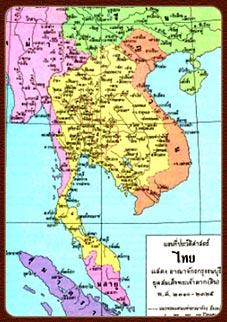
Map showing the Malay territories
(Image from the book Geography Maps: Lower and Upper Secondary Level)
Enshrinement location: This Buddha image was once enshrined in the vihara of Wat Chakrawat Ratchaworawiharn, in the Chakrawat Subdistrict, Samphanthawong District, Bangkok. However, during the reign of King Mongkut (Rama IV), it was returned to the capital city of Luang Prabang. The Buddha image is therefore enshrined in the vihara within the royal palace of Luang Prabang, Laos, and remains there to this day.
10.3.5 Malay Provinces
The Malay provinces were tributary states of Siam since the Sukhothai period, with important regions including Pattani, Trengganu, Perak, Kelantan, and Terengganu. After the fall of Ayutthaya, these provinces became independent. During the reign of King Taksin, he intended to expand Siamese influence into the Malay provinces. The Malay provinces that had formerly been tributary states of Siam during the Ayutthaya period—Trengganu, Pattani, Kelantan, and Terengganu—had become independent after Siam lost Ayutthaya to Burma. In the era of King Taksin of Thonburi, he did not dispatch armies to subdue them directly. Instead, he ordered the governor of Nakhon Si Thammarat to test the sultans of Trengganu and Pattani by requesting loans of 1,000 chang of silver from each city to purchase weapons. However, both sultans refused the request, as recorded in the Rattanakosin Chronicles.
“…The Malay cities were the cities of Trengganu and Pattani, which had formerly been subject to Ayutthaya. They had not yet shown submission, so the Nakhon ruler considered borrowing money from these two cities to purchase arms, one thousand chang per city, to test Phraya Trai and Phraya Pattani to see how they would respond.” There is no record of whether the Nakhon ruler actually carried out this plan, but judging from subsequent events, it is believed that Phraya Trai and Phraya Pattani did not agree to lend the one thousand chang. Whether this was because their reply did not provoke confrontation or because King Taksin was occupied with other military campaigns, the cities of Trengganu and Pattani did not submit to King Taksin, and he did not send troops to subjugate them throughout his reign.
This evidence shows that King Taksin had the intention to expand his influence into the Malay cities. However, these cities were far away, making military campaigns costly and difficult, or the King may have had other more important responsibilities. Therefore, the Malay cities remained independent from Siam until the end of his reign (Paradee Mahakhan, 1983: 28–29).
Summary: The royal intentions of King Taksin the Great were accomplished in all respects. During his reign of more than 15 years, records show he commanded in 16 military campaigns. If including the campaigns he led as Phraya Wachiraprakan to defend Ayutthaya and break through the Burmese siege to gather forces to retake the city, there were an additional 14 campaigns, totaling 30. Of these, he personally led 23 campaigns, while others were commanded by appointed generals on 7 occasions (Prapat Trinarong, Tribute to Important Persons, Vol. 12, Office for National Identity Promotion, Office of the Prime Minister, 1991: 4).
10.4 Military Tactics (in Warfare) of King Taksin the Great
The tactics of King Taksin the Great
The history of the nation’s liberation by King Taksin the Great is a record of his own unique military operations, which have been widely recognized and praised. Even among military experts, it is acknowledged that he possessed extraordinary tactics beyond the traditional manuals. Moreover, he was supported by capable generals and commanders who shared his determination to fight against the enemy. For this reason, shortly after the fall of the capital, he was able to decisively drive the Burmese out of the country and establish a new royal capital at Thonburi. Thailand thus regained full sovereignty once again.
King Taksin the Great was one of Thailand’s most outstanding warrior monarchs. He possessed a strong and resolute mind and set himself as an example for the soldiers under his command. He personally led his troops into battle on every occasion or personally supervised the royal army, which allowed him to observe events directly and give timely orders. This also served to boost the morale of the troops during critical situations. He was capable of making rapid and correct decisions in urgent circumstances. His endurance, both physical and mental, was exceptional, earning the utmost loyalty and respect from all his officials and soldiers.
The military tactics that he employed, which have been widely praised, include:
1. He initiated the use of naval forces in warfare. In earlier times, ships were seldom used in actual combat, but he deployed the navy in battle for the first time. For instance, he led a naval expedition from Chanthaburi to attack the Burmese at Pho Sam Ton Camp. This innovation eventually led to the regular use of naval forces in warfare. King Taksin fought in no fewer than 30 battles, of which 19 were on land and 11 involved naval operations, both on rivers and at sea.
In 1771 (B.E. 2314), he mobilized a fleet of 200 warships and 100 ocean-going vessels with 15,000 troops from Thonburi. He led the fleet by sea to attack Kampong Som, Hatien (known in Thai sources as Phuttha Yai, Banteay Mas, or Phutthaimas; in Khmer as Banteay Mead; and in Chinese as He Xian Zhen), and Phuttha Yai Phet, reaching as far as Phnom Penh. The expedition returned successfully, achieving victory (Sirirangsri, 1986: 63).
2. He modified the battle plan. Instead of using the city as a fortified base to repel the enemy, he sent out smaller detachments to intercept the enemy at a distance, while the main force followed to destroy them.
3. He employed artillery to support his troops. This practice led to the digging of moats and trenches for cover and the strategic use of cannons in coordination with short-range weapon assaults, which proved highly effective.
4. He reorganized and improved army structure by eliminating the rear guard that had existed before, leaving only the vanguard and the royal army, which included logistical, supply, and auxiliary combat units. The royal army in the Thonburi period thus served as the main supporting force and could be split into special combat detachments for specific missions, as in the campaign against Aza Wunki to defend Phitsanulok in B.E. 2318. He deployed the royal army and the forces guarding the capital as special task forces to defend against the Burmese at key points, such as the Mae Sot pass. In addition, he established a general artillery corps as another special unit within the royal army; when any sector was heavily threatened by the enemy, it was sent to bombard enemy camps to open the way. Another innovation he introduced was arranging battle formations in layered lines in depth, as practiced in the defense of Phitsanulok in B.E. 2318, so that even if the enemy broke through the first line, they would face successive lines of resistance.
5. He placed great importance on intelligence and communications, both gathering information and sending reports. For this reason, whenever he commanded in battle, reports from near and far continuously flowed to him, enabling him to assess the situation and issue orders immediately and swiftly.
6. He organized support units (auxiliary combat units) such as supply corps, transport units, and others in an orderly manner and according to sound principles. He strove to move supplies from the capital because food and provisions in the provinces were not yet sufficient for large-scale requisition. He also preferred to transport troops through rear areas safe from naval attack whenever possible, since these routes allowed moving more troops and conserved fighting strength.
Owing to his outstanding tactics, he led Thai forces to victory over the Burmese in almost every engagement. Even Aza Wunki, the Burmese commander who attacked Phitsanulok in B.E. 2318, proclaimed to his generals:
“Thailand now fights with great skill, unlike before, and the loss of Phitsanulok was not due to the superior prowess of the enemy troops but because they suffered from hunger and lack of supplies. Those who would come to wage war against Siam in future have no advantage in wisdom or skill over us; do not attempt to wage war against Siam, for you will not achieve victory. Even if you are better than us, you will not easily prevail in a campaign against the Thais.”
(Prajatakanit of King Taksin the Great, Memorial of Ms. Phan Na Nakhon’s Funeral, 20 September 1981: 3–4)
10.5 How extensive was the Thai Kingdom during the Thonburi period, and how did it differ from the Ayutthaya period?
1. Territory of the Thai Kingdom during the reign of King Taksin the Great
When King Taksin the Great ascended the throne at Thonburi, the Thai kingdom expanded to cover a larger area than during the Ayutthaya period. It incorporated numerous cities and provinces, including Thonburi, Ayutthaya, Ang Thong, Singburi, Lopburi, Uthai Thani, Nakhon Sawan, Chachoengsao, Prachinburi, Nakhon Nayok, Chonburi, Rayong, Chanthaburi, Trat, Nakhon Chai Si, Nakhon Pathom, Suphanburi, Samut Sakhon, Samut Songkhram, Phetchaburi, Kanchanaburi, and Prachuap Khiri Khan.
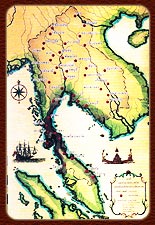
Map of Thailand during the Thonburi period
(Image from Interesting Facts about Thonburi)
Summary of the territorial extent of Thailand during the reign of King Taksin the Great:
North: The entirety of Lanna (the Lanna Kingdom) up to Sipsong Panna and the Shan states.
South: The Malay states including Trengganu, Perlis, Kelantan, Terengganu, and Yala, with Pattani under friendly relations.
East: The entirety of the Khmer territories reaching southern Vietnam.
Northeast: Nakhon Vientiane, Phuan (or Phan) city, Luang Prabang, the Five or Six Principalities, the Twelve Tai Cities, extending to Hunnan in China.
Southeast: Banteay Meas (or Phutthaimat / Ha Tien), located just beyond Trat.
West: Reaching Mergui, Tenasserim, and extending to the Indian Ocean. (Source: The Land of Thailand, Bangkok: Arun Printing, n.d.: 42; and Conservation Foundation of the Former Royal Palace, King Taksin the Great, 2000: 107–109)
2. Territorial Boundaries during the Ayutthaya Period
In the book Compilation of Evidence on King Taksin the Great, Volume 1, published by the committee responsible for constructing the monument of King Taksin the Great on December 19, 1938 (as cited by Praphat Trinarong, Thai Journal 20 (72), October–December 1999: 17–18), it is stated:
“In the year of the Monkey, B.E. 2309 (3 years before the fall of Ayutthaya to Burma), the Siamese kingdom at that time had the following boundaries:
North: only as far as the region of Thoen and Lampang
South: up to Pattani
East: throughout the Khmer territories
Northeast: only up to Nakhon Ratchasima
Southeast: throughout the city of Banteay Meas (Phutthaimat)
West: throughout Tavoy, Tenasserim, and Mergui”