

His Majesty King Bhumibol Adulyadej The Great
Chapter 21: The King Dwells in the Hearts of His People, Inspiring the Souls of All Thais
1. Royal Title
His Majesty King Rama IX was a monarch of boundless grace and virtue, embodying the Ten Royal Virtues, the Four Principles of Service, and the Universal Righteous Rule. His benevolence was immeasurable, and his conduct was dignified and exemplary. He was deeply loved and revered, serving as the unifying spirit of the Thai people. Consequently, numerous groups of citizens have devotedly conferred upon him various honorific titles to celebrate and proclaim his glory, as follows.
1.1 The Ministry of University Affairs compiled commemorative essays from various universities in tribute to His Majesty King Rama IX on the occasion of His 72nd birthday anniversary in 1999. His royal epithets appeared in the book “The Great King of Wisdom” (1996) as follows.
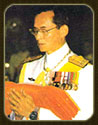
1.1.1 “The Righteous Monarch” — signifying a great king who is deeply devoted to the teachings of the Buddha. (1996: 364)
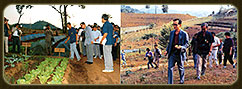
1.1.2 “The Monarch of Rural Development” — referring to His Majesty’s wholehearted dedication and exceptional wisdom in carrying out royal duties for the advancement of rural communities. (1996: 369)
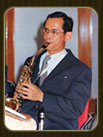
1.1.3 “The King of Music” — a monarch distinguished for his exceptional musical talent. (1996: 204)
1.2 The National Culture Commission jointly conferred upon His Majesty King Rama IX the honorific title of
“Supreme Artist” — Owab Hemaratchata stated in the commemorative publication Grand Musical Tribute to His Majesty the King (1987: 1) that
“… His royal musical undertakings were not carried out solely for Himself and those close to the royal household, but were also extended to His subjects, aiming to promote, preserve, and safeguard the nation’s musical arts and culture, ensuring they are widely recognized and remain an enduring part of Thai heritage.”
1.3 The Ministry of Transport conferred upon His Majesty the title “Supreme Monarch of Sky and Transport” in the commemorative publication (2001: front cover).
1.4 The Matichon newspaper, in its issue dated 26 October 2001, reported on the joint celebrations honoring His Majesty King Rama IX, describing Him as “The Father of Thai Technology,” with the details as follows.
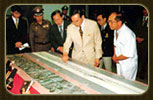
“The Father of Thai Technology” — The Cabinet approved 19 October of each year as “Thai Technology Day” to honor His Majesty the King in recognition of His role as “The Father of Thai Technology,” beginning in 2001. Accordingly, the Ministry of Science, Technology, and Environment assigned the National Electronics and Computer Technology Center (NECTEC), under the National Science and Technology Development Agency (NSTDA), to develop the official Thai Technology Day website. NECTEC coordinated with multiple agencies that implemented royal-inspired projects, including the Royal Irrigation Department, the Department of Public Works, the Department of Highways, and the Thai Red Cross Society, to establish the website www.technology.thai.net in celebration of “The Father of the Nation’s Technology.”
1.5 Mr. Wilas Maneewat, author of The Royal Humor of His Majesty King Rama IX (2000: 95), stated that His Majesty was “The Beloved Patron” of the hill tribes.
1.6 Rachinee Bon Samphan Journal, Series 11, Issue 1 (January 2000: 1) honored His Majesty as “The Benevolent Great King.”
A considerable number of Thais have had the opportunity to receive His Majesty King Rama IX’s royal grace, and many others have had the chance to be in close audience, hear His royal thoughts, or observe His conduct through various media and publications. All Thais deeply appreciate and take pride in being born under His Majesty’s benevolent reign.
1.7 “The Grand Royal Engineer” — a title conceived by the Engineering Institute of Thailand under Royal Patronage to honor His Majesty King Rama IX for His exceptional engineering genius (2001: 1).
1.8 “The Great Computer Monarch” (Chapter 17, pp. 17–27)
2. With hearts devoted and loyal, this life is offered to the Righteous King
A considerable number of Thais have had the opportunity to receive the royal grace of His Majesty King Rama IX, and this profound experience will surely remain engraved in their hearts forever.
Story 1
Mr. Manrat Srikrarnon, who has had the opportunity to be in audience and participate in the royal music ensemble for over 30 years, recounted His Majesty King Rama IX’s musical activities from the early days to the present as follows:
“At that time, His Majesty performed music at Amphorn Throne Hall. I was extraordinarily fortunate to have the chance to pay my respects in person, which was remarkable for an ordinary person like me to serve so closely at the royal presence through music.”
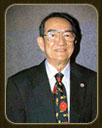
Originally, my name was Raymond Cigarra, as my grandfather was Portuguese, but I am 75% Thai. I longed deeply to have a Thai name and dreamed of receiving a royal-bestowed name. I sought the assistance of a senior, Phra Khun Chatdech Udom, who kindly contacted the Deputy Secretary-General of the Royal Household at that time. The Deputy Secretary-General explained that, according to regulations, I was not entitled to request a royal-bestowed name because I was not a descendant of a civil servant, but he would forward the matter for royal consideration. Whether I would receive it or not depended entirely on fate and merit.
Shortly thereafter, I learned that His Majesty had graciously bestowed upon me a royal name and surname, an honor that filled me with indescribable joy. Yet I had not had the chance to pay my respects in person until I played piano for the Chulalongkorn University Orchestra. When the orchestra performed at Amphorn Garden Throne Hall, I had the opportunity to observe from a distance. After the performance at the radio station, I approached to offer my service, willing to play music or perform any duty at His Majesty’s pleasure. Later, a palace attendant informed me that I was invited to attend the Friday music session. I was extremely excited, prepared a white suit, a proper necktie, new shoes, and my cleanest attire. On Friday, I took half a day off and entered the hall. Upon arrival, Khun Khwan Kaew Watcharothai kindly received me and guided me to the royal presence at the porcelain-patterned orchestra area. His Majesty graciously allowed me to play the piano with the ensemble until past 8 p.m. During dinner, all musicians were invited to dine at the royal table. At that time, I was the youngest in the group and sat beside the most beautiful lady, later revealed to be Khun Ying Kenlong, wife of Lieutenant General Mom Luang Jinda Sanitwong. After the meal, His Majesty departed. I was unsure if I should approach again, so I asked Khun Chum, who instructed me to continue serving, with regular duties including piano performance.
At that time, I was still a professional musician, leading my own ensembles, Keetasavee and Keetawat, and occasionally had the opportunity to perform for His Majesty. Later, I became ill and required kidney surgery. Upon learning this, His Majesty graciously instructed Khun Khwan Kaew to visit me at Chulalongkorn Hospital, accepting me under royal patronage. His Majesty was attentive and compassionate toward musicians, understanding that returning to a professional music career after surgery would be physically demanding. I have received His Majesty’s benevolence ever since. After joining a company, I continued to perform weekly with the Lailakram Orchestra and eventually ceased professional performances. My life to this day is thanks to His Majesty, and I have always felt that His gift to me was not merely a name and surname, but life itself.
The royal compassion extended to all musicians was immense. His Majesty cared deeply for their welfare. For example, members of the Suntharaporn Orchestra, though receiving some support from the Public Relations Department, were provided royal medical care whenever ill, with all medications freely granted by His Majesty. (Suvicha, 1996: 47–49)
Story 2
“In 1980, when I was five years old, everyone called me ‘Ma Su-nga,’ the boy who lived by the riverbank — with tones of disdain, contempt, and hatred.
Now, in 1996, I am twenty-one years old. People still call me ‘Ma Su-nga,’ but their voices are gentle, and their faces friendly.
I am glad and happy to share why the people around me changed from hostility to kindness. When I was five, I truly was a bad child. It seemed that every form of wickedness in the world existed in me. Why? Because of poverty. When one’s stomach is empty, one must do whatever it takes to survive. If one cannot do good, then one must do wrong, just to keep from starving. Honestly, I would rather not recount the evil things I once did, but I must tell some of it — so you may understand how I struggled and how I turned away from that wrongdoing. Please, do not follow my example.
For as long as I can remember, I saw only my mother, Mareeyoh, beside me in our tattered hut by the Sungai Kolok River. My mother, frail and thin, coughed more often than she spoke. At that time, she was only twenty-three years old, yet looked much older from hunger and sorrow. I had no father, no relatives to care for us. Our hut stood apart from other homes…”
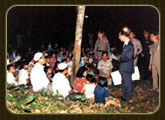
“At that moment, all I could think was: May Mother recover, may her fever break, may her cough cease. Oh… Allah, please grant this.”
I returned to the hut and was nearly struck senseless with shock. My mother lay collapsed face down, surrounded by fresh blood, the metallic scent filling the air. I ran out like a madman, my heart trembling with fear and dread. I saw a large group of people moving forward, and I heard them say, “The King is coming… The King is coming…”
“The King!” I had heard this name before, seen His Majesty’s image on banknotes, in shops, and at the railway station. I had heard that the King is kind, that the King helps everyone. Oh… the King is here! I ran recklessly toward the crowd gathered to pay respects. Police and officials stood in lines for security, and citizens sat on both sides of the path. And then I saw… I saw the King… the majestic King.
Princess Maha Chakri Sirindhorn walked alongside, greeting the people. Amid the afternoon sunlight, my heart burned with determination. I feared neither the police nor anything else. I pushed through the crowd to reach His Majesty. Those I stepped on cried out and tried to push me back, creating a commotion. The police rushed to seize me, but I struggled and shouted at the top of my lungs, determined for my suffering to reach His ears: “Raiyo!… O Raiyo, mi to raiyo, Nateedulu, mi to raiyo, Nateedulu, O Raiyo.” Then I lost consciousness.
I awoke at the village headman’s house and immediately asked for my mother.
“Ismae,” the kind headman called my real name with compassion. “The King has sent a doctor to take your mother to the provincial hospital. She will recover soon. You must stay here with me for now; later I will take you to visit her.”
I wept with overwhelming relief. Though still worried for my mother, I felt immense comfort. Oh, the King… I stayed with the village headman’s family, sometimes returning to check on our hut. One day, I spoke to Grandfather Muhammad:
“The King is so kind, isn’t he, Grandfather?”
“The King is kind. He sent a doctor to care for your mother. Do you love the King?”
“Love,” I replied without hesitation.
“If you love Him, you must be a good person. The King wants everyone to be good.”
“How do I become good, Grandfather?”
“Stop stealing,” Grandfather Muhammad emphasized.
I thought for a moment, then answered firmly, “If the King wants me to stop stealing, I will stop stealing.”
————————————————————————————————————————-
1 “The King! Oh King, please stop, wait for me! Stop, Your Majesty! Wait, oh King!”
“Good… Do you think Grandfather is kind?”
“Grandfather is kind. He gives rice and lets me stay with him.”
“Do you love Grandfather?”
“I love him.”
“If you love him, you must be a good person and help Grandfather with his work. Can you do that?”
“Yes, I can. What do you want me to do?”
“Help me with the housework — sweep, mop, feed the pigeons, clean their cages. Can you do that?”
“Yes, I can.”
I then helped Grandfather Muhammad with every task I could, willingly and with dedication. He taught me that even at the age of five, if someone is good to us, we must be good to them, help them, and strive to be a good person. I still remember his words and teaching methods to this day.
“What else does the King want me to do?” I asked.
“He wants you to study, so you won’t be ignorant, and you will know how to make a living instead of becoming a thief,” Grandfather Muhammad replied.
My mother was ill for several months. Grandfather Muhammad took me to visit her once; she was overjoyed, and I was extremely happy as well. I returned to help him care for the pigeons and eagerly awaited the day my mother would come home.
That day finally came. After more than four months of treatment, Grandfather Muhammad took me to bring my mother home. She was healthy. We returned to our hut. Mother thanked Grandfather Muhammad and taught me to pray in gratitude to the King. She said that the King had been merciful, and we must repay His kindness.
I then knew how I would repay the King’s benevolence. Grandfather Muhammad helped my mother find work as a cleaner at a hotel, while I continued caring for the pigeons and cleaning their cages. When the 1981 school year began, I enrolled at Ban Sungai Kolok School. I studied diligently and excelled beyond the other students. Now, being called “Ma Su-nga” sounded much kinder. I was repaying the King’s kindness by becoming a good child.
On Friday, 4 September 1981, in the late afternoon, my mother took me to pay respects to the King at Ban Gu Bae Ka in Puyo Subdistrict. That evening, we returned to our hut, mother and son, filled with the greatest joy and happiness. Since then, I have had many opportunities to be in audience with the King.
There was a song that my second-grade teacher taught us, which I loved then and still love to this day. I sing it with the happiest heart, striving to pronounce every word as beautifully as possible. I remember the lyrics perfectly even now:
No one in this world cares for the people like Him
Love and compassion remove all suffering
Like a father, like a mother, only concern and care
Do you know who it is? Our King himself
For the last line, I shout it with all my voice. No one reproaches me, for everyone knows that I love the King. Now, in 1996, I am twenty-one years old. People still call me “Ma Su-nga,” but with gentle tones and friendly gestures, because I am a good person — a devout Muslim, an honest and hardworking exemplary worker at the largest batik factory in Sungai Kolok, and a support for all impoverished orphans. My life is happy because of… my King. (Ratchanee Sriphaewan, 1996: 23–32)
Story 3: … I want you to read this … (A good story)
Excerpt from the memoirs of Police General Wasit Dechkunchorn … published in Matichon newspaper (may be a bit long, but very worthwhile)
One night in 1967 (at that time holding the rank of Police Lieutenant Colonel)… after being honored with a royal dinner at Wang Klai Kangwon…
…I recall that on that night, the fortunate ones granted an audience to receive the royal Chitralada honor were eight police officers and one naval officer…

…The King descended holding a box containing amulets in His hand, dressed in casual attire……As He placed the amulet into the palm I held, I felt as if it were warm, as though it had just come out of an oven…
…Later, when I had the chance to respectfully inquire, I learned that the King had created that amulet by mixing various sacred materials: soil from important religious sites across the country, flowers offered by the people on various occasions, and His own hair. These materials were combined using latex glue as a binder, then pressed into a mold (carved by Phaitoon Muangsombun, who later became a National Artist), without firing it in a kiln…
…After presenting the amulet, He graciously offered royal advice, saying, “…Before you worship the amulet, apply gold leaf — but only on the back…” The instruction to gild only the back served as a reminder that doing good deeds need not be shown off or announced to anyone. One should perform their duties for the sake of duty itself, and the fulfillment of the task is the reward in itself…
…I applied gold to the back of the amulet and placed it in a frame. Since then, the Chitralada amulet became the only one I wore around my neck…
…After being assigned duties far from the royal presence, I had the opportunity to return for an audience at Wang Klai Kangwon. The feeling of seeing His Majesty again brought both joy and a sense of disappointment: despite having served diligently, enduring hardships and facing various dangers — sometimes life-threatening — the Police Department had offered no reward or recognition…
…Before He retired that evening, I bowed at the dining table and respectfully requested something…
…The King asked, “What do you want?” I boldly and confidently requested permission to apply gold to the front of the amulet I had received. The King asked why I wished to do so…
…I answered honestly, explaining that since receiving the Chitralada amulet, I had worked extremely hard, endured fatigue, and faced serious danger multiple times. Moreover, the Police Department had not increased my salary even by a single baht…
…The King smiled before replying with a gentle and compassionate voice, “Just continue gilding the back, and the gold will overflow to the front by itself…”
Source: Lamnam Muang, http://pantip.inet.co.th/caf?/rajdumnern/topic/P1186435.html
Comment from CS.I (16 November 2001: 14) in response to “Lamnam Muang”
Responsibility
…“To acknowledge fault” means understanding what one has thought or done that was wrong, so it can be corrected properly. “To accept credit” means that what one has thought or done rightly should be maintained and continued. …If one understands responsibility in this way, any task can be accomplished, no matter how great the obstacles…
For a lifetime, as long as the King reigns over our heads, I would not mind dying. I am proud and joyful to have been born in the land under His Majesty’s sovereign reign. Long live the King.
Story 4
Suwicha, the author of Sunlight Across the Sky, recounts the Bangkok flood of 1983 as follows:
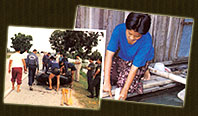
“Once, during the Bangkok flood of 1983, which lasted for a considerable time and caused great hardship to the people of the capital, His Majesty the King personally went to assist the flood-affected citizens without any prior preparation, wishing to witness the true conditions for himself.”
Later, He gave a royal remark about that day, saying:
“I was stuck in traffic too. On the Thonburi side, it took hours. When the police offered to guide the way, I told them not to, as it would only make other cars more congested. Also, I didn’t want anyone to know in advance.”
Hearing this, one is deeply moved by His Majesty’s constant consideration for others. (Suwicha, 1996: 12)
Story 5: He Risked Himself for His People
Suvicha (1996: 12) recounted that His Majesty King Rama IX once related the following:
…I went to Asoke, took the expressway, and then passed under a pedestrian bridge. I traveled there by boat and saw something unusual. Do you know what was under the bridge? There were many unofficially connected electrical wires hanging all around. The water was only about a meter below the bridge. In fact, they did not want me to go there because they were afraid I might get electrocuted, but I wanted to see it with my own eyes so I could find a way to solve the problem. So, I went — I had to lower my head like this (His Majesty bent His head down toward His lap) to avoid the wires…
Story 6
His Majesty King Rama IX and Her Majesty Queen Sirikit The Queen Mother were deeply concerned about the welfare and living conditions of soldiers and police officers performing their duties across the country. Whenever they had time, Their Majesties would visit these officers to offer moral support and encouragement.
Even when visiting dangerous areas, Their Majesties would always send supplies to soldiers and police officers stationed in various regions. A clear example of King Rama IX’s benevolence was when police officers in Kui Buri were ambushed by insurgents and had no jeep to use.
His Majesty King Rama IX immediately granted six jeeps purchased with His personal funds to the police officers stationed in Kui Buri so that they could perform their duties more quickly and safely. His Majesty remarked, “…The lives of soldiers and police officers are far more valuable than the vehicles I have given them…”
Story 7: Sharing Danger with the People
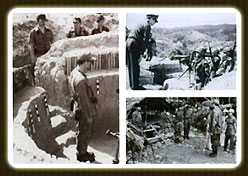
His Serene Highness Prince Kalwanadis Disakul, Chief Aide-de-Camp, stated that one of the most significant royal duties of His Majesty King Rama IX was His courageous act of risking His own safety to rescue soldiers and police officers from loss of life during clashes with insurgents. Despite the dangers, He showed no fear for His personal safety. This particular act occurred during fierce fighting between soldiers and police in Nan and Lom Sak. Upon hearing the news—while visiting the people in Khon Kaen—Their Majesties immediately flew by helicopter to the battle area and personally directed the rescue operations that saved the lives of many soldiers and police officers.
Admiral Prince Kalwanadis Disakul, Chief Aide-de-Camp, revealed the depth of compassion and steadfast spirit of His Majesty King Rama IX and Her Majesty Queen Sirikit The Queen Mother, stating that both were firmly resolved never to abandon their people, but to stand beside them and face the dangers confronting the nation together. (Pramuanwitthaya, 1974: 203)
Story 8
On 27 October 1983, His Majesty King Rama IX presided over the graduation ceremony at Thammasat University, conferring degrees upon 2,661 graduates. The ceremony was expected to take almost the entire day, as each degree was presented personally by His Majesty. When advised that a representative from each faculty should receive the degrees on behalf of the others to save time, His Majesty disagreed and said, “…That cannot be done. Everyone wants to receive it from my own hand…” Thus, the ceremony began at 9 a.m. and continued throughout the day, with only one hour taken for lunch. (Suvicha, 1996: 12)
Story 9: When the Great Flood Brought Sorrow to the Thai People
During the great flood of 1995, His Majesty King Rama IX directed officials of the Chaipattana Foundation to take immediate action to alleviate the urgent problems.
A Twelve-Year-Old Girl Expressed Her Admiration in Verse
While officials of the Chaipattana Foundation were carrying out His Majesty King Rama IX’s initiatives to resolve the flooding problem, they received a letter from Miss Korakot Chanthern. In her letter to the Foundation, she expressed her heartfelt gratitude for His Majesty’s boundless compassion and constant concern for the well-being of His people. She conveyed her feelings through the following poem.
เกิดภัยน้ำท่วม ทุกคนรวมใจ
ช่วยเหลือผ่อนภัย ให้พ้นทุกข์ตรม
ในหลวงทรงห่วง กลัวเมืองจะจม
ให้คนระดม ไปช่วยเร็วไว
แม้ท่านประชวร ยังทรงห่วงใย
เราต้องร่วมใจ ให้สมพระทัย
ในหลวงของเรา
Tears flowed with heartfelt gratitude.
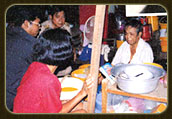
Mr. Boontor Boonhasut, a resident of Village No. 7 along the Bang Khun Non Canal in Bang Kruai District, Nonthaburi Province, suffered severely from the flood. The water rose almost to his bed, making it nearly impossible to live in the house. To make matters worse, Mr. Boontor was paralyzed and unable to care for himself, relying solely on his wife, Mrs. Pimpha Boonhasut, for assistance. When officials from the Chaipattana Foundation arrived to survey the flood situation in the area and met Mr. Boontor, they presented him with two royal relief packages. Upon learning that the packages were from the Chaipattana Foundation and personally granted by His Majesty King Rama IX, Mr. Boontor wept with deep emotion and gratitude for His Majesty’s boundless compassion. (Chaipattana Foundation, December 1995: 21–22)
The People’s Joy at Having Drinking Water for Survival
The royal mobile water distillation unit was brought to various areas to provide clean drinking water for local residents. When officials spoke with the people who came to receive the water, they learned that drinking water had been very expensive and difficult to transport. Therefore, when the royal mobile distillation unit arrived and was set up for their use, the people were overjoyed and deeply grateful.
Grateful for the Benevolence and Aid from the Chaipattana Foundation
When the great flood struck the land
We waded through the waters, weary and pained
Diarrhea and sores from the water came morning and night
The Chaipattana Foundation came to help
Granting relief and sharing joy to end our plight
Providing supplies and provisions to ease our suffering
The people felt the King’s benevolence warm their hearts
The Disaster Relief Club of Wat Ruak Bang Bamru (Chaipattana Foundation, December 1995: 21–22)
Story 10: Joining Forces, Uniting Hearts to Honor the King
…The various benefits gained cannot compare in significance to the impact of the collective actions carried out by the group. The United Farmers’ Group met regularly each month to plant trees and restore forests at the Huai Sai Development Study Center in a simple, natural manner, allowing the existing forest to serve as a nurturing canopy. They brought their own water, lunch, and tools. After planting, they would sing songs in praise of His Majesty’s benevolence, completing the month’s activities, and then reunite the following month. This practice reflected the unwavering pledge of the United Farmers’ Group: “Just as the waves never cease to strike the shore, the waves of loyalty will never cease to form.” This demonstrates the enduring results of development over more than ten years, achieved through the tireless efforts of the Father.
The Father Who Gives All… The Father of the Nation
(Chaipattana Foundation, December 1999: 37)
Story 11: Lessons to Practice
“…This year marked His Majesty’s 72nd birthday, or the completion of six cycles. One evening in December—if I recall correctly, on the 2nd or 3rd—the Thai Television Authority collectively broadcast His Majesty’s royal activities. That evening, the author happened to watch the program while reading a newspaper, not paying much attention. But suddenly (I sound like a melodramatic novel), the author immediately put down the newspaper, shivers running down the spine, tears welling with joy. Do you want to know why? The narrator on television read a passage: ‘This country has suffered from economic storms. This country has suffered from abnormal and unpredictable weather. This country has faced many hardships. Yet this country is extraordinarily fortunate to have Father Bhumibol…”
“Being born Thai does not mean we are inherently superior to the Burmese, Cambodians, or Timorese. Do you know what makes us feel luckier than those people? I can firmly affirm that there is only one reason: we have a King named Bhumibol Adulyadej. That is why our country enjoys peace and happiness. The comfort students experience today is partly due to their parents, but mostly because of our King.”
“Our country is not necessarily better than neighboring nations, yet we remain at peace and in happiness because of His Majesty’s protection. I ask nothing more than for every student to love the King and do something for Him. His Majesty has worked tirelessly. Doing something for Him does not mean you must quit school and enlist as a female soldier to fight and die on the border. Simply behaving as a good person, following school rules, and being prudent with resources—this alone is “as good as it gets.””
From the People Filled with Loyalty to His Majesty
Khru Por, Rachineebon Samphan, Series 11, Issue 1 (1 January 2000: 4)
Story 12: Gentle Rain from His Majesty
At a time when everyone was excited about the approaching year 2000 or the new millennium, the author believes that people across the country shared a common feeling upon hearing His Majesty King Rama IX’s address, which reminded Thai citizens to reflect on an important truth: sufficiency. On His birthday, 5 December 1997, His Majesty stated, “Being a tiger is not important. What matters is having enough to live on, meaning being self-reliant and having sufficiency for oneself…”
From this excerpt of His Majesty’s address, it becomes clear that the truth of life lies in living simply. If we do not indulge in luxury, avoid seeking expensive possessions, and are satisfied with sufficiency for daily living, abandoning fanciful desires and imitating others who chase superficial comfort, we follow a path of genuine human dignity. Many pursue grandeur while lacking financial means and true honor, becoming lonely yet dazzled by glitter and empty pleasures. Reflecting on works such as those by Mr. Sakchai Kai may serve as a reminder to return to ideals or principles that embrace sufficiency as a foundation for life, in accordance with His Majesty’s guidance.
May this tribute be offered as a royal merit, increasing His Majesty’s happiness, granting Him long life, and bringing blessings to the Thai people for generations, with robust health and His words as an annual reminder to remain mindful of ourselves. (Rachineebon Samphan, Series 11, Issue 1, 1 January 2000: 5)
Story 13
“…The compassionate grace of His Majesty King Rama IX toward the Thai people flows continuously from His heart, like rain falling unceasingly from the sky, streaming into rivers, canals, and waterways, and permeating the land everywhere in a vast and boundless manner. There is no pause, no limitation, and no end. This quality is called ‘Appamanna,’ a key characteristic of the supremely virtuous: one who possesses a broad and noble heart, greatness in virtue and goodness—a hallmark of a Brahma-like nature.”
The term “Brahma” or “Phra Brahma” in the Hindu-Brahmin tradition refers to Brahma, one of the highest and most important deities, known as the creator of the world. Statues or images representing Him are often made and enshrined in significant locations for worship and as a source of spiritual refuge. Whether the deity exists in reality is difficult to verify. In Buddhist teachings, however, the term refers to a person who possesses the key qualities described above.
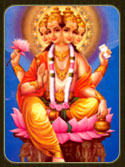
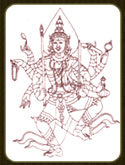
I can confidently say that the Brahma of the Thai people truly exists—it is our King. His Majesty is both the creator and the giver. The gifts He has bestowed upon the Thai people are visible and tangible, such as the Rama IX Development Medical Center and countless other projects initiated under His guidance. Any act of merit performed in conjunction with His Majesty, by any means, will bring complete karmic results in accordance with Buddhist principles, without a doubt. (Police Major General Suchart Phueaksakon, http://www.dabos.or.th/ro17.html)
Story 14: A Source of Support for the People Across the Nation
Whenever disasters occur—whether fires, floods, or powerful storms that destroy homes, or any other crisis in any region—every citizen in the country looks to His Majesty King Rama IX, their King, for guidance and support.
What is particularly remarkable is that He serves as a refuge for those who have sacrificed their bodies and hearts for the nation, whether soldiers, police officers, or any citizens injured or disabled while protecting the lives and property of the people. These individuals receive His Majesty’s boundless compassion without exception. His royal guidance emphasizes that when a person is physically disabled, they should not be disabled in spirit. They must be rehabilitated both physically and mentally, enabling them to support themselves without becoming a burden to society.
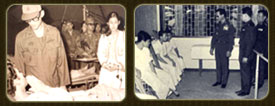
His Majesty King Rama IX exemplified the Ten Royal Virtues (Thosaphit Ratchatham). From a young age, He was trained by Her Royal Highness Princess Srinagarindra, the Princess Mother, to be “a good person, compassionate and merciful.” As a result, He became a monarch deeply loved and revered by citizens throughout the country. His Majesty reigned for fifty years.
He flourished through His compassion and boundless benevolence, and He also approached all royal duties with great mindfulness. Once He undertook a task, He followed it closely until it succeeded, thereby increasing His prestige and spiritual strength. If one compares the mind to radio waves, His Majesty’s mental energy was like a powerful wave capable of reaching the hearts of Thai people nationwide. Everyone focused intently on Him, especially during the times of His Majesty’s illness, feeling concern and deep care.
He was truly the Dharmic King of all Thai people. Born to be the Supreme Monarch under the nine-tiered Great White Umbrella, He became the Father of all Thais. He was a refuge for those suffering from various hardships and a source of inspiration and guidance for citizens at every level—from the underprivileged, farmers, and peasants to administrators, diplomats, students, civil servants, and the entire populace.
May He live long and prosper, as deemed appropriate by His Majesty’s grace.
(Khun Khwankaew Watcharothai: 45 Years of Radio, A.S., Dusit Palace, 1998: 871–872)
3. His Fame Spreads Far and Wide Across the World
Loyalty to His Majesty King Rama IX was not felt only by Thai people; foreigners also revered and admired His conduct. This is evident in excerpts from various articles and statements.
3.1 Several universities abroad conferred honorary Doctorates of Laws upon His Majesty, recognizing and acknowledging His legal expertise and exceptional intellect, including:
Saigon University, Republic of Vietnam
Gadjah Mada University, Republic of Indonesia
Peshawar University, Islamic Republic of Pakistan
University of the Philippines, Republic of the Philippines
Williams College, United States of America
University of Melbourne, Australia
Tufts University, United States of America
On the occasion of conferring the honorary Doctor of Laws degree to His Majesty on 2 July 1984, Tufts University President Jean Mayer delivered a tribute praising His Majesty, stating that He possessed a distinctive and outstanding role in innovation and responsiveness, combined with exceptional wisdom and boundless benevolence.
President Jean Mayer highlighted His Majesty King Rama IX’s statement emphasizing that when law and justice conflict, justice must come first, for the foremost purpose of overseeing human relations is to ensure justice.
On the occasion of His Majesty’s 60th birthday on 5 December 1987, His Excellency Chi O. Yang, Dean of the Diplomatic Corps in Bangkok, paid tribute and offered felicitations to His Majesty.
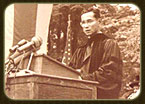
On behalf of the diplomatic and consular corps, a statement cited His Majesty’s First Royal Command, granted during the Royal Coronation on 5 May 1950: “I shall reign over the land with righteousness for the benefit and happiness of the Siamese people.” They paid tribute, noting that His Majesty has fulfilled all royal duties in accordance with this First Royal Command. As a result, He has received the highest respect, profound loyalty, and boundless love from the Thai people.
From the felicitations offered by the Dean of the Diplomatic Corps, it is clear that foreign diplomats in Thailand have shown keen interest in and understanding of His Majesty King Rama IX’s royal pledge to govern the land according to the Ten Royal Virtues. It can therefore be expected that the accounts of His Majesty’s life and all royal activities for the nation and its people would consistently appear as significant topics in reports from heads of diplomatic missions in Thailand to their respective governments.
His Majesty King Rama IX’s wisdom and renown, as well as the deep love, care, and unwavering loyalty of his people across the country, have become widely recognized and celebrated throughout the world. (Office of the University Council, 1996: 665)
3.2 The World Takes Note: Time Magazine Honors the King for Devotion to His People
There are significant implications in the fact that the global magazine Time published opinion pieces on various aspects of His Majesty King Bhumibol Adulyadej in its 6 December 1998 issue. Over time, His Majesty’s renown, diligence, and all royal undertakings for the people have received increasingly broad recognition. After regional Asian magazines frequently highlighted His Majesty’s distinction, the global magazine Time also came to acknowledge the unique and remarkable qualities of the Thai monarch, as reflected in the writings of Terry McCarthy cited above. Importantly, this recognition underscores that…
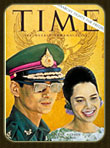
References to His Majesty King Rama IX extend beyond being the longest-reigning monarch still living; He is also celebrated as the singular king who has resisted the decline in popularity and tarnishing of royal families seen elsewhere in the world.
The following is a condensed and adapted excerpt from Time magazine, illustrating the devotion of His subjects. Few fully realize the extent of His Majesty’s tireless efforts and sacrifices over 53 years of reign:
“There is one secret of His Majesty King Bhumibol Adulyadej, the heart of contemporary Thailand: why the King of the Land of Smiles has never shown a smile during state ceremonies, despite apparent contradictions. His Majesty is the focal point of loyalty for all Thai people. The common term used to refer to Him is simply ‘the King,’ signifying the one who must be revered above all. In remote villages, many remain so respectful that they dare not look directly at Him, instead placing their handkerchiefs on the path He walks, to capture the imprint of His footsteps for veneration within their homes.”
Time magazine further highlighted the loyalty of the Thai people to His Majesty King Rama IX through interviews with Thais from all walks of life—from a 72-year-old flower vendor on Sukhumvit Road to political science scholars such as Chaianan Samutwanich, and Somrak Khamsing, Thailand’s first Olympic gold medalist boxer, who carried the King’s portrait above his head while walking around the ring. They described: “His Majesty possesses a pure, radiant heart, with extraordinary power and the marvel of goodness within His royal mind,” “Thailand would be worthless to live in without His presence,” and “Perhaps He is the only king in the world who embodies pure love without fear.”
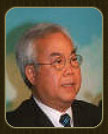
Prof. Dr. Chaianan Samutwanich

Somrak Khamsing
“After a reign of 53 years, the King of Thailand has stood out quietly as a monarch. His majesty’s wonder is not the kind seen in tabloid newspapers, nor is the evil directed against Him manifested through paparazzi on motorcycles.”
Time notes that Thai society is not entirely smooth or radiant; on the contrary, in the past there have been selfish, power-hungry individuals who sought to dominate, tearing apart the threads of national unity for their own satisfaction.
“Thailand has two sides, and while most foreigners tend to see only the smiles, every Thai is well aware that there is always another side to this country.”
Events such as the 1976 hanging at Thammasat University, the Black May incident, child prostitution in Bangkok brothels, the rape and murder of Vietnamese sailors at sea, drug trafficking, and massive corruption—all stem from the dark side of this complex society.
“And all of these things were known to the eyes and ears of His Majesty the King, as a monarch who must remain above them. He endured the pain because He wished to manifest His presence in opposition to these evils.”
Time notes, however, that sometimes He could not remain indifferent:
“And that is when moments of utmost suffering arose… and He exercised royal authority to quell disorder and violence that He did not favor.”
“His Majesty the King positioned Himself above Thailand’s chaotic politics for the most part, preserving extraordinary royal powers to be used in times of utmost necessity…”
“…When traveling to various villages, He engaged with the local people without concern for whether the words they used were proper royal language. On the contrary, He encouraged them to speak in ordinary, everyday terms…”
General Saiyut Koedphol, former Commander-in-Chief of the Royal Thai Army who frequently accompanied His Majesty, recounted this to Time.
The first royal-sponsored Highland Development Project among more than 2,000 initiatives was the village cooperative project in Phetchaburi Province in 1964.
Police General Wasit Detchkunjorn, who served as Head of the Royal Guards from 1970 to 1981, explained in Time that the King traveled everywhere with the well-being of the people as His priority, never considering His own safety. He did not regard Himself merely as a monarch, but, in accordance with Buddhist principles, as possessing no fixed self—an embodiment of emptiness.
In 1979, two explosions occurred just 150 meters from the location where His Majesty King Bhumibol Adulyadej was residing in Yala Province. This incident has been recounted to illustrate His Majesty’s unwavering resolve and steadfast dedication to creating happiness and welfare for His people, regardless of any personal risk.
Time magazine describes that His Majesty would awaken around noon, have lunch in the study, and dine with Her Majesty the Queen late in the evening. Afterwards, He would either continue working or attending to correspondence late into the night, often extending until the early hours of the morning.
“Throughout His life, the only true escape from royal duties was the jazz music He loved. Long before His health declined, recordings of His royal band were broadcast on the radio every weekend. Any world-renowned jazz musician visiting Thailand was granted royal permission to perform alongside Him.”
“Some say music was His ultimate medicine; His saxophone playing was exceptionally sweet and moving.”
Manrat Srikranon, a famous Thai pianist who had performed with the King since 1956, told Time that even when the King had to temporarily reside at Klai Kangwon Palace in Hua Hin during the hot season, His jazz sessions continued uninterrupted.
“We played music with His Majesty all night until dawn in Hua Hin, and then accompanied Him on a walk along the beach.”
Today, Manrat still travels to the palace to perform every Friday, though His Majesty played less frequently in later years and needed to take breaks during sessions.
At the conclusion of Time’s article, it was noted that His Majesty King Bhumibol Adulyadej still had royal duties to perform. The commentary expressed that, after having served the nation for more than half a century, He should at last be free from all worries, as His accumulated royal benevolence had already greatly benefited the kingdom. The article further conveyed a blessing on the occasion of His 72nd birthday, expressing hope that from now on, nothing would stand between the King and the joyful, serene smile seen on the faces of Buddha images.
(Matichon, 2 December 1999, p. 20)
3.3 The Honolulu newspaper praised His Majesty, describing Him as “poised, serious, soft-spoken … a true picture of royalty for Americans … His friendly charm endeared him to everyone … destined to be a long-remembered 20th-century monarch in these parts of the world.”
(Princess Vibhavadi Rangsit, 1960: 13)
3.4 Pitya brought drinking water to his grandmother and said, “I never get bored hearing about the King. Please tell me more, Grandma.”
The grandmother continued, “It is not only us Thai people who are impressed by His Majesty’s conduct; foreigners who witness it also praise and admire Him. For example, when He made an official visit to the Union of Burma in 1960…”
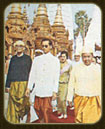
On the day He visited the Shwedagon Pagoda, a sacred religious site, His Majesty removed His royal shoes and walked barefoot, just like the Burmese Buddhist devotees. In Burma, it is customary that anyone who enters a king’s presence or a temple must remove their shoes. By observing this tradition, His Majesty received nothing but praise.
(Rasa Wongyangyu, “Phra Mahakarunathikhun Ying Lon,” National Children’s Day 1988, Romklao, Lat Phrao, 1988: 29)
3.5 The wife of an assistant UN secretary, who sat at the same table as Khun Ying Songsuda Yodmanee, remarked: “… More importantly, the Thai royal family is unusual compared to others because they work so diligently in ways I had never imagined. The King, the Queen, and all the royal princes and princesses work together, taking interest in various affairs, which is truly remarkable. I have never seen any country in the world like this…” (Suvicha, 1996: 203)
3.6 A Portuguese diplomat recounted: “Yesterday we had an audience with the King. He appeared to be in excellent health. Regarding His words to the Thai people, it is no wonder why Thailand has survived every crisis—it is because you have such a wise King. You are indeed fortunate.”
A Swedish female diplomat joining the conversation agreed completely with the Portuguese diplomat. A tall English diplomat added, “Even we foreigners residing in Thailand feel content, so it is no surprise that you all revere His Majesty in this way…”
Then the Russian diplomat remarked, “I realized while being in Thailand just how significant the monarchy is.” One wonders if they regret that their own countries once had kings but abolished them; otherwise, the Soviet Union might not have fragmented into many nations in this way. (Suvicha, 1996: 157)
3.7 Suvicha (1996: 71–87) published in Tawan Song Saeng, translated from The Plain Truth July/August 1984, “More than a Monarch” by John Halford, stated:
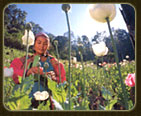
“The hill tribes traditionally cultivate opium as their main source of income, especially in recent years, because they lack sufficient knowledge that such practices will harm the nation as a whole.”
Convincing these hill tribes to stop cultivating opium and instead grow rice, fruits, vegetables, and other cash crops was indeed a significant challenge. One could have resorted to coercion, but that was not the method employed by His Majesty the King. He understood that to truly help His subjects, he had to earn their trust, and such trust cannot be gained through force or intimidation. For this reason, He personally visited the new development sites himself…
“His Majesty the King walked swiftly, leading the team of officials. Although it was a private visit, everyone paid him the highest respect. In return, He honored every inch of His land. He gently reminded photographers, who were eager to capture the best shots, not to trample the shrubs along the way. His Majesty said that we must take good care of nature, and in return, nature will provide its benefits to us.”
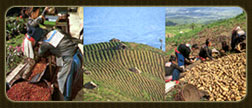
“After walking along this narrow path for several minutes, we arrived at the designated site for the dam. His Majesty the King inquired in detail about various issues while carefully examining the site, using a large map for reference. He was rarely seen without a map in hand when visiting rural areas…”
“His Majesty demonstrated that the nation can prosper and the people’s well-being can improve if the head of state possesses compassion, patience, and generosity, and understands how to give and share…”
“… After consulting with various officials about the dam project, His Majesty the King listened to the opinions of the local leaders. He inquired about their views on the project, patiently received their responses, and carefully noted the problems arising from the villagers’ uncertainties or hesitations. These local leaders were ordinary hill-tribe people, but through His Majesty’s approachable demeanor, they felt at ease and spoke freely.
This was not a matter of public relations; His Majesty genuinely wished to understand their feelings. He spoke to them gently and sincerely, like an elder brother rather than a powerful ruler…”
“After examining two sites, His Majesty advised the local officials to proceed gradually. Initially, small dams and reservoirs should be built to show the hill people the benefits of irrigation and alternative crops. Once trust was established, they would request larger dams and reservoirs on their own. This approach required time and patience, but in the long run, it would win the hill people’s hearts and allow them to live a more secure life.
Those working on the projects under His Majesty’s initiative had complete confidence in His judgments on these matters.
After further consultation with His Majesty, the hill people agreed to cease opium cultivation and switch to alternative crops using irrigation from the newly constructed dams…”
“He helped everyone.”
“… This King did not walk among His people in fear whatsoever.
“… His Majesty also personally greeted two elderly sisters, aged 108 and 101, who had waited their entire lives to see Him. He spoke to them kindly and respectfully, inquiring about their health. The sisters reported that they were fatigued, and one had a cough…”
“His Majesty King Rama IX immediately instructed the royal physicians to examine the two elderly sisters. It was found that one had a minor chest problem. The royal physicians prescribed medicine and vitamins, which His Majesty graciously provided free of charge. Soldiers accompanying the royal entourage took the prescriptions to the medicine table, where volunteer doctors and royal aides, serving as nurses during every royal visit, dispensed the medicines.
His Majesty then spent more time conversing with the two elderly sisters before continuing on His way.”
“… With His unhurried demeanor, He listened attentively to their true needs and provided assistance that could serve as a lasting support. The villagers felt immense happiness and deeply appreciated the King’s genuine care for them. Even simple offerings brought by the villagers—small fruits, vegetables, or even a single flower—were received by His Majesty with wholehearted acceptance.”
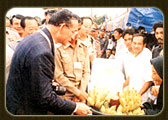
“Each royal visit to the people has a profound psychological impact on everyone; no one is ever neglected or barred from the opportunity to pay homage to His Majesty.
It was late in the afternoon, and the royal procession was running far behind schedule. A staff member of the Bureau of the Royal Household remarked, ‘This is always the case, because His Majesty the King and Her Majesty the Queen do not wish anyone to feel overlooked.’”
“For this reason, the Thai monarchy endures firmly even in today’s world, which is full of confusion and turmoil. The King rules with great benevolence and receives cooperation through his compassionate nature. He truly loves his people, and the people, in turn, offer their unwavering loyalty to their monarch.”
3.8 Prince Vibhavadi Rangsit wrote in the book “Royal Visit to the United States, B.E. 2503” (1960: 147) that officials from the U.S. Department of State sent her a letter stating:
“… I want very much to express my deep gratification for having had the good fortune to travel with Their Majesties, yourself and all the other wonderful people in your party. It was easily one of the happiest and most rewarding experiences of my life, one I dare say will not be duplicated. Beyond establishing fond friendships which I hope someday to renew, I was able, you will recall, to enjoy some melodious close harmony, thanks to Her Majesty, yourself and – not least of all – Phya Srivisarn. We were fortunate indeed to have achieved such camaraderie. For this we have Their Majesties particularly to thank. The warmth and relaxed informality which they demonstrated was simply contagious.
Officially, the visit was by all odds one of the most successful ever made by heads of state to our country. I can attribute this comment to numerous State Department officials, who have many means for comparison, as well as to hundreds of private citizens with whom I personally have come in contact. …”