

His Majesty King Bhumibol Adulyadej The Great
Chapter 19: Royal Ceremonies of Celebration and Emblems
His Majesty King Bhumibol Adulyadej the Great reigned for a long and prosperous period. The royal ceremonies held in celebration of His Majesty on significant occasions, which are worthy of being recorded, are as follows.
- The Coronation Ceremony, 1950
- The Silver Jubilee Ceremony (25th Anniversary of the Accession to the Throne), 1971
- The Bicentennial Celebration of the Establishment of Rattanakosin, 1982
- The Auspicious Ceremony Celebrating His Majesty’s 5th Cycle Birthday Anniversary (60th Birthday), 1987
- The Ratchamangalaphisek Ceremony, 1988
- The Golden Jubilee Celebration (50th Anniversary of the Accession to the Throne), 1996
The Auspicious Ceremony Celebrating His Majesty’s 6th Cycle Birthday Anniversary (72nd Birthday), 1999
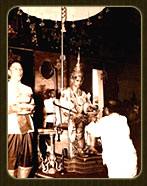
1. The Coronation Ceremony
The significance of the ceremony lies in His Majesty’s receiving of the consecrated water; however, in the present day, the act of placing the Great Crown upon His Majesty’s head is regarded as the most important moment. The Coronation Ceremony was held on May 5, 1950. It is the most significant royal ceremony, marking the formal assumption of the kingship in accordance with ancient royal traditions, as follows:
1.1 Regarding the consecrated water, the preparatory rites included:
1) The consecration of the holy water, performed at 18 important Buddhist sanctuaries across various regions of the Kingdom of Thailand.
- Saraburi Province – at Phra Phutthabat Temple
- Phitsanulok Province – at Wat Phra Si Rattana Mahathat
- Sukhothai Province – at Wat Mahathat, Sawankhalok District
- Nakhon Pathom Province – at Phra Pathom Chedi
- Nakhon Si Thammarat Province – at Wat Mahathat
- Lamphun Province – at Phra That Hariphunchai
- Nakhon Phanom Province – at Phra That Phanom
- Nan Province – at Phra That Chae Haeng
- Roi Et Province – at Bung Phra Lan Chai
10. Phetchaburi Province – at Wat Mahathat
11. Chai Nat Province – at Wat Phra Borommathat
12. Chachoengsao Province – at Wat SothonNakhon Ratchasima Province – at Wat Phra Narai Maharaj
13. Ubon Ratchathani Province – at Wat Si Thong
14. Chanthaburi Province – at Wat Phlap
15. Surat Thani Province – at Wat Phra Mahathat, Chaiya District
16. Pattani Province – at Wat Taninorasamosorn
17. Phuket Province – at Wat Phra Thong
2) The provincial governors appointed royal officials to perform a ceremonial rite of drawing auspicious water from sacred sources within their respective provinces. The water was placed in ceremonial vessels and brought into the consecration ceremony, accompanied by offerings and acts of worship.
3) On March 18, 1950, at 4:00 p.m., the provincial governors proceeded to the ceremonial precincts, lit incense and candles as offerings, observed the precepts, and the presiding monk invoked the deities.
4) Between 3:06 p.m. and 5:14 p.m., the presiding monk lit the victory candle, while auspicious gongs and music were played. Thirty monks then chanted the sacred scriptures, after which they took turns continuing the recitation throughout the ceremony.
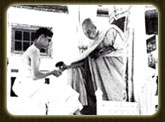
5) On March 19, 1950, at 10:00 a.m., the provincial governors went to the ceremonial hall, lit incense and candles, and observed the precepts. The presiding monk extinguished the victory candle and poured the holy water into the consecrated water. Officials offered meals to thirty monks, and after they finished, the governors presented alms, and the monks gave their blessings.
6) At 12:00 noon, a Bai Sri ceremony and candle procession were held to honor the consecrated water. Governors arranged for officials to bring the water to the Ministry of Interior for delivery to the Royal Household Bureau before April 20, 1950. Full ceremonial uniforms were worn.
1.2 On May 5, 1950, at 9:30 a.m., His Majesty King Rama IX proceeded to the Mandap, seated upon the Uthumporn Royal Throne for the coronation anointment, and the Supreme Patriarch presented the holy water. Then He donned the ceremonial attire and proceeded to the Atthadis Throne beneath the seven-tiered white umbrella. Members of the House of Representatives presented the consecrated water, and the Brahmin officiants offered the divine water in all eight directions. Chaophraya Sritamathibet, President of the Senate, offered blessings in Pali, and the Speaker of the House of Representatives offered blessings in Thai. The royal preceptor Phra Kru Wamathep Muni presented the great nine-tiered white umbrella. Then He proceeded to the Phattharabit Throne, where the Brahmin chanted the opening ritual of the Siwalai Kliat, and presented the golden tablet, royal regalia, royal utensils, and the weapons of the eightfold armament in Pali. After that, Phra Kru Wamathep Muni offered royal blessings in Pali. His Majesty the King then issued a royal proclamation granting protection to the Thai people as follows:
“We shall govern the land with righteousness for the benefit and happiness of the Siamese people.”
Then He poured the anointment water and took the royal oath to perform the royal duties of ruling the Kingdom of Thailand according to the tenfold virtues of kingship. Afterwards, He removed the Great Crown, the Rattanavara Ring, and the Vichien Chinda Ring. Chaophraya Siriwong Rattanakos (Chalerm Kachachiva), Secretary of the Royal Household Bureau, presented gold and silver Pikuls, which His Majesty scattered upon the Brahmins. Then He proceeded from the Phitsan Thaksin Throne to the Amarin Winitchai Throne and offered alms to eighty monks. The monks bestowed their blessings, the Supreme Patriarch conferred the Adirek, and the Supreme Patriarch of Phutthakosa offered parting blessings, then extinguished the victory candle.
In the afternoon, His Majesty attended the Grand Audience at the Amarin Winitchai Throne, where the Cabinet, foreign diplomats, members of the Senate and House of Representatives, and government officials paid their respects and offered royal blessings.
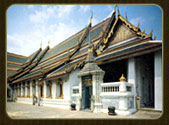
Amarin Winitchai Throne Hall
In the following years, the government designated May 5 as “Coronation Day.” Throughout the past, the Thai people have remembered with gratitude how steadfastly His Majesty preserved the royal command. In ordinary times, He would visit the people to help improve their livelihoods. When the people faced severe disasters, such as fires, floods, or major storms, He would provide food and essential supplies, which the police, officials, and royal staff would deliver to the affected areas without delay.
His Majesty was mindful of the hardships of the people, even while receiving treatment at Siriraj Hospital in March and September 1995, whenever His health allowed some relief.
He worked to solve the severe traffic congestion that troubled the people of Bangkok and nearby cities. He planned the construction of ring roads, elevated highways, parallel flyover bridges, additional bridges across the Chao Phraya River, and the expansion of roads to allow traffic to enter and exit Bangkok from all four directions, called the “Chaturthis.” This shows that He cared for the people’s hardships more than His own comfort.
2. The Silver Jubilee Ceremony
On June 9, 1971, the 25th anniversary of His Majesty King Rama IX’s accession to the throne following the passing of His Royal Highness the King’s elder brother on June 9, 1946, was observed. It was evident to both the Thai people and foreigners that, although it might seem under the current system of governance that His Majesty’s royal duties would be lighter, in fact, the opposite was true. The demands of royal duties had increased due to global and domestic circumstances unlike those of the past. However, through His boundless compassion, perseverance, and wisdom, His Majesty successfully carried out these duties, benefiting the nation and the Thai people greatly throughout the 25 years of His reign, proving that His long tenure on the throne was far from in vain.
Therefore, the people and the government jointly requested His Majesty’s permission to hold the Silver Jubilee Ceremony to honor the reign, commemorate the royal benevolence of King Rama IX, and bring prosperity to the nation, as had been done during the reign of King Rama V. The ceremony was scheduled for three days, from June 8 to 10, 1971, marking the first grand celebration of the current reign, and was divided into four events as follows:
a. The royal ceremonies directly related to King Rama IX included His Majesty receiving congratulations and blessings from members of the royal family, high-ranking officials, military and civilian officers, and members of the parliament. For foreigners, this included ambassadors and diplomatic representatives from various countries.
b. The celebratory events included representatives of all religions holding ceremonies to offer blessings, nationwide lantern decorations, officials and people in every province paying homage, and private foundations and associations presenting monetary gifts to His Majesty for royal merit-making. The Thai armed forces held military parades, and the government organized club and association events to offer blessings.
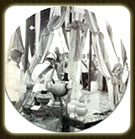
His Majesty King Chulalongkorn performed the auspicious foundation-laying ceremony of the Ananta Samakhom Throne Hall on the morning of Wednesday, November 11, 1908, during the Ratchamangalaphisek Ceremony (celebrating the 41st year of his reign).
c. The honorary activities included producing commemorative books, holding contests for composing works in honor of His Majesty, granting royal pardons to prisoners, engaging in public welfare and social services, and establishing foundations and various charitable organizations.
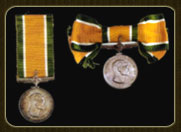
d. The Silver Jubilee commemorative events included the creation of sacred and permanent objects, such as Buddha images, Silver Jubilee medals, and commemorative coins. Memorial sites were also established, including roads such as Ratchadaphisek Road, schools in various provinces, ponds, temples, and bridges.
Government agencies, organizations, associations, companies, and private individuals cooperated to organize various activities in celebration of the ceremony, as detailed below:
June 8, 1971
1. The military, police, and volunteer units conducted a parade. The Minister of Defense presented flowers, incense, and candles, and paid homage while offering blessings.
2. The Cabinet presented the Dusit Mala medal, the Silpawitthaya badge, and the Silver Jubilee medal.
3. His Majesty laid the foundation stone for the construction of the ring road.
June 9, 1971
1. His Majesty proceeded from the Amarin Winitchai Throne Hall to receive congratulations and blessings from members of the royal family, the Cabinet, officials, and members of parliament, responding with a royal speech.
2. His Majesty performed royal merit-making for the royal ashes of His Royal Highness the King’s father and the royal ashes of King Ananda Mahidol at Wat Suthat Thepwararam.
June 10, 1971
1. The Prime Minister and Lady, together with the Cabinet and their spouses, paid homage and presented blessings and commemorative gifts.
2. Ambassadors and diplomatic representatives paid homage, offered blessings, and presented commemorative gifts.
3. The government arranged a royal meal at the Government House.
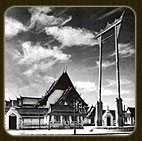
Wat Suthat Thepwararam
Apart from the royal ceremonies, there were numerous other activities too many to describe in full here. The major activities can be summarized as follows:
- Royal ranks were granted: Major General, Rear Admiral, and Air Vice Marshal to Her Majesty the Queen and the Queen Mother (Queen Srinagarindra); ranks of Captain, Lieutenant Commander, and Flight Lieutenant to His Royal Highness Crown Prince Vajiralongkorn; and a special promotion to Colonel for Prince Phanuphanyo, elevated to Major General.
- Silver Jubilee medals and commemorative coins in gold and silver were produced and distributed.
- Essay competitions were held in honor of the Silver Jubilee Ceremony.
- Special commemorative postage stamps were issued.
- In remembrance of the ceremony, three teacher colleges, one physical education college, one performing arts school, three social welfare schools, eight provincial secondary schools and one in Bangkok Thonburi, totaling nine, and four kindergartens were established.
- Three days of public entertainments (June 8–10, 1971) included building ceremonial arches, decorating government offices, and encouraging the public to decorate their homes with flags, banners, and lanterns. Facilities were arranged to allow participation in Bangkok and Thonburi.
- Buddhist temples and temples of other religions were requested to perform auspicious ceremonies, beat drums, and ring bells at the auspicious hour on June 9, 1971.
- Restoration and renovation of temples were carried out at the eight directional sacred sites and one in Bangkok Thonburi, totaling nine locations.
- The Royal Secretariat published collections of royal speeches and guidance given on various occasions, and other institutions published books and documents as commemorative items for the Silver Jubilee Ceremony.
- The Ratchadaphisek Foundation was established, including the “Ratchadaphisek Research Fund R.9.”
- Exhibitions of His Majesty’s hand-painted and sculpted works were held at the Thongphra Hall, Thapra Palace.
- The Thailand Science Institute planned to create 10,000 commemorative Buddha images.
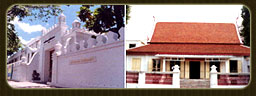
Thapra Palace
3. The Bicentennial Celebration of the Establishment of Rattanakosin
To honor His Majesty the Foremost King of the Chakri Dynasty, who established Rattanakosin 200 years ago, and who nurtured the nation to maintain its independence and prosperity, as well as to demonstrate the stability and strength of the Kingdom of Thailand and promote unity and harmony among the Thai people, His Majesty the King graciously approved the schedule for performing royal merit-making, the Bicentennial Celebration of Rattanakosin, and the celebration at Wat Phra Si Rattana Satsadaram. The ceremonies were arranged in accordance with royal traditions from previous reigns, suitably adapted to the present era.
- Sunday, April 4, 1982
4:30 p.m. Royal merit-making ceremony (Takhsin Anuphan) at the Amarin Winitchai Throne Hall - Monday, April 5, 1982
8:00 a.m. Royal ceremony paying homage to the Foremost Kings of the Chakri Dynasty at Sanam Luang
5:00 p.m. Ceremony of raising the roof pinnacle of the ordination hall in celebration of Wat Phra Si Rattana Satsadaram - Tuesday, April 6, 1982
10:30 a.m. Offering meals to monks and candle procession celebrating Wat Phra Si Rattana Satsadaram at the ordination hall
4:30 p.m. Chakri Memorial Day, paying homage to the statue of King Buddha Yodfa Chulaloke the Great at the Memorial Monument - Wednesday, April 7, 1982
10:30 a.m. Royal ceremony paying homage to Phra Siam Devadhiraj at the Dusit Maha Prasat Throne Hall - Friday, April 9, 1982
7:00 p.m. Grand celebration at the United Club - Wednesday, April 21, 1982
10:00 a.m. Royal ceremony celebrating the city pillar at the City Pillar Shrine
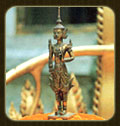
Phra Siam Devadhiraj
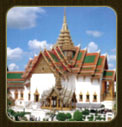
Dusit Maha Prasat Throne Hall
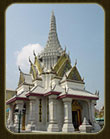
City Pillar Shrine
4. The Auspicious Ceremony Celebrating His Majesty’s 5th Cycle Birthday Anniversary (60th Birthday)
On the auspicious occasion of His Majesty King Rama IX’s 60th birthday on December 5, 1987, His Majesty graciously proceeded to the grand audience at Sanam Luang to receive felicitations. The Prime Minister, the President of the Parliament, and the President of the Supreme Court paid homage and presented their congratulations, along with sacred water consecrated from important sources in every province throughout the Kingdom, as detailed below.
On this significant occasion, the government assigned the Fine Arts Department to construct the Chai Mongkhon Phisek Throne Hall at Sanam Luang. The design was created by Mr. Prawes Limpraji, then Director of the Handicraft Division (now the Institute of Arts and Crafts). The hall drew inspiration from the Dusit Maha Prasat Throne Hall but was built as a four-sided wooden hall with a mandop-style roof. The interior of the throne hall was painted white and decorated with gold filigree patterns, while the exterior featured layered wood designs. The roof finials and gable decorations were gilded. The hall was used for paying homage and inviting His Majesty King Rama IX to receive felicitations, celebrate the occasion, and receive sacred water for the coronation anointment.
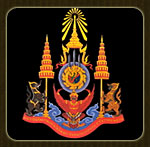
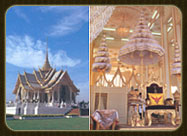
Chai Mongkhon Phisek Throne Hall
For the water presented as sacred water for the coronation anointment on the day of the grand audience, the Ministry of Interior performed rituals to collect water from sacred sources or from sites historically used in previous coronation ceremonies, as well as from important rivers in each province. The water was consecrated as holy water on the same date across all provinces. Water collection rituals took place on Wednesday, November 4, 1987, and the consecration ceremonies were held at important provincial temples on November 11. The water was then sent to the Ministry of Interior to be used in the state ritual of consecrating the sacred water at the Phra Viharn Luang, Wat Suthat Thepwararam, on December 2, 1987.
For the royal and significant ceremonies held in celebration of the 5th cycle birthday, the casting of the Buddha images for His Majesty’s personal age and for the auspicious 5th cycle birthday took place on August 10, 1987.
His Majesty King Rama IX graciously presided over the ceremony at the front of the ordination hall, Wat Phra Si Rattana Satsadaram, on Monday, August 10, 1987, casting the two Buddha images according to the auspicious time from 5:49 p.m. to 6:09 p.m.
The personal-age Buddha image for this auspicious occasion was in the Abhaya Mudra, corresponding to the day of His Majesty’s birth, cast in gilded silver and 9 inches high. The 5th cycle birthday Buddha image was modeled after Phra Buddha Navaratchabophit in the meditation posture, gilded, with an 18-inch base. Mr. Paitoon Muangsombun sculpted the model images for presentation, which His Majesty inspected and approved. Mr. Kaew Nongbua, a craftsman from the Dhamma Rangsri foundry in Ban Chang Lor, was responsible for casting the Buddha images.
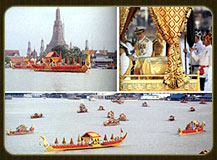
Royal Ceremony of the King’s Kathin Offering by the Grand Royal Barge Procession (October 16, 1987)
This Kathin offering was conducted as a grand royal barge procession, following the style of the 200th Anniversary Celebration of Rattanakosin. The procession consisted of 51 barges, including the Suphannahong Royal Barge carrying the royal throne as the principal barge, the Ananachak Phuchong barge carrying the secondary royal throne, and the Anantanagaraj Royal Barge with a pavilion for the Kathin robes. A total of 2,069 personnel were assigned to the barges. The procession proceeded from Tha Wasukri along the Chao Phraya River to Wat Arun Ratchawararam and returned to Tha Ratchaworadit.
Royal Ceremony of Raising the Nine-Tiered White Umbrella of the Chai Mongkhon Phisek Throne Hall (November 4, 1987)
This ceremony involved raising the pinnacle of the throne hall, a traditional tiered umbrella, to allow His Majesty or the presiding officer to inspect the construction. On this occasion, His Royal Highness Crown Prince Vajiralongkorn presided on behalf of the King.
Furthermore, on the occasion of Coronation Day, May 5, 1987, at the United Club, Government House, General Prem Tinsulanonda, then Prime Minister, announced the unity of the government and the Thai people and respectfully requested royal permission to bestow the title “Maharaj” upon His Majesty King Rama IX, in profound recognition of His boundless benevolence.
5. The Ratchamangkhala Ceremony
The Ratchamangkhala Ceremony is a royal ceremony held on the occasion when a reigning monarch has governed the country longer than any previous monarch. There is no fixed number of years required. His Majesty King Chulalongkorn (Rama V) was the first Chakri Dynasty king to perform this ceremony in R.S. 126 (1907), upon entering the 40th year of his reign.
When comparing the reigns of the monarchs of Ayutthaya, it is evident that King Ramathibodi II ruled the longest during the Ayutthaya period, with a reign nearly equal in length to that of King Chulalongkorn (Rama V), hence the official expression “equal to King Ramathibodi II.” For this reason, His Majesty King Chulalongkorn intended to travel to Phra Nakhon Si Ayutthaya to perform meritorious deeds in honor of King Ramathibodi II.
Furthermore, he paid respects to all former kings of Ayutthaya and Thonburi. From November 30 to December 2, R.S. 126, he stayed in Ayutthaya, performing the traditional royal ceremonies and merit-making according to ancient royal custom. Members of the royal family, officials, and the public recognized the auspicious occasion and collectively celebrated by paying respects, offering blessings, and holding traditional festivities, including ancient performances, local games, and sports such as Rabeng, Mong Krum, lantern dances, lion and dragon dances, buffalo fighting, and mystical competitions. In the evenings, fireworks displays of various types and colors were held, totaling 4,430 sets. This was an extraordinary event, as such a ceremony had occurred only twice in 556 years.
The Ratchamangkhala Ceremony in R.S. 126 was a major event, with preparations beginning one year in advance. The presiding officer was His Royal Highness Crown Prince Maha Vajiravudh, Siamese Crown Prince (later King Rama VI), assisted by a committee of royal family members and senior officials. The committee decided to raise funds for the King to use at his discretion and allowed all loyal citizens to contribute according to their means, starting from one satang, with each donor’s name recorded. Contributions from across the country exceeded expectations. between March, R.S. 125, and early November, R.S. 126, King Chulalongkorn traveled to Europe. Upon arriving in France, he visited the Palace of Versailles and admired the equestrian statue of King Louis XIV.
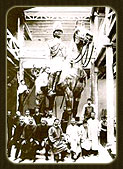
The equestrian statue was photographed in 1997 at the studio of Georges Saulo in Paris. In the photo, both the sculptor and his assistants can be seen. His Majesty King Chulalongkorn visited this studio to pose as a model for Saulo during his second European tour in 1906.
The statue was displayed in the open courtyard in front of the palace, and the King remarked that if the committee were to commission a similar equestrian statue for the Ratchamangkhala Ceremony, it should follow his wishes. His Royal Highness Crown Prince Maha Vajiravudh (later King Rama VI) brought this suggestion to the committee meeting, and it was agreed that if the equestrian statue were to be made, it would be placed in the courtyard in front of the Anantasamakhom Throne Hall.
It was to be constructed in a European-style building, which would be most beautiful and fitting for the location. The cost of casting the equestrian statue at that time was approximately 200,000 baht. The committee had already collected over 1,200,000 baht, six times more than needed. The chairperson of the event therefore approved the sculptor to begin work immediately. The sculptor had the opportunity to pay homage to King Chulalongkorn while he was still in France and to model the statue based on the King himself. As a result, the equestrian statue closely resembled the King, was crafted without haste, and was completed on schedule.
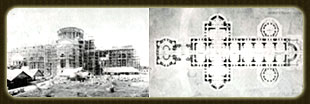
Ananta Samakhom Throne Hall
King Chulalongkorn, aware of the loyalty and dedication of all those organizing the celebration, graciously commanded that various groups be received to pay homage at the locations he visited to perform the royal ceremonies. At every place where groups were received, He graciously provided refreshments and meals appropriate to the time and setting. A historically notable event during this period occurred on 11 November R.S.127 at 7:29 a.m., when King Chulalongkorn proceeded to lay the foundation stone for the construction of the Ananta Samakhom Throne Hall.
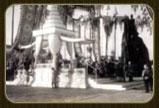
On Wednesday, 11 November B.E. 2451, during the Royal Ratchamangkhalaphisek Ceremony, King Chulalongkorn, standing beneath the nine-tiered royal umbrella, pulled the cord to unveil the equestrian statue.
Later, at 19:30, He returned to the site to unveil the equestrian statue once more. This was the first royal monument in the country erected while the monarch was still alive. The title “Piyamaharaj” appeared for the first time on the inscription at the base of this monument. After deducting the construction costs of the equestrian statue, 982,672.47 baht remained unused. King Vajiravudh (Rama VI) later used this sum to expand the Civil Service School of King Chulalongkorn, adding many new subjects until it developed into a university. The campus area was also enlarged, and it was named “Chulalongkorn University” in B.E. 2459. This brief account summarizes the events of the second Ratchamangkhalaphisek Ceremony, which took place 80 years ago.
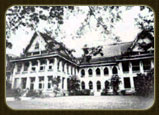
The administration building, the first structure of the university, was designed by Mr. Edward Healey and constructed in B.E. 2456 (1913). Today, it serves as the Faculty of Arts 1 building.
The 3rd Ratchamangkhala Phisek Ceremony took place on 2 July B.E. 2531 (1988) to mark the occasion that His Majesty King Bhumibol Adulyadej (Rama IX) had reigned longer than King Chulalongkorn (Rama V), totaling 43 years. From this date onward, it became a highly auspicious event, recognizing that King Bhumibol had the longest reign of any Thai monarch in recorded history. The details of the Ratchamangkhala Phisek ceremony are as follows.
On 2 July B.E. 2531 (1988), the Royal Ceremony of the Takhsinanuprasan Merit-Making was performed, in which His Majesty offered respects to King Chulalongkorn (Rama V) at the Phra Thinang Amarintharawinitchai. He then proceeded to the Royal Memorial Halls, paying homage and presenting royal offerings to the Buddha images representing the reigns of all past monarchs.
On 3 July B.E. 2531 (1988), the Royal Ceremony of the Celebration of the Auspicious Accession, the Ratchamangkhala Phisek, was held at Phra Thinang Dusit Mahaprasat. His Majesty graciously ordered the enshrinement of the Chaiwat Buddha images of all reigns on the Pearl Throne, along with the royal regalia, the royal weapons of each reign, and the gold-gilded, enameled book containing the royal birth details.
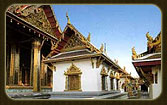
On the left is the rear (west side) of the ubosot, and in the center is the Hall of Royal Chronicles (Ho Phra Ratcha Kromanusorn).
The Royal Seal of Sovereignty (Phra Suphannabat) was placed on the royal throne beneath the Great White Nine-Tiered Umbrella, and His Majesty graciously commanded that Phra Siam Thevathiraj be enshrined at the Mukhdech Hall. The ceremonial offerings were arranged, and the chief Brahmin recited the proclamation of the ritual. In addition, His Majesty graciously ordered the Brahmin assembly to perform the circumambulation with candles to celebrate the Auspicious Coronation of the King’s Long Reign.
On 5 July 1988, His Majesty visited Phra Nakhon Si Ayutthaya Province to perform the ritual offerings and merit-making for all past monarchs, following the tradition established during the reign of King Chulalongkorn. This ceremonial merit-making is called the Ratchamongkol Ceremony. The ritual featured a principal Buddha image representing the reign of King Uthong, and His Majesty graciously commanded Phra Vassa Bunnak, then Deputy Secretary-General of the Royal Household, to read the proclamation praising the royal decree of the ceremonial offerings.
6. The Golden Jubilee Ceremony
On June 9, 1996, the Thai people celebrated a most auspicious occasion, marking the Golden Jubilee of His Majesty King Bhumibol Adulyadej, who had reigned for 50 years. This event was the first of its kind in Thai history, as in over 700 years no other monarch had ever reached a 50-year reign.
The government organized a grand celebration to honor this most auspicious occasion and respectfully submitted a request for His Majesty’s royal approval regarding the name of the grand event. His Majesty King Bhumibol Adulyadej graciously bestowed the name for the celebration and the royal ceremony as: “The Golden Jubilee Celebration of the 50th Year of His Majesty’s Reign, the Kanchanaphisek Royal Ceremony.”
In English, the event is collectively referred to as “The Fiftieth Anniversary (Golden Jubilee) Celebrations of His Majesty’s Accession to the Throne.”
The use of the term Golden Jubilee follows the precedent set by His Majesty King Chulalongkorn (Rama V), who celebrated the 25th anniversary of his accession to the throne in Chula Sakarat 1255 (corresponding to 1896). His Majesty observed that Western monarchs celebrate 25 and 50 years of reign, known as Silver Jubilee and Golden Jubilee, which are auspicious ceremonies. He deemed it appropriate to adopt the principle into Thai royal ceremonies. Moreover, he elegantly translated the term Silver Jubilee. The Royal Ceremony of Ratchadamnoen (Ratchada) originally meant “watering” in the old sense, but later came to signify the coronation ceremony of a monarch. The organization of the 50th anniversary celebrations was unprecedented in Thai history. The committee therefore decided to model the celebration based on the framework of the Ratchadamnoen ceremony, dividing the event into four parts: 1. the royal ceremony, 2. celebratory activities in honor of the King, 3. the construction of commemorative objects, and 4. the establishment of permanent structures.
Regarding the period of the celebrations, His Majesty the King graciously commanded that the 50th anniversary of accession begin on 1 January 1995, marking the start of the 50th year of the current reign (according to the Royal calendar), and end on 9 June 1996, or, if necessary, extend until the end of 1996.
The Golden Jubilee Royal Ceremony was scheduled to take place between 8–12 June 1996. Following this, other associated ceremonies were held in brief as follows:
June 8, 1996 – The Royal Ceremony to celebrate the Supreme Title of King Ananda Mahidol and the merit-making of the Thaksin offerings at the Amarinthawinitchai Throne Hall.
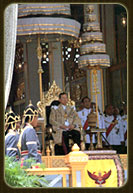
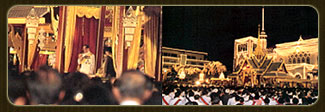
June 9, 1996 – The royal ceremony to pay homage to the past monarchs and the Grand Audience to present blessings and congratulations took place at the ceremonial pavilion in Sanam Luang.
In the evening, a candle-lighting ceremony to offer blessings was held at Sanam Luang, accompanied by nationwide celebratory performances.
June 12, 1996 – Foreign diplomats and consular representatives presented their blessings at the Central Audience Hall of the Chakri Maha Prasat Throne Hall.
June 14, 1996 – The Royal Society of the Union Celebration and the ceremony to present blessings to His Majesty the King on the occasion of the Golden Jubilee were held at the Government House.
June 23, 1996 – A military parade demonstrating the Thai armed forces’ capabilities took place along Ratchadamnoen Avenue.
November 7, 1996 – The Royal Kathin Ceremony took place, with the Royal Procession along the river route from Tha Wasukri to Wat Arun Ratchawararam.
In addition to the scheduled royal ceremonies, the government at the time conveyed a message to the public: “Various activities already undertaken by government agencies, private organizations, and foundations—such as tree-planting projects in honor of His Majesty, charity events to raise funds offered as royal merit, publication of commemorative books, and social welfare activities for the people and youth wishing to express their joy and gratitude—if some are unable to participate in these events, the best way to show loyalty is to follow the guidance consistently given by His Majesty the King:
Thai people must understand the value of unity.
Thai people must recognize their duties to the nation.
Thai people must be willing to forego personal convenience for the benefit of the majority.
Thai people must practice giving with sincerity, such as offering kindness, forgiveness, and cooperation for the national good.
On this auspicious occasion, all Thai people are encouraged to act according to these teachings. His Majesty, who embodies the highest virtues, wishes for this as earnestly as the presentation of royal blessings. These lessons should be practiced continuously, bringing personal merit and contributing to the well-being of the nation.”
- To honor His Majesty the King and the Chakri Dynasty.
- To prominently reflect the art, culture, and national identity of Thailand in an authentic manner.
- To demonstrate the pride of the Thai people in having a monarch endowed with great wisdom who has ruled the nation under a peaceful and prosperous democratic system for 50 years.
- To highlight the nation’s long and rich historical heritage.
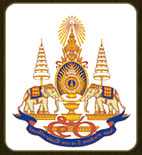
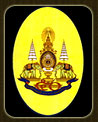
It was designed by Miss Wiyada Charoensuk.
Meaning of the Emblem
The winning emblem design, which was selected through a competition and subsequently publicized as the official symbol of the Golden Jubilee Celebrations, contains elements that convey meaning and reflect various aspects of Thailand’s national identity, namely:
The Royal Emblem, which serves as the personal emblem of His Majesty King Rama IX, is the central element. It features the emblem of the Chakri Dynasty and the Great Crown at the top, symbolizing kingship within the Chakri Dynasty. Beneath it is a two-tiered ceremonial tray, commonly envisioned by the public when thinking of national symbols. This is accompanied by two elephants bearing the emblem under a white-tiered umbrella (Chedi Chatra), which can be interpreted in several ways as follows:
Meaning 1: The elephants serve as the royal mounts of the monarch, symbolizing the subjects who act as loyal servants under the sovereign’s feet. In the emblem, they represent the people honoring and venerating the King and the Chakri Dynasty, while simultaneously living peacefully and securely under the protective shade of the umbrella (Chatra).
Meaning 2: The white elephant is a sacred companion of the King. According to Brahmanic beliefs, a white elephant that conforms to the proper descriptions in scripture brings both military might and wisdom to the monarch. Thus, it signifies merit, virtue, and royal intelligence.
Meaning 3: Elephants have been intertwined with the nation’s history and were formerly depicted on the Thai national flag. They are long-lived creatures, symbolizing the longevity and historical continuity of Thailand.
Additional Consideration: The elephant is one of the species nearing extinction, and its inclusion in the emblem serves as a reminder of the importance of conservation. Even if elephants were to disappear in the future, their form and historical significance would remain preserved in the emblem for future generations to remember.
At the bottom of the emblem is a ribbon bearing inscriptions indicating that it represents the Fiftieth Anniversary Celebrations of His Majesty King Rama IX’s Accession to the Throne. While not mandatory, the designer included this ribbon to enhance clarity and communication of the emblem’s purpose.
7. The Royal Ceremony Celebrating the Sixth Cycle Birthday (72nd Birthday Anniversary)
On 5 December 1999, the nation celebrated another highly auspicious occasion, as the Thai people collectively paid homage and expressed loyalty during the Royal Ceremony honoring His Majesty the King’s Sixth Cycle Birthday. The period for the celebration of this auspicious royal ceremony began on 1 January 1998 and continued until 31 December 1998, during which the general public displayed the emblem of the celebration at government offices, residences, and other appropriate locations to participate in the festivities and to demonstrate their loyalty and respect.
The meaning of the emblem
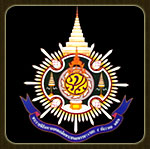
The emblem of the celebrations honoring His Majesty King Bhumibol Adulyadej on the occasion of His Sixth Cycle Birthday, 5 December 1999, conveys the following artistic and symbolic meanings:
The royal initials “ภปร” under the Great Crown of Victory are placed at the center of the emblem above the throne, symbolizing that His Majesty the King is the focal point of the hearts of all Thai people, and the highest object of their loyalty and reverence.
The yellow color of the royal initials represents the King’s birthday (Monday) and is set against a blue circular background, which signifies the monarchy.
The emblem is surrounded by the royal discus (Chakra) and bears the number 9 on the initials, denoting that He is the ninth monarch of the Chakri Dynasty. Two seven-tiered white umbrellas flank the sides, and the nine-tiered royal white umbrella (Nopphapadol Maha Chatra) is placed at the top.
The outer frame, designed as four segments, represents the Thai people in all regions of the country under His Majesty’s benevolent protection, with the green background symbolizing peace, tranquility, and prosperity.
Four lotus flowers positioned between the four segments signify veneration and homage on the occasion of the Sixth Cycle Birthday.
The golden rays surrounding the emblem symbolize the King’s virtue, royal grace, and generosity of heart, radiating far and wide both within Thailand and abroad, bringing joy and pride to all his subjects. At the bottom of the emblem, a blue ribbon displays the inscription “The Royal Ceremony Honoring the Sixth Cycle Birthday, 5 December 1999.” this emblem was designed by Mr. Nirand Kraisarath.
This auspicious occasion was a moment of great joy and celebration for all Thai people, who eagerly awaited the opportunity to pay their loyalty and homage to His Majesty King Bhumibol Adulyadej on the occasion of His 72nd birthday.
We offer our heartfelt blessings, wishing His Majesty a long and prosperous life, continued happiness and contentment, protection from all dangers and afflictions, freedom from disease, and that He may remain a source of inspiration and well-being for all the Thai people forevermore.
The emblem of the Celebrations of His Majesty King Bhumibol Adulyadej
on the Occasion of the Sixth Cycle (72nd) Birthday Anniversary, 5 December 1999
The celebrations honoring His Majesty King Bhumibol Adulyadej on this auspicious occasion comprised royal ceremonies, state rituals, celebratory events, and commemorative activities as follows:
7.1 Royal Ceremonies
7.1.1 The Royal Ceremony of Casting the Buddha Image in the Subduing the Ocean Posture to Commemorate His Majesty’s Sixth Cycle (72nd) Birthday Anniversary was held on 22 October 1999 at 17:39 hours in the ubosot of Wat Phra Si Rattana Satsadaram. Mr. Solit Buddharak, from the Institute of Fine Arts, Department of Fine Arts, designed the Buddha image to be used in the casting ceremony. The image was crafted in full royal attire, adorned with decorative garments and the Great Crown, differing in style from the original Rattanakosin period models. The Buddha image measured 172 centimeters in height, excluding the base and crown, and was cast in brass with gold lacquer or gilding and adorned with gemstones. The Department of Fine Arts undertook the work as a royal offering without charging any fee.
7.1.2 The Royal Ceremony of His Majesty’s Procession to Offer the Kathin Robe by the Grand Royal Barge Procession at Wat Arun Ratchawararam was held on 4 November 1999 at 15:30 hours. The procession followed the grand barge procession model used during the Golden Jubilee Ceremony in 1996, consisting of five divisions with a total of 52 boats. The Royal Barge Suphannahong served as the royal barge, the Royal Barge Anantanakkharat carried the robe, the Royal Barge Narai Song Suban Ratcha 9 represented King Rama IX, and the Royal Barge Anek Chat Phuchong served as the secondary royal barge.
7.1.3 The Royal Ceremony of Celebrating the Casting of the Buddha Image in the Subduing the Ocean Posture to Commemorate His Majesty’s Sixth Cycle (72nd) Birthday Anniversary was held at the ubosot of Wat Phra Si Rattana Satsadaram on Wednesday, 1 December 1999 at 16:30 hours.
7.1.4 The Royal Ceremony of Consecrating the Holy Water for Royal Offering took place at Wat Benchamabophit Dusitvanaram on Friday, 3 December 1999 at 15:09 hours. The Ministry of Interior designated Bangkok and all provinces to conduct rituals to collect water from sacred sites respected by the people, from important local water sources, or from sources previously used for holy water during the Fifth Cycle Birthday Anniversary Ceremony on Thursday, 11 November 1999 at 16:39 hours.
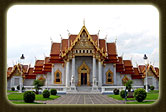
Wat Benchamabophit Dusitvanaram
Bangkok and all provinces conducted the simultaneous ritual of consecrating the holy water at the ubosot or main vihara of each province on Saturday, 20 November 1999 at 14:59 hours. The consecrated water was then placed in white-cloth-covered vessels and sealed for delivery to the Ministry of Interior, to be used in the Royal Ceremony of Consecrating the Holy Water at the ubosot of Wat Benchamabophit Dusitvanaram on Friday, 3 December 1999 at 15:09 hours.
7.1.5 The Royal Merit-Making Ceremony (Thaksinanuphan) took place at the Amarintrawinitchai Throne Hall in the Grand Palace on Saturday, 4 December 1999 at 16:30 hours.
7.1.6 The Royal Ceremony of His Majesty’s Audience to Receive Blessings on Sunday, 5 December 1999, at 10:30 a.m., His Majesty the King presided over the audience to receive royal blessings at Sihabanchorn, Phra Thinang Anantasamakhom, Dusit Palace grounds. The ceremony was organized by the Subcommittee on Coordination of the Royal Ceremony, chaired by the Permanent Secretary of the Prime Minister’s Office, and included the following royal activities:
– In the morning, the state ceremony involved the procession carrying the sacred holy water from Wat Benchamabophit Dusitvanaram to the palace grounds near the equestrian statue.
– His Majesty the King appeared at the Sihabanchorn, the southern porch of Phra Thinang Anantasamakhom.
– Their Royal Highnesses the Crown Prince, the Prime Minister, the President of the Parliament, and the President of the Supreme Court paid homage and presented royal blessings, along with offerings of the sacred holy water. Religious leaders from all over the country recited auspicious chants according to their respective faiths.
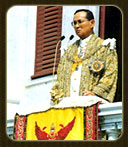
7.1.7 The Royal Ceremony of the Sixth Cycle (72nd) Birthday Anniversary on Sunday, 5 December 1999, at 4:30 p.m., the Royal Ceremony of His Majesty’s Sixth Cycle (72nd) Birthday Anniversary was held at Phra Thinang Amarin Winitchai. The ceremony included the following royal activities in sequence:
– The main royal birthday ceremony at Phra Thinang Amarin Winitchai within the Grand Palace.
– The granting of official certificates and ceremonial fans of rank to Chinese and Vietnamese monks, along with the reception of blessings; monks chanted the Navakkhaya Sutta at the ubosot of Wat Phra Si Rattana Satsadaram.
– The conferment of ecclesiastical titles to Buddhist monks and Brahmin court ranks at Phra Thinang Amarin Winitchai within the Grand Palace.
7.1.8 The Royal Merit Ceremony of the Special Sermon on Monday, 6 December 1999, at 10:30 a.m., a royal merit ceremony featuring the special sermon was held at Phra Thinang Amarin Winitchai.
7.1.9 Audience of Foreign Ambassadors to Offer Blessings on Wednesday, 8 December 1999, at 5:00 p.m., foreign ambassadors paid homage and presented royal blessings at the Throne Hall of Phra Thinang Chakri Maha Prasat in the Grand Palace.
7.1.10 Royal Ceremony of the Opening of the Pa Sak Chonlasit Dam on Thursday, 25 November 1999, the royal ceremony for the opening of the Pa Sak Chonlasit Dam was held in Phatthana Nikhom District, Lopburi Province. This project, initiated under a royal initiative, was executed by the Royal Irrigation Department and relevant agencies. The dam, the longest earthen dam in Thailand, is designed to store water and provide irrigation and general benefits to farmers and the public, with water usage commencing at the end of 1999.
7.2 State Ceremonies
7.2.1 The Oath-Taking and Military Parade of the King’s Guard
On Thursday, 2 December 1999, at 4:30 p.m., the oath-taking and military parade of the King’s Guard was held at the Dusit Palace grounds.
7.2.2 Ceremony of Offering Blessings by Government Officials and the Public on Sunday, 5 December 1999, at the Royal Plaza (Thung Sanam Luang), officials and the public paid homage, offered royal blessings, presented royal tributes, and participated in the lighting of candles in honor of His Majesty.
7.2.3 The Royal Club Ceremony and Royal Banquet on Thursday, 9 December 1999, the Royal Club Ceremony and the royal banquet in honor of His Majesty were held at the forecourt of Thai Khu Fah Building, Government House. The ceremony proceeded in order as follows:
– The Prime Minister paid homage and requested royal permission to invite attendees to partake in the celebratory toast.
– A traditional dance performance was presented by the Fine Arts Department to honor and pay tribute to His Majesty.
– A multimedia light-and-sound show using a water-screen projection system was presented as an alternative to fireworks.
7.2.4 Presentation of Souvenirs at the Royal Club Ceremony
During the same event, souvenirs were presented at the forecourt of Thai Khu Fah Building and Santi Maitri Building, Government House. The Royal Committee approved the presentation of a model of the Throne Hall constructed under the Phra Sumeru restoration project as a souvenir from the government. This Throne Hall was subsequently named Phra Thinang Santi Chai Prakarn. The ceremony concluded with a royal banquet at Government House.
7.3 Celebrations
7.3.1 Decoration of Flags, Lanterns, and the Royal Ceremony Emblem the emblem for the royal ceremony, designed by Mr. Niran Kraisornrat (winner of the design competition organized by the Ministry of Education), was prominently displayed. The government invited related central and regional agencies, private organizations, and the general public to decorate flags, lanterns, and the royal ceremony emblem at various locations from 1 January to 31 December 1999, in accordance with laws and regulations regarding flag usage and display as prescribed by the Prime Minister’s Office.
7.3.2 Countrywide Festive Performances on Sunday, 5 December 1999, public performances and celebrations were held across all regions of Thailand. The Department of Provincial Administration was responsible for organizing these events. In the provinces, traditional performances were arranged under the supervision of local Colleges of Dramatic Arts and Rajabhat Institutes.
7.4 Honorary Activities consisted of various projects organized by multiple agencies to pay tribute to His Majesty the King. Based on the summary from the committee meeting on 30 September 1999, these activities included:
7.4.1 Activities to Praise and Honor His Majesty’s Achievements the Ministry of Education and the University Bureau jointly developed and organized activities such as essay and poetry competitions, painting contests, and exhibitions for schools and educational institutions nationwide. These activities were conducted throughout the celebration period (1 January – 31 December 1999). Additionally, selected royal writings, including Phra Mahachanok, Nai In Phu Pid Thong Lang Phra, and Tito, were incorporated to honor and highlight His Majesty’s literary accomplishments.
7.4.2 Projects and Activities Proposed by Government and Private Sectors A total of 464 projects and activities were proposed by both government and private organizations for consideration as honorary activities to celebrate His Majesty. Of these, 408 projects came from government agencies and 56 from private organizations, with the committee approving some of them. In addition, government and private sectors organized ongoing or general projects of a celebratory nature, such as exhibitions on royal duties, decorative lighting, commemorative runs, mobile medical units, blood donation drives, and mass ordination ceremonies, totaling another 58 projects or activities.
7.5 Projects and Activities Following the Royal Celebration Guidelines
7.5.1 Issuance of Commemorative Postal Stamps for the 72nd Birthday Celebration
– Set 1: Images of the Four Regional Palaces, first issued on 5 May 1999
– Set 2: Portraits depicting the royal biography of His Majesty, first issued on 10 September 1999
– Set 3: Images of His Majesty with the people, first issued on 21 October 1999
– Set 4: Gold, silver, and nickel stamps, first issued on 5 December 1999
7.5.2 Issuance of International Telephone Cards (THAICARD) in honor of the celebration
7.5.3 Production of commemorative coins, medallions, and ribbon-adorned medals
7.6 Restoration of Phra Sumeru Fort and Surrounding Landscape into a Public Park this project included three main plans:
7.6.1 Restoration of Phra Sumeru Fort
7.6.2 Improvement of the surrounding landscape into a public park (granted the name “Santhichai Prakarn Park”)
7.6.3 Construction of a royal pavilion adorned with the royal celebration emblem, including docking facilities for royal visits
7.7 Publication of Commemorative Books and Archives
7.7.1 Books published by the Committee on Document Compilation and Archives – 12 titles
7.7.2 Books published by government and private agencies with permission to participate in the celebrations, using their own budgets – 30 titles
7.7.3 Archival books of the Royal Ceremonies for the Sixth Cycle (72nd) Birthday Anniversary on 5 December 1999 and the Celebrations of His Majesty the King, with manuscripts prepared and published by the National Archives, Fine Arts Department