

His Majesty King Bhumibol Adulyadej The Great
Chapter 18: Proclamations of Royal Tributes and Celebrations of His Genius and Wisdom
In His Majesty King Bhumibol Adulyadej The Great
His Majesty King Rama IX was endowed with boundless compassion, profound wisdom, and tireless perseverance. He steadfastly carried out his royal duties, bringing progress and stability to the nation and the Thai people. His brilliance and intellect were recognized not only within the Kingdom but also by nations around the world. Moreover, His Majesty served as a true exemplar of lifelong learning — a noble quality of a scholar — inspiring universities and institutions of higher education.
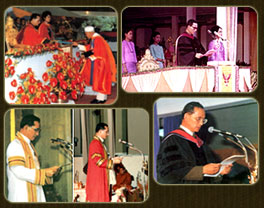
He graciously conferred degrees upon graduates from various institutions of higher education.
Both domestic and international institutions, as well as various organizations, have expressed their deep admiration and paid tribute to His Majesty King Rama IX for His profound wisdom and comprehensive knowledge across all academic disciplines. His Majesty was recognized as being exceptionally gifted in every field of study, including education, humanities, fine and applied arts, law, social and behavioral sciences, business administration and commerce, mass communication, natural sciences, mathematics, computer science, medicine and health-related sciences, engineering, architecture and urban planning, and agriculture, among others.
The Office of the University Affairs compiled royal proclamations honoring His Majesty’s academic achievements, as presented by universities and institutions of higher education when they respectfully conferred honorary degrees upon Him from the beginning of His reign in 1950 until the Golden Jubilee Year in 1996. The Office published this compilation in commemoration of the Fiftieth Anniversary of His Majesty’s Accession to the Throne under the title “Chronicle of the Royal Proclamations Honoring His Majesty King Rama IX.” One excerpt, written by Dr. Kanok Wongtrangan (1996: 5–13), states:
“…Therefore, the Office of the University Affairs’ effort to compile the academic proclamations in honor of His Majesty King Bhumibol Adulyadej serves as a historical record of Thailand’s universities and educational institutions. It will benefit future generations in studying His Majesty’s genius, wisdom, and boundless benevolence. Above all, it will help the Thai people of the future to understand and strengthen their faith in His Majesty the King, creating a shared foundation of unity that will forever support the nation’s progress and stability.”
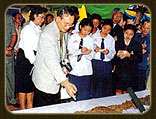
His Majesty the King served as a teacher in the royal educational program “Suksathat” on March 10, 2000.
Field of Education
His Majesty King Rama IX emphasized that education is a vital factor in cultivating and developing a person’s knowledge, thinking, behavior, and moral character. He further stated that education must lead to practical application. Such education requires systematic and rational thinking, learning through real experience, research, and analysis. It must not be narrowly focused on a single aspect such as technology or material advancement, but should instead encompass all dimensions — social, moral, and spiritual — in a balanced manner.
To bring true and complete happiness to the people, education must not only be comprehensive but also aimed at benefiting the nation and society as a whole. Moreover, His Majesty King Rama IX emphasized that knowledge should be transmitted to the people in the manner of a teacher to a student, without yielding to any problems or obstacles — a practice He consistently demonstrated to His subjects.
Thus, His Majesty King Rama IX was endowed with profound knowledge and applied the principles of the field of education in his work with great depth. Importantly, He encouraged and uplifted teachers, instilling pride in their honor and duties, as if to show that preserving “good teachers” ensures that knowledge and its transmission endure for generations.
Field of Humanities
Universities and institutions of higher education have all recognized the royal intention of His Majesty King Rama IX, who set an example in preserving the Thai language. He understood that “language is the identity of a nation and the foundation of all Thai culture.” His Majesty exemplified the correct use of the Thai language with brilliance and wisdom in his royal writings. He believed that using the Thai language correctly not only preserves the language but also reflects the cultural development of the Thai people. It is therefore fitting that universities honor His Majesty as “a monarch who created, supported, and greatly contributed to the Thai language.”
Field of Fine and Applied Arts
His Majesty King Rama IX demonstrated exceptional talent in all forms of art, particularly painting and music. His hand-painted works reveal his personal artistic genius, admired not only by the Thai people but also by foreigners who have had the opportunity to view his art. Numerous compositions that He created from the age of just 18 clearly reflect His remarkable musical talent.

Artistic mastery

An example of a royal composition is the song “New Year’s Blessing.”
The royal compositions have been highly praised by universities and institutions of higher education as “valuable works, composed with exceptional skill, exquisite craftsmanship, high artistic merit, and timeless relevance.” His Majesty King Rama IX initiated research on Thai music, particularly addressing differences in tuning among various Thai musical instruments, greatly benefiting the study of Thai music today. Beyond Thai music, His Majesty also possessed profound and extensive expertise in Western music. Universities have recognized Him as a musician skilled in performing nearly all instruments, honored as the finest soprano saxophonist in Thailand, and acclaimed as a composer and arranger of harmonies with exceptional mastery.
Field of Law
Universities and institutions of higher education have recognized His Majesty King Rama IX’s profound wisdom in the field of law, as evident in His royal speeches and thoughtful reflections on legal philosophy. For example, He regarded laws as tools to uphold justice, emphasizing that those who enforce the law must understand the true meaning of justice, rather than assuming that law and justice are identical. More importantly, His Majesty carried out royal duties according to the principles of the rule of law and governed the country in accordance with the Ten Royal Virtues. Universities and institutions have honored Him as “a symbol of upholding justice and maintaining the peace and order of the nation in every crisis.”
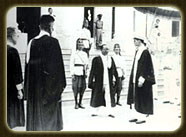
He visited the Court of Justice.
With His brilliance and wisdom in the field of law, all royal speeches and addresses given to legal professionals have served as models for developing legal philosophy suitable for Thai society. Moreover, He consistently offered guidance and direction for those practicing law. It can therefore be said that His Majesty King Rama IX possessed a profound understanding of legal principles and the application of law to achieve justice within the realities of society.
Field of Social and Behavioral Sciences
His Majesty King Rama IX has consistently shown interest in “development.” In terms of rural development, His Majesty undertook regular visits to citizens across all regions over many years, listening to their problems and providing solutions. Universities and institutions of higher education have formally honored His Majesty for His contributions to the development of cooperatives.
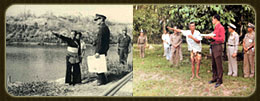
He made royal visits to the people to personally listen to their problems and provide solutions.
By providing guidance that cooperatives should be founded on the principles of self-help and mutual assistance — the true essence of cooperative practice suitable to the economic conditions, customs, and culture of the Thai people — His Majesty King Rama IX emphasized that development must prioritize “self-reliance” and aim to “raise and improve the quality of life of the people.” Demonstrating exceptional skill in public administration, He carried out royal duties according to tradition, bringing peace and well-being to the citizens. Every royal-initiated project was based on careful analysis of real problems, personally heard from the people, and founded on long-term planning that integrated natural resource and environmental development with the enhancement of the population’s quality of life. His royal guidance and projects combined theory, practical problem-solving methods, and operational strategies, consistently achieving success in accordance with His intentions.
His Majesty King Rama IX recognized the importance of “people” in all development and problem-solving efforts. He provided guidance on the qualities of individuals and the cultivation of proper and appropriate values to enable people to successfully implement theories or concepts. This demonstrates His Majesty’s remarkable genius in understanding human behavior with extraordinary insight.
Field of Mass Communication
Universities and institutions of higher education have honored His Majesty King Rama IX as an “innovator in communication,” recognizing Him as a leader who initiated change by developing new theories grounded in the Thai context. He had a method of communicating that reached the minds of Thai people of all genders, ages, and social classes without barriers. His Majesty applied communication to benefit the public by deeply understanding the audience, creating and developing information, selecting appropriate media, and delivering messages effectively to achieve the true purpose of communication.
Field of Natural Sciences
His Majesty King Rama IX was “endowed with exceptional scientific ability to investigate causes and effects and find solutions to problems He encountered during His visits, demonstrating the qualities of a true scientist.” Examples include tilapia breeding, rice variety selection, artificial spawning of giant gourami, using water hyacinths to treat wastewater, and establishing laboratories for tissue culture and other research at the royal residences. These royal initiatives exemplify His scientific approach, and importantly, the scientific methods He applied in analyzing problems and developing practical solutions serve as a model for professors and students to follow.
Field of Mathematics and Computer Science
Universities and institutions of higher education have recognized the brilliance of His Majesty King Rama IX in applying statistical data for national development to raise and improve the quality of life of His people. He understood the importance of data and personally collected and compiled information and statistics. A familiar and memorable image for His subjects is that of His Majesty making notes and adding information directly onto the local maps of the areas He visited.
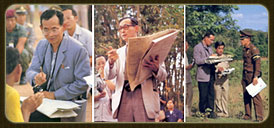
He inquired of the people, took notes, and added information to the maps of each locality.
It has been said that “His maps contain the most accurate, complete, and comprehensive information.” In the use of computers, “He personally experimented with and used computers, typing with them and demonstrating remarkable perseverance in creating a complex Devanagari script program, completing it within four months,” which serves as evidence of His Majesty’s exceptional skill in computer technology.
Field of Medicine and Health-Related Sciences
The living conditions of the people, especially those related to public health, were a matter of deep concern for His Majesty King Rama IX, who cared for the well-being and suffering of all citizens. It could be said that “the illness and health of the people” was a matter of His concern. His Majesty also took an interest in studying and researching to advance medical and biological sciences, such as “He studied various branches of medicine personally and with physicians to provide highly practical guidance.”
He also supported the development of medical personnel in various fields by enabling them to pursue advanced studies abroad, so that they could bring back academic knowledge and valuable experience for further study and research in Thailand. The establishment of “the Ananda Mahidol Foundation” to provide scholarships for medical professors to study and conduct research overseas, beginning in 1959, has greatly benefited medical science in Thailand. His Majesty King Rama IX personally contributed substantial funds to support medical activities, including scholarships, research grants, funding for vaccine production, construction of hospital buildings, and the provision of medical supplies and equipment. He established royal medical units, royal dental units, and personally took seriously ill patients under royal care, among other initiatives.
It can therefore be said that His Majesty King Rama IX created immeasurable contributions to medicine, medical education, and public health in Thailand. He served as a model of selfless dedication for all medical personnel, particularly those in universities and institutions of higher education, to follow in his footsteps.
Field of Engineering
The field of engineering was one in which His Majesty King Rama IX showed broad interest and conducted serious personal study and research. “He diligently applied scientific principles to research, improve, and provide farmers and industrial workers with tools and equipment that were convenient, advanced, and suitably adapted to the conditions of Thailand.” It can be said that agricultural machinery, from labor-saving devices for rice farming and the centrifugal rice milling machine “Pin Kaew” to artificial rainmaking, all aimed to improve the livelihoods of farmers through engineering knowledge. Irrigation engineering was another area to which He devoted exceptional effort to solve problems for His people, including planning and providing guidance for the construction of irrigation systems in various regions, addressing flooding issues, and solving water scarcity, while closely monitoring the results with the Royal Irrigation Department.
He initiated the construction of medium- and small-scale irrigation works in various forms according to local conditions, such as water retention and drainage, benefiting farmers by providing abundant water for cultivation, alleviating drought, increasing income, and ensuring stable livelihoods. “He served as a consulting engineer for irrigation projects under royal initiative.” In surveying and mapping engineering, “He was a true explorer and highly skilled in the use of maps.” His ability to read maps was exceptional, unmatched by others. The maps He used were specially large, and He personally assembled nine map sheets.
During His travels across the country, He always carried these maps, preparing, editing, and correcting them to ensure accuracy for planning purposes. He also took a keen interest in and utilized aerial photography, satellite imagery for resource surveys, meteorological satellites, and field data. “In the field of communication and electrical engineering,” He was proficient in both theory and practice, personally repairing and adjusting radios, providing expert observations on wave propagation according to scientific principles, intending to use communication systems for rapid coordination to promptly aid and improve the well-being of the people. In environmental engineering, “He was endowed with exceptional ability in providing royal guidance and decisions regarding the conservation and development of natural resources and the environment, adhering to principles that were scientifically appropriate, feasible, economical, and avoided causing inconvenience to the public.” He also “invented the slow-rotating surface aerator or the Chai Pattana water turbine,” a high-level invention that surpassed existing devices. The National Research Council awarded this invention first prize in 1993, and the Chai Pattana turbine was also patented. All of these examples demonstrate the genius and exceptional skill of His Majesty King Rama IX in the field of engineering, as recognized and honored by universities and institutions of higher education.
Faculty of Agriculture
His Majesty King Rama IX “addressed farmers’ problems through agricultural research and experimentation”. He applied research findings to develop practical action plans to assist farmers. He established Development Study Centers across the country to serve as comprehensive demonstration sites and hubs for training in modern agricultural techniques. He demonstrated how to make the most of areas with low agricultural potential, applying interdisciplinary knowledge to build the foundations for agricultural development, especially in water resource management. He also disseminated knowledge and technology to farmers and showcased examples of successful rural self-reliance under various conditions. His agricultural research encompassed land development, water resource improvement, forest restoration, and planning for crop cultivation, livestock, and fish farming.
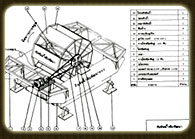
The Chai Pattana Turbine
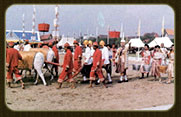
initiating the revival of the Royal Ploughing Ceremony, Phruech Mongkhon Chot Phra Nangkhalak Raek Na Khwan
In addition to academic work, His Majesty King Rama IX strengthened the morale and spirit of farmers by initiating the revival of the Royal Ploughing Ceremony, Phruech Mongkhon Chot Phra Nangkhalak Raek Na Khwan, which uplifted farmers’ confidence in their occupation. This also facilitated the distribution of high-quality rice seeds to farmers’ fields.
From the various academic fields that universities and higher education institutions have publicly honored His Majesty King Rama IX, as briefly summarized above, it confirms the confidence of these institutions in the exceptional wisdom and intellect of His Majesty across a wide range of disciplines. In many fields, He delved deeply into the knowledge itself and its practical application for solving the problems of the people, providing a model for universities and higher education institutions to follow in guiding their own intellectual development for the benefit of all.
Conclusion
The declarations honoring His Majesty King Rama IX that universities and higher education institutions have made when conferring honorary doctorates in various fields can be summarized into the following key points:
His Majesty King Rama IX possessed extensive academic knowledge in various fields, appearing to have no field of study in which He was not interested or did not pursue. Importantly, in any field He studied, He sought to understand the essence of the discipline thoroughly. This is why, whenever He offered guidance to solve problems, His directives were aligned with the principles of that field and applied them in practice in remarkable ways. The results of His applied knowledge clearly demonstrate His exceptional intellect and wisdom in that discipline.
In any academic field, His Majesty King Rama IX encouraged the application of knowledge to effectively solve problems. With His profound wisdom, He could distinguish the boundaries of issues to see which fields’ principles were relevant. In many cases, He recognized the necessity of an interdisciplinary approach. For example, in rural development, He combined principles from various disciplines to address problems systematically. He showed that national issues are complex and cannot be resolved by any single discipline alone; thus, studying multiple fields is essential to fully utilize knowledge effectively.
His Majesty consistently demonstrated that students cannot be considered graduates in any field unless they can apply the knowledge to real-world problem-solving or development. Knowledge and theory cannot be separated from practice. For His Majesty, true knowledge must lead to practical outcomes. In other words, the ability to apply academic principles to achieve tangible results is a crucial characteristic of a university graduate.
Even the ability to apply knowledge does not guarantee that one becomes a “wise person” or a “scholar,” because knowledge may be used solely for personal gain or for immoral purposes. Therefore, His Majesty emphasized the utmost importance of ethics and morality in the use of knowledge. Knowledge must be applied for the good of both self and society. Without ethical and moral guidance, knowledge can become dangerous and harmful. High knowledge without ethics is far more perilous than low knowledge. Thus, knowledge alone is not sufficient; it must serve noble purposes, and this is a critical responsibility for universities and higher education institutions to remember.
Beyond His deep engagement in various fields of study, His Majesty continuously served as a patron of these disciplines, particularly by supporting the development of highly skilled personnel. He provided scholarships for overseas study to university faculty and researchers, ensuring the growth of quality human resources in these academic fields.
Being aware of the importance of developing high-quality academic personnel on par with advanced nations, His Majesty the King also served as a model both in terms of scholarship and diligence in applying knowledge for genuine benefit, by putting principles into practice to achieve successful outcomes, as well as giving encouragement to academics to persevere through the obstacles encountered in research across all fields, so that they could reach the ultimate goals of education. That is, to use knowledge to achieve truly beneficial results.
The academic honors in all fields observed by universities, higher education institutions, and the people, can be summarized that His Majesty the King demonstrated a tangible example to “graduates”, which is “to grasp the essence of the subject and apply knowledge to benefit the people, society, and the nation, for progress and stability of the country in the end…”
King Mongkut’s University of Technology Thonburi deeply acknowledges the royal benevolence of His Majesty King Rama IX for granting the university its name, and greatly admires and honors His brilliance and wisdom in various fields, especially in science and technology. Therefore, in 1972 and 1991, the university respectfully conferred honorary doctoral degrees upon His Majesty King Bhumibol Adulyadej the Great.
King Mongkut’s University of Technology Thonburi conferred honorary doctoral degrees upon His Majesty King Bhumibol Adulyadej the Great.
The university conferred the honorary degree twice:
1. On 18 October 1972, on the occasion of the graduation ceremony, the university conferred an honorary Doctorate in Engineering (at that time, the university had three campuses and was named King Mongkut Institute of Technology, Thonburi Campus).
2. On 24 October 1991, on the occasion of His Majesty King Rama IX’s visit to officially open the 6th Technology Exhibition at King Mongkut’s University of Technology Thonburi, the university requested to confer upon Him the honorary Doctor of Engineering degree in the field of Environmental Technology. The university compiled the royal citation for the two occasions as follows.
The Address in Praise
of
His Majesty King Bhumibol Adulyadej
on the Occasion of the Presentation of the Honorary Doctorate Degree in Engineering
King Mongkut’s Institute of Technology
October 18, 1972
____________
May it please Your Majesty,
This occasion is a most auspicious one, as it marks the first time that Your Majesty, together with Her Majesty the Queen, has graciously presided over the commencement ceremony to confer degrees upon the graduates of King Mongkut’s Institute of Technology. We, Your Majesty’s loyal subjects, who have the great honor to be in Your royal presence, are profoundly grateful and deeply touched by Your boundless benevolence. On behalf of all those present here, I humbly beg leave to extend our heartfelt wishes for Your Majesty’s long life and continued reign as the guiding light and shelter of the Thai people for all eternity.
Your Majesty’s boundless compassion toward the Thai people is beyond measure and expression. You have ruled the Kingdom in accordance with the Ten Virtues of the King, with profound wisdom and discernment in every field, all for the happiness and prosperity of Your subjects in every walk of life. In particular, Your Majesty has applied Your remarkable knowledge of science and engineering throughout the years of implementing royal initiatives to promote and advance the livelihoods of the people, especially those who are underprivileged or lagging behind, helping them achieve stability and progress. This is clearly evidenced by Your tireless dedication in applying principles of engineering to research and development for the benefit of the nation.
He has continuously developed and improved tools and equipment for those engaged in agriculture and industry, enabling them to have more convenient, advanced, and suitable implements for the conditions of Thailand, all while emphasizing economic efficiency. What touches the hearts of Thai farmers most deeply is His Majesty’s royal initiative in artificial rainmaking to relieve the hardships of farmers. His Majesty has also improved and invented labor-saving devices for rice cultivation, such as water pumps, short-tailed boats for pumping water into fields, rice planters, rice hullers, threshing machines, milk powder production machinery, and many other tools and devices—all of which have proven immensely beneficial to the livelihoods of the people.
We, Your Majesty’s loyal subjects, are profoundly aware that Your Majesty harbors the deepest concern for the well-being of the Thai people above all else. It is Your constant wish to be informed of the circumstances and conditions of all Your subjects. Thus, through Your keen intellect and knowledge in the field of radio communication, the joys and sorrows of the people, whether near or far, can swiftly reach Your royal attention, allowing You to extend Your mercy and alleviate their suffering without delay. Because of Your interest in radio communication, the “Aw Saw Radio Station” at Chitralada Villa was established by royal command to broadcast music as well as knowledge in both secular and moral fields, bringing happiness and enlightenment to the people nationwide. This royal benevolence is indeed immeasurable and unending.
Moreover, in regard to the nation’s security, in addition to Your Majesty’s benevolence toward the brave servicemen who safeguard the country’s independence, You have also devised and modified modern equipment and weapons, which have been graciously bestowed upon the military and police forces from time to time. For example, the Royal Thai Navy has constructed patrol boats following the designs graciously provided by Your Majesty, and police helicopters have been equipped with light machine guns operating on an electric firing system, a new method conceived by Your Majesty—marking a significant advancement in Thailand’s defense technology.
Your Majesty’s benevolence also extends to the field of vocational education for the sick, the disabled, and the impoverished, enabling them to acquire basic technical skills for their livelihoods. Furthermore, Your Majesty’s royal remarks emphasizing the vital role of industrial technicians in national development have deeply moved us, Your humble subjects and all those in technical professions. Your Majesty’s kindness toward craftsmen and industrial workers inspires great encouragement and determination to dedicate our efforts in loyal service to the nation, in gratitude for Your infinite grace.
For these reasons, on this most auspicious occasion when Your Majesty has graciously presided over the commencement ceremony, the Council of King Mongkut’s Institute of Technology, together with the faculty members and students, humbly beg leave to present to Your Majesty the Honorary Doctorate Degree in Engineering. This is offered as a symbol of our deepest admiration for Your Majesty’s exceptional wisdom and ability, and as an expression of our unwavering loyalty and gratitude for Your boundless benevolence. It shall stand as the highest honor and blessing for King Mongkut’s Institute of Technology and for all of us, Your Majesty’s humble subjects, for all time to come.
With deepest loyalty and reverence, may it please Your Majesty.
Royal Address in Praise of
His Majesty King
Bhumibol Adulyadej
on the Occasion of the Presentation of the Honorary Doctorate Degree in Environmental Technology
from King Mongkut’s University of Technology Thonburi
at the New Suan Amporn Building
Monday, October 15, 1990
_____________
May it please Your Majesty,
At the 5th meeting of the Council of King Mongkut’s University of Technology Thonburi on August 13, 1990, the Council unanimously resolved to humbly present to Your Majesty the Honorary Doctorate Degree in Engineering, in the field of Environmental Technology. This is in recognition of Your Majesty’s exceptional wisdom and capability in providing royal guidance and initiatives concerning the conservation and development of natural resources and the environment. Your Majesty has consistently adhered to the principles of applying appropriate, practical, and economical technologies, with the utmost consideration to avoid causing hardship to the people.
Since His Majesty ascended the Throne and has reigned righteously for forty-five years, the Kingdom has faced various challenges, including natural fluctuations, droughts, and the hardships of the people in certain areas. Yet, His Majesty has never been disheartened by the obstacles to national development and the improvement of His subjects’ well-being. In the present age, however, environmental issues have become a major global concern—unavoidable and affecting health, sanitation, the economy, and every aspect of development. These problems stem from rapid population growth, the migration of rural populations to large urban centers, and the improper management and exploitation of natural resources, leading to the depletion of forests, minerals, and fuels at an alarming rate. Industrial expansion and the use of technology without regard for their environmental consequences have resulted in the deterioration of environmental quality—manifested in polluted water, soil degradation, toxic air, and the destruction of forest watersheds. These problems also exist in Thailand and cannot be solved in a short time. They require mutual understanding and cooperation from all sectors. Yet, through His Majesty’s boundless compassion and steadfast determination to alleviate the suffering and promote the happiness of His people, His Majesty has personally visited numerous provinces to study the actual problems and obstacles faced by the people. He has imparted practical knowledge of environmental technology, given guidance to the populace, and offered valuable advice to the government and those following His royal initiatives in various projects—to utilize natural resources to their fullest benefit while minimizing harm to the environment. His Majesty’s development projects may be summarized into three main areas: water resource management, land resource management, and environmental conservation, as follows.
In regard to water resources—an area of vital importance and immense benefit to the majority of the Thai population, who are engaged in agriculture—His Majesty has given royal guidance for government agencies to plan and implement various projects. These include the development of water sources for cultivation and consumption, the conservation of headwaters, the development of water sources for electricity generation, the drainage of lowlands, and flood mitigation. His Majesty has provided practical principles and methods for carrying out such projects, taking into thorough consideration the geography, hydrology, economy, and social conditions of each region.
Among His notable environmental initiatives is the project for the treatment of polluted and stagnant water through methods that increase oxygen levels via photosynthesis and the use of plants to absorb certain pollutants as nutrients, thereby creating a beneficial natural cycle that extends to aquatic life in the area. His Majesty has also recommended the study and cultivation of certain fish species that can help in the purification of polluted water.
From the problem of flooding in Bangkok and its surrounding areas in certain years, which often led to stagnant and polluted water, His Majesty graciously proposed that the water in Bangkok’s canals be circulated continuously to prevent stagnation and foul odor. The regular movement of water would help reduce the severity of pollution. Furthermore, His Majesty recommended the creation of more green spaces within the city. He also commanded the development of Makkasan Swamp as a natural wastewater treatment area to receive and purify wastewater from various sources by using water hyacinths to treat polluted water in low-lying areas where drainage was difficult. These plants absorb pollutants and dilute contamination, thus improving water quality naturally.
Studies and analyses have revealed that Thailand produces more than one hundred million tons of carbon dioxide per year from combustion processes—such as the burning of charcoal, coal, fuel oil, and forest fires. In response, His Majesty proposed a royal initiative for reforestation through research to select tree species with high carbon absorption capacity, in order to reduce the amount of carbon dioxide in the atmosphere. This helps mitigate the greenhouse effect that causes global warming and the melting of polar ice, which in turn raises sea levels and increases the risk of coastal flooding in many countries. This initiative clearly demonstrates His Majesty’s compassion and concern not only for the Thai people but also for humanity across the world.
Regarding soil degradation—where soil has lost its nutrients, cracked, and become infertile—His Majesty advised farmers to restore environmental balance through natural methods, such as integrating the cultivation of useful trees with field crops. The trees provide shade and retain soil moisture, thereby improving crop yields.
In addition, His Majesty initiated projects to rehabilitate soil fertility by using agricultural residues, crop by-products, and animal manure to produce organic fertilizer, enhancing agricultural productivity. These royal initiatives have continued to evolve within the framework of rural development projects, emphasizing sustainable self-development and continuous improvement for the long-term benefit of the nation.
In areas where the landscape is particularly scenic and suitable for the establishment of national parks or forest parks as recreational spaces for the public, His Majesty has provided guidance on open-air zoos, the conservation and breeding of endangered species, and the study of forest fire prevention through the use of humidity control systems.
His Majesty has also shown keen interest in the problem of degraded headwaters. Royal initiatives have included projects to locate water sources, construct reservoirs, and build natural weirs to store sufficient water for cultivation in drought-prone areas, such as Huprakong District in Phetchaburi Province, Song Dao, Waritchaphum, and Sawang Daen Din Districts in Sakon Nakhon Province.
These royal development projects represent a new approach to integrated, sustainable development, emphasizing the use of appropriate technology to simultaneously advance development and conserve natural resources and the environment. This approach has led to the establishment of “Royal Development Study Centers” across various regions of the country.
In recognition of His Majesty’s boundless benevolence, the benefits of His royal initiatives to the nation, and the exceptional brilliance of His intellect, the Council of King Mongkut’s University of Technology Thonburi has unanimously resolved to humbly present to His Majesty the Honorary Doctorate Degree in Engineering, in the field of Environmental Technology. This is to honor His Majesty, celebrate His wisdom, and serve as a distinguished legacy for King Mongkut’s University of Technology Thonburi for all time.
With deepest loyalty and reverence, may it please Your Majesty.
Royal Initiatives in the Conservation of Natural Resources and the Environment
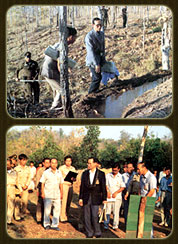
In 1995, the Food and Agriculture Organization of the United Nations paid homage to His Majesty and presented the “Agricola” Medal.
Royal Ceremony for the Presentation of the “Agricola” Medal
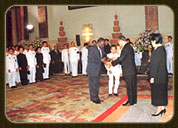
On December 6, 1995, a royal ceremony was held to present the “Agricola” Medal in honor of His Majesty King Bhumibol Adulyadej, conferred by the Food and Agriculture Organization of the United Nations (FAO).
“Agricola” is a Latin term meaning “farmer,” referring to those whose livelihoods the Food and Agriculture Organization of the United Nations (FAO) aims to improve. The FAO issues this medal to honor individuals who have achieved outstanding success in agriculture and rural development, as well as those who have contributed to the goal of “food for all,” which is the FAO’s mission. The image of the honored individual is placed on the medal, which is then distributed worldwide to publicly recognize and celebrate their achievements.
The Food and Agriculture Organization of the United Nations (FAO), fully recognizing the diligence and tireless efforts of His Majesty King Bhumibol Adulyadej throughout his reign to alleviate the suffering of the rural poor, acknowledged that His Majesty is a leader in agricultural development and natural resource conservation whose example should be followed by others. Whether through the thousands of royal projects initiated under His guidance or the establishment of Royal Development Study Centers, all initiatives have aimed to improve the livelihoods and quality of life of rural communities. The FAO has had the honor of participating in several of these royal initiatives, beginning approximately forty years ago when His Majesty graciously received experts in fisheries biology. Since then, the organization has collaborated directly with multiple royal projects across the country, including those at Chitralada Royal Villa.
Through these engagements, the FAO has developed profound respect and admiration for His Majesty King Bhumibol Adulyadej. In recognition of His Majesty’s Golden Jubilee, the FAO created the “Agricola” Medal to honor him and to share worldwide acknowledgment of the value of His royal initiatives. His Majesty’s dedication to improving the lives of disadvantaged rural populations and his unwavering commitment to agricultural development align closely with the FAO’s mission.
In the past, the FAO has depicted on the Agricola Medal individuals such as President Houphouet-Boigny of Cote d’Ivoire, who led his country to independence and supported small farmers in increasing the production of cash and food crops, making Cote d’Ivoire one of the wealthiest nations in Africa; President Suharto of Indonesia, in recognition of his country’s success in achieving rice self-sufficiency; and Mr. Mickey Leland, former Chairman of the United States Senate Hunger Committee, who fought to ensure food for the hungry and tragically died in a plane crash while visiting famine victims in Ethiopia, among others.
For the Agricola Medal issued by the FAO to honor His Majesty, one side of the medal bears His Majesty’s portrait, depicting Him holding a camera and a map—an image familiar to the rural subjects of His Kingdom—with an inscription in English that reads
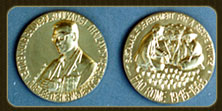
Gold Agricola Medal
“KING BHUMIBOL ADULYADEJ THAILAND – GOLDEN JUBILEE OF HIS MAJESTY’S REIGN” (His Majesty King Bhumibol Adulyadej of Thailand and the Golden Jubilee of His Reign). On the other side of the medal is a portrait of His Majesty in a rice field among farmers, symbolizing His close connection to the people of Thailand. The inscription reads “SUSTAINABLE DEVELOPMENT FOR A SECURE FUTURE,” with “FAO ROME 1945–1995” below, meaning “Sustainable development for a secure future.” This reflects His Majesty’s vision that farmers should receive support to develop themselves sustainably and ultimately become self-reliant. The inscription “FAO 1945–1995” also commemorates the 50th anniversary of the founding of the Food and Agriculture Organization of the United Nations.
The FAO commissioned a Thai artist, Professor Nontiwat Chantnaplin, Dean of the Faculty of Painting, Sculpture, and Graphic Arts at Silpakorn University, to design the Agricola Medal. Professor Nontiwat spent approximately two months on the design, but the design could not proceed until it was respectfully submitted to His Majesty King Bhumibol Adulyadej for approval. Once His Majesty approved the design, the FAO was able to produce the medal. Regarding the design concept, Professor Nontiwat explained that the medal was conceived with two sides. The first side, featuring His Majesty’s portrait, embodies the concept that King Bhumibol Adulyadej devoted his life to serving the people, dedicating himself to the well-being and prosperity of the Thai nation.
His Majesty traveled to every corner of the country to improve the well-being of the Thai people. The equipment He carried with Him—namely a camera and a map—accompanied His work and captured the full scope of His efforts. Therefore, the portrait on the medal depicts Him holding a camera and a map. A standard portrait alone could not convey the full meaning, as the King of Thailand was never idle.
The second side of the medal represents His Majesty’s royal initiatives in addressing the problems of rural communities. The design concept features His Majesty surrounded by Thai farmers, holding a camera and a map, while gesturing and offering guidance to the farmers who respectfully acknowledge His advice. The act of wai, a traditional Thai gesture of respect, is incorporated to reflect both the culture and the way of life of Thai farmers. Observing closely, the farmers are depicted as well-nourished, symbolizing their prosperity and well-being.
Professor Nontiwat Chantnaplin, the designer, explained: “After I completed the initial design, I respectfully submitted it to His Majesty for His review. Once His Majesty approved it, the FAO proceeded with the production of the medal. Designing this medal has been the most auspicious and meaningful work of my life, as it gave me the opportunity to serve His Majesty in a capacity that I could manage. I feel greater pride in this work than in any other piece of art I have created, because those were made for my own artistic expression, whereas this design was created to honor His Majesty—the most exceptional King in the world, and our revered Thai monarch. I also ordered a copy to keep as a personal keepsake.”
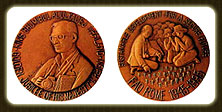
Bronze Agricola Medal
The Agricola Medal produced for this occasion was issued in gold, silver, and bronze. The silver and bronze medals are both 50 mm in diameter, while the gold medal is available in three sizes: 50 mm, 28 mm, and 19 mm. After the medal was presented to His Majesty, it was made available for public subscription on January 2, 1996. The FAO uses the proceeds from the sale of the Agricola Medal to support social and economic development programs for the poor in developing countries.
The granting of royal permission to feature His Majesty’s portrait on this medal effectively contributes to improving the livelihoods of impoverished rural communities, not only in Thailand but around the world. (Rangsit Information Journal, Vol. 2, No. 1, January–June 1996: 35–37)
Royal Proclamation in Honor of
His Majesty the King
On the occasion of the Director-General of the Food and Agriculture Organization of the United Nations
paying homage and presenting the Agricola Medal
On Wednesday, December 6, 1995
_____________
In recognition of His Majesty’s dedication to ensuring the well-being and prosperity of all the people of Thailand, especially those who cultivate the land, raise aquatic animals, and care for the nation’s forests.
In recognition of His Majesty’s commitment to promoting sustainable development for a secure future for all Thai citizens, through inspiring guidance, practical demonstrations, and the long-term success achieved by various royal projects and the Royal Development Study Centers established in agricultural areas across the kingdom.
In recognition of His Majesty’s intent to create social justice, clearly reflected in royal policies designed to provide farmers with land for cultivation and to preserve forest habitats for local communities.
In recognition of His Majesty’s initiatives and tireless efforts to conserve water to ensure food security, protect watershed areas, and prevent soil erosion.
In recognition of His Majesty’s vision to disseminate integrated agricultural development, combining water management with crop cultivation, and utilizing agricultural residues for livestock, thereby enhancing soil fertility.
In recognition of His Majesty’s far-reaching vision and royal initiatives to conserve plant diversity, which is essential for humanity’s pursuit of food security.
In recognition of His Majesty’s foresight of a world free from hunger and His desire for all Thai citizens to have sufficient food and good nutrition.
In view of the above, the Food and Agriculture Organization of the United Nations respectfully requested and presented the Agricola Medal for the year 1995 on December 6, 1995.
In 1999, the FAO also had the honor of presenting the Telefood Medal to His Majesty.
In acknowledgment of the genius of His Majesty King Bhumibol Adulyadej, the longest-reigning monarch in the world, whose reign has brought immense joy to the Thai people throughout the country. Speaking of His royal initiatives, it can be said that throughout His reign, His Majesty devoted Himself tirelessly to his subjects in every region, no matter how remote, alleviating suffering and enhancing the well-being of his people. His Majesty carried out royal duties in all areas, including public health, education, and engineering, with the greatest emphasis placed on…
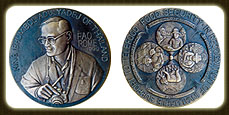
Mr. Jacques Diouf, Director-General of the FAO, presented the “Telefood” Medal to His Majesty on December 8, 1999, at the Chakri Maha Prasat Throne Hall.
Royal Initiatives in Agricultureb this may be because over 80 percent of the Thai population resides in the agricultural sector. His Majesty the King has been steadfast in His determination to develop agriculture and improve the quality of life for farmers. He has implemented various projects covering all aspects, including water resource development, land allocation for cultivation, promotion of fisheries, livestock, crop planting, and the conservation of natural resources and the environment. Even during national disasters or economic crises affecting the population, His Majesty has never abandoned His people. He provided the “Sufficiency Economy Philosophy” as a guideline for the people to navigate life amidst crises. Under this philosophy, He also introduced the “New Theory” in agriculture, which has been widely applied in many areas with clear, demonstrable results. The New Theory, or New Theory Agriculture, entails:
Dividing a small plot of land to maximize its utility so that it can produce a complete range of food. The land is divided into four parts: Part 1, 30 percent, is for digging ponds to store water; Part 2, 30 percent, is for rice cultivation; Part 3, 30 percent, is for planting fruits, perennial trees, vegetables, field crops, and herbs; and Part 4, 10 percent, is for residential purposes, livestock, and other structures.
His Majesty’s boundless benevolence and tireless royal initiatives have not only impressed the Thai people but have also earned international recognition, spreading His renown worldwide.
The Food and Agriculture Organization of the United Nations (FAO) is one such international organization that has recognized His Majesty’s diligence and benevolence toward His subjects, particularly in agricultural development and food security. These initiatives have improved the living standards of farmers through Royal Projects and agricultural development programs, widely acknowledged both domestically and internationally. On December 6, 1995 (B.E. 2538), His Majesty became the first monarch in the world to be presented with the Agricola Medal by the FAO.
In 1999 (B.E. 2542), the FAO deemed it appropriate to present the first TeleFood medal in honor of His Majesty the King on the occasion of His 72nd birthday, and to publicly recognize His Majesty’s outstanding royal initiatives as an agricultural monarch, who has consistently upheld the principle of food security—a key ideal aligned with FAO’s philosophy.
TeleFood is a food security project initiated in 1996 (B.E. 2539) by the Director-General of the Food and Agriculture Organization of the United Nations, Mr. Jacques Diouf. Its purpose is to raise awareness of global hunger issues and to encourage collective action to address them. To date, the TeleFood program has directly enhanced food security for impoverished farmers in developing countries. FAO created the TeleFood medal to honor and recognize individuals who have contributed or supported the organization’s TeleFood initiatives. The medal presented to His Majesty bears His Royal Portrait on the front, with a camera slung around His neck and a pencil in His hand—an image familiar to the Thai public from His visits to local communities. The inscription reads: “KING BHUMIBOL ADULYADEJ OF THAILAND.” On the reverse, it depicts Thai farmers engaged in various agricultural activities, including fisheries, livestock, fruit trees, vegetables, and water management, reflecting the New Theory Agriculture initiative that His Majesty granted to farmers to achieve household food security. Surrounding the image is the English inscription: “FOOD SECURITY IN RECOGNITION OF INVALUABLE SUPPORT TO TELEFOOD.”
The presentation of this medal marked a historic and joyous moment for the Thai people, as His Majesty became the first person to receive the TeleFood medal. Mr. Jacques Diouf, FAO Director-General, presented the medal on December 8, 1999 (B.E. 2542) at the Chakri Maha Prasat Throne Hall, with diplomats from various countries attending to express their admiration. The TeleFood medal thus symbolizes the memory of His Majesty’s continuous royal agricultural endeavors, earning Him the title, “The King Who Ensures Food Security for Humanity.”
Proclamation in Honor of
His Majesty the King
On the occasion when the Director-General of the Food and Agriculture Organization of the United Nations
Paid homage to present the TeleFood Medal
On Wednesday, 8 December 1999
_____________
With deep gratitude for His Majesty’s benevolence in actively supporting the efforts to overcome hunger and poverty, thereby creating food security.
With deep gratitude for His Majesty’s dedication to the well-being of the people in Thailand’s rural areas, enabling them to persevere in increasing agricultural productivity.
With deep gratitude for His Majesty’s encouragement of Thai farmers to achieve self-reliance through the application of the New Theory as guided by His Royal Initiative for integrated farming, making full use of the land for rice and other crops, small livestock, water storage, and fish cultivation.
With deep gratitude for His Majesty’s far-sighted vision to help create a world free from hunger, a goal wholeheartedly shared by the Food and Agriculture Organization, which is committed to seeking cooperation and support from the general public through the TeleFood program.
With deep appreciation for the aforementioned diligence and dedication, which has inspired hope and aspirations for Thailand’s success in the coming millennium, the Food and Agriculture Organization of the United Nations respectfully requests to present the very first TeleFood Medal in the world to His Majesty on 8 December 1999.
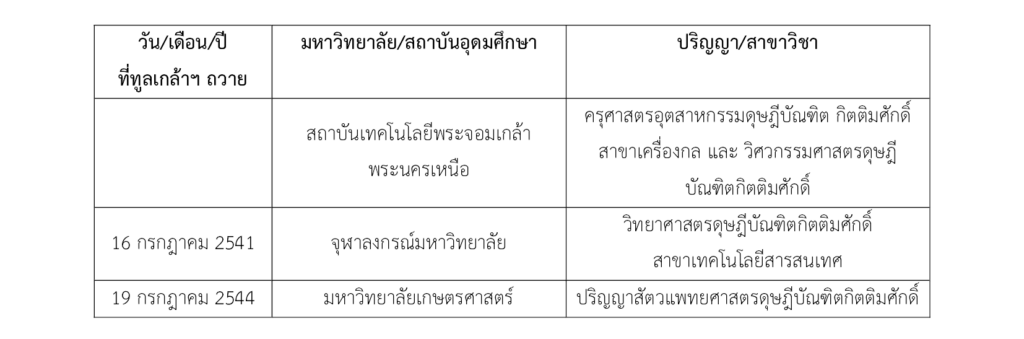
18.1 Thai universities have conferred honorary doctoral degrees from 1950 to 1998, including:



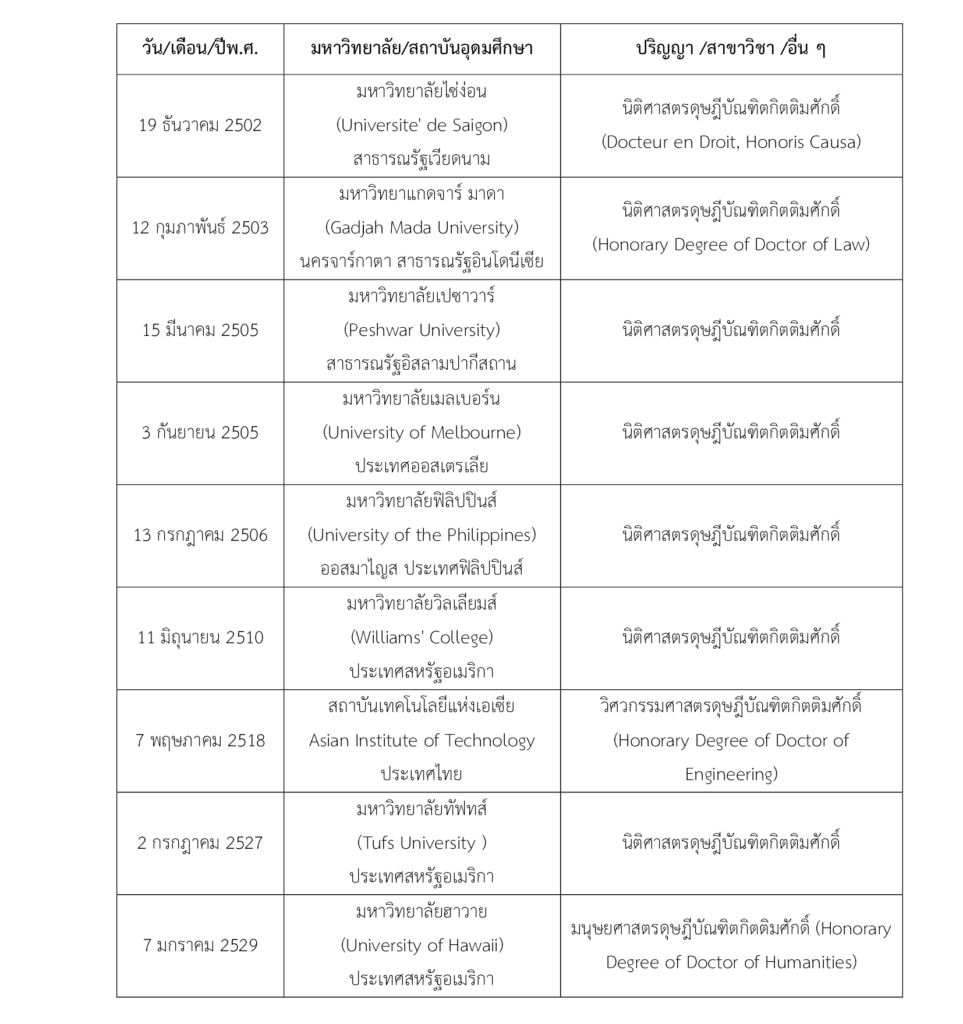
- 18.2 Foreign universities have conferred honorary doctoral degrees from 1959 to 1986 as follows:
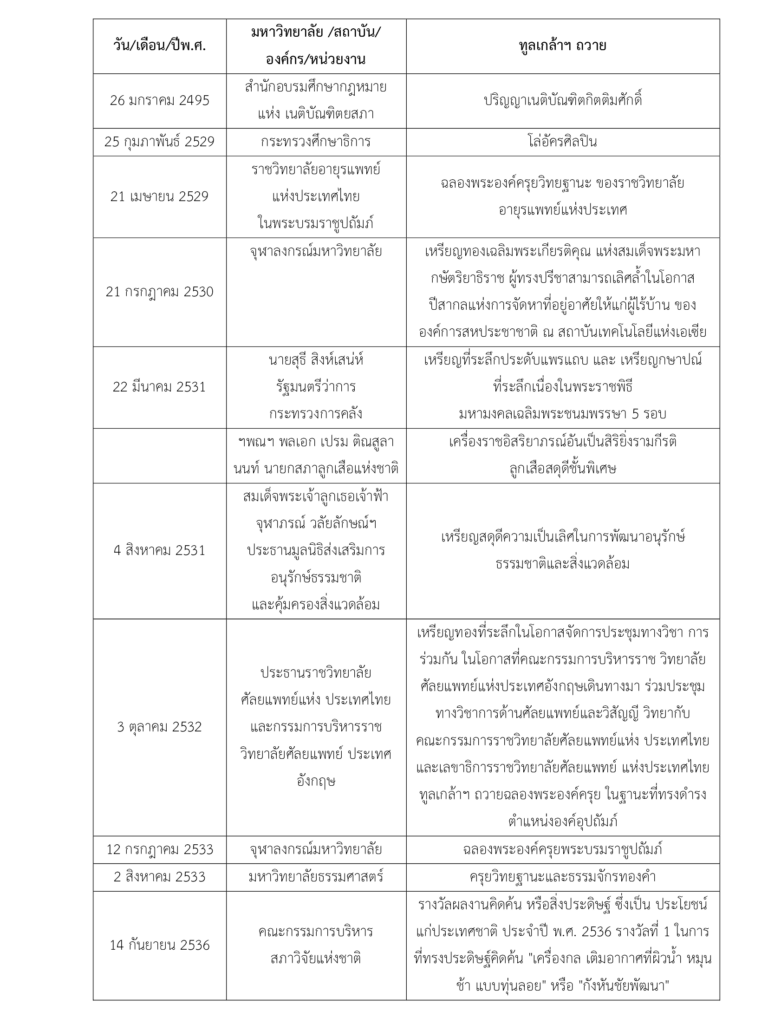
- 18.3 Universities, institutions, organizations, or agencies in Thailand have presented medals, plaques, certificates, etc., as follows:
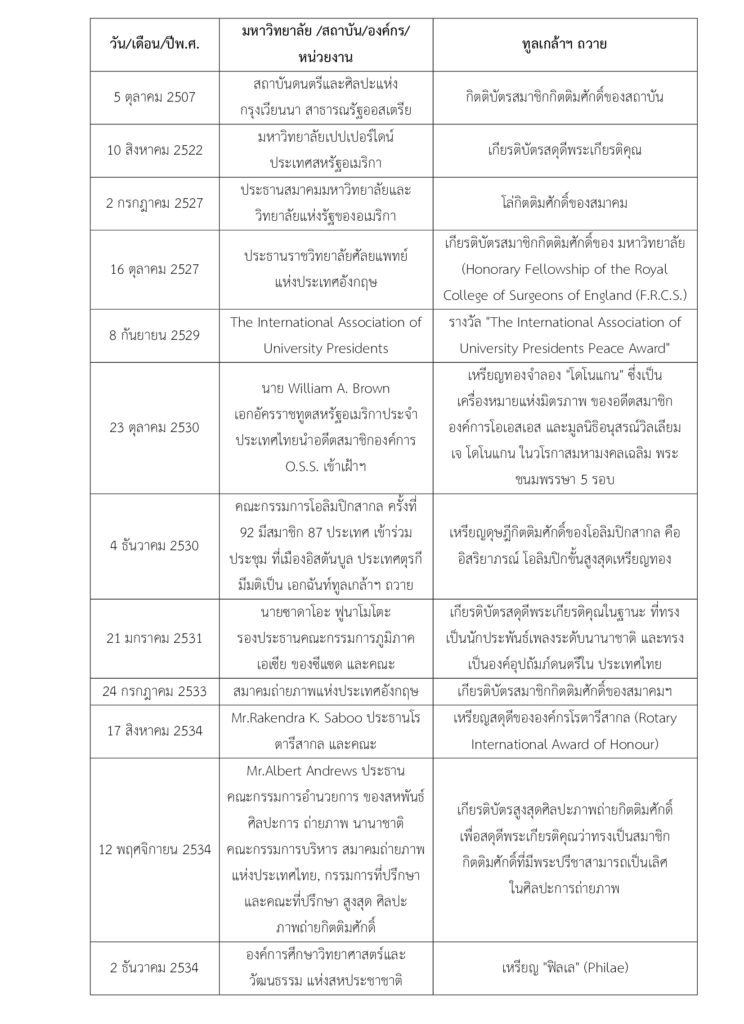
- 18.4 Universities, organizations, institutions, or agencies abroad or international bodies have presented medals, plaques, certificates, etc., from 1964 to 2000 as follows:
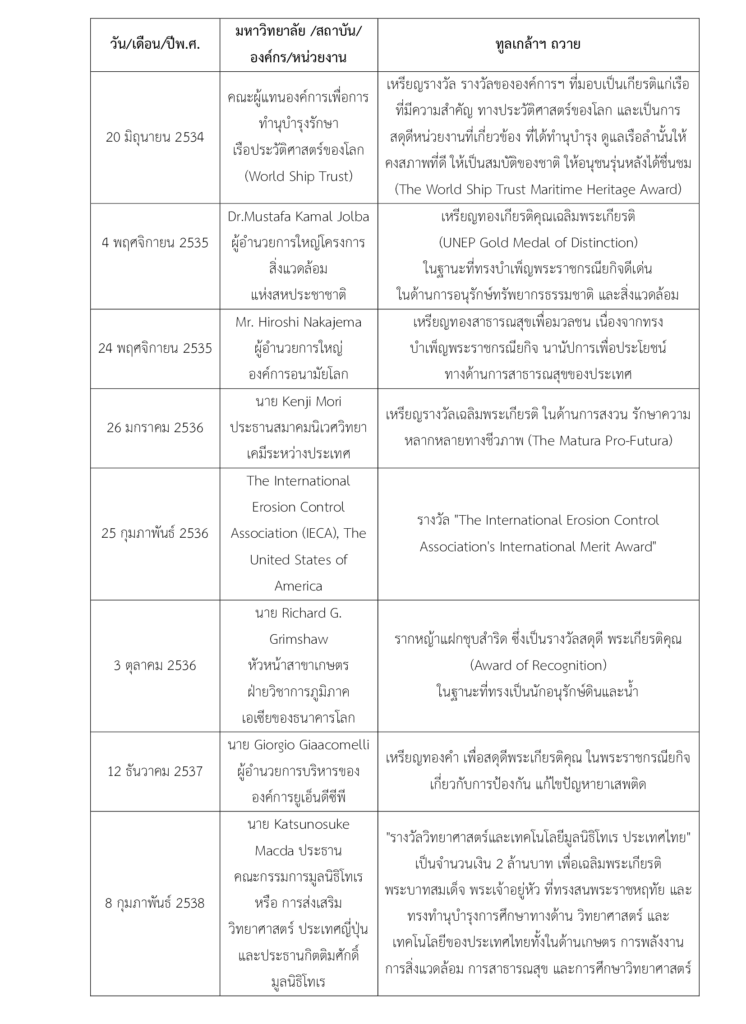
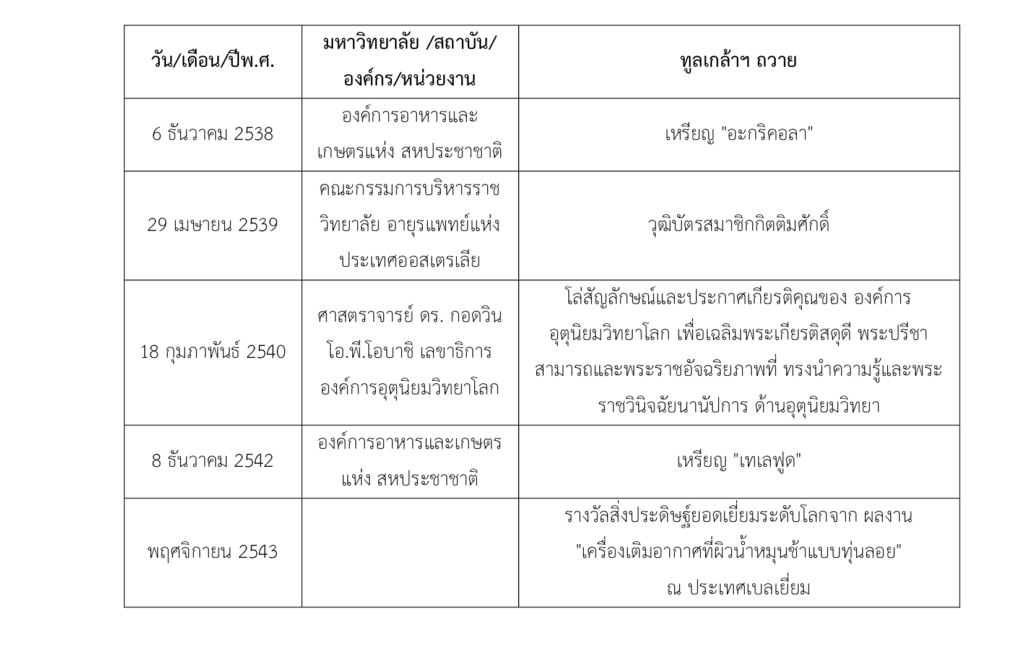
(from the book Chronicles of the Commendation in Honor of His Majesty the King (Office of the University Council) and Rangsit Information Journal, Vol. 2, No. 1, January – June 1996: pp. 23–31)