

His Majesty King Bhumibol Adulyadej The Great
Chapter 15: His Majesty’s Genius as a Teacher
His Majesty King Rama IX was the teacher of all Thai people. His royal duties and conduct reflected and reinforced this role as a teacher. The essence of His Majesty’s teaching can be summarized in three key aspects as follows:
The Qualities of a Teacher: His Majesty served as a role model, a giver, and a person of great compassion.
The Method of Teaching: His Majesty was an exemplary teacher whose teaching approach was clearly evident. He imparted knowledge with well-defined content, applied systematic teaching methods, and conducted evaluations and follow-ups to ensure understanding and accuracy in practice. Moreover, He provided supplementary instruction by offering further explanations and additional examples.

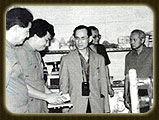
The Wisdom of a Scholar: His Majesty pursued study, research, and experimentation to develop new bodies of knowledge. It can therefore be said that He was truly a scholar—an outstanding scientist, statesman, poet, and musician.
(From The Reform of Thai Higher Education in Response to the Royal Initiatives: Proceedings of the 2000 Annual Conference of the Council of University Presidents of Thailand, 2000: 25)
Assoc. Prof. Dr. Suchet Smitinant, Director of the Institute of Culture, Ramkhamhaeng University, wrote an article published in the Journal of the Compilation of Cultural Promotion Works, Office of the University Affairs, 2nd Edition, December 1–3, 1999 (1999: 9–14), under the title “What Does His Majesty Teach?” An analysis of His Majesty’s royal conduct and speeches reveals that He was a teacher who imparted both worldly and spiritual knowledge. When these forms of knowledge are integrated, they bring great benefit to the nation and all its people. This demonstrates the profound wisdom of His Majesty the King, who recognized two major problems affecting Thai society as follows:
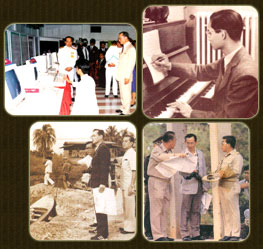
- The crisis inherent in the problems themselves, namely the fundamental causes of poverty, environmental issues, morality, and ethics.
- The deterioration in the quality of people, which has led to economic decline, political instability, administrative and organizational inefficiency, as well as unequal and low-quality education—factors that have prevented individuals from developing the capacity to learn and keep pace with the changing world.
His Majesty King Rama IX graciously offered his overarching vision regarding the ongoing social problems, emphasizing that the key to resolving them—especially those concerning the quality of people—lies in education. This development begins from within oneself, or what His Majesty called the “Intrinsic type of development,” symbolized by the concept of “exploding from within.” This idea is grounded in self-understanding and self-learning, leading to self-knowledge, which His Majesty regarded as the most essential form of knowledge.
Such knowledge is instrumental in cultivating self-control, self-reliance, and self-adjustment, ultimately leading to a state of “self-sufficiency.” This enables individuals to solve immediate problems, build self-confidence, and lay the foundation for future well-being and prosperity.
(Assoc. Prof. Thamrong Udompaichitkul et al., 1999: 67)
His Majesty King Rama IX also taught the people to appreciate the great value of the pursuit of knowledge, as reflected in one of His royal speeches:
“To promote and develop any undertaking successfully to achieve its desired goals, one must begin by examining the foundations of the work itself. It is essential first to survey and understand clearly the current conditions and structural basis of the work, which will help determine the appropriate course of action. Then, one must set out the operational steps in proper order of priority. Once the direction has been determined, implementation must proceed with steadiness and continuity, following a process appropriate to the circumstances and environment. This combination of factors will ensure steady progress until the ultimate objectives are fully accomplished.”
His Majesty King Rama IX was a monarch who taught his people to be self-aware. He offered both guidance and personal example in living a life grounded in Thai values—being content with what one has and maintaining vigilance and prudence in all endeavors. This teaching was beautifully reflected in His royal address delivered to the Cabinet, government officials, military and police officers, and citizens from all walks of life on the occasion of His Birthday Anniversary on December 4, 1997, a passage of which conveys a most profound and inspiring message as follows:
“Being a tiger is not important. What matters is that we can live adequately and have an economy sufficient for our needs. By ‘sufficient,’ it means supporting oneself to meet one’s own needs. Economists may say this is outdated, perhaps because others demand an economy focused on exchange, what they call a trade economy, rather than a sufficiency economy. It may seem less luxurious, but Thailand is fortunate that self-sufficient production is possible. For example, rice cultivation: I have encouraged growing enough rice for one’s own consumption, storing it in small family granaries. If there is surplus, it can be sold. Others, however, have said this is not appropriate, especially in the Northeast, where they insist on planting jasmine rice for sale. That is correct—jasmine rice sells well—but once it is sold, one must buy rice for personal consumption. These matters belong to a trade-based economy. In Western terms, it is called a trade economy, not a sufficiency economy, which they call a self-sufficient economy. If we can operate in a way that meets our own needs, we can live without hardship.”
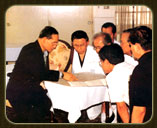
His Majesty King Rama IX instilled his royal initiatives for the people to practice continuously, ensuring that the cycle of development follows the natural order. He fostered awareness among the people (Awareness) by personally engaging with them during visits to every region. In these interactions, He would share essential knowledge, such as how planting vetiver grass can prevent soil erosion, using natural fertilizers can conserve and enrich the soil, correcting acidic soil in the southern region is feasible, and deforestation can lead to drought. Examples of His royal statements related to raising public awareness include:
“Thailand is a very suitable place for settlement, but it must be preserved, so that it does not turn from fertile fields into a desert. This can be prevented and managed.”
His Majesty inspired great interest among the people. Many may have heard of or followed projects initiated under His Majesty King Rama IX’s royal initiatives, often with unusual and intriguing names that piqued curiosity, such as the Monkey Cheek Project, the Soil Bank Project, the Salt Route Project, the Clean Water Drives Out Waste Water Project, and the Three-Flavor Water Project, among others. Each of these projects drew close public attention, yet His Majesty provided clear and detailed guidance for each, making them easily understandable and quickly accessible to people throughout the country.
Next, His Majesty emphasized the importance of evaluation by studying and gathering information to assess whether the projects initiated under His royal initiatives could be applied in one’s own context. He consistently adhered to the principle of allowing people to choose their own path of development, as expressed in His guidance:
“Consider that any undertaking requires time. If the work has already been initiated by others, those who wish to join must have the patience to cooperate with them. One must reconcile differences and, even if a certain point needs correction or improvement, efforts should be made gradually and appropriately.”
During the trial phase, projects recommended by His Majesty were tested to determine their effectiveness. In some cases, if the results were not yet clear, they were not disclosed to the public. Only when the outcomes were confirmed and His Majesty was confident would the projects be shared with the people—for example, the cultivation of vetiver grass for soil and water conservation, which was carefully studied for suitability and feasibility across the country before being introduced to the public.
In the adoption phase, royal-initiated projects that had passed multiple stages of trial and maturation, and which had been demonstrated at the Royal Development Study Centers and other sites, became examples that the public could observe and learn from. Thus, His Majesty’s initiatives were verifiable by the people, showing tangible benefits for their lives and well-being.
“National development must proceed in stages. The foundation is the sufficiency of the majority of the population—enough to live and to use—implemented with methods and tools that are economical yet scientifically sound. Once this foundation is secure and feasible, further advancement and higher economic status can be pursued progressively.”
Development, therefore, requires readiness in multiple aspects: scientifically sound methods, genuine intention, self-knowledge, and a foundation of sufficiency, followed by gradual and orderly advancement.
In 1956, Somdet Phra Wachirayanwong, the Supreme Patriarch of Wat Bowonniwet Vihara (Mom Rajawongse Chuen Noppawong, Pali name: Sujitto, P.7), who was deeply respected by His Majesty and considered to have rendered great personal service to Him, fell gravely ill. His condition caused widespread concern and was almost hopeless. By fortunate circumstance, he recovered miraculously. His Majesty then resolved that if He were to enter the monkhood with the Supreme Patriarch as the preceptor, it would fulfill His desire to show respect and devotion to him fully.
Moreover, with profound virtue and gratitude, His Majesty wished to pay homage to the kindness of His royal parents. He thus resolved to be ordained at Wat Phra Si Rattana Satsadaram in the Grand Palace, dedicating the merit of his ordination to honor their grace. His Majesty remained in monkhood from October 22 to November 5, 1956, for 15 days, receiving the monastic title “Phumiphon Bhikkhu” and residing at the Phan Ya Palace, Wat Bowonniwet Vihara. During this period, a royal command appointed Her Majesty Queen Sirikit as the regent. As a monk, His Majesty observed monastic life like any novice, studying the Dhamma and strictly adhering to the Vinaya.
1. Diligence (as expressed in the Golden Jubilee Ceremony of His Majesty’s Accession, June 9, 1996, at Sanam Luang)
“True and righteous diligence is twofold: one, to eliminate all forms of decline and to guard against their recurrence; and two, to create goodness and progress while ensuring they are preserved and not lost. Both forms of diligence are essential for personal conduct and professional practice. If everyone in the nation applies themselves with such diligence, benefits and happiness will arise for both the individual and the community.”
2. Promoting Good People (as expressed at the National Scout Rally, Wachirawut Camp, Chonburi, December 11, 1969)
“In any country, there are both good and bad people. No one can make everyone good. Ensuring peace and order in the nation does not mean making everyone virtuous; rather, it lies in promoting good people, allowing them to govern the country, and ensuring that their power is exercised responsibly without causing trouble or disorder.”
3. Fostering Unity (as expressed during the Royal Audience at the Birthday Celebration Ceremony, Dusit Palace, December 4, 1991)
“Thai people have been able to maintain independence and sovereignty by valuing unity and understanding the duties of each party, so that they can cooperate and support one another… ‘Know’ means to understand the meaning of unity, and ‘Love’ means to value and cherish unity.”
On April 17, 1987, His Majesty delivered a message on unity to be read at the General Assembly of the Unity Association under Royal Patronage:
“Unity, in common understanding, often refers merely to holding together firmly. If it is only that, it seems to have little value, because it does not generate any benefit. True unity should have a deeper meaning: it should signify the harmonious cooperation of all parties and individuals, with a clear awareness of responsibility to contribute knowledge, skills, and all personal qualities in concert with one another, supporting and assisting each other to create meaningful and beneficial results, leading to the progress of the community and fellow human beings.”
4. Preserving Thai Identity (as expressed February 27, 1994)
“Thai identity is a valuable heritage of the world that should not be neglected or destroyed, as doing so would result in the loss of this precious asset. Those best suited to preserve Thai identity are the Thai people themselves. It is the duty of Thai people to safeguard their identity consistently—materially, morally, and intellectually.”
5. Applying Wisdom (as expressed December 4, 1998)
“The words ‘argue’ and ‘consult’ are different. ‘Argue’ relies on emotion, while ‘consult’ relies on wisdom. If people can consult one another with wisdom, they will reach a solution, because truth is singular, whereas falsehood and error are many. The correct path, which leads to success, is therefore unique.”
6. Being Prudent (as expressed December 31, 1985)
“Human life cannot consist of happiness alone; it will inevitably involve suffering, danger, and obstacles. The key lies in preparing oneself—mentally, physically, and emotionally—at all times. When facing adversity, one must respond with prudence, reason, scientific knowledge, and unity, thereby turning difficulties into manageable situations and transforming challenges into benefits.”
7. Upholding Virtue (as expressed to the Unity Association under Royal Patronage at the Annual Meeting, April 10, 1982)
“Virtue, which anchors the mind, has several aspects. First, giving—providing assistance, forgiving, and offering good advice to one another. Second, speaking well—using truthful, encouraging, and beneficial words toward others. Third, consistent conduct—behaving appropriately without seeking to stand out above others or fall below the standards of the group. A community grounded in such virtues will naturally be stable and strong.”
Preserving freedom and Thai identity is a supreme duty. Beyond intelligent, capable, and righteous governance, it requires the cooperation and support of all citizens. Each individual must strive to contribute positively and uphold virtue appropriate to their role. The four essential virtues that everyone should learn and practice are:
The first virtue is honesty—being sincere with oneself and practicing only what is beneficial and just.
The second virtue is self-discipline—training oneself to act according to truth and goodness.
The third virtue is patience, restraint, and moderation—avoiding any wrongdoing under all circumstances.
The fourth virtue is letting go of evil, upholding integrity, and sacrificing one’s minor interests for the greater good of the nation.
If each person strives to cultivate and nurture these four virtues widely, it will help the nation achieve happiness, peace, and the opportunity to develop and advance steadily as intended.
“…To accomplish work successfully, in a way that is beneficial and just, knowledge alone is insufficient. It must be accompanied by integrity, sincerity, and righteousness. Knowledge serves as the engine that propels the vehicle forward, while virtue acts as the steering mechanism or rudder, guiding it safely toward its intended destination. Therefore, in carrying out work for oneself or for the public, everyone should always remember that social and national undertakings cannot progress without knowledgeable administrators. However, any work, society, or nation lacking individuals of virtue and integrity cannot endure…”
(Royal Address at the Graduation Ceremony of Ramkhamhaeng University Students, July 8, 1977)
8. Frugality and Economy (as expressed at the Graduation Ceremony of King Mongkut’s Institute of Technology, October 30, 1978)
“Economy is highly desirable in all places and at all times.”
“Extravagance leads to dissatisfaction. A person who is extravagant will never acquire enough wealth to satisfy their excess; their appetite is insatiable, always open. No matter how much is given or obtained, it is never enough. Therefore, one must find ways to prevent extravagance and the practices that feed it, which include corruption.”
And as expressed at Dusit Palace, Chitralada Garden, Dusit, on December 4, 1997:
“It is believed that Thailand can overcome crises better than many countries because the land and terrain remain suitable for living. However, life must not be extravagant; it must be economical and follow the correct path.”
9. Honesty and Integrity (as expressed to civil servants on Civil Service Day, April 1, 1985)
“Successful work relies primarily on two abilities: the ability to apply knowledge effectively in life, and the ability to maintain good relationships with others. Both must proceed together and be carried out with integrity in body and mind, free from bias, and guided by reason. Only then can work achieve its objectives and produce complete benefits.” And as expressed to graduates at Kasetsart University on July 19, 1956 “To perform duties successfully requires not only knowledge and ability but also honesty and conduct in accordance with what is right, proper, and honorable.”
10. Self-Reliance (from the royal composition Phra Mahachanok, p. 25)
“Some people in this world see the result of their own determination and carry out their work, whether successful or not… Yet they witness the outcome for themselves. Others may be lost in the ocean, but we alone continue swimming and see the results… We must strive, maintain focus, and exert the perseverance that a person ought to apply to reach the shore of the great ocean.”
From this passage in Phra Mahachanok, authored by His Majesty King Rama IX, it is evident that self-reliance, achieved through perseverance, enables humans to survive safely, even amid dangers and adversity. With endurance and determined effort, without giving up, success will eventually await. This represents a life lived with dignity, fully embracing humanity.
Beyond the ten virtues described above, His Majesty also provided royal guidance in other areas, including:
Royal Guidance on Morality and the Mind
“Today in our country, there are voices claiming that people’s thoughts and minds are deteriorating. Many corrupt behaviors are tending to become generally accepted and tolerated. Naturally, such conditions darken the way of life for each person. This presents a major problem, like a tidal wave flooding everywhere, and it must be addressed by collectively resisting this tide.
In living our lives, we must restrain ourselves from doing anything we know to be wrong or immoral. We must resist every thought and behavior that conflicts with righteousness. We must have the courage to act in accordance with what we know is good, right, and just. If we can truly do this together and increase the results of good actions, it will help sustain the community, preventing moral decline and gradually restoring it to better conditions.”
“Many social problems today arise from various causes. But a principal cause that intensifies these problems is the lack or deficiency of order, cleanliness, stable conduct, and proper thinking in individuals. All religious organizations have the purpose and mission of cultivating behavior and the mind so that individuals are imbued with virtue and ethics according to religious principles. Therefore, they should be able to address social problems effectively. All parties ought to cooperate and support one another earnestly, coordinating systematically with clear and appropriate methods for teaching and disseminating the Dhamma. Most importantly, efforts should focus on instilling belief and faith in virtue and goodness through exemplary practice, showing people the benefits and value of such conduct, accompanied by compassionate guidance. Care must be taken to avoid teaching in a way that provokes opposition or resistance in the audience, as this will not produce beneficial results.”
“Even amid the progress and advancement of the modern era, we cannot neglect education in the mind and morality. On the contrary, we should pay greater attention and teach with increased diligence, ensuring that understanding and thinking remain correct and aligned with an environment that is constantly evolving.”
“Recently, our country has experienced a rapid increase in population, and there are some signs that part of our population is deteriorating in behavior and mind. This is a matter of concern, for if it continues, we may not be able to endure.”
“Doing good deeds is neither outdated nor shameful. It is something everyone can do with ease, yielding worthwhile results. Goodness has intrinsic value and lasting benefits that never change; only society’s perception of what is good may change.”
“All things exist and thrive because they maintain balance within themselves. Human life, for example, depends on the proportionate presence of oxygen, hydrogen, and carbon, the essential components of life. When any core component of life is lacking and balance cannot be restored, life deteriorates and perishes. The same principle applies to other natural phenomena and human creations, such as machinery, factories, buildings, houses, as well as systems like the economy, law, and theory. They all require balanced components. When scholars understand clearly this truth about the balance of all things, it is essential to use knowledge, thought, science, and all abilities to maintain the stability of these balances. It is believed that if everyone and all parties can observe this principle consistently, deterioration, losses, and the myriad problems confronting us today can be alleviated and resolved.”
His Majesty also spoke about “true happiness and prosperity”:
“True happiness and prosperity are those that individuals attain through righteousness, both in intention and action, not by chance or by depriving others. Genuine prosperity is constructive, benefiting others and society as a whole. In contrast, false prosperity arises from unjust actions, causing harm and destruction to others and the community. Ultimately, such destruction will return to harm the perpetrator, for once the community is destroyed, one cannot stand alone and will also fall.”
“In summary, material progress and spiritual development must advance together. The balance of all things must be maintained for sustainable prosperity. The pursuit of happiness and development must be carried out with righteousness and justice.”
His Majesty’s teachings on religion:
“Human beings must have religion, which is the set of thoughts or principles held firmly in one’s mind as a personal guide for conduct. One must also have education, which is knowledge in both mental and material aspects, to apply to oneself in order to live. Both are essential and inseparable.”
“The nation is developing in all aspects and requires unity and order. Such benefits can be realized if the people have a firm moral foundation, with correct faith and wisdom, and act in ways that benefit the community. An important duty is to promote among the people the Triple Gem and the teachings of Buddhism as the basis of mind and conduct, grounded in correct faith and wisdom.”
“Religion points the way to a life free from wrongdoing and leads to peace and prosperity. People therefore trust and practice it, supporting and upholding it for the benefit, happiness, and well-being of all. Buddhism has a special and noble quality in that it relies on reason and truth as the foundation of its teachings, which individuals can contemplate with wisdom and apply in practice for happiness, prosperity, and purity according to their own capacity. It is a religion compatible with the principles of science and truly beneficial for anyone willing to study it and select suitable teachings for practice.”
“Supporting and promoting the religion can be done most effectively by maintaining the purity and completeness of the Dhamma-Vinaya, both in theory and practice. Promoting morality and ethics among the people should consider the knowledge, mindset, and disposition of each individual and group. One must wisely select the teachings appropriate to their foundation that can genuinely benefit them, explain and guide them in practice for those benefits, which will inspire faith, satisfaction in goodness, and lead them to internalize and strengthen their practice independently.”
“Buddhism is a religion of benefit. Whoever studies and practices the teachings of the Buddha will gain benefits according to the manner and diligence of their study and practice. Therefore, maintaining the growth and stability of the religion should emphasize showing the benefits of studying and practicing the Dhamma. As more people study and practice the Dhamma and derive benefit from it, the religion will naturally flourish and spread. It is essential to practice with strictness and firmness, ensuring that the Dhamma is taught in its pure and complete form without distortion or deviation. Emphasis should be placed on foundational study and practice of the Dhamma, because ordinary people need a method that is easy to learn, clear to understand, and convenient to practice. Once the benefits of practicing the Dhamma are experienced, people will be satisfied and motivated to study and practice further on their own. As more Buddhists understand and correctly practice the Dhamma, the corruption of the religion will decrease, and it will thrive and remain steadfast, as everyone desires.”
“The direct aim of all religions, particularly Buddhism, is to enable individuals to study and reflect on the principles and teachings of the faith, and then internalize and practice them according to their ability. This is intended to bring benefit to one’s life, creating peace and prosperity for individuals and the community, as well as purity and liberation, which are the ultimate benefits. Therefore, the promotion and support of Buddhism should be carried out with this goal in mind.”
“The method of studying and reflecting on the principles and teachings of religion for such benefits relies on two essential factors: examining with purity of heart and with rational reasoning. Examining with purity of heart means studying, reflecting, and practicing the Dhamma for the sake of the Dhamma itself, and for the benefit it can bring—not for any other gain or for benefits that might later bring harm. Examining with rational reasoning means analyzing according to true causes and effects, not confused or distorted ones, and also applying principles of logic, psychology, and other scientific methods.”
“All religions, at their highest level, are called ‘paramattha’ (ultimate principles), which refer to the philosophy of the religion. Philosophy is generally an individual’s understanding and belief about how the world came to be, how it will go, and how ultimate happiness can be achieved. Each religion has its own practices, which ultimately aim to attain personal peace and happiness. Attaining heaven or spiritual success is essentially achieving this ultimate happiness. The mind, however, with its greed, anger, delusion, and craving for power, is difficult to control. Therefore, education must address both aspects: teaching skills and knowledge for making a living—meaning having a profession and practical knowledge—as well as learning to control one’s mind.”
On self-control and using knowledge for the benefit of society:
“One must control one’s mind and maintain self-discipline in order to use material knowledge for the benefit of oneself and society. Since we live in a community, if we do not control the knowledge we possess in material matters, it may cause trouble for others, and ultimately become trouble for ourselves.”
“All religions, whatever their names may be, should be promoted and supported to strengthen the unity of society. Therefore, the long-standing harmony among various religions in Thailand has contributed to the peace and well-being of our country.”
On the Truth (Dhamma):
“Buddhism studies suffering itself. People dislike suffering and wish to be free from it, yet achieving this is difficult because people often feel they are not suffering, desire happiness, and become agitated or dissatisfied when needs are unmet, resulting in suffering. Studying Buddhism means understanding the nature of suffering, why we dislike it, and how it arises within us. We must recognize its causes, and then examine how suffering can cease. While suffering cannot be fully controlled and must follow its course, it eventually ends, just as happiness comes and goes. The purpose of studying Buddhism, as the Buddha taught, is to understand the origin and nature of suffering and the path to its cessation. This is called the Noble Truths (Ariya Sacca). Therefore, studying Buddhism is essentially the study of the Noble Truths.”
(Royal Speech of His Majesty King Bhumibol Adulyadej to representatives of Buddhist associations nationwide, at Dusit Palace Sala Dusit, on Saturday, December 13, 1980.)
Royal Speech on the Noble Truths (Ariya Sacca):
1. “Suffering exists not only in poverty. Even those who are very wealthy can experience much suffering, sometimes more than those who have little. The root of suffering lies in the mind. We can create suffering ourselves, as if we can choose whether to experience suffering or happiness.”
2. “Do not allow suffering that has not yet arisen to occur. If we do not permit it, that means keeping the mind pure at all times and acting righteously. When this is practiced, suffering finds it difficult to arise. When it is difficult to arise, existing suffering gradually disappears. As the Buddha taught, all things are impermanent, and suffering is also impermanent.”
3. “The mind suffers because it perceives itself as suffering. If we observe and understand the sensation of suffering, we realize that suffering comes and goes. This awareness reduces suffering in the mind and brings relief.”
4. “Samudaya, the origin of suffering, must be examined by observing the mind. We must see how our mind experiences suffering or happiness. For example, when we are hungry and see delicious food, simply seeing it brings pleasure. It is natural to desire food to satisfy hunger. Consuming it to sustain life is not suffering, but if one eats out of uncontrolled desire, suffering arises.”
5. “Ordinary suffering comes and goes. But suffering that we create can be controlled. This is called ‘cutting off suffering,’ because in this way suffering does not arise.”
6. “What Buddhism studies is suffering itself. Suffering is something people dislike and therefore wish to be free from. Yet freedom from suffering is very difficult. People feel they are not suffering and are happy, but when happiness diminishes or someone causes discomfort, it generates anger, dissatisfaction, agitation, and unhappiness—thus creating suffering.”
7. “The Buddha taught that there are Sila, Samadhi, and Panna. Sila means we must be careful not to commit wrongful acts; it serves as a guideline to prevent us from making mistakes or causing harm. It is not meant to imprison us. Sila is like a cage—we may feel confined, thinking we cannot do this or that because the rules prohibit it. But if we consider a situation like in films where divers are lowered into waters filled with sharks, we cannot put sharks in a cage, so we put the diver in a cage for protection. In the same way, Sila acts as a cage to prevent harmful things from touching us. Initially, Sila controls us, but later it becomes a shield that protects us from trouble. Violating Sila brings trouble; it is an unwholesome act that produces negative results. Therefore, Sila is established to protect us.
8. “Samadhi strengthens the mind so that we can maintain mindfulness and awareness. When we see or do anything, we understand the consequences. We know what is right and what is wrong. This awareness leads to knowledge, which then develops into Panna (wisdom). We learn to discern what should or should not be done.
9. “Ignorance is the lack of true knowledge; it obscures the mind and conceals reality. Thus, we must find ways to remove this veil. To lift the veil, we need to calm the mind. This is called Samatha or meditation, which is not frightening. Some people fear that meditation may cause madness, but it should begin gently. We must start by removing obstacles that obscure the mind. Only then can true concentration arise.
For example, if we intend to walk toward a door, but keep looking at walls, ceilings, or curtains, we will never see the door. If we decide that our concern is only to reach the door, we can withdraw attention from distractions. Most of the time, we are entangled in desire, anger, or restlessness. We may attempt to find peace, but without sufficient effort, we may feel drowsy or skeptical, and fail to see the door. We must sweep away doubt and hesitation to achieve true concentration.
However, if we try to see what is obscuring and say that now it is not the time to be distracted, withdrawing these obstructions, concentration arises immediately. This is called Samadhi. By making the mind calm through meditation, we come to see our own mind. The mind is no longer mysterious; it becomes revealed—we open ourselves to ourselves. Today, we use meditation to still the mind first. Then, when emotions arise—which they do at all times—we contain them as much as possible by restraining the hindrances, like controlling water so it does not ripple. We observe, watching the reactions of the mind and its movements. The mind is what makes us happy or suffering. When the mind is happy, sometimes it may be excessively joyful, which could lead to harm.”
10. “If we perform merit in every way—that is, doing good with good intentions, experiencing delight, receiving the results of merit, and continuing further—careful reflection will give rise to what is called wisdom or true knowledge. This wisdom is not the worldly knowledge obtained from degrees or titles; it is the real wisdom that sees reality as it truly is. By performing merit, we gradually perceive the truth, gaining wisdom, and we can control the arising of suffering in the mind.”
11. “Performing merit, as mentioned, refers to giving (Dana). Proper merit-making includes striving to do what is good, correct, beautiful, and ethical, avoiding harm to others—this is virtue (Sila). Once we have virtue, we can engage in contemplation, which is meditation (Bhavana). Continuous practice of meditation leads to concentration (Samadhi). When concentration is established, meditation continues daily, leading to wisdom (Panna). The Buddha summarized that virtue, concentration, and wisdom collectively comprise the Four Noble Truths. When we attain the Fourth Noble Truth, we then realize the Third Noble Truth, for with wisdom comes liberation.”
“The royal conduct and duties of His Majesty King Bhumibol Adulyadej, according to His royal determination, reflect His benevolence in consistently imparting knowledge and guidance to the people. Moreover, He exemplified behavior for the populace, allowing them to study and learn practices that help solve problems in life, benefiting the individual, society, and the nation.
Therefore, the royal teachings, if sincerely applied, can elevate the quality of life for all Thais. In every province, the people have witnessed both the personal and altruistic virtues of His Majesty. It is thus appropriate to offer loyalty, honor, and blessings by following and upholding His royal guidance.”
The royal guidance and speeches of His Majesty can be taken to heart and adopted as practical guidelines for the way of life of every individual. This serves as a proper response to the love and care that His Majesty holds for the people. At the same time, some individuals or groups of Thais today still tend toward negligence, extravagance, and indulgence in frivolous or harmful behaviors, remaining attached to vices rather than following the exemplary path taught by His Majesty. For this reason, in the teachings of Buddhism, the Buddha praised “merit through practice” (Patipatti-bucha) more than “merit through material offerings” (Amis-bucha).