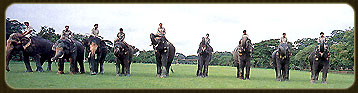

His Majesty King Bhumibol Adulyadej The Great
Chapter 13: Royal Duties in Literature, Museums, and Culture
1. Royal Duties in the Field of Literature of His Majesty King Bhumibol Adulyadej the Great
Associate Professor Sunee Sindhudecha (1980: 176) defined the term “literary works” as follows:
“… Literary works in essence refer to various endeavors relating to art, language, and culture …”
His Majesty King Bhumibol Adulyadej the Great had a profound interest in literature, such as:
1.1 Awareness of the Importance of the Thai Language
His Majesty King Rama IX served as an exemplary model for his people in every respect. In the field of language and literature, this was evident in the royal addresses and speeches delivered to individuals in both public and private institutions on various occasions and at diverse venues. Each was always appropriate to the audience, the occasion, and the circumstances. In expressing his thoughts and in the use of language, every word bore meaning, with a style that was simple yet profound. His Majesty exercised great precision in his choice of words and expressions, as illustrated in the following passage:
“… You must never forget that you are Thai. We Thais have had our own progress for a long time, which is substantial, enduringly beneficial, and suited to our people. What we already have in goodness does not need to be replaced by something else. If we are able to adopt what we still lack and adapt it for the benefit of our nation, then it is appropriate to do so …”
(Royal Address to the Samakkhi Association under Royal Patronage, at the 45th Annual General Meeting, Friday, 2 August – Sunday, 11 August 1968)

His Majesty King Rama IX consistently emphasized the importance of the Thai language in various royal addresses, such as the following:
“… Language is essential for the nation. Let us cooperate to preserve the standard of the Thai language so that it does not deteriorate …”
“… The Thai language must be cherished. It is our own language from ancient times. We must preserve its purity by pronouncing it correctly and clearly, and by maintaining purity in the way words are used …”
“… New terminology is necessary for academic purposes. However, for some simple words, we should continue using our traditional expressions that already exist, rather than adopting newly coined terms—which may appear less fashionable …”
“… The richness of the Thai language is immense, yet people tend to think otherwise and thus feel compelled to coin new terms. While coining new terms is sometimes necessary, it can also be dangerous …”
(Language and Literature of Thailand, Association. Phen Phra Phiriya Koen Cha Rampan. Bangkok: Language and Literature Association, 1987: 191)
This royal address reflects His Majesty King Rama IX’s intention that the Thai people should recognize the importance of their language and preserve it as a standardized and undeteriorated medium. Thai words should be pronounced clearly and accurately.
Furthermore, His Majesty stressed the importance of making proper use of the abundance of Thai vocabulary already available. New terminology should not be introduced unless truly necessary; rather, it is more appropriate to consider using existing words.
His Majesty the King also further emphasized the significance of the Thai language in another address:
“… The Thai language is one of the instruments of the nation. All languages are a kind of human tool; they serve as a means of expressing thought, and they are also a form of beauty. Therefore, it is essential to preserve them well. Thailand has its own language, which must be cherished. Many neighboring countries also have their own languages, yet they are not always strong and must strive to secure and stabilize their languages …”
(Chulalongkorn University, Faculty of Arts, 1964: 5)
Another royal address further illustrates His Majesty King Rama IX’s profound insights on language:
“… Our Thailand is not like Middle Eastern countries, nor like our neighbors. Thailand is fortunate to have our own language, one that we can use without having to destroy it. In contrast, Middle Eastern nations and some of our neighbors have had to abandon their original languages, because of nationalism. Let us, in our love for our nation, never destroy the language we already have. Those nations were long under British rule and thus compelled to adopt English. Later, when living alongside Pakistan, they sought to separate themselves for national identity. Pakistan did not want to follow India; India did not want to follow Pakistan. They quarreled greatly, all in an effort to demonstrate their power and identity through language—even to the point of creating confusion. But such confusion is not as significant as the spirit of patriotism …”
(Chulalongkorn University, Faculty of Arts, 1964: 17)
In aspiring for the Thai people to recognize the value of their language and to cultivate an appreciation and fondness for using it, His Majesty himself served as an exemplary model in the proper use of language.
This was evident in all his royal addresses, whether formal or informal, where he employed rhetoric with mastery and, at times, infused his words with humor. For instance, during his private musical performance at the Siriraj Hospital Auditorium on Saturday, 24 July 1971, His Majesty delivered a royal address to students of Mahidol University, displaying his wit while also conveying a thoughtful reminder of the importance of using the Thai language.
“… The patients are people living in Thailand, and most of them are Thai. Even those who assist in the work, such as hospital staff who are not physicians or certified nurses but who perform supportive duties, are also Thai. Yet why must the signs for entering the restroom be written in a foreign language, with no Thai at all? If someone wishes to use the restroom, they may be unable to do so. Even the janitor, sweeping the floor, would have to be able to read a foreign language in order to find a broom …”
(Chamnarn Rodhetphai, 2002: 88–90)
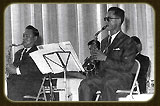
1.2 His Majesty’s Interest in the Use of Language and His Concern for the National Language as Expressed in the Royal Address to the Graduates of Chulalongkorn University on 9 July 1959
“… We are fortunate to have had our own language since ancient times; therefore, it is most appropriate that we preserve it. There are several issues involved in safeguarding our language. One is to maintain purity in pronunciation—that is, to pronounce words correctly and clearly. Another is to preserve purity in usage, meaning that the construction of words and sentences is a significant concern. The third issue is the richness of the Thai vocabulary, which many of us believe to be insufficient, thus leading to the coining of new terms. At present, it appears that words are often used in a redundant manner and not in accordance with their true meanings, while pronunciation also fails to follow correct orthography. If this continues, our language will only deteriorate. The Thai nation already possesses its own language, a precious heritage handed down to us. Therefore, it is the duty of everyone to preserve it. I thus call upon all students, graduates, and teachers alike to join in preserving and promoting our language, which serves both as a tool and as a safeguard for the prosperity of our nation … This passage demonstrates His Majesty’s sincere reminder to graduates and all citizens—the true owners of the nation—to recognize the importance of language in expressing national identity, and that if we, as the rightful users of the language, fail to use it correctly and neglect to preserve it, this equates to failing to safeguard our country, and reflecting his deep concern, His Majesty performed a memorable royal duty that left a profound impression on those who had the honor of being in his presence when he presided over the academic conference of the Thai Language Club, Faculty of Arts, on 29 July 1962 to discuss the deterioration and shortcomings in Thai language education.
During this meeting, His Majesty spoke as follows: “… First of all, I would like to express my gratitude and congratulations on the establishment of the Thai Language Club to preserve and study the Thai language, and I thank you for welcoming me today, even though you did not invite me but I invited myself, because my patience is boundless. The establishment of the Thai Language Club is most appropriate, for the Thai language is one of the instruments of the nation. All languages are tools for humans; they serve as a means of expressing ideas and are also a form of beauty, as seen in literature, for example. Therefore, it is essential to preserve them well. Thailand has its own language, which must be cherished.”
From this royal address, it is evident how deeply His Majesty King Rama IX was interested in the national language. Considering his skill in organizing and choosing words, it is clear that he used language that was easily understandable and demonstrated his benevolent disposition and royal compassion toward the people, as reflected in his words: “even though you did not invite me, I invited myself, because my patience is boundless.” Those who had the honor of attending this meeting personally would find it difficult to forget his profound kindness.
His concern extended beyond the language itself, as he was also an astute observer, exemplified in his remark: “… The issue of pronunciation is extremely important. Consider the word ‘มหาวิทยาลัย’ (university). Nowadays, on television or radio, it is often mispronounced as ‘หมาวิทยาลัย,’ turning it into ‘dog university,’ which is quite dangerous and unacceptable. Some deviations can be tolerated, such as the word ‘ฉัน’ which is written as ‘ฉัน’ but pronounced ‘ชั้น,’ or ‘น้ำ’ pronounced as ‘น้าม,’ which can be accepted to some extent. But the word ‘มหาวิทยาลัย’ must never be mispronounced.”
His Majesty also commented on the creation of new Thai terms, emphasizing that coinage should ensure broad public comprehension, noting that “when people coin terms that are difficult to pronounce or understand, the meaning may be misinterpreted, and even 50 or 100 years later, no one will know the origin of the word.”
His expertise in the field of linguistics was clearly demonstrated to all who were present that day. King Rama IX delivered concluding remarks and additional insights, expanding the knowledge shared in each segment. After every participant finished speaking, His Majesty offered his personal perspectives. Beyond his scholarly knowledge, he also had the ability to create an enjoyable and engaging atmosphere for the audience. In one of his remarks, he said:
“In fact, it is also good to conclude here, because if we do not, it might turn into a debate between Professor Boonlue (Mom Luang Boonlue Thepyasuwan) and Professor Kukrit (Mom Rajawongse Kukrit Pramoj). If that happens, it will not end even by tomorrow morning, since once the time begins, it is difficult to stop, and the discussion might stray into other matters. At this moment, there are questions that have been raised; I ask the Department of Fine Arts to respond.”
In one of his remarks summarizing the discussion, His Majesty stated:
“We have heard Dr. Auw (Dr. Aowchai Ketsing) speak specifically about the issues of terminology or the language of a particular academic field. However, there is one observation worth emphasizing: in coining terms, Thai allows two words to be combined into a new word, which is one of the characteristics of the language. Combining two words or two elements into one must follow linguistic principles, ensuring that the result is not a ‘monster’ or an improperly constructed term.
For example, combining two languages into a single word can create what foreigners also call a ‘monster,’ something linguistically incorrect, such as the word ‘automobile,’ which combines Greek and Latin. Thai also has several such cases. Another point relates to what Professor Kukrit mentioned—not as criticism but as a cautionary note. I agree that Northern and Southern dialects should be preserved and that we must carefully protect the language because these areas are genuine sources for linguistic study. It is true that people in Bangkok often meet foreigners—Indians, Westerners, Chinese—resulting in speech that sometimes becomes confusing because of foreign influences.
Preserving the language in rural areas is essential. Language, as an art, may sometimes lack clear origins. Our Thai language is authentic, but we attempt to construct it without sufficient evidence or thoroughness, then spread it to other provinces, which can undermine the purity of local languages that are the true guarantee of linguistic integrity.”
From the aforementioned royal remarks, it is evident that King Rama IX undertook duties that required extensive study and research, both to enhance his own knowledge and to benefit the governance of the nation.
1.3 He served as a model for the proper use of the national language
King Rama IX exemplified that Thais should use the Thai language, as it is the national language, a foundation, a source of dignity, and a distinctive identity of the nation. When His Majesty had to communicate with foreigners in Thailand, his speeches or letters were graciously delivered in Thai, accompanied by English translations. English was treated as an international language. For example, during the ceremony to present a gold medal in honor of His Majesty at the Asian Institute of Technology on Tuesday, 21 July 1987, he delivered the speech in Thai, while an unofficial English translation was distributed to the attendees.
His Majesty had a particular interest in the Thai language. Despite his numerous responsibilities, he continuously studied on his own through textbooks, experience, and consultation with experts in the Thai language. Additionally, he studied Pali, Sanskrit, Old Khmer, and Devanagari scripts, allowing him to gain deep understanding of Thai etymology from various sources. This is evident in his example of coining Thai terms, such as “ธนาคารกระบือ” (Buffalo Bank) and “ธนาคารข้าว” (Rice Bank), which had not been used before, or using the Thai word “คำคะนอง” instead of transliterating the English word “slang.” Moreover, he demonstrated the effective integration of computational tools in the study of language and in his literary works to maximize their usefulness (Chamnarn Rodhetpai, 2002: 90).
His royal speeches and guidance delivered on various occasions reflect his scholarly ability and attention to detail. His engagements, including attendance at ceremonies and events, are recorded in publications such as “Compilation of Royal Speeches and Guidance Delivered on Various Occasions, including Royal Duties from December 1969 to November 1970,” comprising 127 speeches. Each speech demonstrates his eloquence and careful choice of words. Even with the support of the Royal Secretariat, His Majesty personally corrected any text he deemed inappropriate. Speeches delivered by His Majesty, such as those at state functions or music events for students of various institutions, were profoundly moving and offered thoughtful insights to the audience.
Similarly, his royal guidance often addressed practical and academic considerations for those carrying out duties. For example, he provided guidance to a troupe of traditional dancers from the Fine Arts Department who were to promote Thai arts and culture abroad. His remarks emphasized the importance of arts and culture:
“If we observe other countries, they use art as a political tool to promote recognition of their nation and to compete with others, demonstrating that their country has superior achievements. For instance, in music, competitions determine which country has the most skilled artists, almost as a form of intimidation. Even in sports, they use such measures to assert dominance, which should not be the method of showing greatness. Since this is the case, the responsibility of artists is significant, especially in Thai arts, as those performances convey the heart and essence of the country and its people. If foreigners see that our art is beautiful and profound, they will respect and admire us.”
In occasions when His Majesty provided royal guidance, he did not only offer advice to practitioners but also demonstrated his knowledge regarding their tasks. From the same guidance, he shared his perspective on culture:
“The word ‘culture’ can be interpreted in various ways. Literally, it means development or progress. However, here it refers to long-standing development, not just progress, but continuity over a long period, embedded in the bloodline. It is insufficient to merely show skill or cultural achievements; we must demonstrate that our culture is deeply rooted. Thai culture embodies gentleness, and thus its people must also exhibit gentleness.”
Both during performances and outside of them, culture signifies a person of refined thought. When we say someone is cultured or uncultured, it implies that the person is either courteous or rude. One must demonstrate politeness and gentleness both on stage and off, showing that such qualities are ingrained in the Thai people. This ensures that the presentation of Thai arts and the aim of fostering good international relations through such performances achieve the greatest success.
The tone of the royal speeches and guidance, expressed on numerous occasions, reflects His Majesty’s sincere heart, his concern for the nation, and his steadfast determination to nurture the country’s prosperity while preserving its sovereignty. It is evident that every Thai monarch has relied on the written word as a means to reach the people, using books and careful language to guide citizens in their conduct in ways that bring peace and well-being to the nation.
2. Royal Duties in the Field of Museums for the Preservation of Art and Culture and Royal Initiatives for the Development of the National Museum Activities
As time passed, the activities of the National Museum steadily advanced in line with the course of global social and economic development. Yet, the enduring foundation of the Thai nation has remained its national arts and culture. His Majesty King Rama IX bestowed royal initiatives, contributed his personal collection of ancient artworks, and extended encouragement, serving as a guiding leader for all citizens to remain steadfast in preserving the cultural heritage of the nation for its survival amid globalization. He demonstrated clearly that the museum, with each passing day, increasingly fulfills its purpose as a social institution that benefits the nation and its people. To this day, the work of the National Museum stands as testament to the wisdom and capability of every Thai monarch, who has led the nation forward and enabled its development under all circumstances.

The National Museum
As a Thai, His Majesty King Rama IX demonstrated to his people his deep appreciation for the value of historical sites and antiquities. He recognized the necessity of protecting, preserving, and safeguarding the nation’s cultural heritage as evidence for studying the past, and as a reminder for Thai people to be aware of the greatness accumulated by their ancestors and passed down to the present generation. His Majesty delivered a royal address on this matter during the inauguration of the Chao Sam Phraya National Museum in Phra Nakhon Si Ayutthaya Province on December 26, 1961 (Committee for the Compilation of Royal Activities in Education, Religion, and Culture, 1988: 619).
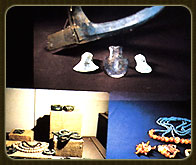
Antiques, works of art, and historical monuments are all of great value and essential for research in history, art, and archaeology. They serve as evidence of the prosperity of the Thai nation since ancient times and should be preserved permanently as the common heritage of the nation. In particular, antiquities and works of art should be kept in museums and displayed so that students and the public may view and study them more widely and extensively than is presently the case.
I have long believed that the antiquities and works of art of each locality should be preserved and exhibited in the National Museum of that particular province. I am pleased that the Ministry of Education and the Fine Arts Department have agreed with this idea and successfully implemented it here first in Phra Nakhon Si Ayutthaya Province. The city of Ayutthaya once served as a glorious capital for 417 years and possesses a wealth of historical monuments, antiquities, and works of art worthy of study. When we consider the prosperity that Ayutthaya enjoyed in the past, it becomes evident that the existing National Museums are still too few to adequately collect and display the antiquities and works of art discovered in Phra Nakhon Si Ayutthaya.
It has been said that at present many people have taken an interest in purchasing antiquities and works of art for export abroad. If in the future we must go to other countries to study or view our own Thai antiquities and works of art, it would be a matter of deep sorrow and great shame. Therefore, we should make every effort to gather and preserve our antiquities and works of art by establishing museums to safeguard them, which would be the best course of action. Indeed, such work requires both time and significant financial resources, but it is believed that if all parties cooperate with sincerity and determination, it can certainly be accomplished.
With his devotion as a preserver of the nation’s unique cultural heritage, His Majesty attentively received information concerning the discovery of such treasures, whether through academic research, accidental finds, or even illegal excavations. These circumstances led to the establishment of more comprehensive National Museums in various regions, such as the Ramkhamhaeng National Museum in Sukhothai Province. Whenever a new museum was established, His Majesty personally presided over the inauguration, for example at U Thong National Museum in Suphan Buri Province in 1966, Khon Kaen National Museum in Khon Kaen Province in 1972, Chiang Mai National Museum in Chiang Mai Province in 1973, and Nakhon Si Thammarat National Museum in Nakhon Si Thammarat Province in 1974. His gracious presence at each opening ceremony reflected his vision and foresight, as well as his recognition of the important role of the National Museum in social development and in strengthening the stability of the nation. Thus, he continuously supported the establishment of this institution throughout the country.
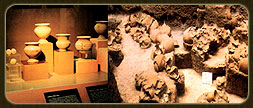
His Majesty King Rama IX had a profound interest in archaeology and possessed extensive knowledge in the field. Whenever excavations were carried out to uncover evidence that could shed clearer light on the past, he provided royal guidance that enabled archaeologists and scholars of the Fine Arts Department, as well as other related agencies, to further develop their expertise in research and exploration. One such occasion was his royal visit to the excavation site at Ban Chiang, Ban Chiang Subdistrict, Nong Han District, Udon Thani Province, on March 20, 1972. Subsequently, as a result of his royal initiatives, a joint research project with the University of Pennsylvania Museum in the United States was established in 1974 (as recorded in The Ban Chiang Heritage). The account describes:
“… His Majesty the King observed the excavation site with great interest, asking questions and offering suggestions throughout the visit.”
“Do you know whether those shells are from the sea or from fresh water?”
“What I intended to see was for things to remain in their original state like this. Why have so many burial pits and painted pottery been found here? Was this a burial ground?”
“That red painted design must have been applied to the pottery after the firing process, correct?”
“Have the bones that were discovered ever been sent for dating analysis? Can these bones be used for determining age?”
On the matter of dating, His Majesty addressed Professor Dr. Sut Saengvichean, who humbly replied:
“Dating bones has been done abroad, but in our country it has never been carried out. I believe the cost of sending them overseas would be quite expensive, Your Majesty.”
His Majesty then remarked: “It should not be overly costly, since museums are an international concern. Moreover, the entire world is likely to be interested in the Ban Chiang discoveries. Everyone would wish to know and be willing to cooperate in determining the age. If the age can be established from the bones, the findings would become even more credible.”
His Majesty closely inspected each excavation pit with meticulous attention.
“This burial pit is likely older than excavation areas 1 and 2 because it is at a deeper level,” he also made a serious scholarly assessment.
“How are the prehistoric people discovered at this site related to the community that settled here approximately 200 years ago?”
“The reasons why the community was abandoned for a certain period are important to consider. This is a matter for the doctor (referring to Professor Dr. Sut Saengvichean) to investigate in cooperation with the excavation team to determine whether the abandoned community perished from an epidemic disease.”
The joint research project between Thailand and the University of Pennsylvania, United States, on Ban Chiang archaeology produced findings that revealed the great antiquity of the Ban Chiang site, later bringing considerable renown to Thailand. The artifacts recovered from the excavations were subsequently used to establish the Ban Chiang National Museum.

His Majesty King Rama IX also recommended the use of scientific methods to aid in the preservation of ancient artworks and antiquities. Following his guidance, the Fine Arts Department sent scientists to Belgium to study the conservation of antiquities under a program funded jointly by UNESCO and the Belgian government.
This marked the beginning of scientific conservation of cultural heritage in Thailand, applying scientific knowledge to preserve cultural assets—a practice that continues to this day. The advancement of conservation activities in museums has benefited greatly from His Majesty’s patronage. In addition to King Rama IX and Her Majesty the Queen Mother showing personal interest in museum affairs, all members of the royal family have consistently supported activities related to arts, culture, and museums. On various occasions, when receiving foreign dignitaries, they would often encourage visits to the National Museum, recognizing that museums represent a nation’s identity and provide visitors with insight into Thai culture and history.
As a result, specialized museums were gradually developed, evolving into institutions that promote national identity and expand their role from merely preserving cultural heritage to providing educational opportunities for the public through informal learning. This aligns with the development of museums internationally. Various specialized museums and centers were established, including planetariums, science education centers, science museums, memorials, and information centers intended to educate and engage the public.
Examples include the Temple of the Emerald Buddha Museum, the Suan Luang Rama IX Project, the Queen Sirikit Park and Commemorative Project, and national parks, all of which originated from the royal initiatives of His Majesty King Bhumibol Adulyadej the Great.
3. Royal Duties Related to Culture in the Preservation of Ancient Royal Traditions and in the Restoration, Promotion, and Dissemination of Cultural Heritage
His Majesty King Rama IX revived royal ceremonies that had been performed to bring auspiciousness to the nation and its people in various ways. He adhered to the “middle path,” maintaining the core principles and purposes while graciously allowing adjustments to make the ceremonies more concise and economical. He also promoted them as a distinctive Thai identity, instilling pride in the nation’s noble and elegant culture. As stated in his royal address at Chulalongkorn University on July 5, 1962:
“Preserving ancient customs and traditions is valuable, but if certain traditions are inconvenient to perform or unsuitable for the times, they should be adjusted. Any change to a tradition, or adopting the traditions of another nation, must be carefully and thoroughly considered beforehand.”
In his royal addresses to students and faculty at Songkhla University, Pattani Campus on September 22, 1978, and at Srinakharinwirot University (Prasarnmit) on December 12, 1969, His Majesty made the following observations on Thai culture:
“A nation can be compared to a human life. According to the truth, a person consists of both body and mind. If both parts are well-balanced, life endures. If one part is destroyed, life itself will perish because the other part cannot survive alone. Our nation consists of the land and its people, which form the body, and arts, traditions, beliefs, and the collective mindset, which form the mind. Together, they create ‘Thainess.’ The Thai nation remains stable because both the country and Thainess are intact. But if Thainess were to decay or be lost, the nation would inevitably vanish.”
Thus, preserving the value and significance of what is good requires careful reflection, understanding the importance of Thai identity, and cultivating awareness of one’s duties, responsibilities, and commitment to the nation. Acting appropriately with this consciousness will bring benefits and promote the nation’s prosperity indefinitely.
His Majesty King Rama IX led the revival and preservation of Thai cultural heritage, restoring certain royal ceremonies that had been lost and initiating new ceremonies, as follows:
3.1 Royal Seal
3.2 Royal Ceremony of Conferring the Order of Ramathibodi and the Water-Purification Oath Ceremony
3.3 Royal Procession by Land Route (Royal Circumambulation of the Capital)
3.4 Royal Ploughing Ceremony
3.5 Royal Kathin Robe Presentation Ceremony by Water Procession
3.6 Royal Ceremony of the Installation of the Supreme Patriarch
3.7 Royal Ceremony for Changing the Seasonal Attire of the Emerald Buddha
3.8 Royal Ceremony for Celebrating the Elevation of Important Elephants
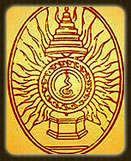
3.1 Royal Seal
There are three royal seals: the Royal Seal of the Kingdom, the Royal Seal of His Majesty King Rama IX, and the Garuda Seal of the Reign.His Majesty King Rama IX graciously commanded the preservation of the ancient royal tradition in creating the Royal Seal of the Kingdom, the Royal Seal of His Majesty, and the Garuda Seal of the Reign. He also graciously presided over the royal ceremony for inscribing the royal seals, known as “Ruktra,” following the ancient Kshatriya royal tradition, which took place from April 20–21, 1950, prior to the Royal Coronation Ceremony and the Royal Mansion Inauguration Ceremony, held from May 4–5, 1950.
In the inscription of the Golden Book (Suphanbat) bearing the Royal Cypher, the date of birth, and the Royal Seal of the Kingdom, His Majesty graciously commanded that His Royal Highness Krom Muen Phitthayalaphapruthiyakorn (at that time holding the title of His Royal Highness Prince Thaninivat) preside over the royal ceremony. On the first day, the ceremony began with Buddhist monks chanting the scriptures at the Ubosot of Wat Phra Sri Rattana Satsadaram. On the second day, the ceremony for inscribing the Golden Book, the Royal Cypher, and the Royal Seal of the Kingdom took place. His Majesty also graciously appointed Mom Chao Samai Chalerm Kridakorn as the artist responsible for inscribing the Royal Seal of the Kingdom.
3.1.1 The Royal Seal of the Kingdom, for which the inscription ceremony was held in 1950, is the Garuda Seal that His Majesty King Chulalongkorn graciously commanded to be created. Since then, it has been used as the permanent Royal Seal of the Kingdom for every reign, with only the royal cypher around the edge of the seal updated according to each monarch, beginning with the reign of King Vajiravudh.
3.1.2 Royal Seal of His Majesty King Rama IX In 1953, His Majesty King Rama IX graciously commanded the creation of his personal royal seal for use on certificates of royal decorations. The Bureau of the Royal Household oversaw the production. Upon completion, the seal was presented in the Royal Coronation Ceremony on May 5, 1953, and was subsequently used for official personal documents.
The royal seal of His Majesty King Bhumibol Adulyadej was designed to reflect the meaning of his royal name, “Bhumibol,” symbolizing the King as the strength and sovereign of the land. The seal features the Phra Thi Nai Atthit throne, with the Maha Unalom symbol inside a circular wheel, radiating light around it. Above the wheel is a seven-tiered white umbrella, placed on the Phra Thi Nai Atthit throne. A distinctive feature of this personal royal seal, compared with seals of other reigns, is its oval shape.
The symbols in the seal represent the King as the sovereign of the land, with the eight directional deities offering the land and sovereignty, symbolizing the coronation ceremony according to ancient royal tradition. The King sat upon the Phra Thi Nai Atthit throne while members of Parliament presented the coronation water from all eight directions. This reign marked the first time in history that a monarch in a constitutional democracy received the coronation water from parliamentary representatives instead of royal scholars, as in previous reigns.
The royal seal of King Rama IX is oval, measuring 5 cm in width, 6.2 cm in length, and 9.4 cm in height. His Majesty graciously commanded its creation for use on personal documents not related to state affairs, such as certificates of royal decorations. It was also used as a mark on Coronation Medals, abbreviated with the royal cypher “ภปร.” at the center. Additionally, it appeared on Ratchadaphisek Medals and on commemorative coins for the King’s 60th birthday celebration, such as the 1-baht denomination.
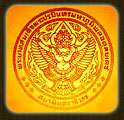
3.1.3 Royal Garuda Seal of the Reign In 1995, His Majesty graciously granted royal permission for the Secretariat of the Cabinet, which is responsible for safeguarding and controlling the use of the royal seal on important national documents, to create a new Royal Garuda Seal of the Reign in gold. This new seal was made to supplement the existing seal, which had been crafted in 1950 and had become worn and damaged after being used to stamp documents for over 45 years.
This Royal Garuda Seal of the Reign was the first in history to be graciously commissioned as a second seal for official use. It was made of gold to commemorate the Golden Jubilee, marking 50 years of His Majesty’s reign, which took place on June 9, 1996.
His Majesty also graciously presided over the royal ceremony to inscribe the gold Royal Garuda Seal of the Reign, alongside the Golden Book (Suphanbat) for the installation of Her Royal Highness Princess Galyani Vadhana, Krom Luang Naradhiwas Rajanagarindra, on April 27, 1995.
- 3.2 Royal Ceremony of Conferring the Order of Ramathibodi and the Water-Purification Oath Ceremony is a royal ceremony related to military affairs.
The Royal Ceremony of Conferring the Order of Ramathibodi and the Water-Purification Oath Ceremony took place during the reign of His Majesty King Bhumibol Adulyadej, the Great. His Majesty revived the Water-Purification Oath Ceremony according to ancient royal tradition and combined it with the conferral of the Order of Ramathibodi. This combined ceremony was held for the first time in 1969.
3.2.1 The Order of Ramathibodi is a royal decoration that His Majesty King Vajiravudh graciously established to reward military officers who sacrificed their lives in service to protect the Kingdom of Thailand, under the Royal Decree of the Order of Ramathibodi, B.E. 2461 (July 22, 1918, marking the first anniversary of Thai volunteer soldiers participating in World War I). The award was conferred both in wartime and peacetime to those who demonstrated bravery and leadership in battle, as well as to those who rendered exceptionally meritorious service, thereby contributing to the advancement of the military. After the reign of King Vajiravudh, the Order of Ramathibodi was not conferred again until the reign of His Majesty King Bhumibol Adulyadej.

In 1960, during His Majesty’s state visits to the United States and countries in Europe, He expressed the view that the Order of Ramathibodi should also be conferred upon distinguished foreigners in addition to the original criteria. Consequently, the Royal Decree on the Order of Ramathibodi B.E. 2503 (1960) was promulgated, establishing new guidelines: the order could be conferred at the royal prerogative upon those who rendered exceptional service or made outstanding contributions to the military, whether in peacetime or wartime, and His Majesty could graciously confer it upon distinguished foreigners regardless of whether they had provided extraordinary military service.
During the reign of His Majesty King Bhumibol Adulyadej, the Order of Ramathibodi began to be conferred in 1961 and continued in certain years thereafter. On the fourth conferral in 1969, His Majesty graciously restored the ancient Ceremony of Holding the Phra Phiphat Satya Water, which had been discontinued since the change of government in 1932, and integrated it with the conferral of the Order of Ramathibodi, specifying that only members of the order were required to partake in the Phra Phiphat Satya water.
3.2.2. The Ceremony of Holding the Phra Phiphat Satya Water, also known as the Ceremony of Holding the Phra Phiphat Sajja or alternatively the Si Sajja Pan Kalan Ceremony, is a royal ritual symbolizing loyalty and integrity, using water as the medium. Commonly abbreviated as the Ceremony of Holding the Water, it involves drinking water pierced with the royal sword as a pledge of allegiance to the monarch and a commitment to one’s own moral and social advancement. Rooted in ancient tradition, this significant royal ceremony has been practiced in Thailand since the Ayutthaya period. King Ramathibodi I, the founder of Ayutthaya, performed the ceremony at Wat Phra Si Sanphet, which was later relocated to the Viharn Phra Mongkhon Bophit.

In the Rattanakosin era, King Mongkut (Rama IV) was the first monarch to partake in the Ceremony of Holding the Phra Phiphat Satya Water. After the transition from an absolute monarchy to a democratic system in 1932, the ceremony was no longer held until 1969 during the reign of His Majesty King Bhumibol Adulyadej (Rama IX).
The royal ceremonies of granting the Ramathibodi Order and holding the Phra Phiphat Satya Water in King Bhumibol Adulyadej’s reign were conducted over two days. On the first day, the Phra Phiphat Satya Water was consecrated at the ubosot of Wat Phra Sri Rattana Satsadaram, using boiled rainwater poured into the royal sakorn bowl (a large silver-gilt bowl). Nine monks chanted the Twelve Canons of Buddhist Prayers (Thawathosaprit), while Brahmin priests recited verses in praise of the Phra Buddha Maha Mani Rattana Patimakorn. On the second day, the Ramathibodi Order was bestowed at the Throne Hall of the Chakri Maha Prasat, and the Ceremony of Holding the Phra Phiphat Satya Water was conducted at the ubosot of Wat Phra Sri Rattana Satsadaram.
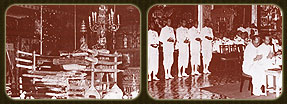
After the Buddhist rites, in which His Majesty King Bhumibol Adulyadej (Rama IX) lit incense and candles to pay homage to the Triple Gem, prostrated, and received the precepts, the Brahmin ceremony commenced. The invocations for sanctifying the water were recited, and the royal weapons were used to pierce the water, totaling thirteen sacred weapons. These included three royal bows—Phlaiwat, Akniwat, and Phrommat—along with the Chanchai Sword, Khabkai Sword, and the royal weapons of the reigns of Kings Rama I through VII.
After the monks had chanted the Satthakata (truth incantation) and concluded, those receiving the Knight Grand Cross of the Order of Rama stood to take the oath of allegiance. The Brahmin then ladled the Holy Water of Phra Phiphat Satya for His Majesty King Bhumibol Adulyadej (Rama IX) to drink.
Subsequently, the members of the Order of Rama paid their respects, proceeded to the ceremonial water basin, where the Brahmin served them the holy water. They saluted the Emerald Buddha and drank the Phra Phiphat Satya water. Finally, they prostrated and paid homage at the King’s feet. After all had partaken of the holy water, His Majesty offered the traditional Thai alms (chatupaccaya) and performed the pouring of Takṣinotoka. The monks gave their blessings and recited the closing chant, after which the King paid homage at the front of the altar, received the respects of those present, and then departed, marking the conclusion of the ceremony.
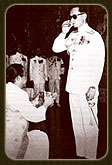
- 3.3 The Royal Procession by Land (Circumambulation of the Capital) On the auspicious occasion of His Majesty the King’s 60th birthday anniversary, His Majesty graciously commanded that the Royal Ceremony of the Royal Procession by Land be conducted according to the ancient royal tradition. This was the first time such a procession was held for the celebration of a 60th birthday anniversary.
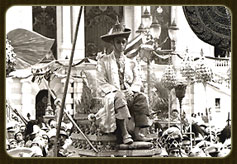
To pay homage to the Triple Gem at the Ubosot of Wat Bowonniwet Vihara on Saturday, December 7, 1963, His Majesty King Rama IX wore the full royal ceremonial attire and the Great Crown, and proceeded from Dusit Maha Prasat Throne Hall to Koey Phiman Pimok Prasat Throne Hall to take his seat on the Royal Palanquin, Phutthan Thong. The royal procession departed from the Grand Palace through Wiset Chaisri Gate, along Na Phra Lan Road, turned onto Ratchadamnoen Road, crossed Phra Phiplila Bridge, proceeded along Chakrabongse Road, turned right onto Phra Sumeru Road, and arrived at the Royal Palanquin at the front pavilion of Wat Bowonniwet Vihara. He lit incense and candles to pay homage to the Triple Gem, offered royal tribute, and paid respects to the royal remains of King Rama VI (King Vajiravudh). He then lit incense and candles at the small golden altar to pay respects to the royal statues of Somdet Phra Maha Samana Chao Krom Phraya Pavaret Wiriya Longkorn, Somdet Phra Maha Samana Chao Krom Phraya Wachirayan Warorot, and the relics of the Supreme Patriarch, Krom Luang Vajirayanwong, his royal preceptor. Afterwards, His Majesty returned seated on the Royal Palanquin along the same route, with a large gathering of subjects witnessing His Majesty’s benevolence, and finally returned to Dusit Maha Prasat Throne Hall in the Grand Palace, thus completing the Royal Ceremony for His Majesty’s 60th birthday anniversary on December 5, 1963.

The royal procession consisted of troops from all branches of the armed forces and senior and junior officials dressed in full ceremonial attire of various colors. His Majesty the King was seated on the Royal Palanquin, Phutthan Thong, surrounded in front and behind by an array of high-ranking ceremonial ornaments, including the Aphirum, Chumsai, Kling Klod, Chamramat, Bang Sun, Bang Saek, Phra Sanathipat, Chat Chai, and Phra Khao Pha, as detailed in the Royal Gazette (Vol. 80, Part 116, Special Issue, December 1, 1963, pages 3–15) as follows:
Saturday, 7 December
Afternoon
His Majesty proceeded in the Royal Procession on land, dressed in full ceremonial uniform, wearing the Maha Chakri sash and the Chulachomklao necklace.
Monday, 9 December
Evening
At the Royal Garden Club, dressed in half-uniform.

The Royal Household
22 November 1963
For the evening of 9 December, His Majesty graciously commanded that members of the Royal Family, the Cabinet, ambassadors and diplomatic representatives, consular officials, members of the Senate, members of the House of Representatives, government officials, and distinguished merchants pay their respects at the Royal Garden Club in celebration of His Majesty’s birthday at Suan Siwalai in the Grand Palace.
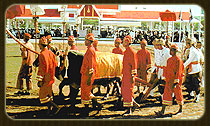
3.4 Royal Ploughing Ceremony and First Ploughing of the Rice-Field The Royal Ploughing Ceremony is a traditional agricultural ceremony that has been held for many centuries across almost all countries in Asia. Over time, this ceremony came to be specifically called the Royal Ploughing and First Ploughing of the Rice-Field Ceremony.

The various ceremonies originate from beliefs rooted in Brahmanical mysticism. In particular, the monarch or head of state appoints high-ranking officials to perform duties on their behalf, called the Phra Ya Raek Na, who plough and sow the seeds. They are assisted by attendants called Thephee, chosen from the royal court ladies, whose role is to carry baskets of seeds while following the Phra Ya Raek Na during ploughing and sowing.
For Thailand, this ceremony has been performed continuously since the Sukhothai period as a Brahmanical ritual according to ancient tradition. During the reign of King Mongkut (Rama IV), a Buddhist ceremony was added, extending the event to two days. The first day is the Royal Ploughing Ceremony, a Buddhist ritual conducted to bless the seeds of grains, including unhusked rice, beans, sesame, and other seeds that will be sown the following day.

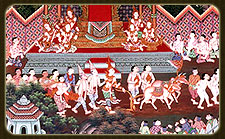
The second day is the Royal Ploughing and First Sowing Ceremony, a Brahmanical ritual that includes organizing the procession, worshipping the deities, and performing divinations concerning the selection of the attire for the Phra Ya Raek Na (the royal ploughman) as well as divinations related to the feeding of the sacred oxen.

The Royal Ploughing and First Sowing Ceremony (image from the book Festivals and Local Traditions).
The Royal Ploughing and First Sowing Ceremony is an auspicious ritual held annually in the sixth lunar month, marking the beginning of the rainy season. It has been a royal tradition continuously until 1934, after which it was suspended until 1940, when the government reinstated only the Royal Ploughing Ceremony. Later, in the reign of His Majesty King Bhumibol Adulyadej, the ceremony was graciously restored to its original form, serving as a source of encouragement for farmers, and organized as a two-day event. The first day is the Royal Ploughing Ceremony, which includes chanting in the ordination hall of Wat Phra Si Rattana Satsadaram.
The following day is the Royal First Sowing Ceremony, during which His Majesty graciously appointed senior officials of the Ministry of Agriculture to serve as the Phra Ya Raek Na, which currently includes the Permanent Secretary of the Ministry of Agriculture and Cooperatives. The accompanying goddesses, who carry silver and gold baskets, are selected from unmarried female officials of the Ministry of Agriculture and Cooperatives at level 3 and above.
The Royal Ploughing Ceremony and First Sowing Ceremony at the Thong Sanam Luang ceremonial ground drew great interest from His Majesty King Bhumibol Adulyadej, who graciously presided over the ceremony to pray for the abundance of crops throughout the Kingdom of Thailand. His Majesty planted rice seeds in the experimental field at Chitralada Garden, Dusit Palace, to be used in the ceremony. The Ministry of Agriculture and Cooperatives divided the seeds so that some could be used in the Royal First Sowing Ceremony, while the remainder was packed and sent to various provinces for distribution to farmers, bringing auspicious blessings in accordance with the King’s intention to promote agriculture.
On the first day, in the afternoon, His Majesty proceeded to Wat Phra Si Rattana Satsadaram. At 16:30, He ascended the ubosot, lit incense and candles to pay homage to the Phra Buddha Maha Mani Rattana Patimakorn and other important Buddha images. The Sangha completed the offering of precepts, and His Majesty offered flowers to venerate the Buddha, praying for the prosperity of crops throughout the Kingdom of Thailand.
Then the chief Brahmin read the proclamation of the Royal Ploughing Ceremony. After eleven monks completed chanting the Buddhist scriptures, His Majesty poured holy water, anointed, and bestowed ceremonial insignia and the royal trident to the senior officials of the Ministry of Agriculture and Cooperatives, who would serve as the Phra Ya Raek Na for that year. He also poured holy water and anointed the goddesses who would participate in the Royal First Sowing Ceremony. At that moment, the monks chanted auspicious mantras, musicians sounded gongs and other instruments, and His Majesty offered the traditional alms. The monks responded with blessings, and the ceremony concluded as His Majesty departed the ubosot, dressed in half-dress uniform.
On the second day, in the morning, His Majesty graciously appointed the Phra Ya Raek Na to travel by royal vehicle from in front of Wat Phra Si Rattana Satsadaram, departing the Grand Palace for the ceremonial ground at Thong Sanam Luang. The procession moved with full ceremonial honors to the Brahmin ceremonial hall, where incense and candles were offered to venerate the principal deities, and preparations were made for the Phra Ya Raek Na to don ceremonial attire. At 08:30, during the auspicious hour, the Phra Ya Raek Na, accompanied by the goddesses, proceeded from the Brahmin hall. Royal scholars and Brahmins led the way through the ceremonial pavilion. The Phra Ya Raek Na paid respects, then proceeded to the ploughing ground. Officials yoked the oxen, the Phra Ya Raek Na anointed the oxen and ploughed three rounds straight, three rounds across, sowed the seeds, the chief astrologer struck the victory gong, and the soil was covered with three more rounds of ploughing. The oxen were then unyoked, and the Phra Ya Raek Na and goddesses returned to the Brahmin hall. The Brahmins performed the seven food divinations, fed the oxen, and the chief astrologer gave the prognostication before the Phra Ya Raek Na returned in procession.
The Phra Ya Raek Na returned in a ceremonial procession from the Brahmin hall, paid respects to His Majesty, and then proceeded to board the royal vehicle to return to the Ministry of Agriculture and Cooperatives. His Majesty returned, dressed in ordinary white attire.
- 3.5 The Royal Ceremony of Making Merit by Offering the Kathin Robe via Waterway The Kathin period begins from the 1st waning day of the 11th lunar month to the 1st waning day of the 12th lunar month, lasting a total of one month.

Kathin, according to the Pali definition, means a wooden frame used to stretch cloth. This wooden frame for stretching cloth to sew is called a “sadung” in Thai. The frame is used to hold the fabric that needs to be sewn together into a large piece. For monks, this cloth is made into a robe called a “civara.” The sewing of such cloth gave rise to the term “Kathin cloth.”
The origin of the Kathin offering, according to the Pali texts, relates to an event in the time of the Buddha. Thirty monks from the city of Patikya set out to pay respects to the Buddha at Jetavana Monastery. However, they did not arrive in time for the beginning of the Rains Retreat (Vassa) and had to remain at Sāketa to observe the retreat. After the retreat ended, they hurried to visit the Buddha. During their journey, the monks were drenched by rain and soiled with mud.
The Buddha, understanding their hardship, allowed the monks to receive Kathin robes that would be offered after the Rains Retreat, specifying that the period for this offering should extend from the 1st waning day of the 11th lunar month to the 1st waning day of the 12th lunar month.
Later, as the number of monks increased and the Kathin robes prepared by devotees were insufficient for all, the Buddha established a rule: the robe should be offered to the monk who had the oldest robe among those residing in the same monastery for the retreat, who was well-versed in the Dhamma-Vinaya, diligently performed religious duties, and was highly respected by the Sangha, without requiring any investigation that could cause embarrassment or dispute.
Monks residing in the monastery who complete the Rains Retreat and gather in the ordination hall for the Sangha act of approval jointly rejoice and designate the recipient of the Kathin robe. Those making the offering cannot specify any particular monk; they must place the robe and recite the offering formula without specifying a recipient. This is why the practice is called “Kathin Thod” or “Kathin Offering.”
The Kathin offering is an important tradition for Buddhists, a major merit-making activity for both the monarchy and the people. It has been a longstanding custom since Thailand adopted Buddhism as the national religion. No other act of charity by the Buddhist community has ever been as widely participated in as the Kathin offering.
In the Rattanakosin era, the Kathin offering became an annual royal ceremony. The King would travel both by land and by water, sometimes visiting two or three temples in a single day. In earlier times, it was a grand event, conducted as a royal ceremonial procession (Phayu Yattra Sathala Marak) with the royal barge, processions of high-ranking officials, ceremonial instruments, conch shells, trumpets, victory drums, attendants bearing spears, lances, swords, and various royal weapons, dressed in ancient Thai military attire. In some years, the King offered the Kathin robes by royal boat, in a royal barge procession (Phayu Yattra Chalomarak), with the Kathin robes placed in a ceremonial pavilion on the royal barge Anantanakharat or other royal vessels. The King would be seated on the royal barge Suphannahong, with naval officers dressed in ancient military attire and a formal recitation of royal poetry for the barge (for example, in 1996, King Rama IX was seated on the royal barge Narai Song Suban, created to honor His Majesty’s 50th anniversary of accession to the throne).
As the country developed, the King later traveled by royal carriages, motor vehicles, or royal boats to present the Kathin robes. In some years, it was still prescribed to conduct the land and water royal processions according to the ancient royal tradition, such as during the reign of King Bhumibol Adulyadej, Rama IX.
The present-day royal merit-making Kathin offering is divided into three categories according to the status of the monastery or temple receiving the Kathin:
1) Royal Kathin (Phra Kathin Luang), or the Kathin of the King, is the Kathin robe personally offered by the King or graciously delegated to members of the royal family to present on His Majesty’s behalf. These are considered offered in the name of King Rama IX, or by royal appointment for members of the royal family or privy counselors to present. There are 16 temples in this category.
There are 16 royal temples designated by the government for the annual royal Kathin offering, as follows:
- Wat Bowonniwet Vihara (contains the royal relics of King Rama VI)
- Wat Suthat Thepwararam (contains the royal relics of King Rama VIII)
- Wat Phra Chetuphon Wimon Mangkhalaram (contains the royal relics of King Rama I)
- Wat Benchamabophit Sathit Maha Simaram (contains the royal relics of King Rama V)
- Wat Rajabopit Sathit Maha Simaram (contains the royal relics of King Rama VII)
- Wat Makutkasattriyaram (a memorial temple of King Rama IV)
- Wat Ratchapradit Sathit Maha Simaram (contains the royal relics of King Rama IV)
- Wat Mahathat Yuwaratrangsarit (a temple of the Chakri Dynasty)
- Wat Ratchathiwat (contains the royal relics of two queens of King Rama V)
- Wat Ratchaworasan (contains the royal relics of King Rama III)
- Wat Arun Ratchawararam (contains the royal relics of King Rama II)
- Wat Thepsirintrawat (built by King Rama V dedicated to the royal mother)
- Wat Suwannadararam (built by the first monarch, Phra Pathom Boromma Chonok)
- Wat Niwet Thammaprawat (built by the initiative of King Rama V as the royal temple of Bang Pa-in Palace)
- Wat Phra Pathom Chedi (contains the royal relics of King Rama VI)
- Wat Phra Si Rattana Mahathat, Phitsanulok Province (a historically significant temple; it is a royal tradition that the king must pay homage to Phra Buddha Chinnarat after the coronation).
King Rama IX would personally offer the Kathin robes at two or three temples per day for about three days. For the remaining temples, His Majesty graciously appointed members of the royal family, privy counselors, or other designated persons to perform the offering on His behalf. Additionally, if the Supreme Patriarch resides at a temple, besides receiving the royal Kathin, King Rama IX would also personally proceed to present the Kathin robes.
2) Royal-Granted Kathin refers to Kathin robes granted by the King for ministries, bureaus, departments, organizations, associations, or private individuals of faith to offer to monks at royal temples throughout the kingdom, totaling 195 temples (excluding the royal temples mentioned in item 1). The Department of Religious Affairs, Ministry of Education, is responsible for requesting royal permission through the government channels, arranging the Kathin robes, and managing the proceeds of donations for the maintenance of the temples as part of the royal merit-making.
3) Personal or Private Kathin refers to Kathin robes that the King personally offers at local temples, as a way to visit and interact with the people in various regions across the country.
The criteria for temples where the King offers personal Kathin are as follows:
- Temples that have never before received a personal Kathin offering.
- Temples where the local people have great faith and reverence.
- Temples where the local people have not had the opportunity to see the King closely.
Royal Kathin—during the royal merit-making ceremony of King Rama IX, His Majesty personally attended or graciously appointed members of the royal family to perform the ceremony on His behalf. The schedule and ceremonial protocol included special dress codes for government officials attending the event as follows:
- Officials wore full ceremonial uniform, with the sash of the Chakkri Dynasty or Chula Chom Klao Order and the White Elephant. In years when the King personally offered Kathin at Wat Benchamabophit Dusitvanaram, the Thai Crown Order sash was designated as the primary sash. If members of the royal family performed the duty on behalf of the King, the protocol specified full ceremonial attire with the Chakkri Order sash. Every temple where the schedule was issued required the Royal Guards to form an honor guard, with a military band, flags, and musical accompaniment playing the royal anthem.
- For royal Kathin offered at Dhammayut temples, the tri-fold robes had a folded white cloth on top. After the offering and completion of the Kathin ritual by the monks, the King returned, and palace sewing staff—officials under the Bureau of the Royal Household—assisted the monks in sewing the white cloth together with the tri-fold Kathin robes into monastic robes. These robes were then dyed red (bark color) and offered to the monks to use in the Kathin ceremony, all to be completed on the same day.
The royal merit-making ceremony of offering the Kathin robe: King Rama IX recited the Kathin offering formula in Pali, with one version for the Dhammayut sect royal temples and another for the Mahanikaya sect. For Wat Mahathat Yuwaratrangsarit and Wat Benchamabophit Dusitvanaram, the King recited the formula in Thai.
In the case of temples where His Majesty personally offered the Kathin robe, the ceremony included listening to the relic recitation of Somdet Phra Mahasamana Chao, such as at Wat Bowonniwet Vihara and Wat Phra Chetuphon Wimon Mangkhalaram. When the Kathin recipient monk took the robes, the King would offer incense, candles, and small golden ritual items, then present the robes. Ten monks would listen to the recitation, return the robes, and resume their seats together with the recipient monk before the offering of Kathin requisites.
Royal Kathin and royal-granted Kathin robes, when a representative offered them on behalf of the King, are recited in Thai as specified by the Department of Religious Affairs. The Ministry of Education also sets guidelines for receiving royal Kathin and royal-granted Kathin. A sample Thai formula for the Kathin offering is as follows:
“This Kathin robe, along with all subordinate robes and accessories, from His Majesty King Bhumibol Adulyadej the Great, Rama IX, of the Chakri Dynasty, Sovereign of Siam, endowed with supreme merit and royal faith, I humbly offer to the monks who have completed their three-month retreat in this monastery. May the monks accept this Kathin robe and perform the Kathin rites according to the royal permission.”
In the past, the royal procession by water (Royal Barge Procession) and by land (Royal Land Procession) accompanied the King when he offered Kathin robes. Today, the King travels by royal car.
On some years, His Majesty travels via the royal barge to offer Kathin robes at Wat Arun Ratchawararam to preserve the ancient royal tradition. King Rama IX would either travel personally or graciously appoint members of the royal family or other representatives to offer Kathin robes to the 16 royal temples. In the reign of the present King, the royal barge procession for the Kathin ceremony resumed in 1957 (B.E. 2500) during the government’s celebration of the 25th Buddhist century.
At that time, the Triple Gem—the Buddha image, the Tipitaka, and the monks—was ceremonially carried in a procession, forming a small-scale Royal Barge Procession on water. This was necessary because many of the royal barges from previous reigns had been damaged, and some were destroyed during aerial attacks in the Greater East Asia War.
Later, in 1963 (B.E. 2506), King Rama IX graciously ordered the restoration of the royal tradition of traveling by water to offer the Kathin robe at Wat Arun Ratchawararam. Due to the limited number of seaworthy barges, only a small procession could be organized, as it was not possible to fully replicate the elaborate traditional arrangements of a full-scale Royal Barge Procession. Relevant agencies, including the Royal Thai Navy and the Fine Arts Department, responded to the King’s royal initiative, recognizing His Majesty’s intention to preserve these invaluable cultural and artistic heritages. They repaired key royal barges such as the Suphannahong, Anantanakkharat, and Anekchatphuchong, which were then used for the Kathin ceremony at Wat Arun again in 1967 (B.E. 2510).
From then on, major restorations were undertaken, replacing decayed wood, reinforcing iron structures, restoring decorative patterns, gilding and inlaying glass, refurbishing ornamental fittings, painting, and reconstructing parts of the hull. Original bow and stern decorations, preserved in the National Museum, were restored. Notable royal barges included the Thong Khwan Fa, Thong Ba Bin, Garuda, Krabi, and Ekachai. This increased the number of royal barges to 51.
Therefore, in 1982 (B.E. 2525), a significant occasion marking the 200th anniversary of Rattanakosin, preparations and rehearsals for a grand Royal Barge Procession were conducted, reminiscent of the time of King Prajadhipok opening the Phra Phutthayotfa Bridge during the 150th anniversary of Bangkok. King Rama IX graciously assigned Princess Chulabhorn Walailak to refine and beautify the royal barge procession. During this event, His Majesty also graciously had Queen Sirikit, Crown Prince Vajiralongkorn, and Princess Maha Chakri Sirindhorn take their places on the Suphannahong royal barge.
His Majesty also graciously had Her Royal Highness Princess Chulabhorn Walailak, the Princess Royal, and Her Royal Highness Princess Soamsawali, the Princess Royal Consort, take their places on the Rong Anekchatphuchong royal barge to follow the procession. This marked the first time in Rattanakosin history that members of the royal family participated aboard a royal barge. Additionally, there was the ceremonial recitation of royal barge hymns, which had not been recorded in the early Rattanakosin period—from the reigns of Kings Rama I to III—during royal water processions.
3.6 Royal Ceremony of the Enthronement of the Supreme Patriarch The Supreme Patriarch is the head of the Sangha, holding the position of “Sakalamahasanghaparinayok” and overseeing the Buddhist clergy throughout the realm. In the past, it was the royal prerogative of the monarch to appoint a particular venerable monk to assume the position of Supreme Patriarch at the monarch’s discretion.
According to ancient royal tradition, when His Majesty the King graciously appointed a particular Supreme Patriarch to assume the position, …

Then, His Majesty would issue the royal command to proceed with the enthronement ceremony in due order. Later, in 1941, when the Sangha Act was first enacted, the enthronement of the Supreme Patriarch was carried out according to the procedures prescribed in the Act. In the event that the position of Supreme Patriarch became vacant, the Department of Religious Affairs, Ministry of Education, would submit the names and biographies of the existing Supreme Patriarchs to the Cabinet. The Cabinet would then forward the matter to the King to seek royal approval or a royal directive, after which it would be considered by the Cabinet and then presented to the King for gracious appointment at the appropriate occasion. Traditionally, the enthronement ceremony of the Supreme Patriarch in previous reigns was sometimes announced on the occasion of the King’s birthday ceremonies or the Umbrella of Sovereignty Ceremony, along with the annual conferment of ecclesiastical titles. During the reign of His Majesty King Bhumibol Adulyadej, a significant change was made: His Majesty issued the royal command to hold a dedicated Supreme Patriarch enthronement ceremony for the first time in 1965.
In the royal ceremony for the enthronement of Somdet Phra Ariyavongsagatayana, the Supreme Patriarch (Chuan Uṭṭhāyī), the 16th Supreme Patriarch of Rattanakosin, His Majesty graciously commanded that a special enthronement ceremony be held at the Ubosot of Wat Phra Si Rattana Satsadaram, separate from any other royal ceremonies.
This royal tradition has been observed continuously up to the enthronement of the current Supreme Patriarch. According to historical records, the ceremony is usually held at the Ubosot of Wat Phra Si Rattana Satsadaram. However, if the enthronement coincides with the Royal Umbrella Ceremony or the King’s Birthday Ceremony, His Majesty issues a royal command to hold the enthronement ceremony at the Amarin Winitchai Throne Hall.
During the reign of His Majesty King Bhumibol Adulyadej, who ascended the throne in 1946, there were several enthronement ceremonies for different Supreme Patriarchs, namely:

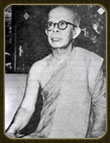
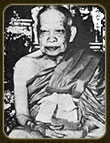
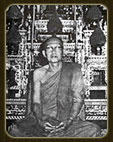
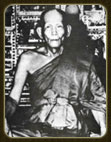
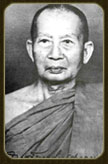
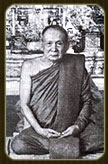
At the time His Majesty the King ascended the throne in 1946, Somdet Phra Wachirayanawong (later enthroned as Somdet Phra Sangharaja Chao Krom Luang Wachirayanawong) was already serving as the Supreme Patriarch, the Head of the Sangha. He was the first Supreme Patriarch of the reign of His Majesty King Bhumibol Adulyadej.
Somdet Phra Ariyavongsagatayana, Somdet Phra Sangharaja Sakal Maha Sanghaparinayok (Plod Kittisopho), was the 14th Supreme Patriarch of Rattanakosin and the second Supreme Patriarch of the reign of His Majesty King Bhumibol Adulyadej. Somdet Phra Ariyavongsagatayana was ordained as a novice monk at Wat Phra Chetuphon Vimolmangklaram, and later King Chulalongkorn (Rama V) graciously commanded him to move and reside at Wat Benchamabophit Dusitvanaram for the Vassa season.
Somdet Phra Ariyavongsagatayana, Somdet Phra Sangharaja Sakal Maha Sanghaparinayok (Yu Janothayo), Wat Saket Ratchaworamahawihan.
Somdet Phra Ariyavongsagatayana, Somdet Phra Sangharaja Sakal Maha Sanghaparinayok (Juan Uddhayi), Wat Makutkasattharam.
Somdet Phra Ariyavongsagatayana, Somdet Phra Sangharaja Sakal Maha Sanghaparinayok (Pun Punnasiri), Wat Phra Chetuphon Vimolmangklaram.
Somdet Phra Ariyavongsagatayana, Somdet Phra Sangharaja Sakal Maha Sanghaparinayok (Was Wasano), Wat Ratchabophit Sathit Mahasimaram.
Somdet Phra Nyanasamvara, the Supreme Patriarch of the Kingdom (Charoen Suvaddhano), Wat Bowonniwet Vihara
Details of the Royal Ceremony
The Royal Ceremony of the Appointment of the Supreme Patriarch, from the early Rattanakosin period up to the present reign, consists of two principal ceremonies: the Inscription of the Royal Suphanbat and the Appointment Ceremony. These two ceremonies may be performed on the same day or on separate days, depending on the auspicious time determined by the royal astrologer.
Normally, in the Ceremony of the Inscription of the Royal Suphanbat, His Majesty the King graciously appoints a royal representative to perform the duty on his behalf, and personally presides only over the Appointment Ceremony.
The Royal Ceremony of the Appointment of the Supreme Patriarch has, in almost every case, followed a similar traditional pattern, with minor variations in the details of the rituals and the locations where they are performed. For the Appointment Ceremony of Somdet Phra Nyanasamvara, the Supreme Patriarch of the Kingdom, the ceremonial procedures were carried out in complete and perfect form, and it has since been regarded as the model for the Appointment Ceremony of the Supreme Patriarch in the present day.
Schedule of the Royal Ceremony for the Appointment of Somdet Phra Nyanasamvara, the Supreme Patriarch of the Kingdom (Charoen Suvaddhano)
The Ceremony of the Inscription of the Royal Suphanbat
On April 21, 1989, His Majesty the King graciously appointed M.C. Piyarangsit Rangsit as his royal representative to attend the Ceremony of the Inscription of the Royal Suphanbat at the Ubosot of Wat Phra Si Rattanasasadara.
Upon arrival, the royal representative lit incense sticks and candles as an offering of worship to the Emerald Buddha. Then, an officer of the Royal Proclamation Division, dressed in white, performed the duty of scribe to inscribe the Royal Suphanbat. During the inscription, five monks chanted the Victory Blessing, the royal astrologer struck the victory gong, the Brahmins blew conch shells, the court officials swung the ceremonial fan, and musicians played conch shells, trumpets, and classical instruments. When the inscription of the Royal Suphanbat was completed, the chief Brahmin poured consecrated water, anointed it, and placed bael leaves upon it. The Suphanbat was then placed in a gold brocade bag and taken to the Office of the Royal Secretariat to be presented to His Majesty the King for anointment. Thereafter, it was enshrined within the Ubosot of Wat Phra Si Rattanasasadaram, in preparation for the subsequent Appointment Ceremony.
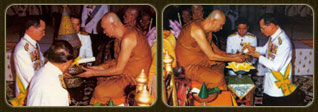
The Appointment Ceremony
His Majesty King Rama IX proceeded to preside over the Appointment Ceremony of Somdet Phra Nyanasamvara, the Supreme Patriarch, at the Ubosot of Wat Phra Si Rattanasasadaram. The ceremony commenced with His Majesty presenting the triple robes to the monks, after which he lit incense sticks and candles in homage to the Triple Gem, observed the precepts, and received them from the Supreme Sangha Council member.
At the conclusion, His Majesty graciously commanded the royal scribe to read the Royal Proclamation of Appointment of the Supreme Patriarch before the assembly of the Sangha. Thereafter, His Majesty King Rama IX proceeded to present consecrated water in a clockwise ritual to the Supreme Patriarch, and conferred upon him the Royal Suphanbat, the seal of office, the ceremonial fan, and the insignia of ecclesiastical rank. The monks chanted the Victory Blessing, the royal astrologer struck the victory gong, the Brahmins blew conch shells, the court officials swung the ceremonial fan, and monks throughout the kingdom simultaneously chanted the Victory Blessing and tolled the temple bells. His Majesty then presented offerings of the four requisites to the monks and poured the ceremonial water of dedication. The Supreme Patriarch then took his seat at the Sangha throne in the center of the Ubosot, where senior ecclesiastics, representatives of the royal family, privy councillors, the Prime Minister, and the President of the Supreme Court presented offerings to him. Afterwards, the Supreme Patriarch left the Ubosot and received offerings from Vietnamese and Chinese monks. His Majesty then departed, marking the conclusion of the Royal Ceremony.
Somdet Phra Nyanasamvara, the Supreme Patriarch of the Kingdom (Charoen Suvaddhano)
Somdet Phra Nyanasamvara, the Supreme Patriarch (Charoen Suvaddhano), was the seventh Supreme Patriarch during the reign of His Majesty King Bhumibol Adulyadej the Great. He was appointed to the position of Supreme Patriarch on April 21, 1989, becoming the nineteenth Supreme Patriarch of the Rattanakosin era.
Somdet Phra Nyanasamvara, the Supreme Patriarch (Charoen Suvaddhano), was born on October 3, 1913, in Kanchanaburi Province. At the age of 13, he was ordained as a novice at Wat Thewasangkharam, Kanchanaburi. Later, he was ordained as a monk, and after the rains retreat in the same year, he was re-ordained into the Dhammayutika Nikaya at Wat Bowonniwet Vihara, with Somdet Phra Sangharaja Chao Krom Luang Vajirananavongs as his preceptor. During his monastic life, he studied the Dhamma and Pali scriptures, attaining the highest level of Pali studies, Grade 9. In 1956, he was chosen to be the ecclesiastical attendant to His Majesty King Bhumibol Adulyadej the Great during the King’s monastic ordination and residence at Wat Bowonniwet Vihara.
He also served as the Royal Preceptor in the ordination ceremony of His Royal Highness the Crown Prince of Thailand. In 1972, he was elevated to the rank of Somdet Phra Racha Khana with the title Somdet Phra Nyanasamvara. On April 21, 1989, His Majesty the King graciously appointed him as the Supreme Patriarch of the Kingdom. His full title, as inscribed on the Royal Suphanbat, was:
“Somdet Phra Nyanasamvara Borommanarithdhammaneetbhibal Ariyavongsagatayanwimon Sakonmahasanghaparinayok Tripitakpariyattithada Visuddhachariyadhisombat Suwatthanaphidhansongkhawisut Pavachanuttamabhisarnsukhumthammavithanthamrong Vajirayanawongsawiwat Phutthaborisatkarawasathan Wijitpratiphanphatthanakhun Wibunsilacharawattsunthorn Boworathammapabitr Sapphakanisramahapathanathibodi Kamawasi Aranyawasi.”
It should also be noted that upon his appointment as Supreme Patriarch, His Majesty King Rama IX graciously commanded that he retain his former ecclesiastical title of Somdet Phra Nyanasamvara, which he had borne as a Somdet Phra Racha Khana. Thus, unlike previous Supreme Patriarchs who were given the title Somdet Phra Ariyavongsagatayan, he became the first Supreme Patriarch to hold the title Somdet Phra Nyanasamvara.
3.7 The Royal Ceremony of Changing the Seasonal Attire of the Emerald Buddha
The Emerald Buddha, formally known as Phra Phuttha Maha Mani Rattana Patimakorn and commonly called the Emerald Buddha, is a meditative posture Buddha image made entirely of green jade. Its lap width measures 48.3 centimeters, and its height from the base to the top of the halo is 66 centimeters. It was enshrined by His Majesty King Phutthayotfa Chulalok the Great, King Rama I.

It was brought back from Vientiane when His Majesty went to subdue the Lan Xang Kingdom in 1778, while he held the title Somdet Chao Phraya Maha Kasat Suek. Later, after being crowned as the first monarch of the Chakri Dynasty, he ordered the capital to be moved from Thonburi to Bangkok and constructed a royal palace along with a temple to enshrine the Emerald Buddha. He subsequently commissioned the creation of summer and rainy season attire as offerings of devotion, as well as a ceremonial base and a gilded pavilion in which the Buddha image was enshrined.
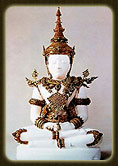
The summer attire, modeled after the royal regalia, is made of gold with enamel inlay and adorned with diamonds and other gemstones. The crown, called the tiered crown, is topped with a large diamond. This attire is changed on the first waning day of the fourth lunar month.
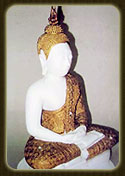
The rainy season attire is styled in the manner of a draped robe. It is made of gold with embossed patterns in the shape of rice grains and adorned with various gemstones, resembling a draped cloth. The Buddha’s hair ornament is made of gold with blue enamel, with the ends of the hair coiled in a clockwise spiral, decorated with small gemstones throughout. The halo is enameled. This seasonal attire is changed on the first waning day of the eighth lunar month. During the reign of King Rama I, His Majesty personally presided over the changing of the Emerald Buddha’s attire twice a year.

The winter attire was introduced during the reign of King Nangklao (Rama III), who commissioned an additional seasonal outfit and a golden base to support the pavilion, elevating the Emerald Buddha to a more prominent position. The attire consists of a draped cloth made of gold tubes with enamel and wired like a mesh, covering both arms. The hair ornament is similar to that of the rainy season attire. This winter attire is changed on the first waning day of the twelfth lunar month.
The Royal Ceremony of Changing the Attire of the Emerald Buddha is considered a significant royal duty, which the King must personally preside over. Only in cases of essential royal obligations that prevent His Majesty from attending would a member of the royal family be graciously appointed to perform the duty on his behalf.
Sequence of the Royal Ceremony
During the reign of His Majesty King Bhumibol Adulyadej the Great, the ceremony proceeded as follows:
When His Majesty King Rama IX arrived at Wat Phra Si Rattanasasadaram, officers of the Royal Ceremonial Sword Division, Bureau of the Royal Household, presented the ceremonial sword (originally made by King Phutthayotfa Chulalok the Great). His Majesty received it and bestowed it to a palace page to carry throughout the ceremony. He then proceeded into the Ubosot to the steps at the rear base of the pavilion housing the Emerald Buddha. Upon ascending the pavilion, he paid respects, removed the crown or hair ornament, and poured scented water using the great conch (commissioned by King Mongkut, Rama IV, kept in a lotus-shaped holder with a handle in front of the pavilion). He also used the smaller diamond-studded conch and wiped the image with four white cloths. Subsequently, he placed the crown or hair ornament back on the Buddha, then descended to the chair beside the northern base of the pavilion, dipped the four white cloths into the consecrated water vessel, and twisted them into a glass container.
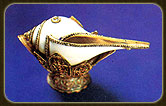
The Small Diamond-Studded Conch
The vessel of water, used as consecrated water for Buddhist rites, was presented by His Majesty to members of the royal family using the small diamond-studded conch, and to the royal attendants using the royal ewer. His Majesty then proceeded out in front of the base of the pavilion.
The tip of the halo of Phra Samphutthaphanani, a Buddha image created during the reign of King Mongkut (Rama IV), was replaced (gold-plated for summer, blue glass for the rainy season, and white or gilt glass for winter). His Majesty then lit incense and candles at the rear of the seat to pay homage to the Emerald Buddha, Phra Samphutthaphanani, the Buddha image in the attire of King Phutthayotfa Chulalok the Great, and the Buddha image in the attire of King Phutthaloetla Naphalai. He also lit incense and candles in the large golden offering to honor the Triple Gem. His Majesty then took his seat on the royal throne. Court officials carried the Small Diamond-Studded Conch, filled it with consecrated water, and presented it to His Majesty, who poured the water over the head of the Emerald Buddha himself. He then poured the consecrated water over members of the royal family in order.
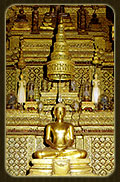
Phra Samphutthaphanani
Thereafter, His Majesty proceeded to pour consecrated water from the royal ewer over the royal attendants present inside the Ubosot, then took his seat on the royal throne. The chief Brahmin opened the ceremonial container, the Brahmins blew conch shells, and court musicians played drums, conches, trumpets, and other instruments, while officials carried the ceremonial candle to circumambulate the Emerald Buddha three times.
The chief Brahmin then ascended the pavilion steps to anoint the Emerald Buddha. Afterward, the officers of Wat Phra Si Rattanasasadaram, who had removed the previous attire of the Emerald Buddha before the ceremony, presented the new seasonal attire. His Majesty then paid respects in front of the offering and exited the Ubosot to distribute the consecrated water from the Emerald Buddha’s ablution vessel to the public using the royal ewer—a royal initiative graciously instituted during the reign of King Rama IX. After completing the distribution to those present inside and outside the Ubosot walls, His Majesty returned the ceremonial sword to the officers for safekeeping and departed.
3.8 The Royal Ceremony of Elevating an Elephant to a Significant Rank
Elephants have held great importance for the Thai people since ancient times. Beyond their practical uses, such as for labor or as war mounts, elephants are also regarded as auspicious animals. White elephants, in particular, are considered highly sacred according to beliefs influenced by Buddhism and Brahmanism. They symbolize clouds that bring rainfall, which ensures abundance of crops, food, and fruits, fostering prosperity for the land and the well-being of the people. Furthermore, Thai tradition holds that white elephants are royal treasures, serving as one of the seven sacred objects known as the Sapta Ratna, representing the monarch’s prestige and authority.
These include the seven sacred objects: the jeweled discus, the jeweled elephant, the jeweled horse, the jeweled general, the jeweled treasurer, the jewel (mani), and the jeweled lady. Therefore, if a monarch acquires a white elephant, it signifies exceptional merit and virtue, and his royal power and prestige will extend widely, earning admiration and reverence from subjects both near and far.
Because white elephants bring auspiciousness to the kingdom and the monarch, their arrival is considered an auspicious omen for the land. It is traditional for such elephants to be formally received in a royal ceremony and elevated to the rank of Phraya Chang Ton or Nang Phraya Chang Ton, making them the royal elephants of the monarch.
The term “white elephant” refers to elephants whose skin color differs from ordinary elephants, such as pinkish-gray or lotus-colored. In Thai belief, white elephants considered auspicious may be elevated in rank during the ceremony. There are three types, each with specific characteristics as prescribed in the Wild Elephant Protection Act of 1921.
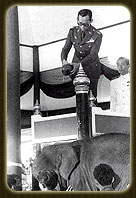
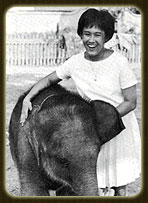
Her Royal Highness Princess Sirindhorn and the White Elephant Surakchathara
A significant elephant is one that possesses seven auspicious characteristics: white eyes, white palate, white nails, white hair, white or new-pot-colored skin, white tail hair, and white genitalia or new-pot-colored genitalia.
A rare-colored elephant is one that has any one of the seven auspicious characteristics, such as white eyes, white palate, white nails, white hair, or white or new-pot-colored skin.
A Neam elephant is one that has three characteristics: black skin, tusks shaped like banana flowers, and black nails.
Because white elephants are rare and auspicious animals, the Wild Elephant Protection Act of 1921 stipulates that anyone who possesses a significant elephant, a rare-colored elephant, or a Neam elephant—whether captured, born from a mother elephant, or acquired by any other means—must consider the elephant as royal property and present it to His Majesty the King. The King would then graciously command an expert in elephant characteristics to examine the elephant. If it is determined to be a white elephant with auspicious traits according to traditional elephant lore, the King may order a royal ceremony to elevate the elephant either in the province where it was found or in Bangkok, according to His Majesty’s wishes. The King also determines the class of the white elephant, which, according to traditional classification, has three levels:
White Elephant Ek: ivory-colored or golden-hued elephants
White Elephant Tho: lotus-colored elephants
White Elephant Tri: elephants with colors such as dried palm sap, dark red, light red, copper, or cloud-colored
The Royal Ceremony of Elevating a Significant Elephant is a royal tradition that His Majesty King Rama IX graciously presided over to officially raise the elephant to the status of Phraya Chang Ton or royal elephant. In earlier times, the duration of the ceremony was not fixed—for example, it lasted five days during the reigns of King Rama II and Rama V, and four days during King Rama VI. In the present reign, the ceremony is held according to the King’s wishes and the suitability of the country’s conditions. The ceremony involves both Buddhist and Brahman rites, with key steps including:
Ceremony of Inscribing the Royal Name on Red Sugarcane
His Majesty King Rama IX graciously bestowed a name upon the significant elephant, reflecting its auspicious traits and honoring it as a white elephant paired with the monarch’s prestige, giving it a status comparable to high-ranking nobility. Court scribes inscribed the royal name on red sugarcane, and the royal Brahmin teacher performed consecration rites on the sugarcane, usually in the Ubosot, either prior to the day of the royal ceremony or on the morning of the ceremony itself. During the ceremony, the King would present the inscribed red sugarcane to the significant elephant.

As for the royal name, during the reign of King Rama V, it was decreed that the name should begin with “Phra Saweet” and end with “Lertfa,” a practice that has been upheld as a royal tradition to the present day.
2. Ceremony of Presenting a Significant Elephant
This ceremony formally presents a significant elephant to His Majesty King Rama IX, who graciously receives it. Some elephants are presented before the day of the Royal Ceremony of Elevating a Significant Elephant, while others are presented on the same day, according to the King’s wishes. The procedure can be summarized as follows:
1. His Majesty lights incense and candles to pay homage to the Triple Gem.
2. A report on the history of the significant elephant is delivered, and the presenters formally offer the elephant to His Majesty.
3. His Majesty pours consecrated water over the elephant and presents ceremonial elephant adornments for its procession.
4. His Majesty offers alms to the monks.
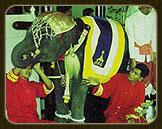
Royal Ceremony of Elevating a Significant Elephant
The ceremony can be summarized as follows:
3.1 Procession of the Significant Elephant into the Royal Ceremony Hall
The procession includes the vanguard, the ceremonial escort of the Phraya Chang Ton (chief royal elephant), accompanied by pairs of drums, conches, trumpets, and other ceremonial instruments, followed by the rear and supporting procession. The ceremony hall or pavilion may be a temporary elephant hall, a provincial elephant hall where the elephant was obtained, or the permanent royal elephant hall. In the current reign, a new royal elephant hall was constructed within the Chitralada Royal Residence to house significant elephants that have been elevated in rank. The former elephant hall was restored by the Fine Arts Department and converted into the Phraya Chang Ton Museum.
-His Majesty King Rama IX lights incense and candles to pay homage to the Buddha image behind the elephant, observes the precepts, and offers alms to the monks, graciously presenting a specially embroidered ceremonial bag indicating the royal ceremony.
-He lights incense and candles to pay homage to the divine deities.
-Brahmins perform rites to honor the divine deities, while royal scholars light incense and candles to pay homage to the Chulathittha.
-His Majesty pours consecrated water over the significant elephant using the royal ewer and the royal conch, anoints the elephant, and presents the red sugarcane inscribed with the royal name of the significant elephant.
-The chief royal Brahmin pours sacred water and anoints the significant elephant.
-His Majesty presents the ceremonial elephant adornments according to the rank of Phraya Chang Ton, which include a back covering, caparison over the elephant’s head, gold-wrapped bindings, necklace with gold ornaments, ear tassels, red cloth for the forehead, golden covers for the tusks and feet, and gold-wrapped ornaments for the tail.
-His Majesty pours sacred water using the royal ewer and anoints the plaque bearing the golden inscription of the Phraya Chang Ton’s royal name.
3.2 Bathing Ceremony of the Significant Elephant
The significant elephant is brought to the designated bathing area called Benja, constructed as a ceremonial pavilion beside the royal ceremony hall. It includes Benja pillars draped with white cloth and topped with gold, a large water basin, and water containers for bathing the elephant, with sacred cords connected to the royal ceremony hall.
3.3 Ceremony of Offering Alms by the Significant Elephant
After the significant elephant has undergone the bathing ceremony, it is brought to offer alms to the monks, a practice believed to bring auspiciousness.
3.4 Recitation of the Dutsadi Sangwei Chant and Musical Accompaniment
This step is particularly important, as the Dutsadi Sangwei chant and the accompanying musical performance with the three-stringed saw are highly exalted elements, reserved only for major royal ceremonies or those specially presided over by His Majesty.
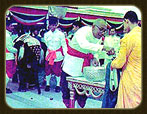
The text of the Dutsadi Sangwei chant for soothing the elephant praises the deities and asks for blessings while bidding farewell to the forest where the elephant once lived. It describes bringing the elephant into the King’s grace, extols the city where the elephant will reside, and instructs the elephant to remember and acknowledge the King’s great benevolence. The chant is usually composed in four sections: Section 1 – Hymn or blessing, Section 2 – Farewell to the forest, Section 3 – Praise of the city, Section 4 – Instruction to the elephant. The accompanying Kaph Khab Mai (wooden percussion poetry) is traditionally arranged in five segments: Segment 1 – Blessing, Segment 2 – Farewell to the forest, Segment 3 – Praise of the city, Segment 4 – Instruction to the elephant, Segment 5 – Praise of the ceremonial elephant adornments.
3.5 Candle Procession Ceremony
The Brahmins lead the ceremonial procession with torches, and His Majesty King Rama IX circumambulates with candles to honor the Phraya Chang Ton (chief royal elephant). Afterwards, the Brahmins anoint the Phraya Chang Ton and offer young coconut water. This royal ceremony of elevating a significant elephant follows the traditional ancient royal protocol, reviving the poetic and ceremonial traditions, which the public greatly admired under the benevolent reign of His Majesty King Bhumibol Adulyadej the Great.
During the reign of His Majesty King Bhumibol Adulyadej the Great, from his accession in 1946 until 1980, the royal ceremonies for elevating important elephants were held a total of eight times for ten elephants.
The first ceremony was for Phra Saewt Adulyadej Phan, the first white elephant in the current reign. It was a second-class wild-born male elephant, considered an important elephant of the Phromphong lineage, belonging to the Atthatis group, named Mumut. It was captured by Mr. Plaek in Krabi Province in 1956. The royal ceremony for its elevation was held at the Royal Elephant House, Dusit Palace, on 10–11 November 1959. It was granted the royal name: “Phra Saewt Adulyadej Phan Phumipol Nawamanathabarami, Thutiya Saewt Kri, Muthaphonno Phas, Boromkamalasana Wisutthiwong, with all auspicious characteristics of the elephant nation, beneficial to the people of Siam, a jewel of fortune and merit, the supreme protector, and of exalted glory in the sky.”
The second ceremony was for Phra Saewt Warattanakri, a male white elephant born in captivity at the house of Mr. Kaew Panyakong, On Tai Subdistrict, San Kamphaeng District, Chiang Mai Province. It was an important elephant of the Wisanuphong lineage, belonging to the Atthakach group, named Dham Pahatsadin. His Majesty the King graciously ordered the royal elevation ceremony to be held in Chiang Mai Province from 22–24 January 1966. The elephant was granted the royal name: “Phra Saewt Warattanakri Naphisi Siri, Pingkanat, Ekathat Mongkol Sulak, Supanak Netra Thi Kowan, Phitsanu Phun Akkharakachat, Atkulsara Dham Pahatsadin, the royal elephant of the great king, beneficent to the Siamese people, of exalted glory in the sky.”
The third ceremony was for Phra Saewt Surakachat, a male white elephant born in the wild and separated from its mother. It was considered an important elephant of the Phromphong lineage, belonging to the ten-elephant group, named Dham Pahate. It was discovered by Mr. Je Heng Haratee, the headman of Kan-Au Subdistrict, Raman District, Yala Province. The royal elevation ceremony for this elephant was held on 10–11 March 1968, and it was granted the royal name: “Phra Saewt Surakachat Boromnuban Swamiphak, Suphalaksan Netra Thi Khun, Thosakun Wisit Phromphong, Adulyawongsa Dham Pahate, Prachachana Swasdi Vibulyasak, Akrasiam Nath Suraphan, Mongkolsarn Lertfa.”

The fourth ceremony was for Phra Nang Sri Saewt Suphalak Akkharattanakri, a female white elephant. Originally named Chao Taen, she was a wild-born elephant considered important in the Wisanuphong lineage, belonging to the Atthakach group, named Dham Pahatsadin. The Department of Forestry acquired her from Phanom Sarakham District, Chachoengsao Province, and she was raised at Khao Chong Arboretum in Trang Province. His Majesty the King graciously ordered the royal elevation ceremony to be held on 7 May 1976 at the Royal Elephant House, Chitralada Garden, Dusit Palace, and bestowed the royal name: “Phra Nang Sri Saewt Suphalak Akkharattanakri Dham Pahatsadi Phitsanuphong, Damrong Suttasakon Su Khonthachat, Chalerm Ratchakridabarami Sri Trang Kapiset Sut, Udom Sar Lertfa.”
The fifth ceremony was for Phra Saewt Sutthavilas, a male white elephant. He had auspicious characteristics and was an important elephant of the Wisanuphong lineage, belonging to the Atthakach group, named Dham Pahatsadin. Originally named Bunrod, he was discovered by a worker from the Department of Forestry along the Kwae Noi River in Kanchanaburi Province and later raised at Khao Khieo Arboretum in Chonburi Province. His Majesty the King graciously ordered the royal elevation ceremony to be held on 25 June 1977 at the Royal Elephant House, Chitralada Garden, Dusit Palace, and granted him the royal name: “Phra Saewt Sutthavilas Atthakachachat Phitsanuphong, Damrong Praphap Mahiman Tam Rappan Paisit, Phritwaruttam Mongkol, Dalsupphon Sawasdi Bul, Adulyalak Lertfa.”
The sixth ceremony was for Phra Wimolrattanakiri, a female white elephant. She had auspicious characteristics and was an important elephant of the Phromphong lineage, belonging to the Atthathit group, named Kumut. Originally named Phangkhachorn, she was discovered by Mr. Preecha and Mrs. Pimjai Warawijit in the forests of Prachuap Khiri Khan Province and brought to be raised at their home in Thung Si Kan, Bangkok. She was later presented to His Majesty the King. His Majesty graciously ordered the royal elevation ceremony to be held on 30 June 1977 at the Royal Elephant House, Chitralada Garden, Dusit Palace, and granted the royal name: “Phra Wimolrattanakiri, Kumutsri Phansopit, Atthathit Phongkamlarn, Akkharatchathipaya Phan, Thakol Kittikhun Kamchon, Amornsarn Lertfa.”
The seventh ceremony was for Phra Srinararatchakiri, a female white elephant. She had auspicious characteristics and was an important elephant of the Phromphong lineage, belonging to the Atthathit group, named Anchun. Her original local name was Ji, and she was later given the royal name Jitra. She was discovered by Mr. Mayi Mamu, a resident of Baan Kumung, Village 7, Chanae Subdistrict, Ra-ngae District, Narathiwat Province, on the Kue Sa mountain range. The Ministry of Interior, together with the local people of Narathiwat, brought this important elephant to be presented according to royal tradition. His Majesty graciously ordered the royal elevation ceremony to be held at Narathiwat Province from 23–25 August 1977 and bestowed the royal name: “Phra Srinararatchakiri, Jitrawadee Rojanasuwong, Phromphong Atthathit Phitsan, Pisettharn Thon Nipithak, Khunarak Kittikamchon, Amornsarn Lertfa.”
The eighth ceremony involved three elephants: Phra Saewt Phasurakchan, Phra Thepphatchakiri, and Phra Boromnakhathat.
1. Phra Saewt Phasurakchan was a male white elephant with auspicious characteristics, considered an important elephant of the Visnupong lineage, belonging to the Atthakach group, named Dampahadinthin. Originally named Phasri, he was born around October 1975 from a wild elephant mother in Song Phi Nong Subdistrict, Tha Yang District, Phetchaburi Province. When he was about one week old, Karen villagers from Ban Nong Puenthaek, Song Phi Nong Subdistrict, captured him, and he later came under the care of the 706th Border Patrol Police. Subsequently, Mr. Suradej Maharom, owner of Phasri Plantation near Kaeng Krachan Dam, Tha Yang District, took him in and raised him.
2. Phra Thep Watcharakirini was a female white elephant with auspicious characteristics, considered an important elephant of the Visnupong lineage, belonging to the Atthakach group, named Dampahadinthin. Originally named Kampha, she was later renamed Khwanta. This important elephant was born around November 1976 from a wild elephant mother in the Deng and Yang forests, Song Phi Nong Subdistrict, Tha Yang District, Phetchaburi Province. When she was about two weeks old, villagers from Pranburi District, Prachuap Khiri Khan Province, who worked in logging, captured her and brought her to Mr. Sanit Siriwanich, the headman of Khao Noi Subdistrict, Pranburi District. After Mr. Sanit Siriwanich passed away, his heirs presented her to Phra Palat Boonsong Dhammavalo, abbot of Wat Khao Bandai It, Mueang District, Phetchaburi Province.
3. Phra Borom Nakhat was a male white elephant with auspicious characteristics, considered an important elephant of the Visnupong lineage, belonging to the Atthakach group, named Khrab Krachok. Originally named Dao Rung, he was obtained by Phra Palat Boonsong Dhammavalo, abbot of Wat Khao Bandai It, from the people of Pranburi District, Prachuap Khiri Khan Province, and was raised at the temple alongside the female elephant Khwanta.
The Ministry of Interior, together with the people of Phetchaburi Province, presented these three important elephants to His Majesty the King in accordance with the ancient royal tradition. His Majesty graciously commanded that the royal ceremony to enshrine these three elephants as royal elephants be held on 25–26 May 1978 in Phetchaburi Province, as a symbol of auspiciousness and honor for the region.
The royal names granted to the elephants as royal elephants are as follows:
Phra Saewt Phasurakchan: “Phra Saewt Phasurakchan Nawamendraphan Sutthawimal Visnupong Khunthamrong Dampahadinthin Suphatcharinanantaphol Kachamongkol Lertfa.”
Khwanta: “Phra Thep Watcharakirini Dampahadhee Phisnupong Sotthithamrong Visutthilak Ananakkhunkhunsob Santh Wimalasopit Pibulkit Lertfa.”
Dao Rung: “Phra Borom Nakhat Watcharapahan Phisnupong Sotthithamrong Atthakach Direkayas Anankhunkhunsar Lertfa.”
During the reign of His Majesty King Bhumibol Adulyadej, in addition to the ten important elephants that were enshrined as royal elephants, other important and unusual-colored elephants also came into the royal care but were not formally enshrined as royal elephants.
1. Klao Khao, a male white elephant, belonged to the auspicious category of important elephants in the Phromphong lineage, Atthathit group, named Anchan. The Governor of Chiang Mai Province respectfully presented him to His Majesty at Phuping Palace and submitted the official registration documents in 1976. The elephant was placed under care at the Elephant Calf Training Center in Lampang Province, but he was never enshrined as a royal elephant because he passed away in the same year.
2. Klong, a male elephant, was taken by the Royal Forest Department and kept at Khao Kheow Forest Park in Chonburi Province. Upon inspection, he was found to possess auspicious traits classified as an unusual-colored elephant. He was never formally presented to His Majesty as he also passed away before the ceremony.

The Royal Elephant Stables located within the Chitralada Royal Residence compound.
3. Wanphen, a male elephant, belonged to Mr. Sap Pukdui, the village headman of Village No. 5, Mai Ruak Subdistrict, Tha Yang District, Phetchaburi Province. The Governor of Phetchaburi Province, Mr. Supayok Panichwit, respectfully presented him to His Majesty on 29 June 1978.
4. Mod, a female elephant, came from Kanchanaburi Province. Mrs. Chailai Thavorn respectfully presented her to His Majesty at Suan Chitralada, Dusit Palace, on 13 August 1979.
5. Khwan Mueang and Yod Phet, two male elephants, were presented to His Majesty the King by Mr. Prasat Phothipiti and Phra Palat Boonsong Thammapaalo, abbot of Wat Khao Bandai It in Phetchaburi Province, at the East Courtyard of Chitralada Royal Residence, Dusit Palace, on 6 August 1980.