

His Majesty King Bhumibol Adulyadej The Great
Chapter 12: The Supreme Patron of Religion
Apart from Buddhism, a number of Thai people also adhere to Islam, Christianity in both the Roman Catholic and Protestant denominations, Brahmanism, Hinduism, and Sikhism. His Majesty King Rama IX consistently supported the activities of these religious organizations in the country, particularly in matters concerning their respective adherents.
1. Islam
In Thailand, around the year 1994, there were approximately 2,396,198 Thai Muslims residing in 72 provinces. There were 2,799 mosques nationwide across 50 provinces, with Pattani Province having the highest number at 544 mosques. At that time, Bangkok had 159 mosques. Thai Muslims in Thailand hold a status and citizenship that is somewhat different from that of Muslims in many other countries of the world, namely:
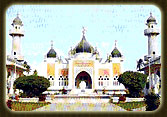
The Central Mosque of Pattani Province
They hold the status of Thai citizens, with the same rights and duties as all other Thais. As Muslims, their family status, religious practices, and the application of law and culture are firmly based on Islamic law, particularly in the four southern provinces of Pattani, Yala, Narathiwat, and Satun, where Thai courts apply Islamic law in cases where both parties are Muslim, with a Dato Yuttitham serving as part of the panel of judges.
Therefore, Thai Muslims are true Thai citizens, entitled to serve as government officials, obligated to perform military service under the law, and able to pursue any occupation in the same way as Thai Buddhists and followers of other religions or denominations, with complete equality.

Professor Sawas Sumalayasak
President of the Central Islamic Committee of Thailand
The “Chularajmontri” is the position of the head of the Muslim community. At present, the 11th Chularajmontri is Mr. Sawas Sumalayasak (November 5, 1997 – present). The administrative organization for Islamic religious affairs consists of the Chularajmontri, the Central Islamic Committee of Thailand, the Provincial Islamic Committees, and the Mosque Committees.
Royal Duties as the Patron of Islam
His Majesty King Rama IX was regarded as a source of inspiration and deeply beloved by all Thai people. Through his wisdom and virtuous prestige, both the general public and Thai Muslims admired and praised his royal duties and every endeavor undertaken for the utmost benefit and well-being of Thai Muslims. The important royal duties of His Majesty King Rama IX in relation to Islam include:
1.1 Promotion of Islam and related activities
1.2 Enhancement of quality of life and elimination of underdevelopment in Muslim communities
1.3 Promotion of rights and equality in the development of Thai Muslim personnel
1.1 Promotion of Islam and related activities
1.1.1 The Central Mawlid Celebration
His Majesty King Rama IX attended the Central Mawlid Celebration and delivered royal addresses on almost every occasion between 1964 and 1970. Later, His Majesty graciously appointed His Royal Highness Crown Prince Maha Vajiralongkorn to represent him at the Central Mawlid Celebration each year.
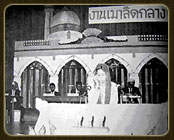
Qur’an recitation competition during the central Mawlid celebration.
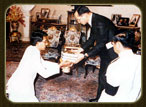
The Board of Trustees of the “Tuan Suwansat Chularajmontri Foundation” presented the Holy Quran and its Thai translation to His Majesty.
The Mawlid Celebration is the observance of the birth anniversary of the Prophet Muhammad (peace be upon him), celebrated by Muslims around the world. In Thailand, the celebration is held in provinces with significant Muslim populations. In Bangkok, the central event draws Thai Muslims from all provinces in large numbers. This central event is called the Central Mawlid Celebration of Thailand. The Chularajmontri serves as the presiding chair for the organization of the event, and His Majesty King Rama IX has graciously presided over the celebration on various occasions.
1.1.2 Translation of the Holy Quran into Thai
His Majesty King Rama IX supported the translation of the Holy Quran into Thai and authorized the printing and royal distribution of the translated copies to mosques across the country.
In 1962, the Saudi Arabian Ambassador presented an English version of the Holy Quran to His Majesty on the occasion of his birthday. His Majesty King Rama IX expressed that if the Holy Quran were translated into Thai, it would enable Thai Muslims to understand its true meaning and practice it correctly, which would greatly benefit them spiritually. Two important royal intentions were emphasized:
(1) The translation of the Holy Quran into Thai must be accurate.
(2) The Thai language used should be easily understood by the general public.
The translation took a total of 1 year, 7 months, and 8 days, and was completed on July 2, 1964. The printing process was approved by the Cabinet, with a budget of 862,400 baht allocated through the Department of Religious Affairs. The printing was carried out in parts, and the Thai royal edition of the Holy Quran was divided into 30 parts. Some completed parts were presented by the hand of His Majesty King Rama IX to central institutions and later bestowed to the Narathiwat Provincial Islamic Committee, transported from Bangkok to Narathiwat. The royal presentation ceremony was held at the pavilion in the provincial hall on July 17, 1970. Since then, the Narathiwat Provincial Islamic Committee has designated July 17 of every year for the religious ceremony, a tradition that continues to this day.
During the Central Mawlid Celebration in 1981, the organizing committee presented the 30th and final part of the printed Quran to His Majesty. Therefore, the translation of the Holy Quran from the original English version into Thai fully realized the royal intention.
1.1.3 Royal Awards for Islamic Teachers and Private Islamic Schools
His Majesty King Rama IX strongly supported Islamic education for Thai Muslims, especially in the southern border provinces. Before 1961, Thai Muslims had to study Islam at traditional Islamic schools called pondok, which were run by toh khru (teachers). The term pondok means “hut.” In this system, students lived, ate, and studied closely with the toh khru in huts near the teacher’s home. Students assisted the teacher in his occupations, such as working in rubber or coconut plantations. Education in pondok schools was informal, without registration or standardized assessments, and instruction depended on the abilities and discretion of the toh khru and students. The curriculum included religious studies and language, along with practical religious duties.
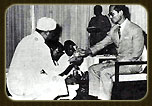
Royal awards for well-managed schools were presented to Islamic teachers’ councils at the reception hall of the Thaksin Ratchaniwet Palace.
1.1.4 Construction of Provincial Central Mosques
His Majesty King Rama IX initiated and supported the construction of provincial central mosques, with the government allocating state budget funds for their construction. These mosques have now been completed, including those in Pattani, Satun, Narathiwat, and Yala provinces. For the inauguration of each central mosque, His Majesty personally presided over the ceremonies and graciously delivered royal addresses to the Muslim population on each occasion. Furthermore, during visits to various provinces, His Majesty allowed Thai Muslims to pay respects closely and would visit the mosques when invited by the local imams. In particular, during royal residencies at the Thaksin Ratchaniwet Palace in Narathiwat, His Majesty, accompanied by Her Majesty the Queen Mother, His Royal Highness Crown Prince Maha Vajiralongkorn, Her Royal Highness Princess Maha Chakri Sirindhorn, and Her Royal Highness Princess Chulabhorn Walailak, visited and provided support to Thai Muslims in nearly every district and village of Pattani, Yala, Narathiwat, and Satun provinces.
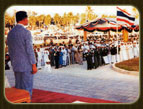
His Majesty the King delivered a royal address on the occasion of his visit to inaugurate the Narathiwat Provincial Mosque building.
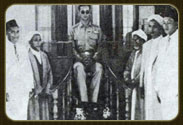
In March 1959, during a visit to the southern provinces, His Majesty visited the Salahuddin Mosque and sat on the mimbar in honor of the Thai Muslim community.
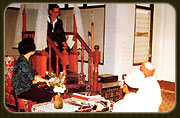
His Majesty the King and Her Majesty the Queen visited the community mosque in Sam Phraya Subdistrict, Cha-am District, Phetchaburi Province.
1.1.6 Appointment of the Chularajmontri
During the reign of His Majesty King Rama IX, Chularajmontri were appointed to advise the Department of Religious Affairs in the Ministry of Education on matters concerning the Islamic patronage. According to the Royal Decree on Islamic Patronage, B.E. 2488, as amended by the Royal Decree on Islamic Patronage (No. 2) in 1948, two Chularajmontri were appointed. Mr. Tuan Suwansat, who had been appointed since the previous reign, carried out many important duties, including the translation of the Holy Quran into Thai, as previously mentioned. Mr. Tuan Suwansat passed away on March 22, 1981.
A candidate for the position of Chularajmontri was nominated and presented for His Majesty’s gracious appointment. His Majesty King Rama IX appointed Mr. Prasert Mahamad, who had been nominated through the Ministry of Interior, as Chularajmontri on September 8, 1981. The Chularajmontri also serves as the chairman of the Central Islamic Committee of Thailand. Later, upon the passing of Mr. Prasert Mahamad, Mr. Sawas Sumalayasak was graciously appointed as the 11th Chularajmontri on November 5, 1997.
His Majesty King Rama IX has provided close royal patronage to Islamic organizations and Thai Muslims from the beginning of his reign, as exemplified in the following details.
On June 3, 1967, His Majesty King Rama IX attended the 10th anniversary celebration and the inauguration ceremony of the new school building of the Thai Muslim Women’s Association at the association’s premises in Bang Kho Laem Subdistrict, Yannawa District, Phra Nakhon Province.
On January 13, 1970, the Director-General of the Department of Religious Affairs brought Mr. Tuan Suwansat, the Chularajmontri, Miss Maimunah Moesad, the winner of the international Quran recitation competition, and the Central Islamic Committee of Thailand to pay respects at Chitralada Royal Villa. On this occasion, the Chularajmontri presented funds donated by Muslim institutions and Thai Muslims through the Chularajmontri’s office to assist flood victims.
On September 2, 1972, His Majesty visited the residents of Ban Tanyong, Narathiwat Province, and presented commemorative medals to those who graciously donated 210 rai of land for the construction of a private royal residence.
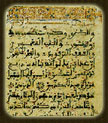
The Holy Quran
On April 17, 1973, His Majesty, accompanied by Her Majesty the Queen Mother, Her Royal Highness Princess Maha Chakri Sirindhorn, and Her Royal Highness Princess Chulabhorn Walailak, visited residents on the islands in Phang Nga Bay, Mueang District, Phang Nga Province. He presented clothing and blankets to approximately 120 elderly and impoverished people on the islands, and provided garments and school supplies to village teachers for distribution to about 400 students.
On April 18, 1973, His Majesty visited Koh Yao Noi and Koh Yao Yai. During this visit, he graciously presented clothing and school supplies to approximately 600 students and offered guidance to improve living conditions. On this occasion, His Majesty also authorized royal medical units and volunteer medical teams under Her Royal Highness Princess Srinagarindra, the Princess Mother, to provide medical care to the local population for two days.
On August 22, 1973, an Islamic Dhamma delegation from Bangkok, Narathiwat Province, and Pattani Province, along with 31 officials from the Ministry of Interior and the Ministry of Education, paid respects at the reception hall of Thaksin Ratchaniwet Palace, Narathiwat Province, and presented a report on the history of the Islamic Dhamma project.
On August 27, 1973, His Majesty visited the Nurul Yahrivalyabali Mosque (Khao Tanyong) to observe the mosque’s construction and meet the residents gathered at the mosque.
On August 22, 1974, His Majesty visited the residents of Ban Bago Sato, Ban Sipo, Ban Dusongyo, and the Kairukini Mosque, graciously contributing personal funds to support the mosque and Ban Dusongyo School, and authorized medical examinations for the sick as had been done on previous visits.
On September 4, 1974, His Majesty privately visited the residents of Village 1, Ban Kampong Buke, Ban Yamu Rema, and Ban Kalu Pa, Bare Nuea Subdistrict, Bacho District.
On September 11, 1974, His Majesty visited the residents of Ban Ku Bae Yamu, Rangae District, and Yi-ngo District, and inspected breeding cows of the Holstein-Friesian and Red Sindhi breeds.
On September 19, 1974, His Majesty privately visited residents and inspected the drainage canal excavation from the marsh at Ban Thon, Mueang District, Narathiwat Province.
On September 20, 1975, His Majesty observed improvements and construction of Romklao School, a junior high school for general education in Yi-ngo District, which he graciously funded at Ban Buke Pala, Yi-ngo District.
On April 21, 1975, His Majesty inspected the progress of the canal excavation from the marsh to the sea at Ban Basepute and visited the weaving training center at Ban Khok Kian, Khok Kian Subdistrict, Mueang Narathiwat District.
On August 23, 1975, His Majesty visited the residents of Ban Bago Sato, Ban Sipo, and Ban Prang, Mueang District, Narathiwat Province, and graciously contributed personal funds to support the Kairudini Mosque.
On September 1, 1975, His Majesty observed a demonstration of martial arts.
On September 2, 1975, His Majesty inaugurated the “Narathiwat 1” water control gate at the end of Bacho Canal, constructed under royal initiative to drain water from Bacho marshlands and mitigate flooding in up to 60,000 rai at Ban Basepute, Mueang District, Narathiwat Province.
On September 6, 1975, His Majesty presented awards to Islamic teachers who operated exemplary schools at the reception hall.
On September 20, 1975, His Majesty visited Romklao School and interacted with participants in the bird parade from all subdistricts, graciously presenting various sweets to representatives of the Yi-ngo District Islamic Committee for distribution to village heads for the Thai Muslim ordination ceremonies.
On August 24, 1976, His Majesty presented awards and interacted with representatives of public schools teaching Islam in Education Area 2, recognized for improvements and promotion of Islamic education, at the Central Mosque of Mueang District, Pattani Province.
On September 26, 1976, His Majesty granted a royal audience to the Islamic Committee of Narathiwat Province to pay respects and offer blessings on the occasion of Hari Raya Id al-Fitr at the Reang Hall, Thaksin Ratchaniwet Palace.
On September 16, 1977, the Islamic Committees of Narathiwat, Pattani, and Yala Provinces, mosque committees, and Dato Yuttitham officials paid respects and presented blessings on the occasion of Hari Raya Id al-Fitr of 1977, and offered funds according to their wishes.
On September 22, 1977, His Majesty presented plaques to schools with outstanding educational performance and awards to teachers of Islamic schools in the southern region, presented the royal monogram pin (Por Por Ror) to provincial mosque committees in 13 southern provinces, and bestowed the provincial scout flag to local scouts in Yala Province.
On September 23, 1978, His Majesty observed the Kra-le boat race.
On September 24, 1978, His Majesty inspected the operations of royal medical units and personally contributed funds for the maintenance of the mosque in Ban Bacho Island, Rangae District, Narathiwat Province.
On September 20, 1979, His Majesty inaugurated the mosque in Phiman Subdistrict, Mueang District, Satun Province, and presented the annual awards to Islamic school teachers in the southern region.
On October 4, 1979, His Majesty visited the residents of Ban Bue Re and provided funds to the imam to support the construction of a new mosque that was still under construction.
On August 22, 1984, Khun Ying Samorn Phuminrong, Chairperson of the “Tuan Suwansat Chularajmontri Foundation,” along with Ms. Rattana Sukonthapan, the foundation’s advisor, and the delegation, paid respects and presented funds for projects initiated under royal initiative.
In 1984, His Majesty graciously allowed delegations to receive royal awards, personally visited and supported Thai Muslims, and contributed funds for the maintenance of various mosques during annual residencies at Thaksin Ratchaniwet Palace, Narathiwat Province—a royal benevolence that continues to the present day.
1.2 Improving Quality of Life and Alleviating Underdevelopment
Every year between July and September, His Majesty King Rama IX relocated to Thaksin Ratchaniwet Palace, accompanied by Her Majesty the Queen Mother and Her Royal Highness Princess Maha Chakri Sirindhorn, or Her Royal Highness Princess Chulabhorn Walailak. Thaksin Ratchaniwet Palace thus served as a center of spiritual refuge, a small medical facility, a school or vocational training center, and a relief center to ease the hardships of impoverished people. This was made possible through His Majesty’s benevolence and various royal-initiated assistance projects, such as:
Munoh Irrigation Project, Narathiwat Province
Bangnara River Basin Project
Pratu Daeng Marsh Project (Research and Study Center for Sirindhorn Peat Swamp Forest)
Pak Phanang River Basin Development Project and Nutrition Development Project
1.2.1 Munoh Project
The Munoh Project was initiated after Muslim residents of Munoh and Pupoh Subdistricts, Su-ngai Kolok District, Narathiwat Province, petitioned His Majesty for royal assistance in agriculture. The area was largely swampy, with waterlogging throughout the year. During the dry season, freshwater in the Kolok River was insufficient, allowing seawater to encroach and render the soil infertile. During the rainy season, water from the Kolok River and the acidic water from Pratu Daeng swamp flooded the area, causing perennial waterlogging that prevented agriculture.
The Royal Irrigation Department was responsible for implementing the project under the royal initiative, starting from the 1975 fiscal year, including the following works:
Water drainage: excavating the 15 km Munoh drainage canal and dredging 13 km of the natural Pratu Daeng canal.
Saline water prevention: constructing embankments around the cultivated areas, approximately 17 km in length.
Flood mitigation: constructing embankments along the banks of the Kolok River.
Water storage and distribution: building ditches in Ko Sathon Subdistrict along with four additional irrigation canals totaling 15 km in length.
Peatland reclamation, or the Ban Kuwe Project under royal initiative: excavating a separate water canal from the Munoh Canal to channel freshwater to leach acidic soil along the edges of Pratu Daeng swamp and discharge wastewater through drainage canals into the Kolok River.
Munoh Royal Livestock-Agriculture Village Project: providing over 100 impoverished families, including members of the Volunteer Farmers Group, with farmland and livestock opportunities, covering more than 1,500 rai.
The vast Munoh Project spans seven subdistricts in Tak Bai and Su-ngai Kolok Districts, covering approximately 131,300 rai. From 1967 to 1996, over 20 years, with expenditures exceeding 464 million baht, the project transformed the dreams of Muslim residents in Narathiwat Province into reality. It created stable livelihoods, arable land, and most importantly, lifted the population out of extreme poverty. Even cemeteries (kubur) were protected from flooding. The wisdom and royal benevolence of His Majesty King Rama IX made it possible for Munoh today to comprise over 7,329 households, totaling more than 21,380 people, who benefit from flood control, agriculture, fishery and livestock development, freshwater supply, saline water prevention, and irrigation, as well as riverbank protection along the Kolok River. What was once an inhospitable swamp has been transformed into a fertile and prosperous area, a “golden land,” entirely due to the compassionate royal vision and perseverance that accomplished the Munoh and peatland projects within 20 years.
Bangnara Upper Floodgate
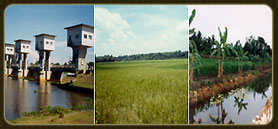
Agricultural area in the Bangnara River Basin
1.2.2 Bangnara River Basin Project
Another project initiated from the far-sighted vision of His Majesty King Rama IX aimed to systematically resolve the hardships of impoverished residents caused by the Bangnara River. The project established a sustainable natural resource management system, developing the entire Bangnara River Basin for the benefit of agricultural and fishery areas, which are limited in southern Thailand. This restoration reclaimed hundreds of thousands of rai, directly improving the livelihoods and well-being of the local population by enabling them to earn income and achieve a better standard of living (Office of the Royal Development Projects Board, 1992).
A major problem of the area known as the Bangnara River Basin is that the Bangnara River is formed by the convergence of several tributaries in Narathiwat Province before flowing into the sea. The river is influenced by tidal seawater, causing its water to be saline and brackish throughout the year, making it impossible to cultivate land along its banks. In addition, there is a shortage of raw water for potable use. During His Majesty’s residence at the southern royal palace between 1980 and 1983, he graciously provided royal guidance to the Royal Irrigation Department to establish a development project for the Bangnara River Basin.

Bangnara River Basin
The project aimed to prevent flooding on both sides of the river and to store and distribute freshwater for agriculture and domestic use, while establishing an appropriate irrigation and drainage system within the project area to expand and develop cultivable land simultaneously.
Implementation included constructing an upper floodgate in Taluo Nuea Subdistrict and a lower floodgate in Pron Subdistrict, Narathiwat Province, along with an irrigation and drainage system to prevent saline water from entering the Bangnara River.
The project was completed in 1996, successfully preventing saltwater intrusion into the Bangnara River. As a result, approximately 105,000 rai of farmland were fully rehabilitated, with an additional 69,000 rai of agricultural land gained after excess water was drained. Furthermore, about 62,000 rai of land now have freshwater available for year-round cultivation, and residents in the Bangnara River Basin have access to freshwater for domestic use throughout the year.
1.2.3 To Daeng Swamp Project
Swamps are inhospitable areas with stagnant wastewater throughout the year, making them unusable for any productive purpose. Across Thailand, the total area of swamp forests is approximately 400,000 rai. The largest swamp forest is located in Narathiwat Province, forming a vast contiguous area covering about 283,350 rai. This swamp forest is divided into two major swamp areas:
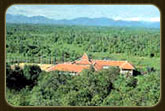
To Daeng Swamp covers approximately 209,900 rai, encompassing the districts of Su-ngai Padi, Tak Bai, and Su-ngai Kolok.
Bacho Swamp covers about 65,450 rai in Bacho and Mueang districts.
A major problem of the swamp forests in Narathiwat Province is the degradation of the swamp ecosystem caused by human activity, which rendered the swamps unproductive and deteriorated. His Majesty graciously provided guidance for research and investigation to develop solutions. He authorized the establishment of the Phikun Thong Development Study Center in Narathiwat Province to study and find ways to restore and develop To Daeng Swamp (Jirapant Taweewong, M.R.V.M.P.P.).
The Office of the Special Committee for Coordinating Projects Initiated by Royal Decrees, in collaboration with the Royal Forest Department, therefore considered and established the “Sirindhorn Peat Swamp Forest Research and Study Center” at Ban To Daeng, Village No. 8, Putoh Subdistrict, Su-ngai Kolok District, in honor of Her Royal Highness Princess Maha Chakri Sirindhorn on the occasion of her 36th birthday. The center was established to study the environmental conditions and natural science of To Daeng Swamp. Research activities began in 1991, focusing on climate observation and environmental data collection, in cooperation with the UN University and Tokyo University, as part of the “Research Project on Narathiwat Tropical Forest Eco-system.”
The results of the research and study showed that:
Sirindhorn Peat Swamp Forest is the only peat swamp in Thailand with a comprehensive and modern academic information center.
There are 470 plant species identified, many of which are unique to this swamp, such as Tang Nu and Lum Pi, among others.

Eleiodoxa conferta
Note:
Eleiodoxa conferta, commonly known as “lum pee,” is a plant that has a close relationship with the peat swamp ecosystem. Naturally, it grows as an understory plant in shaded areas with waterlogged conditions throughout the year. The plant grows in large clumps, and each individual produces fruit only once before dying. However, other shoots within the same clump produce fruit in succession, allowing the clump to expand continuously. Lum pee can retain moisture and water, which benefits other plants and animals in the peat swamp, supporting the food chain and overall ecosystem, which is essential for the livelihood of surrounding communities.
Its fruit is similar to the rattan palm, but the skin is dark red and thornless, and the flesh inside resembles the rattan palm, though smaller and rounder.
It was found that there are 109 bird species and 154 wildlife species, including animals currently under heavy hunting pressure, such as long-tailed macaques and smooth-coated otters, as well as species on the brink of extinction, such as the flat-headed cat.
In addition, 52 fish species were recorded, including rare ones such as the crocodile toothfish, as well as species never before observed, such as the kamme fish and two other species that have yet to receive Thai names.

Flat – Headed Cat
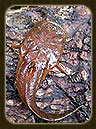
Chaca bankanensis
The results of this study will serve as a guideline for the development of wildlife and the conservation of the peat swamp forest, leading to its improvement. This is not only beneficial for Thailand, but also greatly contributes to the study of natural science, environmental conservation, and the prevention of degradation of the Toh Daeng peat swamp. Furthermore, it serves as one of the natural science research centers in the world. This is all due to the far-sighted vision of His Majesty King Bhumibol Adulyadej in promoting research and academic development, aimed at applying knowledge to restore and improve natural conditions, solely by His Majesty’s initiative.
1.2.4 Development Projects for the Pak Phanang River Basin and Nutrition Improvement Projects
In addition to the aforementioned royal initiatives, which directly benefited the Thai Muslim population as well as the general populace in the three southern provinces of Pattani, Yala, and Narathiwat, there are two more projects that deserve mention here:
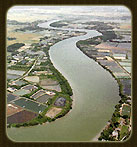
Both banks of the Phanang River

Uthokwiphat Prasit Floodgate
The Pak Phanang Basin Development Project under the Royal Initiative in Nakhon Si Thammarat Province was a result of His Majesty’s directive to the Royal Irrigation Department to consider constructing the Pak Phanang floodgate at Pak Phanang District, Nakhon Si Thammarat Province, on 9 and 11 October 1992 at the pumping stations of Ban Khok Duwae and Ban Tor Lang, Tak Bai District, Narathiwat Province.
Because His Majesty was concerned about the hardships of the people in the Pak Phanang basin across four districts—Chawang, Hua Sai, Chian Yai, and Pak Phanang Districts, Nakhon Si Thammarat Province—due to brackish water in the dry season and flooding in the lowlands during the rainy season, His Majesty therefore had the royal initiative to consider constructing floodgates along the Pak Phanang River to prevent seawater from entering the river and to store fresh water in the river and its tributaries, so that the people could use it for agriculture and domestic consumption throughout the year.
It also serves as a source of raw water for the production of tap water in Pak Phanang District. This is considered a major royal-initiated project, providing benefits to approximately 500,000 rai of cultivated land within the project area. Nakhon Si Thammarat Province has a total population of about 1,407,340 people, of whom approximately 73,748 are Muslims, with 97 mosques scattered across the districts. In particular, the four districts under this project have benefited from its implementation (Department of Religious Affairs, 1994: 11).
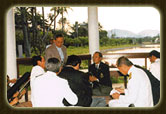
On 27 October 2000, His Majesty gave additional royal directives regarding water management in the Pak Phanang River Basin area to maximize its efficiency.

Huai Sai Reservoir and the Development of the Irrigation System
The core components of the project include the Pak Phanang watergate, drainage into the Gulf of Thailand, and the construction of sluice gates to store fresh water along tributaries and the reservoir at the upper Pak Phanang area. The project has been fully surveyed, designed, and completed. This initiative is a royal-initiated project aimed at assisting the people and also serves to honor the occasion of His Majesty the King’s 50th year on the throne.
Note: “Uthok Wipak Prasit” is the auspicious royal-given name, meaning the ability to separate fresh and salt water effectively. It signifies balanced water management, preventing saltwater intrusion while storing fresh water for livelihoods, thereby initiating the improvement of people’s quality of life and ensuring the sustainable use of natural resources in the Pak Phanang watershed.
The watergate, which serves as the starting point of the Pak Phanang River Basin Development Project under the Royal Initiative, has been operational since October 1, 1999. It has the capacity to store 72 million cubic meters of fresh water above the watergate, with 10 spillway gates, and can discharge water at a rate of 1,246 cubic meters per second. The management is conducted in an integrated manner, combining scientific principles and technology from the Royal Irrigation Department, along with the participation of local organizations in the form of committees responsible for opening and closing the gates, in order to maximize benefits for both people and the environment within the Pak Phanang watershed.
(Reference: http://www.chaipat.or.th/journal/aug01/t2.html, June 16, 2004)
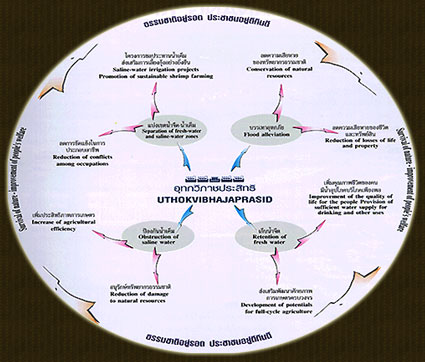
The nutrition development project, initiated under the Royal Initiative of Her Royal Highness Princess Maha Chakri Sirindhorn, aims to ensure that all people—children and adults, men and women, whether in rural or urban areas—have good health, are strong, and can be effective citizens, thereby contributing to the nation’s long-term stability and sustainability (Office of the Royal Development Projects Board, 1994: 29–33).
The nutrition development efforts under this Royal Initiative and the dedication of Her Royal Highness Princess Maha Chakri Sirindhorn comprise several programs, such as:
2.1 The “Agriculture for School Lunch” project is implemented in schools both in the provinces and in Bangkok, focusing on providing students, particularly those from underprivileged backgrounds, with meals to eat at school during lunchtime.
2.2 The “Single-Plate Meal” project focuses on providing students with a balanced meal that includes all four food groups (carbohydrates, protein, fat, and vitamins) consistently, in order to promote good health and strengthen the body’s resistance to illnesses.
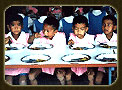
2.3 The Project for Improving the Nutritional Status of Children Aged 0–60 Months is a program jointly implemented by the Office of the Royal Development Projects Board (ORDPB) and several government agencies in accordance with the royal initiative in the three southern border provinces: Pattani, Yala, and Narathiwat. This project provides significant benefits to children in these provinces, where culture, traditions, and beliefs are rooted in Islam.
This project can thus be considered an extension and expansion of development efforts for Thai Muslims in Narathiwat Province, where there are approximately 476,438 Muslims out of a total provincial population of about 601,082 (Department of Religion, 1994).
1.3 Promoting Rights and Equality in the Development of Thai Muslim Personnel
Thai citizens, regardless of ethnic origin or religion, are entitled to equal rights and duties under the law. Likewise, Thai Muslims have the same rights as Thai citizens of other religions under the law.
However, in reality, societies often exhibit “discrimination” even among members of the same nationality, based on customs, traditions, values, religion, social class, wealth, education, ethnicity, or skin color, to varying degrees depending on the era or circumstances.
In Thai society, from ancient times to the present, which operates under a parliamentary system with the monarchy as head of state, discrimination or prejudice has historically been less severe compared to other societies. Foreigners or people of foreign descent are often recognized and highly respected for their ability and intelligence, and their religion is also acknowledged and protected. For these reasons, promoting rights and equality is a crucial factor in developing Thai personnel to serve society effectively, whether through appointments to positions or the granting of noble titles, as seen historically with figures such as Chao Phraya Vichayen (Falcon) or Chao Phraya Chek Ahmad Rattanaratchasethi.
Although the practice of granting noble titles has been discontinued, Thai Muslims still occupy important positions in the civil service, such as Director-General of the Department of Religion or Permanent Secretary of the Ministry of Education, exemplified by Mr. Rangsarit Chaowsiri, or the current Permanent Secretary of the Ministry of Interior, Mr. Aree Wong-araya. In the military, notable figures include Lieutenant General Thanom Waithanom-sat, Vice Admiral Tatsanai Waithanom-sat, Lieutenant General Wutthikrai Waithanom-sat, and Police Major General Siri Thongkhamwong, among many others currently holding significant governmental positions.
Appointments granted by royal grace are numerous, extending across the fields of medicine, education, general administration, and even the Ministry of Foreign Affairs, including positions such as ambassadors. For example, Mr. Prasert Masodi was entrusted by royal favor to hold a position based on integrity, loyalty, and competence to serve and benefit society. Even religious figures, such as Mr. Winai Samaun, a member of the Central Islamic Committee of Thailand, Mr. Asis Phitakkumpon, also a member of the Central Islamic Committee and chairman of the Islamic Committee of Songkhla Province, and Khun Ying Suwatana Petchthongkham, were graciously appointed as senators, in addition to Muslim ministers such as Mr. Den Thomeena, Mr. Surin Pitsuwan, and Mr. Wanno Hammad Normata.
The fact that Thai Muslims are entrusted with high and significant positions in politics and civil service stems primarily from their knowledge and ability. For this reason, whenever His Majesty King Bhumibol Adulyadej traveled to the Thaksin Ratchaniwet Palace, He would consistently visit schools teaching Islam to encourage and support Thai Muslims in pursuing both religious and secular education. Royal initiatives, such as granting educational awards or scholarships, demonstrated His Majesty’s sincere interest in fostering education to enhance the quality of Muslim personnel for the service of Thai society, both in government and the private sector. Many Thai Muslims have received and completed royal scholarships offered according to the needs of various governmental agencies.
Thus, it can be observed that prejudices or discriminatory practices based on religion are gradually diminishing as Thai Muslims attain higher education. This contrasts with the period during World War II when civil servants or individuals who were not Buddhist were pressured to change non-Thai names and, in some cases, to convert to Buddhism.
It is important to note here that even the royal attendants who served closely with His Majesty the King on his travels included both Muslim men and women. Therefore, His Majesty King Bhumibol Adulyadej and Her Majesty the Queen Mother showed understanding and trust toward Muslim attendants.
They provided support and assistance according to their abilities, without any distinction from other attendants. This deep and well-informed understanding of Islam was a crucial factor behind His Majesty’s interest in promoting education for Muslims in the southern provinces, the translation of the Holy Quran into Thai, and the proper study of Islam, all for the benefit of fostering unity, stability, and national progress.
Royal Speeches Regarding Islam
On the occasion of attending the central Mawlid celebration, H.E. 1384, July 22, 1964, at Lumpini Sathan:
“I am pleased to join the celebration of Islam today and delighted to meet you all once again. Prophet Muhammad, the messenger of Islam, is a great man who has contributed greatly to the world. He praised wisdom, careful deliberation, and purity of mind and body as fundamental principles for life. Therefore, I urge everyone to follow his teachings so that you may attain happiness and prosperity. May the event held today achieve the purpose intended by all of you.”On the occasion of attending the central Mawlid celebration, H.E. 1385, July 12, 1965:
“My wife and I are pleased to meet you all again on this important Islamic occasion. I appreciate the goodwill you have shown toward me today. Prophet Muhammad, the messenger of Islam, is a person of great significance who has done much good for mankind. The organization of his birthday celebration to disseminate his history and teachings, guiding youth toward faith and goodness while prioritizing national welfare, is most appropriate and an important religious activity. I rejoice in your efforts and hope that this event will achieve all its intended benefits and bring happiness and prosperity to all.”Royal Speech Granted to the Committee Organizing the Central Mawlid Celebration at Chitralada Royal Palace, August 3, 1976:
“… I am pleased that the Mawlid celebration was conducted successfully, providing benefits in many ways. This event demonstrates that participants acted righteously and in accordance with moral principles, which greatly benefits the community. Having religion as a guiding principle is already a virtuous act, and when one diligently follows the teachings of a good religion, it further enhances personal and communal well-being. The success of collective efforts contributes to continued achievements. Therefore, your persistent application of excellent religious knowledge and practices, without discouragement, fosters collective happiness and national welfare. In Thailand, although individuals hold different beliefs, adherence to a good and righteous religion allows people to live peacefully together without conflict. Correct faith encourages mutual understanding and support across all religions. Thus, practicing and promoting a good religion is highly beneficial and commendable. I encourage you all to be diligent in your practice and to educate those less knowledgeable so that everyone can act rightly, contributing both to communal stability and individual well-being. By doing so, you work for the public good while simultaneously fostering peace and happiness for each person…”
Royal Speech at the Celebration of the 14th Century of the Quran at Kittikachorn Stadium, Bangkok, March 16, 1968:
“My wife and I are delighted to join the celebration of the 14th century of the Quran, which you have organized collectively. The Quran is not only a central scripture of Islam but also one of the world’s important literary works, widely recognized and translated into many languages. Your effort to translate and disseminate it into Thai is entirely appropriate, as it allows Muslims in Thailand who do not know Arabic to study the teachings conveniently and extensively. It also provides an opportunity for the general public to gain a correct understanding of Islamic principles. It is known that the Quran contains deep meanings that are difficult to fully translate into another language. Your faithful and diligent translation into Thai, preserving the essence of the original scripture and publishing it widely, is commendable and deserves great support. I wish the celebration of the 14th century of the Quran a complete success in every respect, and may all participants enjoy happiness and prosperity.”Royal Speech on the Occasion of Presenting the Quran and its Thai Translation to the Narathiwat Provincial Islamic Committee at the Narathiwat Provincial Hall, July 17, 1970:
“I am very pleased to meet the Islamic Committee and the Muslim community during my visit to Narathiwat. I have always reflected that your efforts over generations to strengthen development, prosperity, and peace in the southern provinces stem from your adherence to and practice of the virtuous teachings of Islam. I am therefore deeply desirous of promoting religious education, particularly the widespread study of the Quran. Today, studying the Quran is still inconvenient for many, as learners must first master Arabic, which is difficult and time-consuming, leaving those without this opportunity at a disadvantage. Having the Quran translated into our language allows everyone to study it more easily. I have therefore entrusted the Grand Mufti with organizing the translation into Thai, which he has done willingly, despite the considerable difficulty in rendering the text faithfully and completely. The work has now been partially completed and is ready for dissemination. I present the Quran with its Thai translation to you so that it may be studied and serve as a symbol for the continued advancement and dissemination of Islamic teachings in our country. May all sacred forces you revere, along with your sincere dedication, ensure that this endeavor achieves all its intended purposes.”
Royal Speech to the Dhammacharik Group at the Guest House of Thaksin Ratchaniwet Palace, Narathiwat, August 22, 1973:
“… The work carried out by the Dhammacharik Group over the past three years has been highly effective, as it has enabled the Muslim population to understand their religion and practice it in a way consistent with being responsible citizens in Thailand. Islam has a strong foundation of goodness that deserves support, as it teaches everyone to be good citizens, disciplined, and benevolent toward one another. If properly supported and understood, these principles foster intellectual growth, progress, and stability for everyone. By reaching the population effectively, governance is strengthened, and the benefits of national initiatives are well realized.
The dissemination of true religious teachings is particularly important today, as modern material knowledge allows us to improve our lives with convenience and comfort. Demonstrating that religion does not conflict with progress helps ensure a better quality of life. The Dhammacharik Group, by teaching authentic religion alongside providing material advancements such as medical aid to remote communities, performs great merit. It corrects the misconception that devout believers must reject new knowledge contrary to the teachings of Prophet Muhammad, who encouraged everyone to seek goodness and strengthen both individual and collective well-being. Here, ‘collective’ refers not only to villages or families but to the nation. Prophet Muhammad taught that citizens of a country must work together to preserve its peace and prosperity. Thailand, with its diverse religious communities, benefits when people act responsibly and peacefully. Therefore, Islam, particularly in the four southern provinces, is a vital force for national development, as its followers contribute to the country’s progress by living virtuously. Understanding and practicing religious principles is fundamental to this stability. May the work of the Dhammacharik Group be fully successful, and may all participants achieve strength, morale, and benefit, bringing happiness, prosperity, and success in all aspects.”
Royal Speech to Thai Muslims in Narathiwat, Pattani, and Yala on the Occasion of Eid al-Fitr at Bulan Hall, Thaksin Ratchaniwet Palace, September 5, 1979:
“… By observing the fast during the holy month of Ramadan, you train your mind and body to gain strength in accordance with the teachings of the holy scriptures. This training is crucial for all human beings. Anyone who strives to develop knowledge, skill, and physical and mental strength fulfills their human duty and attains peace. The aim of all religions, particularly Islam, is to cultivate capable individuals who can bring happiness to themselves, their communities, society, and the nation. Numerous religious injunctions encourage believers to practice these virtues, with the most important being the development of one’s strength—both physical and mental—for the benefit of the community and humanity at large, ensuring peace and well-being.
Your gathering today to offer blessings demonstrates unity and an understanding of the importance of collective cooperation. Furthermore, your charitable contributions, regularly made each year, are appreciated and have been allocated to support public welfare. I now entrust these funds to the Deputy Governor to be used in accordance with the intended purposes …”
2. Christianity: In Thailand, there are two denominations: Roman Catholic and Protestant.
2.1 Roman Catholic Christianity has its center at the Vatican City, Rome, Italy. It was introduced to Thailand in 1511 B.E. (A.D. 1568) during the reign of King Ramathibodi II of Ayutthaya. As of 1988 B.E., the Archdiocese of Bangkok is located at No. 51 Soi Oriental, Bang Rak, Bangkok. The denomination is administratively divided into 10 dioceses: Bangkok, Ratchaburi, Chanthaburi, Surat Thani, Chiang Mai, Nakhon Sawan, Tha Rae–Nong Saeng (Sakon Nakhon), Ubon Ratchathani, Udon Thani, and Nakhon Ratchasima (Chumluang Wutthichan, 1988: 462).
King Bhumibol Adulyadej (Rama IX) and Her Majesty the Queen Mother visited Europe and had an audience with Pope John XXIII at the Vatican Palace on 1 October 1960. Their visit to the head of the Roman Catholic Church greatly impressed and delighted Thai Catholics.
King Bhumibol Adulyadej and the Queen Mother had a private audience with Pope John XXIII for approximately 20 minutes. Afterwards, the Pope guided Their Majesties to tour the renowned Vatican Library and exchanged historically significant gifts with them. Pope John XXIII also addressed Their Majesties, saying:
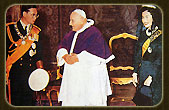
His Majesty King Bhumibol Adulyadej and Her Majesty Queen Sirikit of Thailand visited Europe and paid a courtesy call to Pope John XXIII at the Vatican Palace on 1 October 1960.
“I am deeply delighted by Your Majesty’s visit, which provides me the opportunity to express my special goodwill toward the people of Thailand. Thailand is a country of abundant natural beauty and is rich in venerable traditions passed down through the ages. The Thai government and people have diligently preserved this precious heritage with great care and have endeavored to advance the nation in various aspects of human life, achieving results truly worthy of praise. In the fields of society and education, the clergy, religious leaders, and Catholic faithful, my children, are eager to contribute to these efforts through numerous and fruitful activities.”
Schools, hospitals, and health centers were established to demonstrate the eagerness to serve as loyal children, devoted to the advancement and prosperity of their homeland in this world. Because of this selfless sacrifice, they received respect, honor, and sympathy, which are the most noble rewards in the performance of their duties. I am pleased to humbly declare before His Majesty that Catholics have been granted respect and freedom, which are the results of the farsighted vision embodied in the law and the admirable goodwill of the authorities of the state. This benevolence has been a tradition since ancient times. As early as 1688 (B.E. 2231), His Holiness Pope Innocent XI sent a papal letter to the King of Siam, expressing his profound gratitude for the gracious protection that had been extended to the Catholic mission.
On the occasion of the Thai diplomatic mission’s visit to Rome, His Holiness the Pope graciously extended the warmest welcome, showing his concern for his compatriots by offering attentive care and presenting various mementos. Both sovereigns were well aware that Thailand was not a stranger to the Vatican. For my part, I hold the same sentiments toward Thailand as the late Pope Innocent XI, and I am deeply pleased to reaffirm my goodwill toward Your Majesty. I humbly pray to Almighty God to bestow abundant blessings upon this noble nation, upon its leaders, and upon Your Majesty and all the Royal Family. (Office of the University Affairs. The Genius Monarch, 1996: 516–517)
When His Holiness Pope John Paul II paid an audience to His Majesty King Rama IX, Her Majesty the Queen Mother, and members of the Royal Family at the Chakri Maha Prasat Throne Hall on 10 May 1984, His Majesty the King delivered an address encouraging and supporting the social development efforts of Catholics in Thailand as follows.
My Queen and I are deeply delighted to welcome Your Holiness on the occasion of your visit to our country. Although the Vatican and Thailand have only recently established full diplomatic relations, in truth we have shared a profound bond for many centuries, since the time when the Roman Catholic faith was first introduced into this land during the era of Ayutthaya as the capital. The priests and missionaries who came in successive generations brought with them not only the teachings of Christianity but also the sciences and knowledge that flourished in Europe at that time. They imparted these to the Thai people, granting opportunities to learn both the Christian faith and advanced disciplines, as well as the arts, culture, and traditions of the West, which were adapted and applied to the great benefit of the nation.
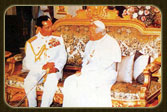
His Majesty the King granted an audience to His Holiness Pope John Paul II during his official visit to Thailand on 10 May 1984.
My Queen and I are profoundly delighted to welcome Your Holiness on the occasion of your visit to our country. Although full diplomatic relations between the Vatican and Thailand were established only recently, in truth we have shared a deep bond for centuries, ever since the Roman Catholic faith was first introduced into this land during the Ayutthaya period. The priests and missionaries who came in successive generations brought not only the teachings of Christianity but also the sciences and knowledge that flourished in Europe at that time. They imparted these to the Thai people, granting opportunities to learn both the Christian faith and advanced disciplines, as well as the arts, culture, and traditions of the West, which were adapted and applied to the great benefit of the nation.
That the Thai people and Thailand have always extended a sincere and friendly welcome to missionaries of various faiths is because the Thai people, being Buddhists, are firmly grounded in virtue, righteousness, and compassion. They recognize that all religions teach goodness, guiding individuals to act rightly, to live beneficially, and to seek serene happiness in life. Furthermore, we have the tradition and custom of receiving and respecting foreigners of different faiths with friendship, extending kindness with pure sincerity, without contempt or oppression toward those of other nationalities or religions, for such actions would lead only to division and suffering. It is in this way that Christianity has been able to flourish in this country. The Thai people have long known and held in the highest esteem the Pope, the head of the Catholic Church, as a distinguished figure who spreads peace, tranquility, and enlightenment to all mankind.
When I had the opportunity to visit the Vatican in 1960, His Holiness Pope John XXIII inquired about the Thai people, asking to what extent they were religious. I replied that the Thai people are, by and large, devout, most of them adhering to Buddhism, the national religion, while others follow several different faiths. This is because our people enjoy freedom and equality both under the law and through long-established custom in the practice of religion. His Holiness expressed great joy to me that Thailand is blessed with good citizens, moral and upright, who hold righteousness as their guiding principle.
During this visit to Thailand, Your Holiness will surely have witnessed that the Christians in this country diligently observe their religious duties in peace and harmony. You will also have observed that the Thai people take joy and are willing to pay homage to Your Holiness as the Head of the Church, a seeker of peace, filled with compassion and serenity. I firmly believe that friendship, benevolence, mutual goodwill, and sincere support among people of all faiths are vital elements, endowed with sacred power, that will indeed bring about peace, freedom, liberty, and equality for all mankind.
On this occasion, I extend my blessings that Your Holiness be endowed with longevity, health, strength, wisdom, virtue, and every auspicious blessing, so that you may continue to fulfill your mission of bringing lasting peace, harmony, and genuine stability to the peoples of the world.
In 1969, during the reign of His Majesty King Rama IX, diplomatic relations were established, and the Apostolic Nuncio of the Vatican was appointed to Thailand, while the Thai Ambassador to Switzerland also served concurrently as Ambassador to the Vatican. On 16 October 1969, at the Chakri Maha Prasat Throne Hall, His Majesty the King delivered an address upon receiving the credentials of the first Apostolic Nuncio to Thailand, stating in part:
“I welcome you and am gratified by your reference to our joint efforts to uphold lasting peace and the liberty of mankind. Thailand has consistently maintained the policy of granting its citizens freedom of religion. Every Thai enjoys full liberty to embrace any faith and to practice its rites according to their belief. The Constitution of Thailand guarantees these rights and freedoms. Thus, people of diverse religions in Thailand have long lived together peacefully for centuries.”
I am pleased that you have affirmed the loyalty and cooperation of the Catholics in Thailand, as well as your own collaboration in promoting the progress and development of the country. In this regard, please be assured that you will receive my full support, and that the Thai government will provide every possible assistance and facilitation to help you accomplish your duties successfully.
On 11 February 1969, His Majesty attended the 50th anniversary celebration of Saint Gabriel’s School, officiated at the opening of the “De Montfort” auditorium, laid the foundation stone for the science building, inspected classrooms and the academic exhibition, and presented commemorative medals to the senior teachers of the school.
On 16 February 1974, at 3:00 p.m., His Majesty, accompanied by Her Majesty the Queen Mother, presided over the opening ceremony of the Church of Divine Mercy in Ban Mai Subdistrict, Pak Kret District, Nonthaburi Province.
On 2 December 1974, at 4:30 p.m., His Majesty, accompanied by Her Majesty the Queen Mother, traveled by royal barge from Tha Wasukri to the Church of the Immaculate Conception on Mitkham Alley, Samsen Road, on the occasion of the 300th anniversary of the church’s founding.
On 5 July 1976, His Majesty, accompanied by Her Majesty the Queen Mother, visited Don Bosco Vocational School on New Phetchaburi Road, Bangkok, to inaugurate a new building and the school’s laboratory.
On 9 November 1976, His Majesty visited Assumption Sriracha School on the occasion of the 75th anniversary of the Saint Gabriel Brothers’ educational mission in Thailand, graciously presiding over the opening of the “Watcharasomphot” building for the benefit of students’ education.
On 17 November 1982, His Majesty graciously bestowed names upon two buildings at Saint Louis Hospital of the Bangkok Mission, which were named “Sirikusala” and “Srisawat.”
On 28 December 1984, His Majesty King Rama IX graciously appointed His Royal Highness the Crown Prince of Thailand to represent Him at the 150th anniversary celebration of Saint Francis Xavier Church on Mitkham Alley, Samsen Road. This followed a request from Cardinal Michael Michai Kitboonchu, President of the Bangkok Mission, who wrote to Mom Luang Thawisan Ladawan, then Royal Secretary, seeking permission to invite the royal presence.
Upon His Royal Highness’s arrival at the church and taking his seat, Cardinal Michael Michai respectfully presented a report. Father Sangwan Surasrang then presented the faithful who had made donations for royal merit, and subsequently recognized other generous contributors who assisted in the restoration of the church with commemorative plaques. His Royal Highness inscribed his name in the memorial book, anointed the foundation stone, and delivered the following royal message:
“His Majesty the King has graciously appointed me to represent Him at the 150th anniversary celebration of Saint Francis Xavier Church. I am most pleased to meet all of you on this occasion.
Thailand is home to people of various faiths, yet there has never been conflict, distress, or disorder caused by religion. This is because the Thai people understand that all religions share the same fundamental purpose: to teach goodness and guide people toward the proper and balanced way to live a happy and prosperous life. Furthermore, all recognize that extending compassion, support, and mutual assistance is an important duty for everyone living together in society.
I believe that if the people of our country consistently act righteously according to the precepts of their own faiths, peace, harmony, and well-being will spread ever further, and our nation will remain strong, maintaining its full independence for all time.”
Project Responsible: Hubkrapong Agricultural Cooperative Limited, Cha-am District, Phetchaburi Province.
In the name of His Majesty the King, I extend my blessings for the 150th anniversary celebration of Saint Francis Xavier Church, wishing that this event may achieve all the intended benefits and that all participants may enjoy happiness and well-being. (Documents of Saint Francis Xavier Church, n.d.)
On 15 August 1985, His Majesty King Rama IX graciously appointed Her Royal Highness Princess Chulabhorn Walailak to represent Him in presiding over the “Assumption Centennial” celebration.
On 9 January 1986, Her Royal Highness Princess Maha Chakri Sirindhorn presided over the Suwansamphoch celebration at the Convent of the Sacred Heart School.
On 15 January 1986, Her Royal Highness Princess Soamsawali, the Princess Royal, presided over the Khon performance of the Ramayana at the Suwansamphoch Auditorium on the occasion of the 100th anniversary of Assumption College, Bang Rak.
On 7 February 1986, Her Royal Highness Princess Soamsawali presided over the 60th anniversary celebration of Saint Francis Xavier Convent School.
On 12 February 1986, Her Royal Highness Princess Maha Chakri Sirindhorn presided over the opening ceremony of the Montfort College secondary school building in Chiang Mai.
On 13 December 1986, Her Royal Highness Princess Soamsawali anointed the foundation stones of the Hubert Memorial Building and the Alumni Association Building at Saint Gabriel’s School. She again presided over the official opening of these two buildings on 18 November 1987.
His Majesty King Rama IX presented monetary awards for outstanding schools to Saint Gabriel’s School in 1967 and 1969.
On 18 December 1986, Her Royal Highness Princess Soamsawali presided over the Hirun Samphoch celebration at Assumption Thonburi School.
On 21 August 1987, Her Royal Highness Princess Maha Chakri Sirindhorn presided over the centennial celebration of the laying of the foundation stone by His Royal Highness Prince Mahawachirunhis, officiating and anointing the foundation stone of the new school building.
On 19 December 1987, Her Royal Highness Princess Maha Chakri Sirindhorn presided over the 80th anniversary celebration of Saint Joseph Convent School.
On 16 November 1988, Her Royal Highness Princess Maha Chakri Sirindhorn presided over the opening of the Sirintep Building at the Convent of the Sacred Heart School.
On 28 January 1989, Her Royal Highness Princess Soamsawali and Her Royal Highness Princess Bajrakitiyabha presided over the opening ceremony of the kindergarten building, “Regina Caeli,” at Assumption Sriracha School.
On 1 March 1989, Her Royal Highness Princess Maha Chakri Sirindhorn officiated at the 84th anniversary celebration of Assumption Convent School, Bang Rak, Bangkok.
On 3 July 1989, Her Royal Highness Princess Maha Chakri Sirindhorn attended a student theatrical performance at Saint Joseph Convent School.
On 7 November 1990, Her Royal Highness Princess Maha Chakri Sirindhorn presided over the opening ceremony of the “Chalerm Ratchamongkhon Building” at Assumption University.
On 9 December 1990, Her Royal Highness Princess Soamsawali and Her Royal Highness Princess Bajrakitiyabha presided over the “Science for the Community” event at Montfort College, Chiang Mai.
On 15 July 1991, Her Royal Highness Princess Soamsawali presided over the charity dance event “A Night in Versailles,” where 17 students of Saint Joseph Convent School served by selling flowers and perfumes.
On 21 January 1992, Her Royal Highness Princess Soamsawali officiated at the opening of the administration building and the 12th anniversary celebration of Assumption Samrong School.
On 16 February 1992, Her Royal Highness Princess Soamsawali, together with Her Royal Highness Princess Bajrakitiyabha, presided over the 30th anniversary celebration and the opening of the school building at Mary Immaculate School.
On 4 June 1992, Her Royal Highness Princess Petchrattana Rajasuda Sirisopaphan Navadi officiated at the casting ceremony of the bronze statue of King Rama VI at Assumption School.
On 22 June 1992, Her Royal Highness Princess Maha Chakri Sirindhorn presided over the 30th anniversary celebration of Assumption Thonburi School.
On 7 February 1993, Her Royal Highness Princess Maha Chakri Sirindhorn presided over the opening of the “Emmanuel Building” at Montfort College, Chiang Mai.
On 22 February 1993, Her Royal Highness Princess Maha Chakri Sirindhorn officiated at the inauguration of the Ubolratana Foundation plaque at Saint Joseph Convent School.
On 30 August 1993, Her Royal Highness Princess Ubolratana Rajakanya and Khun Ploypailin visited the Ubolratana Foundation and granted scholarships for the repair and reconstruction of Catholic schools that had suffered fire damage in various southern provinces at the Trinity Hall Auditorium.
On 19 January 1995, Her Royal Highness Princess Maha Chakri Sirindhorn presided over the 25th anniversary celebration of Assumption University and officiated at the opening of the memorial building “Thakol Phakiet S.K.”
On 20 September 1995, Her Royal Highness Princess Maha Chakri Sirindhorn accompanied Queen Fabiola of Belgium during her visit to the university on the occasion of Assumption University conferring an honorary doctorate upon King Baudouin, the former King of Belgium.
The royal activities of the Thai monarchy, particularly those of His Majesty King Rama IX, in supporting and encouraging Catholic educational institutions—whether by visiting in person with Her Majesty the Queen and members of the royal family, or by graciously appointing various members of the royal family to represent Him—have consistently brought delight to administrators, staff, and students alike. This royal attention has been a significant factor motivating Catholic school authorities to continually enhance the quality and rigor of their educational programs. The alumni of these institutions, who follow various faiths, have gone on to pursue careers and serve society conscientiously and responsibly, earning recognition and respect throughout the wider community.
His Majesty’s wise and compassionate conduct as the royal patron of the Roman Catholic Church, coupled with his paternal care for all citizens, has given Thai Roman Catholics confidence in their identity. Despite being a minority, they have been encouraged to improve their living standards and quality of life, becoming leaders in various sectors of society. They have shown a willingness to sacrifice personal interests for the greater good of the nation, with many serving in the armed forces, some even giving their lives and health heroically, while others devote themselves to assisting fellow citizens in need, regardless of their faith or beliefs.
This has been a significant contribution, carried out as royal benevolence both directly and indirectly, in areas including education, nursing, rural development, disaster relief, care for refugees, support for the elderly, and vocational development for the less-educated, among others, as compiled in the following list.
Relief and Refugee Assistance Unit (COERR)
- AIDS Life Promotion Committee
- Family Life Promotion Committee
- Justice and Peace Committee
- Saint Vincent de Paul Association – provides assistance to the general poor population
- Khlong Toei Personal Development Center – vocational training, “One Baht per Day” school, community clinic in slum areas
- Saint Louis Elderly Home – elderly care
- Saint Louis Children’s Home – orphanage
- Catholic Medical Association – assists society with health-related issues
- Nonthaburi Blind Rehabilitation Center – supports visually impaired persons
- Vocational Training Center for Blind Female Students, Soi Srisathien, Sampran
- Saint Camillo Elderly Home, Sampran
A credit union is an organization under the supervision of local temples.
- Baan Ua-Ari, Silom / Phayathai – Provides free accommodation and meals for up to 7 days for people from other provinces seeking work.
- Baan Suan Santi, Lam Luk Ka, Pathum Thani – Assists AIDS patients.
- Communita Incontro Center, Lam Luk Ka – Assists drug addicts.
- Baan Phak Jai – Assists people living with HIV/AIDS.
- Isan Catholic Club – Assists people from Isan working in Bangkok.
- Bunthao Jai Center, Nonthaburi – Assists AIDS patients.
- Mercy Center, Bangkok – Assists terminal AIDS patients.
- Redemptorist Vocational School, Pattaya – Vocational training for people with disabilities (electronics, computers, etc.).
A credit union is an organization affiliated with a local parish.
- Baan Ua-Ari, Silom / Phayathai – Provides free accommodation and meals for up to 7 days for people from other provinces seeking work.
- Baan Suan Santi, Lam Luk Ka, Pathum Thani – Assists AIDS patients.
- Communita Incontro Center, Lam Luk Ka – Assists drug addicts.
- Baan Phak Jai – Assists people living with HIV/AIDS.
- Isan Catholic Club – Assists people from Isan working in Bangkok.
- Bunthao Jai Center, Nonthaburi – Assists AIDS patients.
- Mercy Center, Bangkok – Assists terminal AIDS patients.
- Redemptorist Vocational School, Pattaya – Vocational training for people with disabilities (electronics, computers, etc.).
- Tharn Chiwit Center 1-2, Pattaya – Assists women in special occupations and children.
- Don Bosco Vocational School – Provides vocational training for underprivileged students.
- Orphan and Elderly Care Foundation – Supports orphans and the elderly.
- Leprosy Rehabilitation Center, Khok Pib – Rehabilitation for leprosy patients.
- Drug Rehabilitation Center, Bang Khla – Supports drug addicts.
- Social Development Center, Sa Kaeo – Provides community development services.
- Relief and Refugee Office, Prachinburi – Supports disaster and refugee relief.
- Marina Home, Chiang Mai – Vocational training for hill-tribe girls to prevent them from entering prostitution.
- Hmong Center – Assists hill-tribe people in education, health, and social services.
- Hill-Tribe Children Training Center, Chom Thong, Chiang Mai – Supports children of Pa Ka Yo tribe.
- Hill-Tribe Children Training Center, Lahu, Chiang Mai – Supports children of Lahu tribe.
- Girls’ Vocational Training Center, Mueang, Chiang Rai – Prevents girls from engaging in prostitution.
- Girls’ Vocational Training Center, Wiang Pa Pao, Chiang Rai – Provides vocational training.
- Our Lady of Mount Carmel Center, Lampang – Supports social and educational development.
- Social Development Center, Chiang Mai – Community development and social support.
- Leprosy and Blind Assistance Center – Assists leprosy patients and visually impaired people.
- Social Development Center, Tha Rae – Community development support.
- Disaster and Refugee Assistance Center, Nakhon Phanom – Supports disaster victims and refugees.
- Social Development Center, Nakhon Ratchasima – Community support.
- Dairy and Volunteer Training Center, Zonta – Provides vocational training for villagers.
- New Life Center, Chom Bueng, Ratchaburi – Assists drug addicts and people living with HIV/AIDS.
- Bethany Home, Ban Pong – Elderly care.
- Youth Vocational Training Center – Skills development for youth.
- Social Development Center, Ratchaburi – Community development.
- Relief and Refugee Assistance Center (COERR), Ratchaburi – Disaster and refugee support.
- Don Bosco Vocational Training Center, Ron Phibun – Vocational training.
- Orphan and Elderly Care Home – Supports orphans and the elderly.
- Social Development Center, Surat Thani – Community and social development.
- Ban Suksan Center, Songkhla – Social support services.
- Marie Upatham Clinic, Koh Samui – Health services.
- Ban Chik Elderly Care Home – Elderly care.
- Intellectually Disabled Assistance Center – Supports people with intellectual disabilities.
- Anonymous Clinic, Baan Noi – Provides medical services.
- Leprosy and Elderly Care Home – Assists leprosy patients and the elderly.
- Leprosy Rehabilitation Center – Rehabilitation for leprosy patients.
- Disabled and Intellectually Challenged Children Center 1-2 – Supports children with disabilities.
- Disabled and Intellectually Challenged Children Center, Chiang Khan, Loei – Supports children with disabilities.
- Social Development Center, Ubon – Community development support.
- Mae Moon Credit Union – A credit union affiliated with local temples.
- Baan Teresa, Elderly Care Home – Supports elderly people.
2.2 Protestant Christianity entered Thailand in 1828 (B.E. 2371) when missionaries Gusslaff and Tomlin brought it to the Chinese community. However, their mission was unsuccessful, and they returned. Later, Dr. Bradle introduced modern knowledge such as printing and medicine during the reign of King Rama IV, but conflicts with accompanying missionaries led to another halt in propagation. In 1840 (B.E. 2383), the American Presbyterian mission began spreading Christianity again in Bangkok, and by 1861 (B.E. 2404), their work expanded to Phetchaburi Province. In 1868 (B.E. 2411), it reached Chiang Mai. The mission involved preaching Christianity to the general population, establishing churches to provide education for both Christians and the public, founding schools in churches and cities, and offering healthcare services by setting up hospitals in various locations such as Chiang Mai, Phrae, Lampang, and Bangkok. Today, Protestant Christianity in Thailand is divided into four groups: the Church of Christ in Thailand, the Christian Cooperative of Thailand, the Baptist Church Foundation, and the Seventh-day Adventist Church Foundation of Thailand.
Prince Mahidol Adulyadej, the Prince Father, served as a resident physician at McCormick Hospital of the Church of Christ in Thailand from April 24 to May 18, 1929 (B.E. 2472).
On March 8, 1958 (B.E. 2501), His Majesty King Rama IX, together with Her Majesty the Queen Mother, visited McCormick Hospital, Prince Royal’s College, and Dara College in Chiang Mai Province.
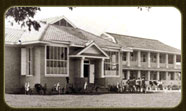
McCormick Hospital
On 10 November 1965, His Majesty visited and inaugurated the inpatient building at Bangkok Christian Hospital.
On 5 March 1978, His Majesty, together with Her Majesty the Queen Mother, visited the McKenn Institute.
On 15 December 1984, His Majesty graciously appointed General Samran Paetyakul, Privy Councillor, to represent Him as the presiding officer at the 50th-anniversary celebration of the Church of Christ in Thailand.
3. Brahmanism
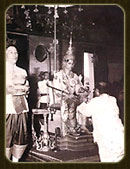
It has influenced Thai customs and traditions, particularly those related to the monarchy. The king has patronized the Brahmin office by establishing a Brahmin office within the royal palace, with its office located at the Devasthan, Sao Chingcha Subdistrict, Phra Nakhon District, Bangkok. The Department of Religious Affairs allocates funding to the palace-affiliated Brahmin office to conduct activities related to Hindu religious practices.
At the beginning of the reign of King Rama IX, Phra Kru Wamathep Muni served as the chief Brahmin, followed by Phra Kru Satannata Muni. The Brahmin group performs important ceremonies that were formerly royal rites, such as the Triyampawai (swinging) ceremony, held from the 1st waxing to the 1st waning day of the second lunar month, approximately in January each year. Regarding King Rama IX, the Brahmins were granted the royal audience at the royal residence in the morning for two or three consecutive days. On a three-day ceremony, the first day, the Brahmins would receive royal patronage funds, and the king would anoint the Shiva deity statue.

He presided over the opening of the Vethvithayakhom Hall.
The deities Uma and Ganesha, which are to be invited to the Triyampawai ceremony, on the second day His Majesty graciously commanded the Brahmins to pay respects, offer blessings, and present ceremonial items for the Triyampawai. On the third day, he anointed the statue of Narayana to be invited to the ceremony. If the ceremony is two days, on the first day the Brahmins receive royal patronage funds, and His Majesty anoints the statues of Ishvara (Shiva), Uma, Ganesha, Narayana, and Brahma (since 1966), which will be included in the Triyampawai. On the second day, His Majesty graciously commanded the Brahmins to pay respects, offer blessings, and present ceremonial items for the Triyampawai. His Majesty has graciously commanded this two-day format since 1957.
Apart from the Triyampawai ceremony, there are also the Upatthar Yad Devapadimaka ceremony and the consecration of the Shiva lingam. His Majesty has graciously commanded the Brahmins to perform rites in royal ceremonies, ceremonies within the Grand Palace, and ceremonies of the royal family on a regular basis.
1. For royal ceremonies, His Majesty has graciously commanded Brahmin rites in royal ceremonies such as changing the seasonal attire of the Phra Buddha Maha Mani Rattana Patimakorn (Emerald Buddha), the Royal Umbrella Ceremony, the Royal Ploughing Ceremony at both the Ubosot of Wat Phra Sri Rattana Satsadaram and the ceremonial grounds at Sanam Luang, casting important Buddha statues, inscribing Suphannabhat and Hiranbhat during the installation of royal and ecclesiastical ranks, the investiture of royal and ecclesiastical dignitaries, royal birthday celebrations, royal weddings, the Royal Coronation Ceremony, three-day consecration ceremonies, monthly ceremonies, and ceremonies for the ordination or investiture of Princes, Princesses, and royal descendants.
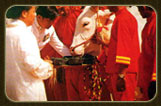
The Brahmin rites in the Royal Plowing Ceremony.
2. His Majesty graciously commanded the Brahmins to perform rites honoring King Naresuan the Great, King Narai the Great, Queen Sri Suriyothai, and other past monarchs. The Brahmins also conduct ceremonies for casting royal statues of deceased kings and members of the royal family, rites to dispel malevolent influences at various palaces, celebrations of birthdays, foundation-laying ceremonies for buildings and other constructions, and the Water-Pouring Oath Ceremony, among others.
4. Hinduism
Hinduism is a religion that evolved from Brahmanism, which existed in the country of Bharat (present-day India). The people of Bharat who sought refuge with His Majesty the King introduced Hinduism and carried out its activities through two associations. The Hindu Council, established in 1925 B.E. (AD 1882), is now renamed the Hindu Samaj Association. Its office is located at 136/1-2 Siriphong Road, Samran Rat Subdistrict, Phra Nakhon District, Bangkok. The religious site, Thepmanthien Temple, is situated at the same location. Daily prayers and teachings are conducted at Thepmanthien Temple every morning and evening, and rituals are performed on important religious days such as Shiva Ratri and Vaisakhi. The association also supports the Bharat College.
The Hindu Dharmasapha Association, established in 1915 B.E., is a Smarta sect Brahmanical association located at 50 Soi Wat Prok, Thung Wat Don Subdistrict, Yannawa District, Bangkok. It regularly conducts ceremonies and celebrations on important religious days at the temple located at the association’s premises, including the worship of Lord Shiva on Maha Shivaratri, Hindu New Year (Holi), the birth of Lord Rama on Ram Navami, the worship of the serpent deity on Nakapanchami, the birth of Lord Krishna on Sri Krishna Janmashtami, and the worship of Lord Rama and Mother Uma Devi on Vijaya Dashami. Additionally, it organizes ceremonies such as the topknot shaving (Gon Chuk), Yajna Pavitra rituals, exorcisms (Sadah Kret), and the installation of guardian spirit shrines (San Phra Phum), among others.
Both Hindu associations have been graciously granted royal permission to propagate their religion according to their beliefs and have been accorded the honor of audience on various occasions as requested.
His Majesty the King visited Wat Bowonniwet Vihara and graciously granted the Sikhs the royal audience to present a Buddha image in 1956 B.E. (AD 1956).
5. Sikhism
Sikhism is the religion of a group of people from India. It is organized under the Sri Guru Singh Sabha Association, located at No. 565 Chakraphet Road, Phra Nakhon District, Bangkok. The association conducts Sikh congregations and prayers according to religious rituals every morning and evening. It has received royal patronage in various events, similar to other religious organizations. During the 500th anniversary celebration of Sikhism, held at the National Theatre on 18 November 1969, His Majesty the King graciously attended the event and gave the following royal address: “I am pleased and satisfied that your chairman confirmed that the Sikhs in Thailand have been provided with convenience and support to live in comfort and security, to earn a living, and to perform religious duties according to their beliefs. The stability and happiness of individuals arise from righteous conduct, fairness, and mutual support among each person. You all experience happiness and peace because you follow the proper and appropriate path, with the aim of fostering understanding among humans without regard to nationality, class, or religion, and you have consistently endeavored to uphold these principles, considering society or the collective as the place for individuals to reside.”
6. His Majesty the King’s Royal Addresses on Religion and Religious Organizations
6.1 His Majesty the King’s Royal Address to the Committee of the Catholic Association of Thailand at Chitralada Royal Residence on 6 July 1972: “I wish to thank the Catholic Association of Thailand for organizing public health activities and for contributing funds to help create an encyclopedia for children and youth. This encyclopedia aims to compile knowledge so that young people in our country can learn about various fields of study and understand how these fields are interrelated. However, this is a large project that requires expertise from specialists and considerable funding. Therefore, your assistance in this endeavor greatly contributes to the advancement of the nation’s education, enabling future generations to gain knowledge in academics, life skills, and proper conduct. I rejoice in your charitable hearts and wish you all goodness, prosperity, and success in every aspect.”
6.2 His Majesty’s Address to the Committee of Thai Christian Leaders at Chitralada Royal Residence on 4 October 1973: “I wish to thank the Christian committee for donating rice to aid those affected by floods. Recently, severe floods struck the northern provinces and other areas, causing great hardship. Your donations, combined with contributions from merchants, government agencies, and private organizations, demonstrate that in Thailand, people of all religions share a compassionate heart for those in distress. This compassion aligns with the principles of every religion and sustains the nation. Your rice donations help the needy and fulfill the teachings of your faith, while also strengthening goodwill among all citizens. I wish you full physical and mental strength, prosperity, success in your endeavors, and enduring happiness.”
6.3 His Majesty the King’s Royal Address to the Executive Committee of the Thai-Indian Cultural Society at Chitralada Royal Residence on 24 June 1971: “I wish to thank you for coming today on behalf of the Thai-Indian Cultural Society. It gives me great pleasure to see all of you, both Thai and people from the Indian subcontinent, living in Thailand and offering your support. The Cultural Society has carried out its work excellently, promoting culture, history, and harmony. Thailand has greatly benefited from Indian culture, and it is important that we continue to interact, research, and engage with the cultural heritage of both countries. I am pleased that the Cultural Society has been operating smoothly and successfully for over thirty years.”
6.4 His Majesty the King’s Royal Address on the occasion when religious institutions and organizations paid homage and offered gifts on His Majesty’s birthday at Phaka Pirom Hall on 4 December 1968: “All of you, representatives of associations and various religions, coming together to offer birthday blessings here, demonstrate unity among the people of Thailand. Even though you follow different religions, you can come together harmoniously. This is very commendable and shows that Thailand provides full freedom of thought. With this freedom of thought and belief, we must protect it carefully… Religious differences may have different approaches, but these differences should not become obstacles. Conflicts over religious methods can sometimes be described as leading toward ruin. Every religion teaches compassion and respect for others’ beliefs, not coercion or intimidation. Therefore, I am pleased to meet those of you interested in practicing and studying various religions.
I also encourage you to continue studying and practicing in the best possible way for the peace of society and the correct understanding among the people. The young, who are still developing their thoughts, should receive support and guidance from those who are more knowledgeable. Those who seek happiness should not keep it to themselves but share it with others by pointing the way. This does not mean that if others fail to understand or oppose, you should become angry. You should explain with sound reasoning, understanding that actions bring consequences, whether good or bad. I urge you to act with good intentions, perseverance, and determination to maintain harmony and safeguard the well-being of our country, which has demonstrated that everyone has the right to think and act, provided that no one infringes upon others.”
With your good intentions and through every virtuous act and practice of the mind, may you be strengthened and blessed with good health, a strong spirit, success in your thoughts, and success in the work you undertake. Especially in matters that provide the noble and beautiful teachings of each religion, may you achieve victory and be beneficial to the community, so that the collective society of the Thai people and Thailand may be sustained, progressing and flourishing both materially and spiritually. May Thailand be recognized as a pleasant place to live, known as a country that loves peace, and at the same time, cherishes order and tranquility. I thank you once again for coming to offer your blessings on this birthday occasion, and I wish all of you prosperity and success.