

World Scientists and Thinkers in the Reign of King Rama IV
The Pioneer
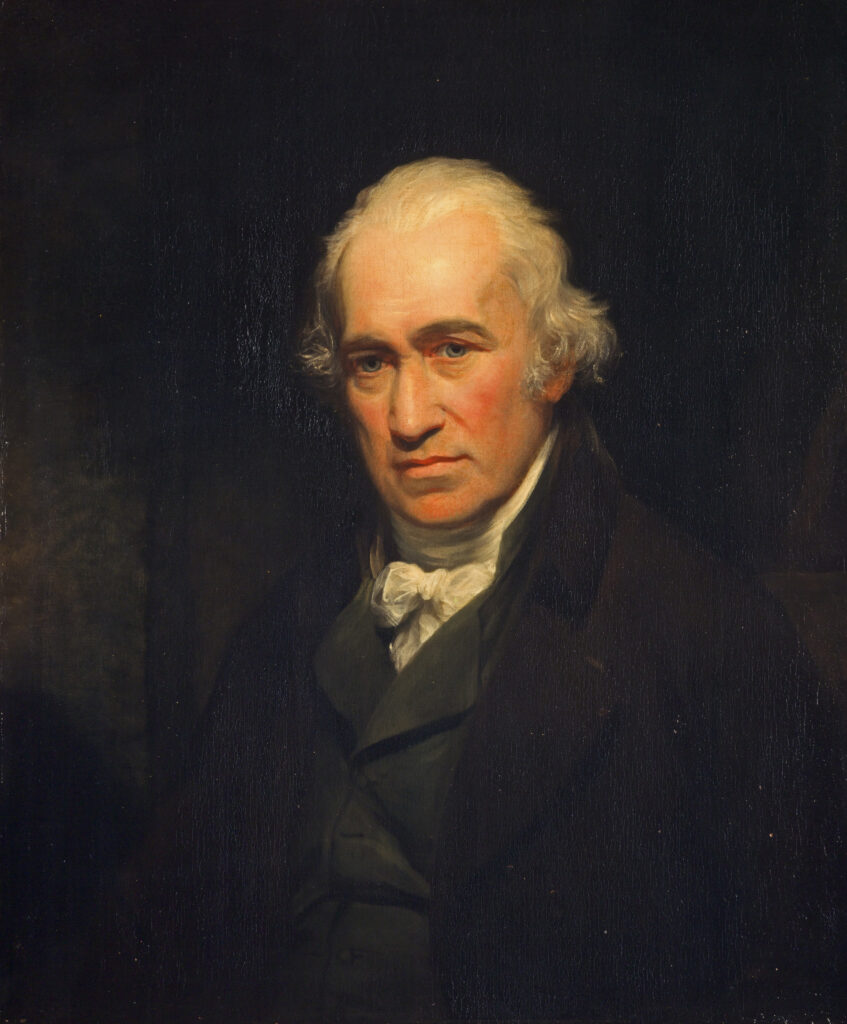
James Watt
James Watt was an English inventor who improved the steam engine, making it far more efficient. Watt’s steam engine became widely adopted and led to the Industrial Revolution in both Europe and the United States, greatly increasing production capacity and technological advancement. Moreover, Watt’s engine served as a prototype for modern machines powered by petroleum. He also coined the term “horsepower,” a method for calculating the performance of machinery, and his name was later used as the unit of power in the International System of Units (SI).
Table of content
Table of content
Personal Background
James Watt was born on 19 January 1736 in Greenock, England. His father, Thomas Watt, was a carpenter and ran a business related to all kinds of woodwork. Watt’s family was relatively poor, which limited his opportunities for formal education. Nevertheless, he showed a strong interest in inventing tools, equipment, and mechanical engines from a young age. Watt was intelligent and eager to learn new things. Having helped in his father’s workshop for some time, he acquired basic knowledge and skills in construction and craftsmanship, including woodworking, which were passed on to him by his father.
Later, in 1754, when he was 18 years old, he traveled to the city of Glasgow to seek employment. Eventually, he obtained a job as an assistant craftsman in a workshop that assembled tools and instruments. In the evenings after work, he continued his studies, which led to serious health problems due to the strain of working during the day and studying at night. As a result, he resigned from his job and traveled to London in order to pursue his education more seriously. Watt enrolled in courses related to the making of scientific and mechanical instruments. During his stay in London, a European war broke out, and the government ordered young men to be conscripted for military training. As Watt did not wish to become a soldier, he returned once again to Greenock.
The Path of an Inventor
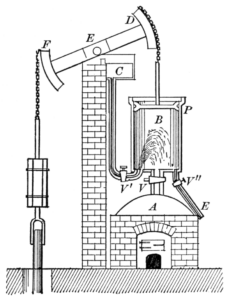
Newcomen atmospheric engine
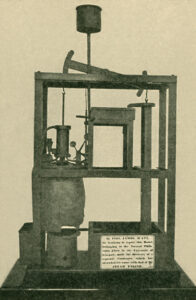
Watt steam engine
In 1756, when he returned to his hometown, he wished to open a shop to repair tools and instruments, but he was unable to do so because he lacked the required qualifications. According to local law, anyone who wished to engage in trade had to be registered with the merchants’ guild, and registration was permitted only for the sons of merchants or those who had previously worked in related shops. As a result, Watt’s dream was shattered, and he had to seek other employment. Eventually, he obtained a position as a tool repairman at the University of Glasgow, earning an annual wage of 35 pounds. While working there, one day the university’s Newcomen steam engine broke down. Watt was able not only to repair it so that it functioned properly again, but also to improve its efficiency. This experience sparked his idea of building a steam engine of his own, with the determination to make it more efficient than Newcomen’s, which he believed was excessively large and operated very slowly.
Financial and Investment Problems
In 1773, an investor named John Roebuck provided financial support, enabling Watt to begin inventing the steam engine. He redesigned the engine by enclosing all components within a cylindrical metal casing to reduce its size, and connected pipes to allow steam to enter the engine directly. The steam would then push the piston, causing the steam engine to operate.
In the early stages, the steam engine that Watt built still had problems and could not be used effectively. When the steam condensed into water, it caused newly supplied steam to also condense into droplets, resulting in inefficient operation. The engine would stall intermittently or stop working altogether. As a result, Roebuck, who focused mainly on profit, withdrew his financial support because he no longer had confidence that Watt would successfully invent a working steam engine. However, Watt was fortunate to receive financial backing from a new investor with greater resources than John Roebuck, namely Matthew Boulton, the owner of an industrial factory.
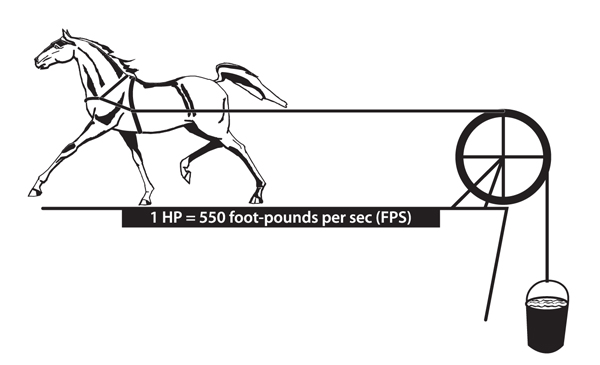
Coined the term “horsepower”
In 1776, after Watt had spent a long time attempting to solve the problem, he finally succeeded. His solution was to separate the steam pathways, creating one pipe for the incoming steam and another pipe for the outgoing steam where the steam condensed into water. This improvement was far more successful than expected, significantly increasing the efficiency of Watt’s steam engine and making it rapidly popular. Although Watt was not the first person to successfully invent a steam engine, his design was more efficient and widely accepted. After achieving success with his steam engine, he also coined the term “horsepower” to describe the engine’s power.
Later, Watt registered his inventions for patents and collaborated with Boulton to manufacture and sell steam engines to industrial factories and the general public. Watt’s achievements were not limited to the invention of the steam engine alone; he also invented several other machines. For example, in 1784, Watt invented a machine to assist in forging iron, and in 1785, he invented a machine to assist in spinning thread. Watt spent most of his time inventing machinery for use in the industrial sector, which greatly advanced industrial development. He later died on 25 August 1819 in England. Due to Watt’s reputation for inventing machinery for industrial use, later generations adopted his surname, “Watt,” as the name of the unit of electrical power in the scientific system of units (SI Unit).

Finally, for anyone who is interested in or would like to read books related to James Watt—whether specialized academic works or general knowledge—you can read recommended articles on books about James Watt at https://kmutt.me/book-watt
Phanthalak. (2003). Great Scientists of the World. Bangkok: Bannangseu 19.
“Watt” – Encyclopædia Britannica. [Online]. Available: https://www.britannica.com/science/watt [31 March 2023].
"Standard Units of Measurement for Electricity” – Edison Tech Center. [Online]. Available: https://www.edisontechcenter.org/UnitsElectrical.html [31 March 2023].