

World Scientists and Thinkers in the Reign of King Rama IV
The Pioneer
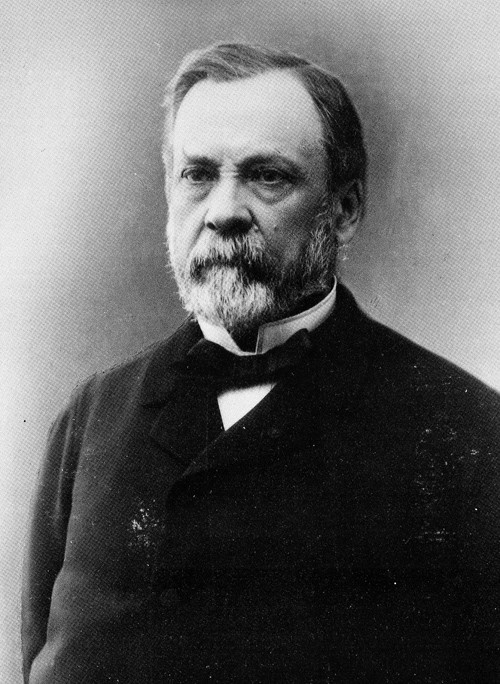
Louis Pasteur
Both the pasteurization process, which helps preserve food and beverages for longer periods without spoilage, and vaccines against major diseases such as cholera, tuberculosis, rabies, and diphtheria were among his contributions. His discoveries enabled the field of microbiology to advance rapidly, due to their great benefits to medicine and the general public.
Table of content
Table of content
Personal Background
Pasteur was born on December 27, 1822, in the town of Dole, Jura Department, France. His father was a tanner named Jean Joseph Pasteur, who had previously served as a soldier in Napoleon’s army and had received a medal for bravery in war. Pasteur’s family later moved to the town of Arbois. Although his family was not well-off, his father wanted Louis to receive a good education like other children.
The Educational Path of an Exemplary Student
Pasteur studied at a school in the town of Arbois. He performed well in science subjects and had a strong interest in drawing, especially portrait painting. Because Pasteur was a good student with ability and good conduct, he received support from the headmaster of Arbois College to study at the Ecole Normale Superiere, a prestigious higher teacher training institution in Paris. The intention was for him to complete his studies and return to teach at Arbois College. However, he was unable to remain there for long and had to return home due to a severe case of homesickness.
Later, he continued his studies in the field of humanities at the Royal College in Besancon. After graduating, Pasteur pursued studies in science. He then traveled to continue his education at the Ecole Normale Superiere as he had originally intended. During his time there, he had the opportunity to study chemistry with two renowned chemists, J.B. Dumas and A.J. Balard, who taught at Sorbonne University. In the final years of his studies at the Ecole Normale Superiere, he conducted experiments related to crystallography.
The Path of a Scientist
After Pasteur completed his studies in 1852, he conducted experiments on tartaric acid, or cream of tartar, which is used in making vinegar. This work led to his appointment as a professor of chemistry at the University of Strasbourg. Two years later, he became a professor of chemistry and dean of the Faculty of Science at the University of Lille.
Since Lille was an industrial city producing alcoholic beverages such as spirits, beer, and wine, Pasteur studied operations at alcohol factories and learned of their problems with spoilage, the causes of which were not yet understood. He examined samples of alcohol under a microscope and discovered a type of bacterium with a round shape called yeast, which converts sugar into alcohol. He also found another type of bacterium with a rod-like shape called Bacillus, which converts sugar into lactic acid and was responsible for lowering the quality of alcohol. This discovery led Pasteur to conduct further experiments on fermented products, through which he found that fermentation produces succinic acid and glycerin. He therefore proposed the fermentation theory, stating that fermentation is the result of microorganisms.
Outstanding Contributions
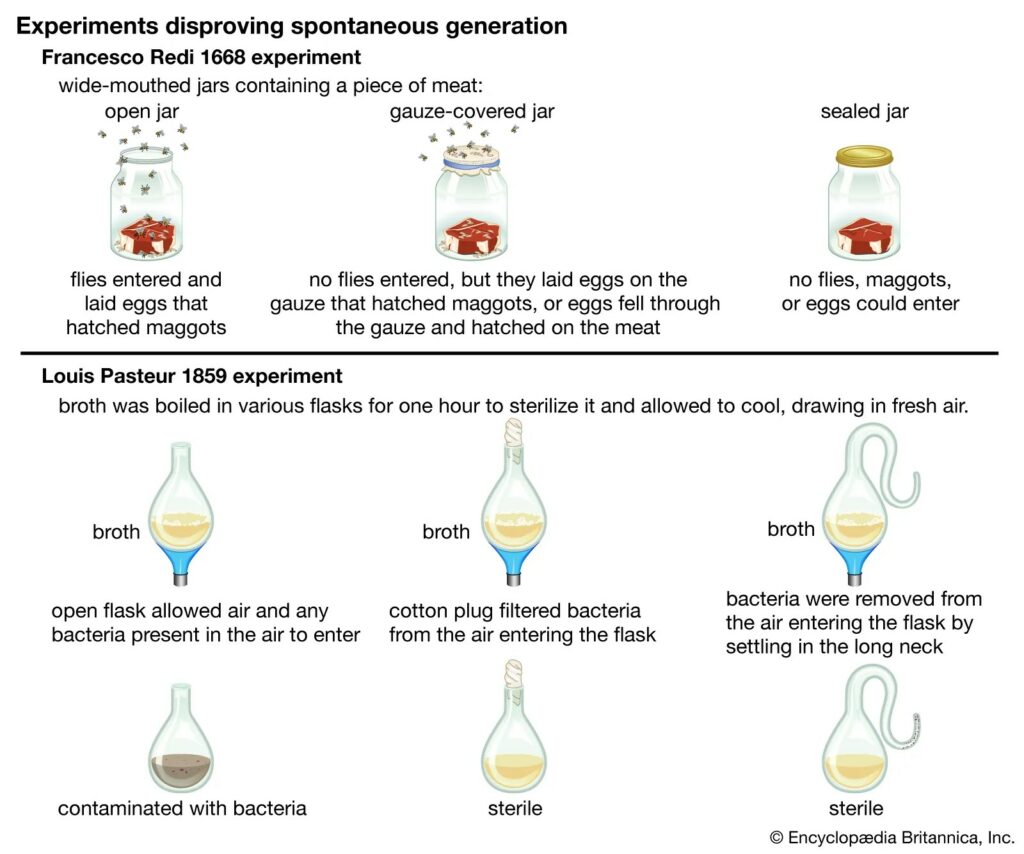
Pasteur continued his research on microorganisms and discovered that microorganisms affect disease and spoilage. To preserve food for longer periods, microorganisms must be eliminated. He heated milk at high temperatures to kill all microorganisms before bottling it. As a result, the milk could be kept longer than usual without spoiling. This method was later applied to other beverages such as spirits, distilled water, and wine, in a process well known as “pasteurization,” which has remained widely used to the present day.
In 1865, he found that dead cells, which decay like corpses buried in the soil, give rise to microorganisms in the ground. When these contaminate groundwater, drinking the water without boiling can cause illness. Some microorganisms found in soil can cause tetanus and anthrax.
After five years of research to stop a serious epidemic affecting silkworms, which caused severe damage to the silk industry, he discovered a microorganism called Nosema bombysis and was able to halt the outbreak of this disease.
In 1873, he published further research on fermentation and was invited to become a member of the Academy of Medicine.
Famous Contributions with Impact on Medical Treatment
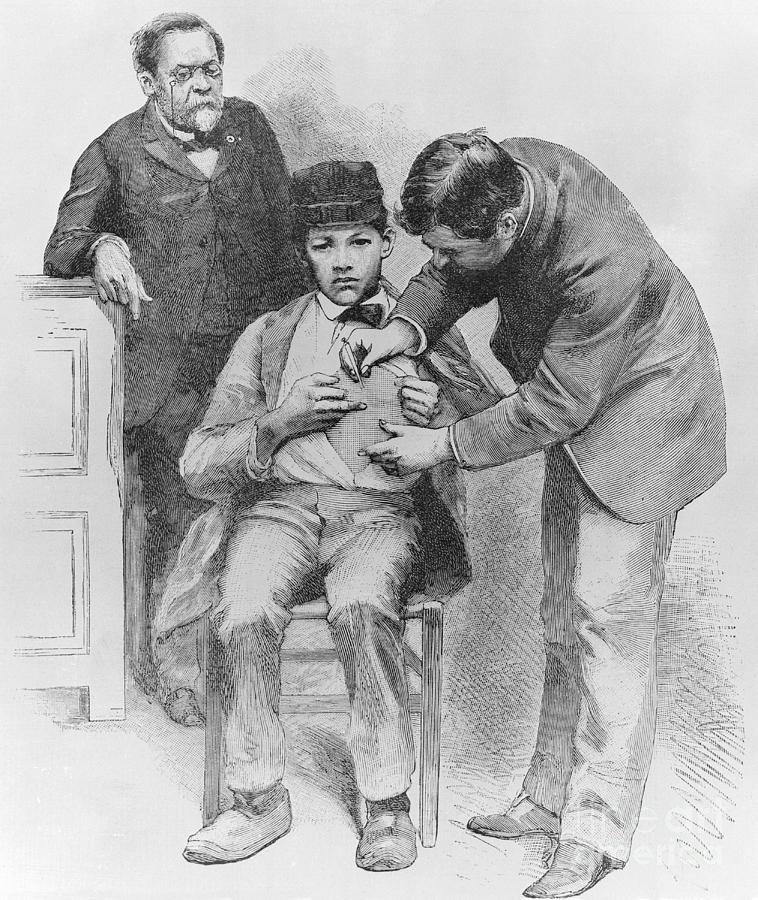
In 1887, Pasteur conducted experiments on epidemics in animals, beginning with the most severe disease, anthrax. He found that using the urine of animals infected with anthrax to culture and weaken the pathogen made it possible to use it as a vaccine. However, this method was difficult for the general public to accept. To gain public confidence, he tested the vaccine on 50 sheep, dividing them into two groups of 25—one group vaccinated against anthrax and the other unvaccinated. The results showed that all sheep in the unvaccinated group fell ill and died. Consequently, the French government provided funding for further research on vaccines to prevent cholera in chickens, which he successfully produced from chicken bone broth. The vaccine that brought Pasteur the greatest recognition was the rabies vaccine. Although Pasteur had discovered that the rabies pathogen was present in animal saliva and had developed a vaccine, he hesitated to test it on humans. Eventually, a nine-year-old boy was bitten by a rabid dog and was certain to die. The boy’s parents brought him to Pasteur for treatment with the vaccine, and the child did not develop rabies.
In 1888, Pasteur founded the Pasteur Institute in Paris, France, and subsequently established many branches around the world, including in Thailand, under the name “Queen Saovabha Memorial Institute.”

Finally, for those who are interested or would like to read books related to Louis Pasteur, whether on specialized knowledge or general knowledge, they can read the book recommendation article on Louis Pasteur at https://kmutt.me/book-pasteur
Phanthalak. (2003). Leading Scientists of the World. Bangkok: Bannangseu 19.
Sutass Yoksan. (2005). Great Scientists. Bangkok: Pajera.