

World Scientists and Thinkers in the Reign of King Rama IV
The Pioneer
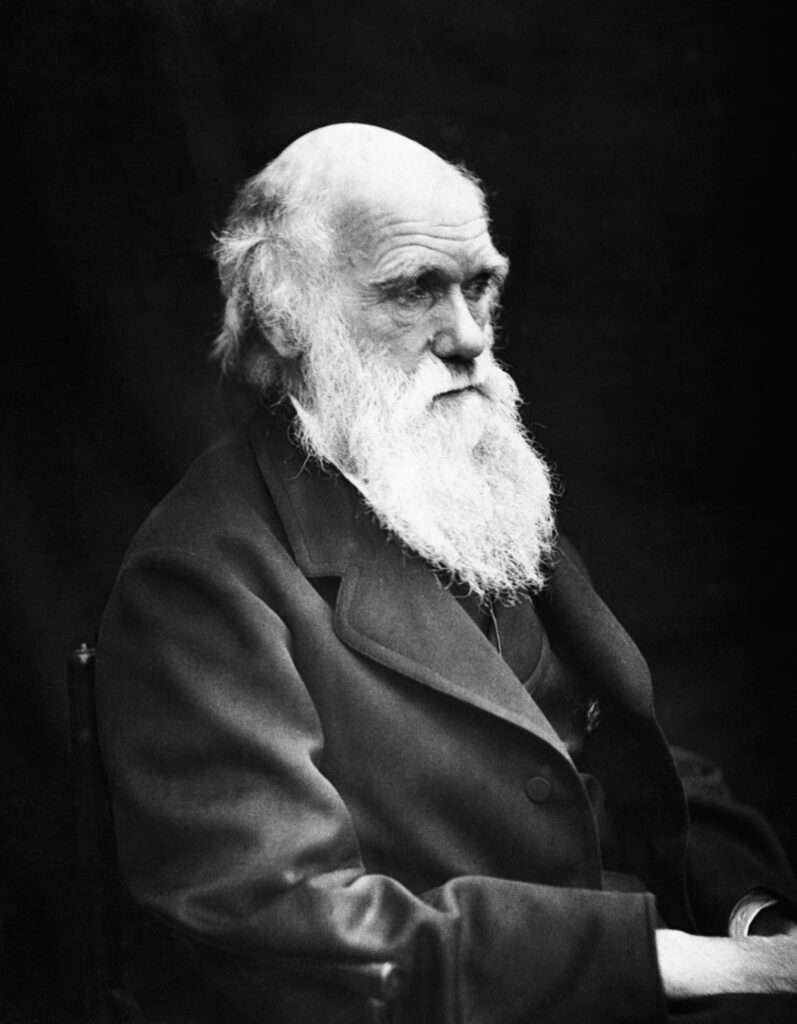
Charles Robert Darwin
The father of evolutionary theory, a naturalist who revolutionized beliefs about the origins of life through the “theory of evolution.” He authored the world-renowned book The Origin of Species, based on observations from his sea voyages, explaining the origin and evolution of living organisms and demonstrating their continuous change from the past to the present. Without his work, the public might never have come to understand the remarkable story of life.
Table of content
The Life of Darwin: Did Darwin Really Drop Out, Too?
Charles Darwin was born on 12 February 1809 in Shrewsbury, England. Darwin came from a wealthy family; his father, Robert Waring Darwin, was a physician and wished for Darwin to follow a medical career. He therefore sent Darwin to study medicine at the University of Edinburgh. However, Darwin showed little interest in medical studies. Instead, he spent much of his time engaging in leisure activities such as shooting birds, fishing, and collecting insects, and living largely immersed in nature. He was also afraid of surgical procedures and could not tolerate the sight of blood in the operating room. As a result, he studied there for only two years before leaving, and then went on to study theology at the University of Cambridge. At Cambridge, Darwin encountered what he had been interested in since childhood. During his studies, he frequently attended lectures on natural history and came to know two distinguished scholars: Professor P. Henslow, an expert in botany, and Professor P. Sedgwick, an expert in geology. Through them, he gained knowledge in biology, geography, and geology, and eventually graduated with a bachelor’s degree from the University of Cambridge in 1829.
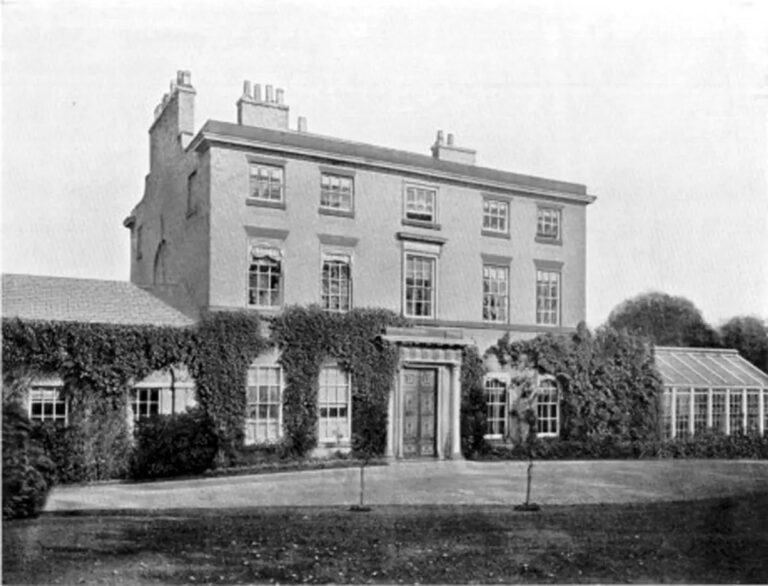
The Path of a Scientist: Why Did Charles Darwin Set Sail?
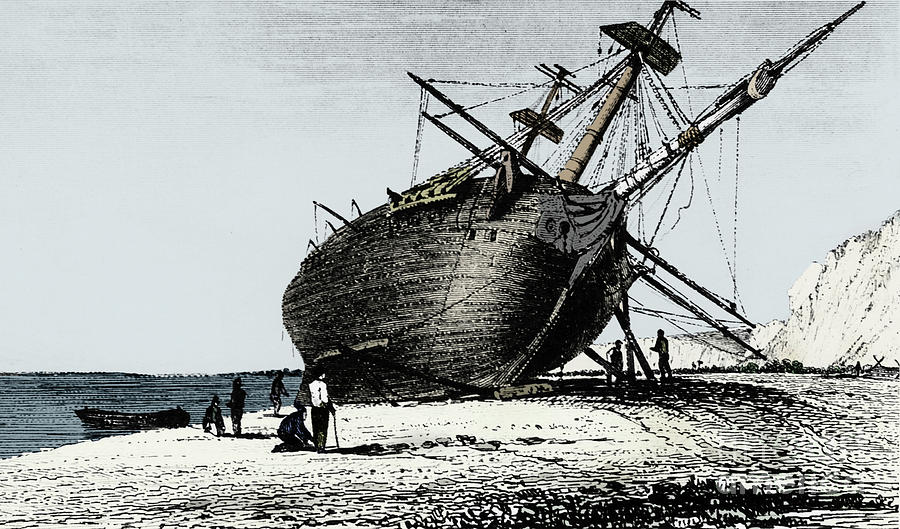
At that time, the British Royal Navy planned an expedition to survey the geography of the early Atlantic Ocean coastline and the Pacific Ocean, areas that had not previously been explored. The survey voyage used the HMS Beagle as the expedition vessel, with Captain FitzRoy serving as the commanding officer of the ship.
For this expedition, a naturalist was also required to accompany the survey team. However, there were no volunteers, as all travel expenses for the journey had to be borne personally. The captain therefore consulted Professor Henslow, who conveyed this information to Darwin. As a result, Darwin became interested in joining the expedition and was appointed as the naturalist for this survey, which was to explore the coasts of South America. The expedition was originally planned to last two years. H.M.S. Beagle departed from Davenport Harbor, Plymouth, England, on 27 December 1831. The Beagle called at Porto Praya in the Cape Verde Islands and stopped at the Azores as the final port of call before returning to dock at Falmouth, a southern port of England. Darwin ultimately spent as long as five years on the voyage, longer than originally planned. This expedition enabled Darwin to collect extensive data on various animals and plants throughout the journey. Upon returning home, he classified the plant and animal specimens he had collected and began to study them seriously. In the same year, Darwin published a work entitled A Naturalist’s Voyage Around the World, which recounted his observations and experiences during the global voyage aboard the Beagle.
Notable Works
During his exploratory voyage, Darwin encountered a wide variety of living organisms inhabiting different environments and kept detailed records of every aspect of the journey. These included daily weather conditions, the characteristics of each location, geographical features, and all species of plants and animals he encountered. He also collected a large number of plant and animal specimens. Some specimens were sent by post to be stored at his residence in England. If an item was too large to be collected, he produced highly detailed drawings with accurate proportions. In particular, on the Galapagos Islands, he observed distinctive characteristics of many animal species, some of which were entirely new and found only on those islands. Darwin therefore began to formulate hypotheses regarding the origins of these animals. He spent more than twenty years gathering data to study the evolution of living organisms, drawing inspiration from fossil remains. He studied a wide range of organisms, including humans, horses, dogs, and apes.
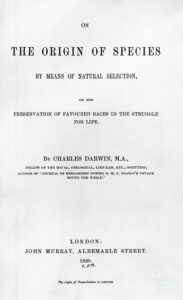
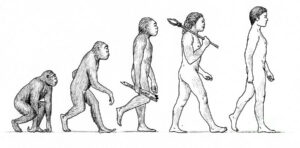
From his research, he was able to conclude and formulate the theory of evolution, stating that present-day living organisms arose from changes in organisms in the past. Later, on May 24, 1859, Darwin published a work entitled The Origin of Species, which explains the origins of living organisms and their evolution from one form to another, with the environment playing a crucial role. Each species of animal or plant evolves by adapting to its environment in order to survive. Species that are weak are unable to persist and eventually become extinct, while stronger organisms are able to survive and pass on their hereditary characteristics to their offspring, a process known as “natural selection.” He also proposed the hypothesis that “God did not directly create humans, but that humans likely evolved from apes.”
Does it conflict with religious teachings?
When Darwin’s book was published, it faced strong opposition and harsh criticism from religious conservatives, who accused him of being irreligious and heretical. This reaction occurred because these groups believed that all things in the world were created by God in their original forms from the beginning. Darwin’s work therefore conflicted with this belief. Later, people in scientific circles and the general public gradually began to accept his theory, largely due to Darwin’s rigorous research and the clear and abundant evidence supporting it. After that, many books on nature and research articles in scientific journals were published. The last book published before Darwin’s death was The Formation of Vegetable Mould Through the Action of Worms, printed in 1881. On 19 April 1882, Darwin died in Shrewsbury, England. His body was buried at Westminster Abbey. Darwin’s works, as presented in his books, have been extremely valuable to both biology and anthropology. In particular, the theory of evolution is regarded as a major milestone in modern biological science.
Published Works (Books)
1862: Published The Fertilization of Orchids
1868: Published The Variation of Animals and Plants under Domestication
1871: Published The Descent of Man, and Selection in Relation to Sex
1872: Published The Expression of the Emotions in Man and Animals
1875: Published The Effects of Cross and Self-Fertilisation in the Vegetable Kingdom
1877: Published The Different Forms of Flowers on Plants of the Same Species
1880: Published The Power of Movement in Plants
1881: Published The Formation of Vegetable Mould Through the Action of Worms

Finally, for those who are interested or would like to read books related to Charles Darwin—whether specialized academic works or general knowledge—they can read an article recommending books by Charles Darwin at https://kmutt.me/book-darwin
Phanthalak. (2003). The World’s Leading Scientists. Bangkok: Bannangsu 19.
Sutats Yoksan. (2005). Great Scientists. Bangkok: Pajera.
Numchai Cheewawiwat, & Suwat Asawaichanchai. (2012). Charles Darwin: The Origin of Life and the Theory of Evolution. Bangkok: Sarakadee.