
King Taksin the Great
Chapter 19: The Chief Generals of King Taksin the Great
In the period when Thonburi was the capital, King Taksin the Great had many brave and loyal generals, including:
1. Phraya Surabodin
2. Phraya Anurak Phuthon
3. Phraya Kamhaeng Sangkharm
4. Phraya Phichai Dabhak
5. Phraya Thainam
6. Phraya Phiphit Racha
7. Chao Phraya Chakri (Khaek)
8. Chao Phraya Phichai Racha (or Phichai Racha)
9. Chao Phraya Surasi
10. Somdet Chao Phraya Maha Kasat Suek
19.1 Phraya Surabodin
He was originally the ruler of Chainat. Later, he was appointed Phraya Kamphaeng Phet after the victory over Chaophraya Phang (of Sawangburi). When Aza Wun Kyin led his army back to Burma via Tak, he was assigned by the king to lead the royal forces to pursue the Burmese army (Tuan Bunyaniyom, 1970: 98, 150).
19.2 Phraya Anurak Phuthorn
He was granted the title Phraya Nakhon Sawan for his role in resisting the forces of Chaophraya Phang. Later, during the campaign against Aza Wun Kyin, he became the commander in charge of the troops at Wat Chan at the outskirts of Phitsanulok. In the Ratchaburi campaign, he went to assist Phraya Thibetsaradee in fighting the Burmese. He once led the vanguard under the command of Phra Maha Montien against the Burmese, advancing to Ban Sompoi, where fierce fighting ensued. On another occasion, Phraya Anurak Phuthorn pursued the Kalabo forces toward Phetchaburi. In the final instance, he was appointed to lead a force to attack Phnom Penh, Cambodia. It is evident that Phraya Anurak Phuthorn continuously participated in military campaigns throughout the reign of King Taksin the Great (Tuan Bunyaniyom, 1970: 98, 128, 141, 145, 162).
19.3 Phraya Kamhaeng Sangkharm
Originally named Khun Chana, he served in the administration of Nakhon Ratchasima. Bearing a grudge against Chaophraya Nakhon Ratchasima, whom he believed had killed his former superior, he volunteered to assist King Taksin of Thonburi in capturing Chaophraya Phimai, which he succeeded in doing. As a result, Khun Chana was appointed Phraya Kamhaeng Sangkharm and made governor of Nakhon Ratchasima. Phraya Kamhaeng Sangkharm participated in every battlefield alongside King Taksin. For example, he was ordered to lead forces from Nakhon Ratchasima to approach the Burmese camp at Khao Changhum, Ratchaburi, during the Bangkaew campaign, surrounding the Burmese until they were starving. He was also sent to assist Phraya Nakhon Sawan from the southern side during the Aza Wun Kyin campaign at Phitsanulok and was tasked with commanding troops to defend the supply lines for the assault on Phitsanulok. However, they could not enter the city and had to return the supplies to the royal camp.
When the governor of Nang Rong requested to report to the Lord of Champasak, Phraya Nakhon Ratchasima sent a report to Thonburi stating that the governor of Nang Rong was a rebel in 1776. Later, he was granted permission to serve in Thonburi. During the Cambodian campaign, he was appointed as a Kiak Kai (Tuan Bunyaniyom, 1970: 83, 132, 144, 146, 154, 162).
19.4 Phraya Phichai Dabhak
Monument of Phraya Phichai Dabhak
Sanun Silakorn sculpting the Monument of Phraya Phichai Dabhak
(Image from the Journal of Arts and Culture)
Phraya Phichai was a chief military officer and a royal guard close to the king. His original name was Choi, later called Thongdee Fun Khao. He was the son of a farmer from Ban Huai Kha, Mueang Phichai (now a district of Uttaradit Province). He studied martial arts with several renowned masters, gained fame through boxing, and trained in swordsmanship at Sawankhalok until he became highly skilled. When he had the opportunity to go to Tak, it coincided with the ceremony of holding the Phra Phiphat Satya water ritual, which also included boxing competitions. Thongdee faced the masters and won against two opponents consecutively. Impressed by his boxing skills, King Taksin invited him to serve. Later, he was appointed Luang Phichai Asa. In addition to boxing and swordsmanship, he was also skilled in using spears and staffs.
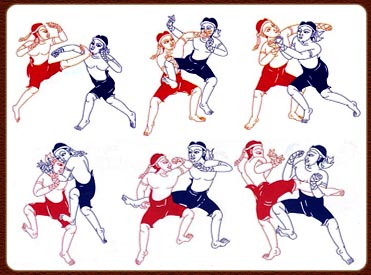
Various Muay Thai Techniques
(Image from Thai Culture Magazine)
Note: Mae Mai in Muay Thai refers to techniques that combine the use of fists, feet, knees, and elbows for offense or defense in Thai boxing. To master these techniques, a practitioner must first train in the basic use of each strike—fist, foot, knee, and elbow—until proficient. Only then can they practice combining them along with defensive maneuvers, which depends on the instructor’s creativity to adapt and apply effectively. Each technique is named according to its form for easy memorization. As the number of techniques grew, they were categorized or given rhyming names so that students could memorize them more easily. In the past, Thai boxers did not wear gloves and fought with bare hands or hands wrapped in cloth, allowing them to grab opponents for throws, locks, or twists. Therefore, fighters relied more on skill than brute force, resulting in the creation of numerous techniques. Later, rules were established requiring Thai boxers to wear gloves during competitions, similar to Western boxing, along with other regulations to protect fighters and simplify judging. Some traditional techniques could no longer be used in competitions as they violated the rules, and some fighters could not perform them effectively due to protective gear. Consequently, some techniques were eventually forgotten (http://www.msu.ac.th/satit/stu_project/pj102-2-2546/thaiBoxing/, 24/8/2004). The Royal Chronicles mention that before the fall of Ayutthaya, when Phraya Taksin broke through the Burmese siege, Luang Phichai Asa was among the forces that fought through the Burmese army.
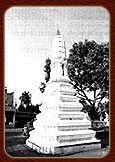
Small stupa at Wat Ratchakaruh, believed to enshrine the ashes of Phraya Phichai
(Image from the Journal of Arts and Culture)
After gathering people and preparing his forces in Chanthaburi until the time was right to pursue the Burmese army, King Taksin led his naval forces to attack Thonburi. He appointed Luang Phichai Asa as the vanguard to successfully capture the Pho Sam Ton camp. After King Taksin was crowned, he graciously appointed Luang Phichai Asa as Chao Muen Waiwaranart, a chief officer of the royal guards. When Chaophraya Phimai was defeated, he was further promoted to Phraya Siharat Dechochai. Later, in 1770, after subduing the northern cities, he was assigned to govern Mueang Phichai with the title Phraya Phichai, commonly referred to as Luang Phichai Asa.
Throughout the campaigns to subdue various uprisings and unify Siam, Luang Phichai Asa displayed exceptional loyalty and bravery. He led the troops at the front and fought with full determination. While governing Mueang Phichai, Posuphala led an army to attack the city. On that occasion, Phraya Phichai wielded his sword with both hands to lead the soldiers in defense against the Burmese until one side of his sword broke (Professor Rong Sayamanon wrote that both swords broke; see details in the introduction). His remarkable courage became famous, earning him the name Phraya Phichai Dabhak, which remains to this day.
In early 1782 (B.E. 2325), when Phraya Phichai Dabhak was 41 years old, Somdet Chao Phraya Maha Kasat Suek was crowned as King Phutthayotfa Chulalok, the monarch of the Chakri dynasty. Phraya Phichai was summoned to an audience and asked whether he would continue to serve under the new king. Phraya Phichai replied courageously, “I will not serve two kings or two masters. I ask to die following King Taksin.” He was therefore ordered to be executed. This demonstrates that Phraya Phichai Dabhak possessed unwavering loyalty, even unto death, toward King Taksin the Great. It may also be understood that he regarded himself as a former royal officer of King Taksin and feared that, in time, he might become an object of suspicion to the new monarch and find it difficult to live in peace. Moreover, he was deeply grief-stricken over King Taksin. For these reasons, he petitioned to die in following King Taksin. Phraya Phichai Dabhak is regarded as the progenitor of the families “Wichaikhathaka, Wichailakkhana, Srisaragon, Phichaikun, Siripalkka, Dithanon,” and others (Sathuean Suphason, 1984: 105).
19.5 Phraya Thainam (Phraya Chiang Ngoen)
Originally, he was the ruler of Chiang Ngoen, a fourth-class city under Mueang Rangaeng. He pledged allegiance to Phraya Taksin and fought alongside him from the time of breaking through the Burmese forces until Chanthaburi. Phraya Chiang Ngoen was not particularly distinguished in military command and was sometimes considered weak, to the point that he nearly faced execution. Nevertheless, he was a royal officer whom King Taksin the Great treated with special mercy and one of the governors whom the king favored calling to instruct in the “methods” of fighting the enemy.
Historical records note that during the campaign against rebels in Rayong, Phraya Chiang Ngoen became known as “Thainam” (Rear Guard), and in the Royal Chronicles he is referred to as Phraya Chiang Ngoen Thainam. After the northern cities were subdued, the king graciously appointed this Phraya Thainam to govern Sukhothai. He was a royal official who enjoyed the king’s highest trust (Ancient Monuments Conservation Foundation, 2003: 51-52).
19.6 Phraya Phiphit Racha
One of the key commanders of King Taksin of Thonburi during the first five to six years of his reign was Chao Khrua Lien, a Teochew Chinese surnamed Tang, commonly known in Thai as Tang Liang. When he first pledged allegiance, he was appointed Khun Phiphit Wathi. Due to his abilities and extensive influence over the eastern seaboard cities, he was rapidly promoted and within less than a year became Phraya Phiphit Racha, one of the generals leading the assault on the Pho Sam Ton camp, a Burmese stronghold defending Ayutthaya. Nithi Eawsriwong believes that this Phraya Phiphit served as the first Kosa (treasurer) of King Taksin’s reign.
Phraya Phiphit, or Phraya Kosa, was closely connected with Chanthaburi, a port city that served as an economic support base for King Taksin’s army in the early period. When King Taksin led campaigns against Cambodia and Phuthaimat simultaneously, Phraya Phiphit (Tang Liang) commanded a force of 1,481 men. After capturing Phuthaimat (or Hatien), he was appointed Phraya Racha Setthi, replacing Mo Thien Su, who fled to seek assistance from the Vietnamese king to counterattack the Siamese army. This war lasted from 1771 to 1773, until Mo Thien Su sent envoys to negotiate peace. King Taksin then returned Hatien to Mo Thien Su (the Vietnamese Phraya Racha Setthi) and recalled Phraya Racha Setthi (Tang Liang) to Thonburi. Phraya Phiphit, or Phraya Racha Setthi (Tang Liang), led the Teochew community living on the eastern bank of the Chao Phraya River near the Grand Palace. Later, during the reign of King Phutthayotfa Chulalok, the first monarch of the Chakri dynasty, he was allowed to return to govern Phuthaimat as before (Phim Prapai Phisankul, 1998: 98, 101-102, 155).
19.7 Chao Phraya Chakri Khaek (Mud)
Chao Phraya Chakri Khaek was the father of Phraya Ratchawang San (Wang) during the Thonburi period. He had a house along Wat Hong Rattanaram (called Wat Hong Aws Wihan in the Thonburi era).
Chao Phraya Chakri (Khaek) was originally named Mahahmud and was a descendant of Sultan Sulaiman, who ruled Mueang Phatthalung since the reign of King Prasat Thong.
Chao Phraya Chakri (Mud) came to serve as a courtier under King Ekathat (Khun Luang Khee Ruen – Phra Thinang Suriyasomrin). He held the position of Luang Sak Nai Wae or commonly called “Luang Nai Sak.” Before the fall of Ayutthaya, Luang Nai Sak was ordered to collect tribute and taxes from the eastern cities. He collected 300 chang (24,000 baht) from Phraya Chanthaburi. When news of the fall of the capital arrived, he buried the money at Wat Chan. That evening, he disguised some Chinese to make a commotion as if the money had been stolen and told Phraya Chanthaburi that the treasure had been robbed. Phraya Chanthaburi did not believe him and ordered his arrest. By chance, King Taksin’s army arrived at Chanthaburi. Knowing Luang Nai Sak personally, he fled to join the king. As fellow royal courtiers, he contributed 500 of his Chinese followers and the 300 chang in tribute to help King Taksin capture Chanthaburi. Luang Nai Sak (Mud) was skilled in navigation and shipbuilding, and he organized the construction of 100 warships in Chanthaburi within a short period. King Taksin then led the fleet to Ayutthaya and defeated the Burmese within just seven months after the capital’s fall.
When King Taksin ascended the throne, he appointed Luang Sak Nai Wae (Mud) as Phraya Yamrat, the prospective admiral, and later ordered him to lead the naval campaign against Nakhon Si Thammarat, which succeeded. He was then appointed “Chao Phraya Chakri Sri Ongkhrak,” as the head of the navy, becoming the first Chao Phraya Chakri of the Thonburi period. People commonly called him “Chao Phraya Chakri Khaek” or “Chakri Khaek.” Chao Phraya Chakri (Khaek) passed away in the Year of the Rabbit, 1771 (Chullada Phakdeephumin, Sakul Thai 48(2480): April 30, 2002: 32; and Sakul Thai 50(2565): December 16, 2003).
His body was interred at Ton Son Mosque, at the mouth of Khlong Bangkok Yai. On the day of the burial ceremony, King Taksin of Thonburi personally presided over the rites (Prayunsak Chalayandet, n.d.: 55).
Mud’s lineage has continued through many family lines. All descendants of Sultan Sulaiman are considered Sunni Muslim families, even though most today have adopted Buddhism. Those who still practice Islam are found in Surat Thani, Phatthalung, and Songkhla provinces, and the family has branched into many surnames, such as Iadtrong, Huanmukda, Mudausen, Khot Sawat, Chaiyachana, Phlaikaew, Khun Chamroen, Rongdet, Phetkarn, Suchariphun, Suphannachaburi, Bunyodom, Naoketu, Mitrakul, Bunyaphakdi, Sapasamai, Chaowanagawi, Thepsena, Chanaphan, Senathip, Khongsamai, Sewatkool, Phlasang, Rangsi, and Phrompalat, among others. Many of these families still strictly observe Islam today and are distributed across southern and central provinces as well as Bangkok (Prayunsak Chalayandet, n.d.: 52).
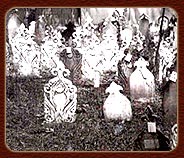
The graveyard (masjid) of Ton Son Mosque, where many military commanders of the Thonburi period are buried
(Image from Sampao Siam: Legend of the Bangkok Chinese)
19.8 Chao Phraya Phichai Racha (formerly Luang Phichai Racha)
He was another chief military officer who followed Phraya Wachiraprakan (Sin) to break through the Burmese encirclement and gather people in Rayong. He also served as an envoy, delivering letters to persuade Phraya Racha Setthi at Phuthaimat to join their side, which succeeded. Later, after King Taksin captured Chanthaburi, Luang Phichai Racha was responsible for overseeing shipbuilding and led the vanguard to pursue and drive out the Burmese from Thonburi to Pho Sam Ton. He remained one of King Taksin’s chief military officers throughout.
When King Taksin led the campaign against Nakhon Si Thammarat in 1769 (B.E. 2312), Luang Phichai Racha was appointed Phraya Phichai Racha. After the northern cities were subdued in 1770 (B.E. 2313), he was entrusted by King Taksin to serve closely and was appointed as one of the vanguard generals. After the campaign, he was promoted to Chao Phraya Phichai Racha and assigned to govern Sawankhalok as Chao Phraya Sawankhalok, making him a former royal official who rapidly rose to a high noble rank.
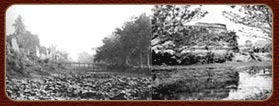
The city walls of Chiang Mai and the section known as Chang Hua Rin. Chang refers to the original city wall lines, moats, and corner bastions, which include Chang Hua Rin, Chang Sriphum, Chang Kratum, and Chang Ku Ruang.
(Image from Seen: Architectural Forms of North Siam and Old Siamese Fortifications)
During the campaign to capture Chiang Mai in 1774 (B.E. 2317), Chao Phraya of Sawankhalok conducted himself satisfactorily in battle and was granted a short-barreled firearm by royal favor. However, later during the same campaign, on Wednesday, the 1st day of the second lunar month, a plan was made to dig a trench encircling the city. The Sawankhalok camp did not fully enclose the city, and the Chiang Mai rulers, who were Burmese—Posuphala and Po Mayungwan—escaped with their families through Chang Phueak Gate, which faced the Sawankhalok camp. The king judged Chao Phraya Sawankhalok for negligence in military duty, failing to fully secure the encampment and allowing the enemy to escape, and ordered him to be flogged fifty times and detained. It is understood that he was then transferred to serve in Thonburi.
Chao Phraya Phichai Racha did not return to serve in Sawankhalok again. When he incurred royal anger while in Thonburi—after sending a merchant to petition Chao Chom Prang, a younger sister of the chief consort, daughter of the ruler of Nakhon Si Thammarat—he was executed; his head was displayed as a warning against similar behavior. He passed away around 1776 (B.E. 2319). Chao Phraya Phichai Racha is the progenitor of the Boonlong, Plangkun, and Kreewat families (Praphat Trinarong, Thai Journal 20(12): October–December 1999, “The Reign of King Taksin the Great,” 1999: 13–20).
19.9 Chao Phraya Surasih, who later became Somdet Phra Bowornrajawongse Maha Surasinghanat, was originally named Bunma.
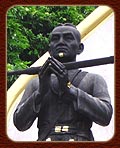
Somdet Phra Bowornrajawongse Maha Surasinghanat
When he reached the age of 16, his father brought him to serve as a royal page under King Suriyamarin, or King Ekathat, the last monarch of Ayutthaya. After three years of service, he was promoted to Nai Sutjinda, a royal page of silk-clad rank (“Nai Sutjinda” was a noble title under the administrative system, while “silk-clad” corresponded to the modern rank of captain).
When Ayutthaya was besieged by enemy forces in 1767 (B.E. 2310), Nai Sutjinda realized that the city was doomed to fall. Staying would only result in being captured or killed by the Burmese, serving no purpose. It was better to escape first and seek capable allies to return later to restore the kingdom. Therefore, Nai Sutjinda and three companions devised a plan to flee Ayutthaya, avoiding the enemy, and traveled by boat southward along the Chao Phraya River. Their goal was to join King Taksin, who was gathering forces to break through the Burmese encirclement from the east. They successfully regrouped in Chanthaburi to help organize the army and work toward rescuing Ayutthaya from Burmese control.
King Taksin was greatly pleased to see Nai Sutjinda, as they had served together before and shared a close, affectionate familiarity dating back to the prosperous days of Ayutthaya. He appointed Nai Sutjinda to the position of Phra Maha Montri, Chief of the Right Police Department, with a Sakdina of 2,000. At that time, Phra Maha Montri (Bunma) was only 24 years old.
Phra Maha Montri (Bunma), later Krom Phra Ratchawang Boworn Mahasurasinghanat, could be described in simple terms as “born a warrior” or “born with a sword in hand.” Throughout his life, he commanded troops to fight across every direction and almost always emerged victorious. His Burmese adversary, Aza Wun Ky, even bestowed upon him the nickname “Phraya Suea” (Tiger Lord), which corresponds to the title he received upon being appointed Deputy King, “Maha Surasinghanat.” It can be said that his greatness lay in his true prowess as a warrior. He rose as a masterful soldier, participating in a total of 24 military campaigns as a commander, including:
a. During the reign of King Taksin the Great (B.E. 2310–2325)
Chao Phraya Surasih (Bunma) participated in 16 military campaigns:
The First Battle: The attack on the Burmese camp at Pho Sam Ton, 1767 (B.E. 2310). After Phraya Taksin (Sin) broke through the Burmese encirclement from the east, he established himself in Chanthaburi. In the 11th month of 1767, King Taksin led a naval force of approximately 100 warships with around 5,000 Thai-Chinese soldiers up the Chao Phraya River to attack the Burmese forces occupying Thonburi. At that time, Nai Thong In, who had sided with the Burmese, was administering the city. King Taksin’s forces advanced to attack the Burmese general Suki’s camp at Pho Sam Ton, north of Ayutthaya. The city and surrounding areas were empty, with homes and temples burned. The Burmese were driven out, restoring the city to Thai control. Phra Maha Montri (Bunma) participated in this campaign, though he had not yet been assigned any major responsibilities. Nevertheless, his exceptional skills in battle were recognized, securing him important roles in subsequent campaigns. After King Taksin established Thonburi as the capital and completed his coronation, Phra Maha Montri (Bunma) went to bring his elder brother, Luang Yok Krabat of Ratchaburi (formerly Thong Duang), to serve in Thonburi. King Taksin then elevated Luang Yok Krabat to the rank of Phra Ratchawarin.
The Second Battle: The attack on the Burmese camp at Bang Kung, 1767 (B.E. 2310), in the late dry season of the same year. Manki Manoya, the ruler of Tavoy, led 3,000 soldiers to scout and conduct incursions into Siam under orders from King Ava. They encountered a Chinese force stationed by King Taksin at Bang Kung, Samut Songkhram. The enemy was encircled, and King Taksin appointed Phra Maha Montri (Bunma) as the vanguard commander, while the king himself led the main army. The Burmese forces were defeated.
The Third Battle: The destruction of the forces of the ruler of Phitsanulok, who had declared independence, in 1768 (B.E. 2311), 11th month. King Taksin led a naval force north toward Phitsanulok. However, he was wounded by a bullet fired by a monk from an ambush unit of the Phitsanulok ruler at the southern suburb of Phitsanulok, forcing the army to retreat. Although the names of Phra Ratchawarin and Phra Maha Montri are not explicitly mentioned in this campaign, it is likely they participated, as the two brothers were already King Taksin’s chief trusted military officers.
The Fourth Battle: The subjugation of Phimai (Krom Muen Thepphiphit, under King Ekathotsarot) after the rainy season in 1768 (B.E. 2311). King Taksin led an army to suppress Phimai at Nakhon Ratchasima and appointed Phra Ratchawarin and Phra Maha Montri to lead separate units to attack one of Phimai’s camps at Dan Khun Thot. The battle lasted three days, as the enemy defended strongly. After this campaign, Phra Ratchawarin was promoted to Phraya Aphaironrit, and Phra Maha Montri was promoted to Phraya Anuchitracha, both holding the positions of chief police officers. At that time, the two brothers remained in Nakhon Ratchasima to manage the administration of the city, while the king withdrew his main forces back to Thonburi.
The Fifth Battle: The attack on Cambodia, 1769 (B.E. 2312). Upon learning that the Kingdom of Cambodia refused to submit to Thonburi as it had to Ayutthaya, King Taksin commanded Phraya Aphaironrit and Phraya Anuchitracha to lead 2,000 troops from Nakhon Ratchasima, while Phraya Kosa Thabodi commanded another 2,000 troops from Prachinburi to subdue Cambodia during the dry season.
Phraya Aphaironrit and Phraya Anuchitracha captured Siem Reap, while Phraya Kosa Thabodi captured Battambang at the start of the rainy season and paused there to await the main army, which King Taksin was to bring to join the campaign against the Cambodian capital during the dry season. However, when the dry season arrived, King Taksin had not yet advanced, and rumors spread that he had passed away in Nakhon Si Thammarat. Learning of this, Phraya Aphaironrit and Phraya Anuchitracha were alarmed, fearing potential chaos in Thonburi, so they withdrew their forces to Nakhon Ratchasima. When King Taksin returned from the Nakhon Si Thammarat campaign and learned of the situation, he summoned both commanders, questioned them, and after hearing the details, granted them pardon.
The Sixth Battle: The attack on the forces of Chao Phraya Phang, 1770 (B.E. 2313). In this campaign, Phraya Anuchitracha (Bunma) had been promoted to Phraya Yamrach and was appointed to lead 5,000 troops to attack the northern cities, joining the main army of King Taksin and the forces of Phraya Pichai Racha. They captured Sawankhaburi, which had been held by Chao Phraya Phang, while the royal army captured Phitsanulok. This completed the king’s consolidation of the northern and central provinces under his authority. After the campaign, Phraya Yamrach (Bunma) was elevated to Chao Phraya Surasih Phitsanuwathiraj, becoming the governor of Phitsanulok (a rank higher than Chatusadom nobles) at the age of 28. The vacant position of Phraya Yamrach was then filled by promoting Phraya Aphaironrit (Thong Duang).
The Seventh Battle: Attacking the Burmese Army at Sawankhalok, 1770. When Po Mayungwan, the Burmese ruler of Chiang Mai, learned that the Thonburi forces had captured Phitsanulok, he feared that Chiang Mai would be in danger. He therefore led his army to lay siege to Sawankhalok. Chaophraya Phichai Racha, the governor of Sawankhalok, requested reinforcements from nearby cities. Chaophraya Surasi and Phraya Sukhothai led their forces to assist, and together they attacked and defeated the Burmese army.
The Eighth Battle: Attacking the Burmese at Chiang Mai, 1770. When the Burmese laid siege to Sawankhalok, King Taksin learned of this and led his army to assist in the fourth month of that year. Upon reaching the midway point, news arrived that the Burmese had retreated, prompting him to consider advancing to drive the Burmese completely out of Chiang Mai. In this campaign, Chaophraya Surasi commanded a vanguard force of 15,000 men, moving ahead. Local rulers along the route, recognizing them as fellow Thais, pledged allegiance, allowing the army to reach Chiang Mai swiftly. They successfully attacked all the outer camps and surrounded the city. When the main army arrived, it joined in the encirclement and attempted an assault on the city, but it was unsuccessful. King Taksin, concerned about the limited troops and potential shortages of supplies, ordered a withdrawal.
The Ninth Battle: Attacking the Burmese at Phichai, 1772. Po Suphla, a Burmese commander who had reinforced the forces at Chiang Mai, sought to display his troops’ abilities and sent forces to attack Laplae, advancing as far as Phichai. Phraya Phichai defended the city and requested assistance from Chaophraya Surasi, who was then commanding forces at Phitsanulok. Chaophraya Surasi led troops to support Phichai, attacking the Burmese surrounding the city. Phraya Phichai’s forces counterattacked from within the city, causing the Burmese army to scatter.
The Tenth Battle: Attacking Chiang Mai for the Second Time, 1774. King Taksin led his army to Tak and received news that Mon refugees fleeing the Burmese had entered through the Mae Sot checkpoint, possibly passing through the Phra Chedi Sam Ong checkpoint as well. He ordered Chaophraya Chakri (Thong Duang) and Chaophraya Surasi (Bunma) to lead forces to attack Chiang Mai while he remained at Tak to monitor the movements of the Mon refugees. As in previous campaigns, local rulers along the route pledged allegiance. The Thonburi forces encountered only minor resistance from Burmese forces in southern Chiang Mai. After driving them off, they surrounded the city. Soon the main army joined the encirclement. Chaophraya Chakri and Chaophraya Surasi led separate assaults from different sides, and Chiang Mai soon fell. King Taksin ordered the two brothers to manage the administration of the Lanna cities from Chiang Mai, while he quickly returned with the main army to Thonburi, having learned that the Burmese were sending troops to follow the Mon refugees into Siam, fearing they might seize towns along the western route to Thonburi.
The Eleventh Battle: Battle against the Burmese at Bang Kaeo, Ratchaburi, 1774. The events unfolded as King Taksin had anticipated. Nguy Akong Hun led Burmese forces to capture Bang Kaeo north of Ratchaburi and also seized Khao Chongum and Pak Praek in the Kanchanaburi district. At first, King Taksin did not have precise information regarding the strength of the Burmese forces that had advanced, and he therefore dispatched a relatively small force with the intention of capturing the Burmese alive. He ordered Chaophraya Chakri to quickly lead the northern army to surround the Burmese at Bang Kaeo, while Chaophraya Surasi was commanded to encircle the Burmese at Khao Chongum. Ultimately, the Burmese at Bang Kaeo suffered severe food shortages and were forced to surrender, while those at Khao Chongum and Pak Praek were defeated by Chaophraya Surasi’s troops.
The Twelfth Battle: Battle against Alaungpaya’s forces at Phitsanulok, 1774. Alaungpaya intended to lead his army south from the north to invade Siam. In 1775, he ordered Po Suphla to attack Chiang Mai and then join his forces at Phitsanulok. However, as Po Suphla advanced to Chiang Mai, King Taksin commanded Chaophraya Surasi to march from Phitsanulok to drive him back, while Chaophraya Chakri led a second force in support. Before any engagement could occur, Po Suphla withdrew his troops back to Burma.
Alaungpaya then sent approximately 20,000 troops to Sukhothai to advance on Phitsanulok, waiting for Chaophraya Surasi’s forces to enter the city so that the Burmese could encircle both Thai armies simultaneously. Once the Thai forces were established in Phitsanulok, King Taksin led the main army from Thonburi to assist. The two sides engaged in combat for about four months. With supplies exhausted within Phitsanulok, the two Chaophrayas led their troops to break through the Burmese lines eastward to Phetchabun. Upon entering Phitsanulok, the Burmese had already burned buildings and looted valuables before withdrawing back to Burma via Tak and Mae Sot, upon learning of the death of the Burmese king, Mangra. Once the two Chaophrayas learned of the Burmese retreat from Phitsanulok, they gathered troops and provisions from Nakhon Ratchasima and pursued the retreating Burmese forces, inflicting heavy losses.
The Thirteenth Battle: Defense of Chiang Mai, 1776. King Jingūja, the new Burmese monarch, sought to gain control of the northern cities from Siam. He ordered Gamalawun to lead 6,000 troops to join Po Mayungwan at Chiang Saen and advance on Chiang Mai. Phraya Wichianprakan, the local governor, was unable to resist and fled to Thonburi. King Taksin then commanded Chaophraya Surasi to lead forces in coordination with Phraya Kawila, the governor of Lampang, to drive the Burmese occupying Chiang Mai into retreat. Following this, Chiang Mai remained abandoned for 15 years before being reestablished in the reign of King Rama I.
The Fourteenth Battle: Attack on Champasak, 1777. The rulers of Champasak, Chao Ok and Chao In, prepared an army of 10,000 to invade the Isan region of Siam. King Taksin commanded Chaophraya Surasi to lead forces from Thonburi to join Chaophraya Chakri’s army at Nakhon Ratchasima. Together, they advanced and attacked Champasak in early 1777, also bringing Attapeu, Surin, Sangkhla, and Khukhan under Thonburi’s control. Following this campaign, Chaophraya Chakri was elevated to Somdet Chaophraya Maha Kasatsuek, equivalent to the position of Chaokhun, serving as Samuhanayok.
The Fifteenth Battle: Attack on Vientiane, 1778. Phra Vor, a former official of the ruler of Vientiane who had submitted to Thonburi and settled at Ban Don Mod Daeng on the Mun River since the Siamese capture of Champasak, was killed by forces sent from Vientiane. King Taksin therefore commanded Somdet Chaophraya Maha Kasatsuek and Chaophraya Surasi to lead an expedition against Vientiane in the first month of 1778. Somdet Chaophraya led 20,000 troops by land, while Chaophraya Surasi mobilized 10,000 naval forces from Cambodia along the Mekong River. The ruler of Luang Prabang submitted and offered assistance in attacking Vientiane. The Thonburi army laid siege for four months and captured Vientiane, bringing various Lao cities and even the Tonkin region of Vietnam under Thonburi control. In this campaign, Somdet Chaophraya Maha Kasatsuek also brought the Emerald Buddha and Phra Bang from Vientiane to Thonburi.
The Sixteenth Battle: Suppression of the Rebellion in Cambodia, 1780. A civil conflict broke out in Cambodia, leaving only the young heir, the four-year-old Maha Uparaja. Prince Talahe (Mu) assumed regency but aligned himself with the Vietnamese to claim kingship independently. King Taksin therefore appointed Somdet Chaophraya Maha Kasatsuek as supreme commander, Chaophraya Surasi as front commander, and Prince Krom Khun Inthapitak, his eldest grandchild, as supporting commander. Together, a force of 20,000 advanced to attack Cambodia, with orders that upon victory, Prince Krom Khun Inthapitak would be crowned king of Cambodia. Before the campaign could take place, a rebellion erupted in Thonburi. Somdet Chaophraya Maha Kasatsuek and Chaophraya Surasi returned to suppress the uprising. After the passing of King Taksin, Somdet Chaophraya Maha Kasatsuek ascended the throne as king, following the counsel of officials and the people, and established the new capital at Bangkok in 1782.
b. Period of King Buddha Yodfa Chulalok (B.E. 2325–2346)
After King Rama I established Rattanakosin, Chao Phraya Surasi Phitsanulokwarat (Bunma) was appointed as Somdet Krom Phra Ratchawang Bowonmahasurasinghanat, holding the position of Maha Uparat (Front Palace), serving as the supreme commander of King Buddha Yodfa Chulalok Maharaj, the King’s elder brother. During his tenure until the King’s passing, he led military expeditions on several occasions. His status at that time was “Commander of Rattanakosin,” and he was highly skilled and trusted by the King’s elder brother.
Originally, the residence or mansion of Chao Phraya Surasi (Bunma) was located at the mouth of Khlong Bang Lamphu, near Wat Tong Pu or Wat Chanasongkhram. Chao Sri Anocha, his consort, resided there with their daughter. In B.E. 2320, when Chao Phraya Surasi was appointed as Front Palace, their daughter was named Chao Fa Phikunthong.
Contemporary evidence from the Thonburi period includes the memoirs of Krom Luang Narindradevi, which recorded that at the end of the Thonburi reign, when Chao Fa Phikunthong was four years old, a crisis occurred in Thonburi. At that time, the two elder commanders, Somdet Chao Phraya Maha Kasat Suek and Chao Phraya Surasi, were on military campaigns in Vietnam and Cambodia, when Phraya San and his forces attacked the house of Phraya Suriya Aphai, nephew of Somdet Chao Phraya Maha Kasat Suek and Chao Phraya Surasi.
The book Thai-Rob Phma recorded the role of Chao Sri Anocha, also known as Chao Sirirachana, during this event: “…When the battle arose, Chao Sirirachana, the lady of Chao Phraya Surasi, was at the house at the mouth of Khlong Bang Lamphu. Knowing that the enemy had come to raid Phraya Suriya Aphai’s house, she conferred with Phraya Cheng, Phraya Ram, and the Mon officers to suppress the rebellion.” At the same time, the Chiang Mai local chronicles recorded: “Chao Sri Anocha sent a dan (letter) to the people of Pak Phreow to come, saying: ‘As long as I live, I will not allow you to take over government matters. You may trade freely, except where I wish otherwise.’ The people of Pak Phreow responded by capturing Phraya Sing and Phraya San and executed them.”
Chao Sri Anocha had “taken control of the city” and then invited Somdet Chao Phraya Maha Kasat Suek and Chao Phraya Surasi, the two brothers, to come and assume rulership… (see Chiang Mai Local Chronicles 700 Years, 1996, p. 118).
The volunteers from Pak Phreow were likely Lao or Yuan people under Chao Sri Anocha’s authority, as evidenced by the letter (dan) ordering them to suppress the rebellion. The area of Pak Phreow later became home to a large population of Yuan from Chiang Saen. After Chao Kawila, elder brother of Chao Sri Anocha, led troops to capture Chiang Saen in B.E. 2347, these records clearly indicate Chao Sri Anocha’s role behind the establishment of the Chakri Dynasty. After suppressing opposition and founding the Chakri Dynasty in B.E. 2325, Somdet Chao Phraya Maha Kasat Suek (Thong Duang) was enthroned as King Buddha Yodfa, while his younger brother, Chao Phraya Surasi (Bunma), was appointed as Krom Phra Ratchawang Bowonmahasurasinghanat (B.E. 2286–2366).
Krom Phra Ratchawang Bowonmahasurasinghanat ordered the construction of a grand Bowon Palace on the “Tha Phra Chan” area, consisting of three royal pavilions, including the Phra Thinang Siwamok Phiman, Phra Phiman Dusida, and he also commissioned the Phra Thinang Sutthasawan to house the Phra Phuttha Sihing brought from Chiang Mai. Everything within the Front Palace was built on the Tha Phra Chan site similar to the Grand Palace, including the elephant stables, horse stables, the officials’ hall, storehouses, and the Front Palace Temple of the Emerald Buddha, among others. The difference was that the inner pavilions in the Grand Palace were constructed of wood, whereas in the Front Palace, the inner pavilions were built as masonry buildings. Specifically, the residence of Chao Sirirachana or Chao Sri Anocha, the chief consort, was built as a group of two-story pavilions, while the pavilion of Chao Fa Phikunthong, the royal daughter, was also constructed within the palace. Around the Front Palace, there were ten forts, such as Fort Phra Chan and Fort Phra Athit. Outside the southern wall of the Bowon Palace stood a temple originally named Wat Salak; Krom Phra Ratchawang Bowonmahasurasinghanat renamed it Wat Nippananaram. Later, during the Sangkhayana Buddhist canon revision in B.E. 2331, it was called Wat Phra Si Sanphet. He undertook 15 days of ordination at this temple. In B.E. 2345, when the Burmese army advanced to attack Chiang Mai, Krom Phra Ratchawang Bowonmahasurasinghanat led troops to suppress them.
However, upon reaching Thoen, his gallstone condition worsened, and he delegated command to Krom Phra Ratchawang Lang (Phraya Suriya Aphai) and returned to Bangkok. In B.E. 2346, he passed away at the age of 60 (see M.R. Sangsom Kasemsri and Wimon Phongphat, History of Thailand in the Rattanakosin Period, Reigns of Rama I to Rama III [B.E. 2325–2394], Bangkok: Committee for Thai Historical Revision, Office of the Prime Minister, 1972, pp. 20–21, 34–36).
After his passing, there are no records concerning the chief consort, Chao Sri Anocha, but it is believed that she remained in the Front Palace until her death. Her ashes were likely brought to Lampang, as they are still enshrined today at Wat Phra That Lampang Luang, Lampang. The royal daughter, Chao Fa Phikunthong, was granted the title Krom Khun Srisunthorn in the year of the Dragon, B.E. 2351, and she passed away in the year of the Horse, B.E. 2353, at the age of 34. She was a descendant of Chao Kawila of Chiang Mai. The chief consort Chao Sri Anocha, “Lady of Lanna,” performed the heroic act of “turning the city,” which enabled the two elder commanders of Thonburi, former officials of Ayutthaya, to suppress opposition, enthrone the new dynasty, and establish the Chakri Dynasty. The two brothers, representing the Grand Palace and the Front Palace of Rattanakosin, recognized and honored her as a crucial force behind the enduring relationship between the Chakri Dynasty and the noble families of the seven principalities of Lanna.
The site of Bowon Sathan Mongkhon Palace, or the “Front Palace,” residence of Krom Phra Ratchawang Bowonmahasurasinghanat and Chao Sri Anocha, was a “political center” with a dramatic history over two centuries since the establishment of Rattanakosin in B.E. 2325, because the royal custom dictated that “upon the elder’s death, the younger shall inherit.”
Thus, both the Grand Palace and the Front Palace had everything in parallel, including offerings such as silver and golden trees, which were presented in two sets. However, the younger, Front Palace holder had to die before the elder, Grand Palace ruler. It is said that during his illness, Krom Phra Ratchawang Bowonmahasurasinghanat ordered himself to be carried in a palanquin to Wat Phra Si Sanphet (later called Wat Mahathat) to worship the principal Buddha image in the ordination hall. He offered the sword in dedication for Buddhist merit, an origin of the Bowon Monument style in front of Wat Mahathat today.
It is recorded that he once lamented, “I labored to make this with my mind and strength… and soon it will belong to someone else…” and he cursed that “…in the future, anyone who is not my descendant, if they possess it, may the spirits and deities not grant them happiness…” (Somdet Krom Phraya Damrong Rachanuphap, “Legend of the Front Palace,” Chabap Phongsawadan 13, cited in Somchot Ongsakul, Front Palace: Two Hundred Years of History on Thammasat Land, 1982: 4–5).
Note:
Krom Phra Ratchawang Bowonmahasurasinghanat suffered from gallstones during the campaign to support Chiang Mai in the year of the Dog, B.E. 2345. His condition was severe, requiring immersion in water for relief. He remained in Thoen for treatment and delegated command to Krom Phra Ratchawang Lang, who later led the army to defeat the Burmese besieging Chiang Mai. After completing the military mission, his condition eased, and he returned to Bangkok in the year of the Pig, B.E. 2346. Later, his illness worsened, and he passed away at Phra Thinang Burapha Phimuk within Bowon Sathan Mongkhon Palace on the 12th lunar day of the 12th month, B.E. 2346, at the age of 60 (Phra Bowon Ratcha Prabhat and Phra Bowon Ratcha Nipon, 1972: 5).
Krom Phra Ratchawang Bowonmahasurasinghanat had 18 sons and 25 daughters, totaling 43 children. He had heirs continuing four family lines, in order of age: Asuni Na Ayutthaya, Sangkhad Na Ayutthaya, Patmasingh Na Ayutthaya, and Nirasingh Na Ayutthaya. The first political transformation of this land occurred during the reign of King Rama V when Krom Phra Ratchawang Bowon Wichai Charn passed away on 28 August B.E. 2428. King Rama V abolished the position of “Front Palace” and established the position of “Crown Prince” instead, changing the succession custom from “elder to younger” to “from father to son.” Since then, the history of the Front Palace became a largely untold legend. Parts of its buildings were converted into the National Museum and the National Theater, while the inner pavilions, such as Chao Fa Phikunthong’s pavilion along Tha Phra Chan, were later demolished to make way for the Ministry of Defense, which housed sequentially the Navy, the 11th Royal Guard Infantry Regiment, and the 4th and 5th Infantry Battalions (Somchot Ongsakul, 2002: 3–8).
19.10 Somdet Chao Phraya Maha Kasatsuek (Thong Duang)
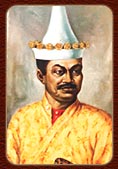
Kosa Pan (Image from The Biography of Kosa Pan and records of his journey to France)
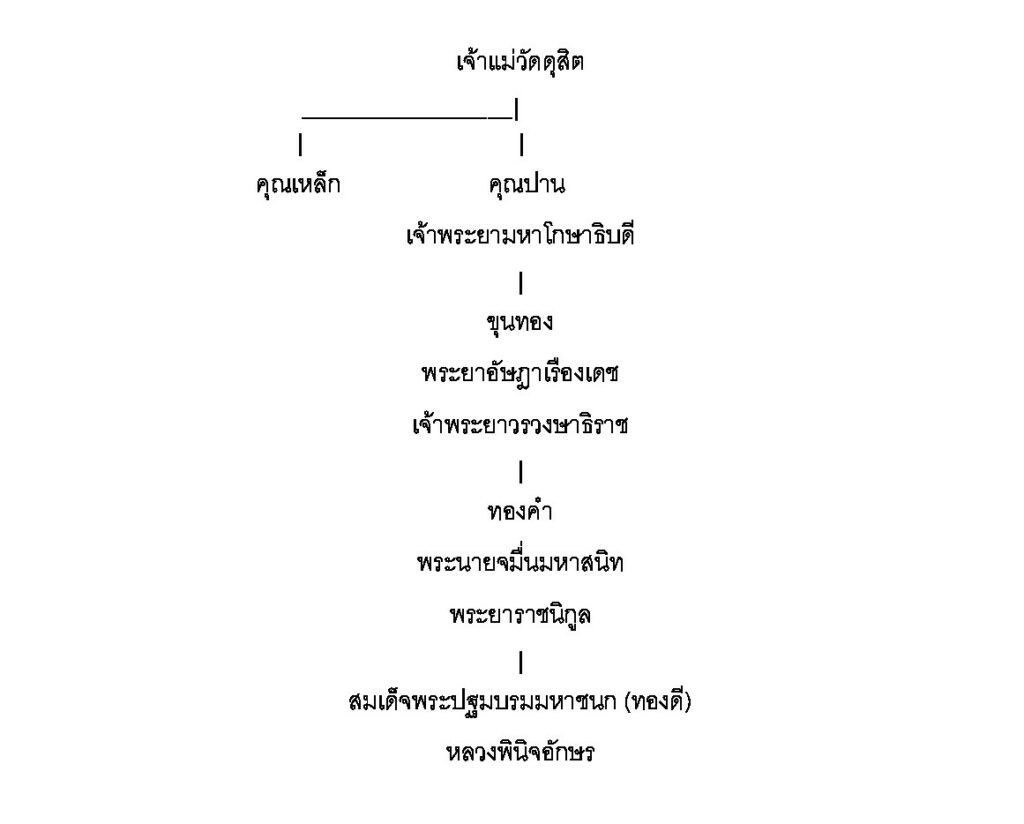
Kosa Pan, who once served as the Thai ambassador fostering diplomatic relations with King Louis XIV of France, and Kosa Lek, a chief military officer under King Narai the Great, was the son of Chao Mae Wat Dusit, the wet nurse of Crown Prince Narai. Since the mother of Crown Prince Narai had passed away while he was still very young, Kosa Pan became a foundational figure of the Chakri dynasty (Somchai Pumsa-ard, 1995: 1-42).
Kosa Pan had an eldest son named Nai Khun Thong, who later became Chao Phraya Worawongsathirat and held the position of Minister of the Treasury. Nai Khun Thong’s eldest son, Nai Thongkham, later became Phraya Ratchanikul Palat Thul Chalong Mahatthai. He had a son named Nai Thongd, who later became Luang Phinit Aksorn.
Luang Phinit Aksorn married Daoruang, also called Yok, and resided within the city walls north of Pom Phet. This family had a total of five children.
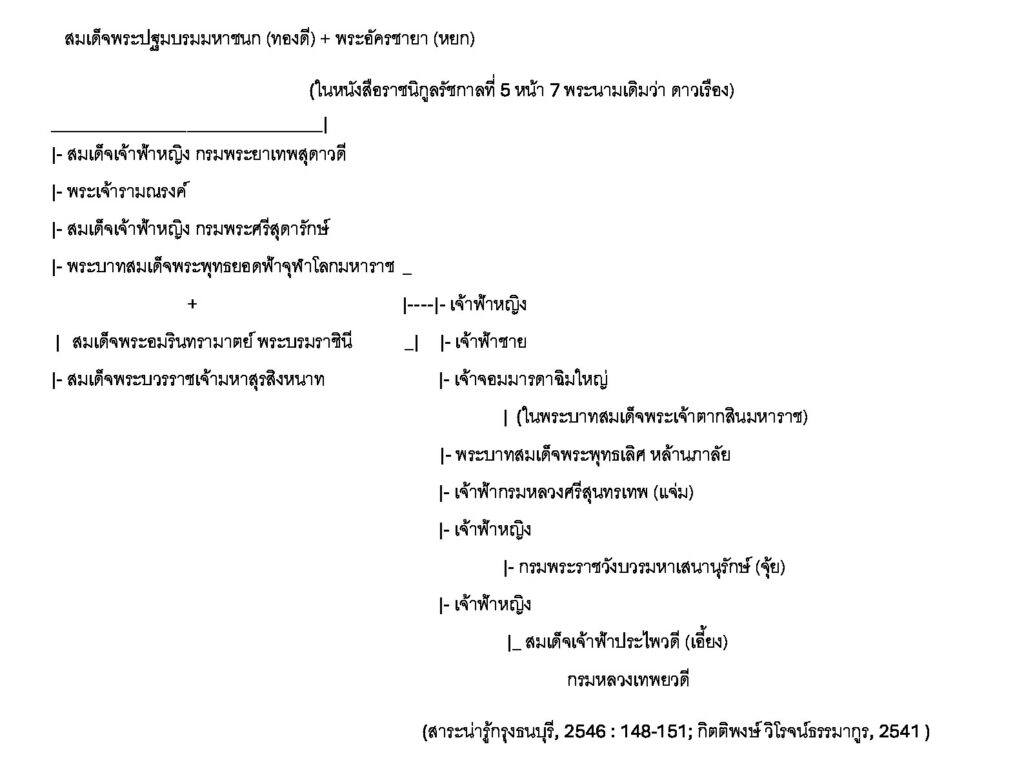
The first child was a daughter named Sa, who married Sam, the son of the Chief of the Police Department, and was later conferred the title Somdet Chao Fa Ying Krom Phraya Thepsudawadi. The second child was Khun Ramnarong, who died before the fall of Ayutthaya to the Burmese. The third child was a daughter named Kaew, who married Chao Khrua Ngern, a Chinese of the Tan lineage, and later became Somdet Chao Fa Ying Krom Phraya Srisudarak; their sons and daughters became the progenitors of the Thephasadin, Mantrikul, and Isarangkul lineages of Ayutthaya. The fourth child was Thong Duang, born on Wednesday, March 20, 1736 (Year of the Dragon), during the reign of King Boromkhocha of Ayutthaya; he later ascended the throne as King Phutthayotfa Chulalok the Great. The fifth child was Boonma, who became Krom Phra Ratchawang Boworn Maha Surasinghanat. The sixth child was Princess Ku, also called Chao Krok Wat Pho, ancestor of the Narintrakul lineage of Ayutthaya. The seventh child was named La, later becoming Chao Fa Krom Luang Chakrachet, ancestor of the Chetthakunakul lineage of Ayutthaya.
A remarkable event occurred during the childhood of Thong Duang. It was said that at the age of five he fell into a fire but suffered no injury. He later studied under several teachers, gaining broad knowledge in various fields. At age thirteen, he underwent the topknot-cutting ceremony (Kan Chuk), performed personally by Chao Fa Uthumphon, Krom Khun Phra Phinit. Afterwards, Thong Duang served as a royal page, alongside Sin, who would later become King Taksin the Great in 1757. When Thong Duang reached the age of twenty-two, he respectfully requested to resign and enter the monkhood at Wat Maha Thalay, while Sin had already been ordained at Wat Khosawat for three years.
Three years later, during the reign of King Ekathat, the last monarch of Ayutthaya, Thong Duang married the daughter of the wealthy couple Thong and Som, named Nak, a beautiful woman from Amphawa District, Ratchaburi Province. He later relocated to Ratchaburi to serve as Luang Yokkrabat. At the time of the fall of Ayutthaya to the Burmese, Luang Yokkrabat remained in Ratchaburi, while his wife was heavily pregnant. When his younger brother Boonma invited him to join Phra Ya Taksin’s service, he had to delay departure and entrusted Boonma to escort Nang Nok Eang (the mother of Phra Ya Taksin), who had been in hiding at Ban Laem, and also gave Phra Ya Taksin the ancestral golden sword and two rings—one ruby, one yellow sapphire.
In 1768, Luang Yokkrabat began official service in Thonburi, holding the rank of Phra Racharin (some sources call it Phra Ratchawarin), serving as the Chief of the Outer Police on the right, residing near Wat Bang Wa Yai (Wat Rakhang). In the same year, he went on his first military campaign, suppressing Phraya Worawongsa Thiraj at the Khun Thot checkpoint. After quelling the Phimai rebellion, he was promoted to Phraya Aphaironrit, Commander of the Police Department.
In 1769, he led a campaign to capture the cities of Phra Tabong and Siem Reap, and in 1770 he followed King Taksin of Thonburi to suppress the uprising of Chao Phraya Fang at Sawang Kaburi. He was promoted to Phraya Yommarat at the age of 34. The following year (1772), he was appointed Chao Phraya Chakri and led the army to attack Cambodian territories, capturing the cities of Baphnom, Banteay Pich, and Phothisat.
In 1773, he served as the vanguard for King Taksin the Great’s campaigns against Chiang Mai, Lampang, Lamphun, and Nan. In the same year, the Burmese advanced to attack Ratchaburi, but the northern forces he commanded defeated them in 1774. When the Burmese marched on Chiang Mai, King Taksin ordered Chao Phraya Chakri to lead troops in defense, but the Burmese retreated before any engagement (Suree Phumiphamorn, 1996: 154-157).
In 1775, he was appointed commander-in-chief to assist in the defense against the Burmese assault on Chiang Mai. Upon learning of this, the Burmese withdrew their forces. Later, Aza Wunki advanced to attack northern territories and encamped at Sukhothai. At that time, Chao Phraya Chakri and Chao Phraya Surasi were leading an army to attack Chiang Saen. Upon receiving news of the campaign, they returned to confront the Burmese at Phitsanulok before Aza Wunki could encircle the city. The Burmese repeatedly attempted to assault the Thai encampments, but each time they were repelled. Aza Wunki even praised the Thai commanders and agreed to a one-day truce. When the Thai and Burmese commanders met on horseback in the battlefield, Aza Wunki observed Chao Phraya Chakri’s appearance and remarked, “This man is handsome, skillful, and strong enough to fight an old warrior like me. Preserve yourself, for one day you shall become king.” He also told Chao Phraya Chakri, “Defend the city well, for we aim to capture Phitsanulok this time” (Pranee Jamkhunthien, 1991: 24).
Sang Phatnotai (n.d.: 86) notes that Aza Wunki intended to sow discord among the Thais, which is a point worth considering.
In 1776, he led the army to conquer eastern Laotian territories, capturing Nakhon Champasak, Si Thandorn, Atpue, and several Cambodian forest towns. He was elevated in rank to Somdet Chao Phraya Maha Kasatsuek, Piluk Mahima, Nakhon Aradej, Naresuan Ratchasuriyawong, Ong Bat Mulikakorn, Bowon Rattanaprinayok, with honors equivalent to those of a departmental lord.
In 1778, he commanded the army to capture Lan Xang and Vientiane. He successfully captured Vientiane, making it a vassal city, and brought Luang Prabang under Thonburi’s control. On the return journey, he personally transported the Emerald Buddha and Phra Bang to Thonburi.
In 1780, a rebellion broke out in Cambodia. He led the army to suppress it, but before the campaign was completed, disturbances erupted in Thonburi, requiring him to return to the capital. In 1782, he performed the coronation at the age of 47 (Interesting Facts about Thonburi, 2003: 148-151).
After the celebration of Wat Phra Kaew Morakot in 1809, His Majesty King Phutthayotfa Chulalok fell ill from old age and passed away at the Eleven-Chamber Throne Hall.

The royal emblem of His Majesty King Phutthayotfa Chulalok the Great appears above the doorway of the Phra Buddha Prang at Wat Arun Ratchawararam, as well as on the covers of ancient royal manuscripts in sequence.
(Image from the book Royal Emblems)
The royal emblem is circular in shape, depicting a lotus with an urna, which represents the third eye of Lord Shiva, a symbol of great power. At the center is the character “อุ,” representing the word “Duang.” The emblem is adorned with lotus petals around it, signifying a righteous and virtuous mind. This emblem was once again displayed when the Thai people celebrated the 200th anniversary of Bangkok and jointly recognized His Majesty King Phutthayotfa Chulalok as the Great King.
At that time, the royal tree, His Majesty’s favorite, the Ratchaphruek, bloomed with yellow flowers in full splendor throughout the surrounding area.
Note:
Suree Phumiphom (1996: 160-161) mentioned that the tree favored by His Majesty King Buddha Yodfa Chulalok the Great was the “Ratchaphruek,” considered the king of trees. It is a tree used in Hindu religious ceremonies. Ancient Thai beliefs held that when constructing the foundation of a house, one should place Ratchaphruek wood in the post hole. When erecting the house pillars, five Ratchaphruek leaves, three banana leaves, and one sugarcane leaf were tied to the top of the gable post. S. Playnoi (1984, Plants of Auspicious Significance, Aksorn Phittaya) recorded this practice.
The Ratchaphruek tree is considered suitable for building a house in the Year of the Rat, as it is believed to enhance one’s status and well-being. The Ratchaphruek symbolizes greatness and authority, regarded as the king of trees. Its flowers are used in paying respects to teachers in traditional royal theatre. Ancient Thai guidance suggests that if planting a Ratchaphruek near a residence, it should be placed on the northeast side or the southwest direction to bring the greatest auspiciousness.

The Ratchaphruek (Cassia fistula Linn)
Ratchaphruek, with the Latin name Cassia fistula Linn, belongs to the Caesalpiniaceae family. In Thailand, it is known by various names, including Chai Phruek (central Thai), Khun or Lom Laeng (northern Thailand), Glak Kluak Koi (Pattani), Gu Peya (Karen, Kanchanaburi), Pue Yu, Pu Yo, Peor So, Mae Lai Yu (Karen, Mae Hong Son).
Ratchaphruek naturally grows throughout India and Indonesia and has been cultivated in several other countries such as Nepal and the Philippines. Local names differ, such as Sonali in Bengal and Sonalu in Nepal. Its common English names include Indian Laburnum, Golden Shower, Purging Cassia, and Pudding Pipe Tree.
Ratchaphruek is a deciduous tree that thrives in dry mixed forests. Young trees have gray-green bark, which turns reddish-brown as they mature. The compound leaves consist of 4–6 pairs. The bright yellow flowers grow in clusters and bloom in the summer, making Ratchaphruek popular as an ornamental tree. Its fruits are long and cylindrical. In India, the leaves are used as animal fodder.
The wood is yellowish-brown with short fibers, making it difficult to plane or trim. It is hard and durable. The pulp inside the fruit is edible and used as a laxative, especially in Arab countries and China. The pulp is effective for pregnant women, but caution is advised with the outer parts of the fruit, which may induce miscarriage. In total, the fruit can be used to make 16 types of medicine, the pulp 15 types, the roots treat fever and heart disease, the leaves expel roundworms and can sometimes treat elephants, and the seeds induce vomiting.
In Thailand, Ratchaphruek wood is commonly used for house pillars, bridge posts, pestles, cart wheels, axles, plow shafts, lathe handles, drum shells, and ceremonial drums. Some groups consume the tannin-rich latex as a betel substitute. The bark contains approximately 10–12% pyrogallol-type tannins, making it suitable for leather tanning. In India, it is used for furniture, carving, and wooden boards. Overall, Ratchaphruek is a highly valuable tree for those who cultivate it.
The Ancestral Lineage of His Majesty King Phutthayotfa Chulalok the Great and Krom Phra Ratchawang Bowon Mahasurasinghanat