

His Majesty King Bhumibol Adulyadej The Great
Chapter 20: Permanent Structures Constructed During the Reign of King Rama IX
His Majesty King Bhumibol Adulyadej the Great was a monarch of profound benevolence and boundless grace. His exemplary conduct and virtuous character earned Him the deepest love and reverence of His people. Every Thai citizen holds an enduring gratitude for His immeasurable kindness. Thus, on various auspicious occasions, people from all walks of life united in constructing permanent monuments and memorials to honor His Majesty and to express their unwavering loyalty and devotion.
Numerous structures and commemorative works were established in dedication to His Majesty and in celebration of His reign, such as:
1. The Royal Barge Narai Song Suban, King Rama IX
2. The Kanchanaphisek Lighthouse at Phromthep Cape
3. The new Order of Chula Chom Klao Decoration, “Direkkunabhorn”
4. Phutthamonthon
5. Phra Thinang Santichaiprakarn and Phra Sumen Fort
6. Phra Phuttha Maha Vajira Uttamophat Sasada
7. Phra Phuttha Nirorokantarai
8. Suan Luang Rama IX Park
9. Princess Mother Memorial Park
In addition, significant national developments such as Suvarnabhumi Airport, the Skytrain, and the Underground Metro were also established during His Majesty’s reign.
1. The Royal Barge Narai Song Suban, King Rama IX
The Narai Song Suban was originally named Mongkol Suban and was commissioned by His Majesty King Nangklao (Rama III) to be built in the Ayutthaya style; according to the Royal Chronicles it was constructed as a mark of honor for the kingdom. The vessel measured 17 wa 3 sok in length, 5 sok 5 inches in width, 1 sok 6 inches in depth, and 6 sok 6 inches in height; its outer hull was painted red and it was propelled by 65 oarsmen. The prow was originally carved in the form of Phaya Suban or the Garuda grasping a naga, with a circular opening beneath the Garuda for mounting a cannon.
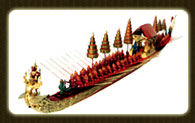
During the reign of His Majesty King Mongkut (Rama IV), His Majesty ordered that a figure of the god Narai standing upon the back of Phaya Suban be added to enhance the majesty of the barge and to conform with the Brahmanical belief that Phaya Suban, or Garuda, is the divine vehicle of Narai. The new image of Narai created in the reign of King Rama IV was carved from wood, gilded, and decorated with dark blue glass mosaics. The deity was depicted with four arms, each holding a divine weapon—trident, mace, discus, and conch. After the figure of Narai was added, the King graciously renamed the vessel “Narai Song Suban.” According to records of the Royal Barge Procession during the Rattanakosin period, this royal barge, formerly known as Mongkol Suban or Narai Song Suban, participated in two significant processions.
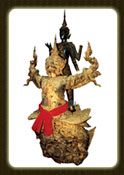
โขนเรือพระที่นั่งเดิม
The Royal Barge Procession took place during the royal progress of His Majesty King Mongkut (Rama IV) for the coronation ceremony on May 21, 1851. At that time, the barge had not yet been adorned with the figure of Narai and was still known by its original name, Mongkol Suban.
It appeared once again in the Royal Barge Procession held for the investiture ceremony of His Royal Highness Crown Prince Maha Vajirunhis, the Siamese Crown Prince, on January 19, 1886, during the reign of His Majesty King Chulalongkorn (Rama V).
The attire of the royal officials and oarsmen assigned to the barge was recorded in the Royal Chronicles of the Rattanakosin period, in the section describing King Mongkut’s royal progress by water in 1851, as follows:
“The royal officials acted as escort vessels, wearing purple tunics with gold-trimmed headdresses. Each barge was manned by 65 oarsmen, who wore felt shirts with gold trim, petal-shaped hats, and trousers with flared hems, and used gilded oars.”
It is presumed that the original Narai Song Suban barge deteriorated over time, as there is no record of its participation in subsequent Royal Barge Processions. Only the prow carving has survived, preserved by the Ministry of the Navy until 1953, when it was entrusted to the Fine Arts Department for safekeeping at the National Museum, where it remains today.
The prow of the Narai Song Suban is considered a masterpiece of early Rattanakosin craftsmanship, particularly during the reign of King Nangklao (Rama III). It features intricate wood carving, gilding, and glass inlay work, which reached a highly developed artistic standard, including innovations in glass decoration and patterning.
Moreover, the prow holds profound symbolic significance for the Thai monarchy. Its elegant form reflects ancient Thai beliefs in honoring the sovereign as a devaraja, an incarnation of the divine according to Brahmanical cosmology, integrated with Buddhist principles and Thai cultural traditions.
Thus, the construction of a barge featuring the Narai Song Suban prow was commissioned by the Royal Thai Navy in homage to His Majesty the King on the occasion of the 50th anniversary of His Majesty’s accession to the throne on June 9, 1996. This act was considered fitting, as it both honored the King and reinforced His Majesty’s royal prestige in accordance with the customs and beliefs long upheld by the Thai people.
Purpose of the Construction:
The primary objective of this project was to honor His Majesty the King by building a new royal barge adorned with the auspicious figure of Narai standing on Phaya Suban. This single vessel serves as a secondary royal barge, with its throne deck comparable to the Anantanagaraj and Enekachat Phuchong royal barges.
In addition, the project aimed to preserve Thailand’s artistic and cultural heritage by constructing a new royal barge featuring the prow of Narai standing on Phaya Suban, based on the original models crafted by artisans of the early Rattanakosin period during the reigns of King Nangklao (Rama III) and King Mongkut (Rama IV). The original barge had deteriorated over time, leaving only the prow, which includes the figures of Phaya Suban and Narai, still in good condition.
Importantly, this initiative helps conserve the barge for use in royal ceremonial processions, enhancing the completeness of the flotilla, while also safeguarding the craftsmanship of early Rattanakosin artisans from being lost.
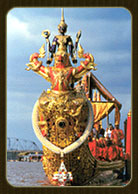
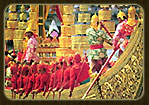
His Majesty King Bhumibol Adulyadej graciously bestowed the name of the newly constructed royal barge, the first to be built during His reign, as “Royal Barge Narai Song Suban, King Rama IX.” It serves as a symbol of His Majesty’s royal authority and as an enduring honor for the kingdom for generations to come.
The committee responsible for constructing this royal barge consisted of officers from the Royal Thai Navy and senior officials from the Fine Arts Department, who jointly studied the feasibility of carrying out the project in accordance with the objectives of the Navy as follows:
The new royal barge, featuring the prow of Narai standing on Phaya Suban, was designed to match the dimensions of the original vessel, measuring 3.20 meters in width, 44.30 meters in length, with a draft of 1.10 meters, and weighing 20 tons.
As for the oarsmen, although the original barge used 65, it was decided to reduce the number to 50 for the following reasons:
This allowed more space for the throne deck and the display of ceremonial ornaments, providing a grander arrangement befitting a royal barge. Fifty oarsmen were considered sufficient to propel and maneuver the vessel safely while maintaining a speed comparable to other royal barges in the Royal Barge Procession. The Suphannahong royal barge, of similar size, also uses only 50 oarsmen, so it was deemed appropriate that the new barge should not exceed this number. Furthermore, using 50 oarsmen symbolically corresponded to the 50th anniversary of His Majesty King Bhumibol Adulyadej’s accession to the throne.
Regarding the prow, the Navy initially considered restoring the old prow, but after careful review, it was determined that constructing a new prow would be more suitable. This would allow historical records to show that the new royal barge was entirely built during the reign of His Majesty King Bhumibol Adulyadej.
In planning the new prow, the Navy consulted with the Fine Arts Department and agreed to improve the design beyond the original, refining the chest and beak of the Garuda and raising the prow by approximately 50 centimeters to enhance its grandeur, consistent with other royal barges. Thus, the height of the prow was increased from 3.85 meters to 4.35 meters, achieving proportions that harmonize with the stern and enhance the overall aesthetic of the vessel.
Construction Process of the Royal Barge
The Royal Thai Navy coordinated with the Fine Arts Department to produce a full-scale (1:1) line drawing of the prow, without decorative details, which was provided to the Naval Dockyard to create a wooden model for commissioning the carving of the decorative patterns. The Navy supplied the timber needed for both the construction of the barge and repairs according to the project plan.
For the design of the royal barge, the Navy developed the structural framework and various components, while the Fine Arts Department created the decorative carvings. Simultaneously, the throne deck (kan ya) was constructed and completed in March 1995. For the stern, the Naval Dockyard prepared the timber for carving, including the four hull sides. Once the prow, hull, throne deck, stern, and hull side carvings were completed, the Navy assembled all parts together, a process that took approximately seven months, finishing around October 1995. An additional 15 days were reserved for minor adjustments if necessary.
Specifications of the Royal Barge Narai Song Suban, King Rama IX
Dimensions of the hull
Overall Length (L.O.A.)
Load Waterline Length
Full Load Waterline Length (L.W.L.)
Beam of the hull (BMLD)
Depth of the hull (DMLD)
Draft (T)
Full Load Displacement (FL)
FL.
Oarsmen
44.30 meters
34.60 meters
3.20 meters
1.10 meters
0.40 meters
20 tons
50 oarsmen
Construction Cost of the Royal Barge
The construction cost of the royal barge was approximately 11.7 million baht, with the Royal Thai Navy initially responsible for all expenses. Upon completion, the total expenditure amounted to 15 million baht. No government budget was used; instead, funding was primarily provided by Siam Commercial Bank Public Company Limited, along with contributions from various organizations and the Thai public.
ลักษณะการวางฉัตร
กัญญาเรือ
ลวดลายบัลลังก์กัญญา
หลังคากัญญา
ส่วนที่เป็นศิลปกรรม
ส่วนที่เป็นโครงและหุ่นลำเรือ
เฉพาะโขนเรือนารายณ์ทรงสุบรรณ
เว้น 2 กระทงต่อ 1 ฉัตร
เช่นเดียวกับเรือพระที่นั่งสุพรรณหงส์
ออกแบบลวดลายใหม่
ออกแบบลายทองแผ่ลวดใหม่
กรมศิลปากรรับผิดชอบ โดยกองทัพเรือออกค่าใช้จ่าย
กองทัพเรือรับผิดชอบทั้งหมด
เนื้อไม้ แกะสลัก ลงรักปิดทองประดับกระจก
Artistic Features
The designer drew inspiration from the limited surviving decorative patterns of the original Narai Song Suban prow. Historical evidence shows that the barge was entirely carved from wood, lacquered, gilded, and inlaid with glass, featuring traditional pudtan-patterned motifs throughout the vessel.
Stern of the Barge
The stern resembles that of the Anantanagaraj royal barge, but the upper part of the aft deck is adorned with a Garuda-tail ornament, and the tip of the stern features a decorative Garuda tail fin. The underside of the tail section is carved with Garuda horns.
Hull Color of Narai Song Suban
The hull is painted red, following the original color scheme.
Throne Deck Canopy of Narai Song Suban
The canopy is decorated with gold leaf patterns, featuring lantern and triangular motifs on a red background, surrounded by curtain-like patterns in gold leaf. The decorative motifs match those of the roof.
Throne Deck (Kan Ya)
The throne deck features carvings lacquered, gilded, and inlaid with glass. The back panel is carved with the Garuda grasping a naga motif, lacquered, gilded, and decorated with glass. The interior design follows the style of the Suphannahong royal barge.
Support Beads for the Roof Beams
These are carved wooden posts, lacquered, gilded, and inlaid with glass, consisting of two posts painted black.
Curtains and Oars
Both are lacquered and gilded.
Note: The construction period was from June 1, 1994, to April 30, 1996. The Royal Barge Narai Song Suban participated in the Royal Barge Procession for the royal Kathin ceremony at Wat Arun, and for the 50th anniversary of His Majesty King Bhumibol Adulyadej’s accession to the throne in 1996.
Lieutenant Commander Thongyoi Saengsinchai composed the winning poem for the royal barge ode contest, organized by Siam Commercial Bank Public Company Limited, as part of the project to construct the Royal Barge Narai Song Suban, King Rama IX (from Rangsit Informatics Journal, Vol. 2, No. 1, June–December 1996: pp. 66–72).
Royal Barge Ode (Kap Hao Ruea)
Royal Barge Narai Song Suban, King Rama IX

2. Kanchanaphisek Lighthouse, Promthep Cape
On the auspicious occasion of the 50th anniversary of His Majesty King Bhumibol Adulyadej’s accession to the throne in 1996, the Royal Thai Navy launched seven projects as a tribute, offered with utmost respect, to honor His Majesty during the Kanchanaphisek Royal Ceremony.
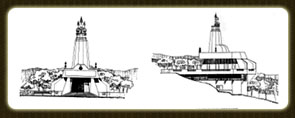
The project to construct the Kanchanaphisek Lighthouse at Promthep Cape, Phuket Province, was one of seven initiatives undertaken by the Royal Thai Navy in collaboration with the Thai people. Admiral Winyan Santivisit, Deputy Commander-in-Chief of the Royal Thai Navy, served as Chairman of the project committee. The lighthouse was built as a respectful tribute on this highly auspicious occasion, with participation from government agencies and the people of Phuket, collectively demonstrating their loyalty and devotion in the creation of the Kanchanaphisek Lighthouse.
The construction of the Kanchanaphisek Lighthouse at Promthep Cape was carefully considered for its suitability. Besides the location itself, the Promthep Cape viewpoint in Rawai Subdistrict, Mueang District, Phuket, is renowned worldwide. The Royal Thai Navy therefore decided to construct the lighthouse in collaboration with the people of Phuket to honor His Majesty King Bhumibol Adulyadej and requested the royal permission to name it “Kanchanaphisek Lighthouse, Promthep Cape,” which was graciously granted.
The construction budget was approximately 24 million baht, with contributions from Thai citizens from all walks of life to help honor His Majesty and express loyalty. This permanent structure is expected to provide numerous benefits in the future. The Naval Civil Engineering Department commissioned Sap Sin Satthahip Limited Partnership for construction, which began on December 26, 1995, with a planned delivery within 180 days. The lighthouse was completed and officially inaugurated in July 1996. The details of the lighthouse’s design and significance are as follows:
1) Design of the Lighthouse: The front features a stairway leading to an entrance hall, with an open rear area. Above the entrance is the emblem celebrating the 50th anniversary of His Majesty’s accession to the throne. On either side of the emblem are national flags, and below it is a 1.50 × 7.00 meter display showing the running-light system. The ground floor houses the lantern room and a hydrological exhibition room, including a commemorative plaque listing donors, visible upon entering. A semicircular staircase rises from the lantern room to the upper deck, offering panoramic views of the surrounding area, with a spiral staircase leading up to the lantern and its observation balcony.
2) Materials Used: High-quality, durable, and aesthetically pleasing materials were employed. The structure is reinforced concrete faced with granite. The lighthouse features double-layered reflective gold glass, cut clear glass, gold-colored aluminum frames, gilded or gold-plated metal elements, and brass accents.
3) Characteristics, Dimensions, and Significance: The lantern is made of cut clear glass assembled into a ten-sided crystal shape. Inside, a rotating lamp shines light in all directions, symbolizing His Majesty’s radiance illuminating the realm. The base supporting the lantern consists of ten gilded or gold-plated metal strips, representing the ten virtues of kingship on each side: 1. Charity (Dana), 2. Morality (Sila), 3. Generosity (Bhrijaka), 4. Honesty (Achava), 5. Gentleness (Mattva), 6. Perseverance (Tapah), 7. Non-anger (Akkoṭha), 8. Non-harming (Avihimsa), 9. Patience (Khanti), and 10. Justice (Avirodhana). These inscriptions include the royal writings of King Vajiravudh regarding the ten royal virtues as recorded in Buddhist scriptures, exemplifying the conduct that the monarch has faithfully observed. His Majesty King Bhumibol Adulyadej has practiced all these virtues fully according to royal tradition since his accession to the throne.
The gilded or gold-plated elements symbolize the Kanchanaphisek wings. The lighthouse height is 50 feet, representing the 50th year of His Majesty’s reign. The base diameter is 9 meters, symbolizing King Rama IX of the Chakri Dynasty. The light is visible from 39 kilometers, signifying the year 1996 when His Majesty celebrated the 50th anniversary of his reign.
On April 12, 1996, His Majesty King Bhumibol Adulyadej graciously commanded that His Royal Highness Crown Prince Maha Vajiralongkorn lay the foundation stone of the Kanchanaphisek Lighthouse at Promthep Cape, Rawai Subdistrict, Mueang District, Phuket, on His behalf. From then on, the Promthep Cape viewpoint has been graced with this precious construction, erected by the Thai people in collaboration with the Royal Thai Navy, serving as a lasting structure of both practical and symbolic value.
3. New Class of Royal Decorations: “Direk Khunaphon”
Royal decorations refer to ornaments or insignia bestowed by the monarch upon individuals to be worn as adornments or to decorate clothing.
In Thailand, royal decorations have existed since the Ayutthaya period, but at that time, they were not widely granted to the general populace. During the reign of King Chulalongkorn (Rama IV), a royal initiative was made to establish two classes of royal decorations: the “Thai Crown Class” and the “White Elephant Class,” to be conferred upon government officials, setting a precedent for subsequent royal traditions.
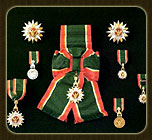
In 1991, His Majesty King Bhumibol Adulyadej graciously granted royal permission for the government to establish a new class of royal decorations. These decorations were intended to honor merchants and citizens who had rendered special services benefiting the government. The royal decoration was named “Direk Khunaphon,” signifying a highly commendable order of merit.
The origin of creating the new class of royal decorations arose from the fact that previously, individuals who performed meritorious deeds—whether government officials receiving royal decorations according to their seniority or private citizens who contributed to charitable causes—were all awarded the Thai Crown or White Elephant decorations, just like government officials. This practice, however, caused certain issues.
The reason was that government officials might feel resentful, having to serve for many years to receive each royal decoration, while donors contributing large sums could be awarded decorations in higher ranks than those who had long served. In addition, there was another group of individuals who had rendered meritorious services bringing prestige to the nation but could not meet the criteria for the Thai Crown or White Elephant decorations.
Therefore, in 1991, the government requested a new class of royal decorations, separate from the Thai Crown and White Elephant classes, to be conferred upon individuals who had rendered distinguished services to the nation, religion, and people, without any time requirement and not as part of official duties. His Majesty King Bhumibol Adulyadej graciously granted the name and explanation for the decoration as “Direk Khunaphon,” meaning the prosperity of the land. After the Royal Decorations Act was promulgated in 1991, it took four more years to issue the Royal Decree establishing the criteria for the award. Thus, in 1995, the Royal Decree on the conferral of the Direk Khunaphon decoration was announced, coinciding with the Kanchanaphisek ceremony celebrating the 50th anniversary of His Majesty’s reign.
The Direk Khunaphon decoration features a Garuda and bears the royal cypher “P.R.” on the back of the insignia and star, indicating that it was graciously created by His Majesty specifically to honor meritorious service in the present reign.
The Direk Khunaphon decoration is divided into seven classes:
Class 1: Pathom Direk Khunaphon
abbreviated: P.K.
Class 2: Thutiya Direk Khunaphon
abbreviated: T.K.
Class 3: Tatiyadirek Khunaphon
Abbreviation: T.P.
Class 4: Chatutthadirek Khunaphon
Abbreviation: Ch.P.
Class 5: Benjamadirek Khunaphon
Abbreviation: B.P.
Class 6: Gold Medal Direk Khunaphon
Abbreviation: R.T.P.
Class 7: Silver Medal Direk Khunaphon
Abbreviation: R.N.P.
Criteria for Requesting the Royal Decoration
1. Individuals who have rendered outstanding services to the nation, religion, and the people, with their achievements certified by the government agency benefiting from their work. Normally, the initial request is for the R.N.P. class. If further meritorious deeds are performed, an individual may request a promotion to higher classes sequentially, with a minimum interval of 5 years between promotions.
2. Individuals who perform meritorious deeds by donating assets for public benefit in the fields of religion, education, public health, medicine, community development, social welfare, or national security. The criteria specify the method for certifying such donations and determine the class of the decoration according to the value of assets donated for public benefit.
R.N.P.
R.T.P
B.P.
Ch.P.
T.P.
T.K.
P.K.
– 100,000 Baht
– 200,000 Baht
– 500,000 Baht
– 1,500,000 Baht
– 6,000,000 Baht
– 14,000,000 Baht
– 30,000,000 Baht
(from Rangsit Information Journal, Vol. 2, No. 1, January – June 1996: 62-65)
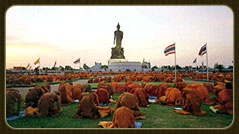
4.Buddhamonthon
In the Buddhist year 2500 (1957), during the reign of His Majesty King Bhumibol Adulyadej (Rama IX), Buddhism had prospered for 2,500 years. Vesak Day, the day marking the birth, enlightenment, and passing away of the Buddha—all occurring on the full moon of the sixth lunar month—fell on May 13, 1957, an extraordinary coincidence. The committee organizing the celebration of the 25th Buddhist century decided that a central Buddhist park should be established in the country, grander than any previous religious site. The government at that time approved the project and resolved to construct “Buddhamonthon” on an open area of 2,500 rai, located at the border area connecting Bang Krathuek Subdistrict, Sam Phran District, and Salaya Subdistrict, Nakhon Chai Si District, Nakhon Pathom Province.
His Majesty King Bhumibol Adulyadej (Rama IX) was respectfully invited to preside over the foundation-laying ceremony at the site of the principal Buddha image at Buddhathon. He also graciously commanded that a replica of the walking Buddha image, which would be enshrined at Buddhathon, be placed at the ceremonial area in Sanam Luang during the celebration of the 25th Buddhist Century.
Objectives of Establishing Buddhathon
- To serve as a center for research and study of Buddhism.
- To act as a place of Buddhist worship and a commemorative site, marking the 2,500-year prosperity of Buddhism in Thailand in 1957
- To be a unifying spiritual center for the Thai people.
- To provide a serene and peaceful environment for public recreation and relaxation.
- To function as a center for the study and practice of Vipassana meditation.
- To serve as the central administrative office for the Sangha of Thailand.
- To be a hub for the propagation of Buddhism.
- To provide a forum for exchanging ideas and teachings among Buddhists.
His Majesty King Bhumibol Adulyadej graciously bestowed the name of the principal Buddha image at Buddhathon as “Phra Si Sakkaya Thotphol Yan Prathan Buddhathon Suttharasan.”
On May 23, 1983 (B.E. 2526), His Majesty visited the site personally, accompanied by Her Royal Highness Princess Maha Chakri Sirindhorn, to examine the construction site of the rear mandapa behind the principal Buddha image.
On December 21, 1982 (B.E. 2525), His Majesty graciously commanded Her Royal Highness Princess Maha Chakri Sirindhorn to preside on His behalf over the consecration ceremony of the principal Buddha image and to officially open Buddhathon for public worship and use according to its intended purposes.
The construction of Buddhathon was completed in time to coincide with the grand royal celebration of His Majesty’s 60th birthday in 1987 (B.E. 2530).
Since 1983 (B.E. 2526), formal merit-making ceremonies on important Buddhist observances have been held at Buddhathon. His Majesty graciously commanded members of the royal family to preside on His behalf during these ceremonies, participating alongside the public in the afternoon of each significant Buddhist day, namely Magha Puja, Visakha Puja, and Asalha Puja.
5. Santi Chai Prakan Throne Hall and Phra Sumen Fort
Santi Chai Prakan Park, surrounding Phra Sumen Fort, is a public riverside park along the Chao Phraya River, covering an area of 8 rai. It was developed as part of the Rattanakosin Island area improvement project, with beautifully designed and landscaped features that cascade harmoniously with the historic fort. The park also preserves the last mangrove trees (Lumnitzera littorea), a symbol of the local area, allowing the community to enjoy them along the riverbank.
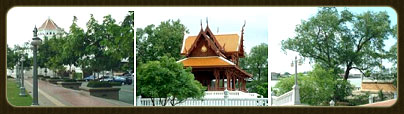
The surrounding scenery of Santi Chai Prakan Park
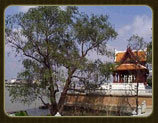
Santhichai Prakan Throne Hall and the Lamphu tree, which gave the name “Bang Lamphu,” with only one large tree remaining in the image.
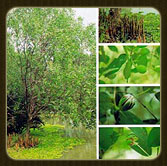
Lamphu Tree (Cork Tree)
Scientific name: Sonneratia caseolaris Gaertn.
There is also a riverside walkway along the Chao Phraya River extending to beneath the Phra Pinklao Bridge, with seating areas at intervals for watching the sunset.
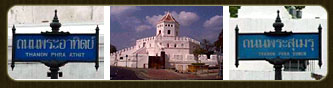
Phra Sumen Fort is located between Phra Athit Road and Phra Sumen Road.
Pom Phra Sumen is one of the two remaining original city forts, alongside Pom Mahakan. It was constructed with the help of 5,000 Laotian laborers from Vientiane. The other 12 forts—Chakphet, Phisuea, Phra Chan, Phra Athit, Mahachai, Mahaprab, Mahayak, Maharit, Yukolthorn, Isinthorn, Suea Thayan, and Mu Thaluang—have deteriorated or been demolished.
Pom Phra Sumen has an octagonal shape with a two-tiered base. The first tier allows a walkway around the fort, while the walls of the second tier are styled like bai sema (sacred boundary markers). Doors and windows are rectangular, with arched air vents spaced around the walls. Cross-shaped openings are carved into the walls, and the wooden roof was plastered. The battlements and roof were damaged during the reigns of King Rama V and Rama VII. In 1959, the Fine Arts Department restored the fort, and it was restored again in 1981 for the 200th anniversary of Bangkok, based on photographs from the reign of Rama V.
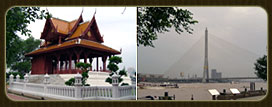
From Phra Thinang Santi Chai Prakan, visitors can enjoy views of the Chao Phraya River and the Rama VIII Bridge.
Phra Thinang Santi Chai Prakan
In this public park stands Phra Thinang Santi Chai Prakan, a completely wooden structure beautifully carved. It was presented as a gift from the people to His Majesty King Bhumibol Adulyadej (Rama IX) on the auspicious occasion of his 72nd birthday in 1999.
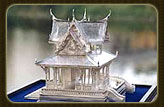
The Gate of the Palace of Krom Luang Chakrabongse Jetta
The Gate of the Palace of Krom Luang Chakrabongse Jetta, or the gate on Phra Sumeru Road, is the remaining part of the palace of His Royal Highness Prince Krom Luang Chakrabongse Jetta, the younger brother of King Buddha Yodfa Chulaloke the Great (Rama I). It also served as the original residence of the Front Palace of Krom Phra Ratchawang Bowon Mahasurasunthorn during the reign of King Rama I.
The brick arch gate is 4 meters high, 1.8 meters wide, and 3.8 meters long. In the center, there is a wooden shrine inscribed with “Krom Luang Chakrabongse Jetta.” (Rattanakosin Cultural Road: 220th Anniversary Celebration, Bangkok: Ministry of Education, 2002: 89–90)
6. Phra Buddha Mahawachiruttamophat Satsada
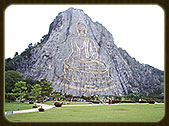
“Phra Buddha Mahawachiruttamophat Satsada” is the royal-bestowed name given by His Majesty King Bhumibol Adulyadej (Rama IX), meaning that the Buddha is a glorious and radiant teacher, exalted like the Great Vajira.
The purpose of constructing Phra Buddha Mahawachiruttamophat Satsada was to create a stone-carved Buddha statue representative of King Rama IX’s reign and to honor His Majesty King Bhumibol Adulyadej on the auspicious occasion of his 50th year on the throne. Initially, in 1984 (B.E. 2527), Somdet Phra Nyanasamvara, the Supreme Patriarch of Thailand, began studying the feasibility of carving a Buddha image on the cliffs of Khao Chi Chan, located in Bang Lamung District, Chonburi Province, approximately 2 kilometers south of Wat Yannasangwararam. Khao Chi Chan rises about 169 meters and had previously been partially blasted for stone extraction over many years. The remaining steep cliff was deemed suitable for a Buddha carving, which would not only serve as a religious monument but also help preserve the natural state of Khao Chi Chan.
By November 1990 (B.E. 2533), the Special Committee for Coordination of Royal Projects (K.P.R.) appointed a committee to define the design of the cliff-carved Buddha. They tasked the Department of Mineral Resources to conduct surveys in collaboration with stone-carving experts from Sichuan Province, China, to assess the cliff’s suitability. It was determined that only low-relief or line-style carving was feasible on the natural rock surface. The committee then proposed the project for royal consideration. On May 26, 1992 (B.E. 2535), after His Majesty graciously approved the Buddha design, Somdet Phra Nyanasamvara invited His Royal Highness Crown Prince Maha Vajiralongkorn to serve as the honorary chairman of the project. Simultaneously, K.P.R. arranged for the use of the Royal Thai Navy (Sattahip Base) and the Department of Lands for project implementation.
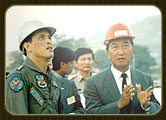
His Royal Highness Crown Prince Maha Vajiralongkorn directly oversaw the construction work of the project.
The Phra Phuttha Mahawachiruttamophat Satsada is a seated Buddha image in the subduing Mara posture (Maravijaya), modeled after Phra Phuttha Navaratchabophit. The Buddha statue stands 109 meters high, with the lotus base bringing the total height to 150 meters and a width of 100 meters. Professor Kanok Boonphotkaew, Deputy Director-General of the Fine Arts Department and the designer, explained that the design concept aimed to create a statue with aesthetically pleasing proportions according to Buddhist iconography. The design blends Sukhothai and Chiang Saen artistic styles, with the Buddha’s form inspired by the Sukhothai style, characterized by graceful, soothing lines. Traditionally, Sukhothai Buddha images do not have a lotus base, but the designer combined this with the Chiang Saen style lotus base to create a unique fusion. The reasons for choosing the subduing Mara posture is that most Sukhothai-era Buddha images are depicted in this posture, which also fits harmoniously with the proportions of the cliff face where the statue is carved.
In the initial design, the Buddha image was created in low relief. However, His Majesty the King graciously advised that it should be executed as a line drawing instead, but with depth and clarity so that the figure of the Buddha could be clearly seen from a distance. This approach would be better than creating it in low relief, which would pose problems in terms of maintenance and durability, as the work was to be carved on a limestone mountain.
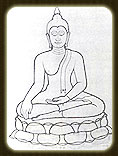
The landscape design for the surrounding area, covering approximately 193 rai, was based on four main concepts. The stone courtyard in front of the Buddha image was designed in accordance with the royal guidance and ideas of His Majesty King Rama IX, who emphasized the prevention of danger from rocks near the Buddha image. A large two-tiered lotus pond was created, following the natural contours of the terrain, with a waterfall linking the two levels to create harmony and highlight the prominence of the Buddha image. Additionally, the area was designed as a rock garden, utilizing stones already present on the site and arranging them to form a harmonious composition.
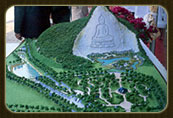
The soil area in front of the Buddha image, surrounded by the entrance road along the cliff, was adjusted into a hill with three access routes—from the front road, from the parking area behind, and from the stone courtyard in front of the Buddha image. It was designated as the site for a multipurpose building and a viewpoint pavilion. The Royal Forest Department also planted a forest imitating natural conditions, following the beautiful landscape design of the Department of Public Works, consisting of 18 tree species related to the Buddha’s life and 9 auspicious plant species.
The trees mentioned in the life of the Buddha include the Bodhi tree, Nigrodha or Banyan tree, Cratoxylum, Diospyros, Java plum, tree cotton, Dalbergia, Acacia catechu, Neem, Hopea odorata, Mango, Indian gooseberry, Orange, Parichat tree, Coral tree, Bamboo palm, Cotton tree, and Sala tree.
The auspicious plant garden features trees such as Mitrephora, Teak, Coral tree, Variegated coral tree and its related species, Golden shower tree, Cassia bakeriana, Rosewood, Jackfruit, Tonbadan, and Bamboo with golden stems.
The area to the right side of the Buddha image was developed as a public service zone, comprising a large lotus pond surrounded by multipurpose pavilions, rest pavilions, a parking area, and a lawn shaded by large trees planted in rows.
For the construction of the Buddha image, modern technological and scientific advancements were applied and integrated into the artistic process. The design was traced using laser projection onto the cliff surface and then outlined with colored powder before being sculpted by controlled explosions according to the designated line drawing.
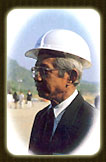
Kanok Bunphokaeo
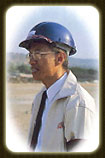
Assoc. Prof. Dr. Pichet Limsuwan
Associate Professor Dr. Pichet Limsuwan, a lecturer at the Faculty of Science, King Mongkut’s University of Technology Thonburi, who served as the head of the laser operation team, explained the process of creating the image with laser light. He stated that it involved the coordination of two systems: a computer and an argon laser that emitted a green light, which was the most clearly visible color.
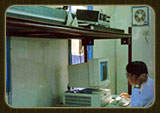
The process began by inputting the designed image of the Buddha into a scanner. Once the image appeared on the computer screen, any desired adjustments to details could be made quickly. After the Buddha image was saved in the computer, it was programmed to be sent to another scanner system, which was equipped with two motors.
Each motor was fitted with a small mirror approximately 1 millimeter in size. The motors rotated the mirrors at a speed of over 600 times per second, following the rotation pattern programmed in the computer.
The two mirrors on the scanner served to reflect the argon laser beam emitted from the generator. The programmed rotation of the mirrors caused the laser beam to be reflected onto the projection surface—the cliffs of Khao Chi Chan—in the desired patterns. The distance between the laser device and the projection surface depended on the size of the image to be displayed. For this operation, the laser laboratory was set up approximately 215 meters away from the Khao Chi Chan cliffs, which served as the projection surface.
The laser used in this operation was imported from the United States by International Blaster Co., Ltd., a company specializing in cliff leveling and carving. It was the most powerful laser in use in Thailand at the time, capable of producing a laser output of up to 20 watts and operating continuously for up to three hours.
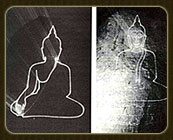
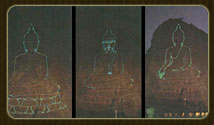
Although the laser equipment was limited to continuous operation of only three hours, it was able to complete the projection of the Buddha image onto the cliff within just two nights, from 7:00 p.m. to 1:00 a.m. on January 6–7, 1996.
As for preparing the cliff surface to be smooth and suitable for laser projection, the cliffs of Khao Chi Chan, being composed of brittle limestone, had been weakened and damaged by previous blasting.
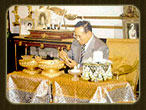
He enshrined a relic of the Buddha to be placed in the chest of the Buddha image, Mahavajirauttamobhasasat.
The collapse or fracturing of any part of the cliff could occur quite easily, posing a danger to the workers. Therefore, the Faculty of Engineering at the Asian Institute of Technology (AIT) advised the contractor to reinforce the cliff with steel rods, sized and positioned according to engineering calculations.
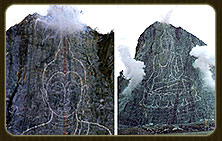
This was done to strengthen the cliff and improve its adhesion before sending workers up to paint along the laser-projected lines using powdered and plastic paints.
After the line drawing was completed and finalized, the cliff was carved according to the designated dimensions. Large-scale lines were rough-carved using a 45 Cfm drill, while finer details were completed with a drill known as a Hand Breaker to ensure precision.
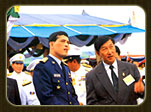
On January 24, 1996, His Royal Highness Crown Prince Maha Vajiralongkorn presided over the ceremony to press the detonator for the carving of the top of the ushnisha of the Buddha image, Mahavajirauttamobhasasat, marking the commencement of the work. The construction was carried out and completed in time to participate in the royal celebration on June 9, 1996. (From Rangsit Information Journal, Vol. 2, No. 1, June–December 1996: 73–76)
7. Phra Buddha Nirrokantaharn
His Majesty King Rama IX was the center of love and devotion for all Thai people. When He fell ill with heart disease in March 1995, it caused deep concern among the entire nation. When He recovered, it brought overwhelming joy to all Thais. Therefore, the Ministry of Interior, together with Thai people from all walks of life, united to commission a gold Buddha image to be presented to His Majesty. This was intended to protect and safeguard the King, ensuring His well-being and freedom from illness, so that He could enjoy full health indefinitely. This Buddha image is considered to have been created from the hearts of Thai people from every region and profession.
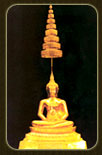
The Ministry of Interior submitted the proposal to commission this Buddha image to the Royal Secretary (Mom Luang Tawisak Ladawan), who kindly advised that it was appropriate to first consult with Somdet Phra Nyanasamvara, the Supreme Patriarch, to determine its suitability before presenting it for royal consideration. The Supreme Patriarch approved the creation of a single gold Buddha image, granting royal permission to model it after Phra Buddha Nirrokantaharn Chaiwat Chaturatis, to be presented to His Majesty the King.
His Majesty graciously conferred the name of the Buddha image as “Phra Buddha Nirrokantaharn.” The gold image measures 19 inches across the lap in the meditation posture, symbolizing that only one image was created to be offered to His Majesty King Rama IX during the reign of Somdet Phra Nyanasamvara, the 19th Supreme Patriarch of the Rattanakosin era. The base was set at 30 inches in width, with a total height from the base to the top of the ushnisha of 40 inches. Modeling work began on May 5 and was completed before December 4, 1995, to present it in time for the King’s birthday that year.
The nine-tiered gold canopy adorned with nine precious gemstones was designed and supervised by Ajarn Montri Chanthaphan of the Pohchang School of Arts. The design process took two weeks, creating a nine-tiered embossed gold canopy set with genuine nine-colored gemstones in a peacock feather motif. It was estimated to require 8 kilograms of gold and 3,427 gemstones, with completion scheduled by November 29, 1995.
For funding, the Ministry of Interior collected 61.57 kilograms of gold, purchased 65.95 kilograms from the Customs Department, and 5 kilograms from private donors, totaling 132.52 kilograms. After deducting gold used for wiring and leftover scraps from decorating the Buddha image, totaling 19.22 kilograms, the completed image weighed 113.30 kilograms. The remaining 19.22 kilograms of gold was intended to be used to create a commemorative medallion featuring His Majesty, with proceeds donated to the Chaipattana Foundation.
In addition, the Ministry of Interior raised 27.5 million baht in cash donations.
Khun Chantip Glinsophon presented a gold Buddha image in the blessing posture, measuring 3 inches across the lap and weighing approximately 1 kilogram, to be enshrined inside the main Buddha image. The Ministry of Interior also requested royal permission from His Majesty the King to enshrine a Buddha relic within the image. The total cost for creating Phra Buddha Nirrokantaharn amounted to 31,581,141.08 baht.
The casting ceremony of the Buddha image was graciously authorized by Her Majesty Queen Sirikit, the Queen Mother, who appointed His Royal Highness Crown Prince Maha Vajiralongkorn to preside over the casting on November 23, 1995, at 4:45 p.m., followed by the Buddha consecration ceremony on November 30, 1995, at 4:30 p.m. at the ubosot of Wat Phra Sri Rattana Satsadaram.
For the presentation of Phra Buddha Nirrokantaharn to His Majesty King Rama IX, His Majesty graciously granted the royal occasion for the Prime Minister (Mr. Banharn Silpa-archa), the Minister of Interior, the President of the Supreme Court, the Speaker of the House of Representatives, the President of the Senate, all provincial governors, and the people to pay homage and offer the Buddha image on December 4, 1995, at 4:00 p.m. at Dusidaram Hall, Chitralada Garden. His Majesty expressed His appreciation for the offering, saying: “… I am grateful for bringing this sacred Buddha image named Nirrokantaharn. I understand it is a Buddha image that protects against all dangers, especially diseases, which is beneficial as it reminds us to maintain good health …”
8. Suan Luang Rama IX
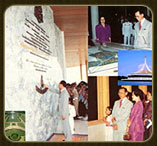
Bangkok, together with the Suan Luang Rama IX Foundation and the Thai people, established Suan Luang Rama IX to pay homage and celebrate the 60th birthday of His Majesty King Bhumibol Adulyadej in 1988. The garden was intended to serve as another “green lung” for Bangkok, in accordance with the royal initiative, and to act as a center for botanical knowledge. It was also designed to cultivate appreciation for trees and nature, while providing a remaining area of pollution-free space within the city.
Bangkok allocated existing land and exchanged additional land with nearby private owners, resulting in a total area of approximately 500 rai for the construction of Suan Luang Rama IX.
The garden was funded through public donations of about 100 million baht via the Suan Luang Rama IX Foundation, with Bangkok Metropolitan Administration contributing an additional 120 million baht. It is considered the first public park in Thailand built through the cooperation of the people, presented in homage to His Majesty the King. Construction began in 1982 and was completed on December 1, 1987.
Suan Luang Rama IX is located in Nong Bon Subdistrict, Prawet District, Bangkok, with Sukhumvit 103 Road (Udomsuk Alley) running along the front and Srinagarindra Road at the back. The park has six entrances and covers 500 rai, divided into six main areas:
Area 1 is the Royal Tribute Zone, which includes the “Ratchamongkol Hall” and its surrounding precincts. The hall serves as a repository of stories about the King’s royal duties and accomplishments, as well as personal items graciously bestowed by His Majesty. Ratchamongkol Hall is considered a permanent structure representing a part of the history of the current reign.
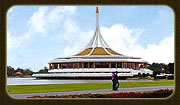
Ratchamongkol Hall is designed in a Thai contemporary style of the Rattanakosin era, reign of King Rama IX. The building is a regular nonagon with a high roof supported by radio-style columns, decorated with golden yellow glazed tiles, the color of the King’s birthday. It is situated on a three-tiered hill. Inside, there are nine rooms with glass walls, allowing the public to view the exhibits. Outside, models of royal initiative projects and personal items graciously bestowed by His Majesty are displayed. The central area of the building is a large hall used for musical performances or film screenings, accommodating approximately 500 people.
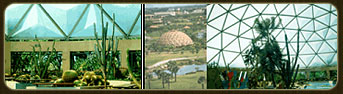
Area 2 is the Botanical Garden, covering approximately 184 rai in the northern section. It is Thailand’s first fully developed botanical garden, organized according to taxonomic and ecological principles, which are the core of a metropolitan-level public park. The garden houses a wide variety of Thai plant species, including rare trees and medicinal herbs. There are greenhouses for foreign plants and species requiring temperature control, as well as international gardens representing Spain, France, Italy, and England. This section serves academic purposes, providing a research and educational resource on botany for students, researchers, and the general public.
Several buildings have been constructed within this area, including the Chiodessik Dome, an indoor plant building, a Japanese garden, and an orchid house. The Chiodessik Dome is dedicated to desert plants, which are carefully maintained rather than left in their natural arid habitats. The dome roof is made of special materials to control the temperature, with thermometers maintaining internal conditions at around 40 degrees Celsius, hotter than outside. Inside, a wide variety of cacti from the United States, Japan, and Thailand are displayed, including species that grow in both tropical and cold regions. Currently, the collection includes over 200 species of cacti.
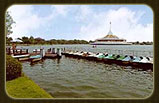
Area 3 is the Tarang Kaeo Pond, located at the center of the park and covering 45 rai. It serves as a water reservoir to help alleviate flooding in the inner city and is used for water sports and recreational activities. The pond also supports aquatic conservation.
Tarang Kaeo Pond is home to various fish species, including common carp, giant catfish, and tilapia. Some fish are over ten years old and were originally brought from private ponds, such as those of Major General M.R. Kukrit Pramoj, a former Prime Minister, artist, and writer, who, along with others, released these fish into the pond more than ten years ago.
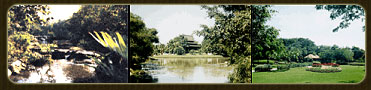
Area 4 is Romanee Garden, covering 49 rai in the eastern section. It serves as a recreational area designed to emulate the natural beauty of the local landscape, featuring waterfalls, streams, and ornamental plants. Various materials, plant species, and local symbols were incorporated to create a pleasing environment in harmony with the ponds and waterways within the park. Notable features include a Chinese Garden, built by the Chinese Embassy as a royal tribute to His Majesty King Rama IX, a stone wall garden decorated with beautiful stones, and a hillside garden planted with a variety of plant species.
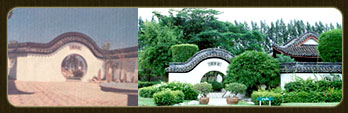
The Thai-Chinese Friendship Garden, called Zhiluoyuan Garden, is located in the southeastern part of Suan Luang Rama IX and covers over 2,000 square meters. The People’s Republic of China sent skilled craftsmen to build the garden in honor of His Majesty King Rama IX. Construction was carried out by the Chinese Garden Construction Company, Hangzhou branch, which sent 18 art and construction experts to supervise the work. The project took three months, from August 6 to November 5, 1988, with over 300 tons of construction materials transported in 17 containers by ship.
The name “Zhiluoyuan” was taken from the teachings of Confucius, meaning “one endowed with supreme wisdom and great compassion,” symbolically referring to His Majesty the King of Thailand, whose profound wisdom brings peace and happiness to the Thai people. Zhiluoyuan Garden thus stands as a symbol of lasting friendship between the Chinese and Thai peoples.
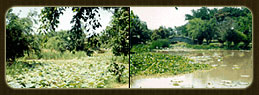
Area 5 is the Water Garden, adjacent to the public field and Romanee Garden, covering approximately 32 rai. This newly added garden features a stream suitable for boating, lined with trees on both sides, and serves as a collection of beautiful aquatic plant species.
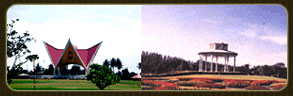
Area 6 is the Public Field, or the sports and multipurpose activity area, located in the southern section and covering approximately 43 rai. It features a large open field used for cultural and traditional performances, various sports activities, agricultural product competitions, and public sports training, as well as an outdoor performance stage.
(From Thairath Newspaper, November 24, 1987, by Chawarak Limpattampanee; Siam Rath Newspaper, November 27, 1988, by Sakdech Phitakchat; and Ban Muang, November 10, 2001, by Manu Jarryong)
9. Princess Srinagarindra Park
His Majesty King Rama IX issued a royal command to establish Princess Srinagarindra Park in 1993. The park is located behind Wat Anongkharam in Khlong San District, Bangkok, with the purpose of preserving historic buildings near the childhood home of Her Royal Highness Princess Srinagarindra. It serves as a museum honoring the Princess Mother and as a community-level public park. Mr. Daeng Nana and Mr. Lek Nana, the landowners, graciously donated four rai of land, which was placed under the ownership of the Chaipattana Foundation by royal command.
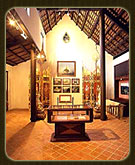
The construction of the park involved several agencies, including the Crown Property Bureau, the Office of His Majesty’s Principal Private Secretary, Non-Truengjai Company, the Fine Arts Department, the Royal Thai Air Force, Bangkok Metropolitan Administration, the Treasury Department, and the Chaipattana Foundation. The park was completed in July 1996.
The community-level public park is divided into two sections: the front and the inner area. It serves as a place for the public to relax and restore their health, participate in ceremonies or various activities, and study plant species.
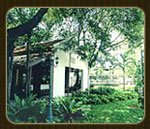
The front garden occupies the outer area surrounding the original residential buildings. It features a circular fountain with benches around it. The front area is planted with grass, flowering plants, and various ornamental species while preserving the original Bodhi and banyan trees. Benches are placed under the large trees and throughout the surrounding garden area.
The inner garden contains two museum buildings restored from historic structures and adapted as exhibition spaces. They house permanent exhibitions on the royal biography, duties, and leisure activities of Her Royal Highness Princess Srinagarindra, including low-relief stone carvings depicting her various royal projects. The interior features walkways covered with climbing plants surrounding a multipurpose courtyard, as well as a contemporary Thai-style pavilion (octagonal) for musical performances and other activities.
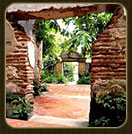
The site originally housed the residence of Chao Phraya Sriphiphat Rattanaratchakosathibodi (Phae Bunnag), the Director-General of the Treasury during the reign of King Chulalongkorn. The office building and the food and beverage service building, both restored, were renovated while preserving the original architectural features in their entirety.
The remains of the gate and walls of Chao Phraya Sriphiphat Rattanaratchakosathibodi’s residence have been preserved and are still visible.
“Original House” Replica
At one corner of the garden in front of the museum, a replica of the house where Her Royal Highness Princess Srinagarindra spent her childhood has been constructed. The interior of the replica is arranged according to the book “Mae Lao Hai Fang,” authored by Her Royal Highness Princess Galyani Vadhana, Princess of Naradhiwas.
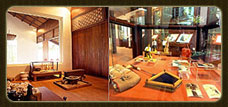
Stone Carving Creation
The stone carving is one of the park’s significant sculptural works, located in the courtyard behind the replica house. The sandstone was sourced and transported by the Royal Thai Air Force from Wang Nam Khiao District, Nakhon Ratchasima Province. Each green sandstone slab measures 1.60 meters wide, 8 meters long, and 90 centimeters thick, mounted on an 80-centimeter-high base. One side of the slab depicts royal duties and activities.
The other side of the slab depicts the procession paying respects to Mae Fah Luang in front of the Doi Tung Royal Villa. Along the edges of both sides of the stone, one side is engraved with the royal cypher “Phor Por Ror” and verses reflecting the royal initiative in establishing the park, while the other side bears the royal cypher “Sa Wa” and poetic inscriptions honoring Her Royal Highness Princess Srinagarindra.
1. Side engraved with the royal cypher Phor Por Ror (P.P.R.)
โปรดเกล้าฯ ให้อนุรักษ์เป็นหลักฐาน
และสร้างเป็นอุทยานโดยถวิล
เฉลิมพระเกียรติพระราชชนนีศรีนครินทร์
ปองประโยชน์ทั้งสิ้นแก่ปวงชน
และเพื่อผู้สนใจใคร่ศึกษา
พระราชประวัติบรรดาอนุสนธิ์
พระราชกิจสฤษฎิ์ไว้ในสากล
ดั่งรอยพระบาทยุคลอันฝากไว้
ขอให้อุทยานสถานนี้
อันใกล้ที่เคยประทับในสมัย
จงสำเร็จประโยชน์แท้แก่ชาวไทย
เฉลิมพระเกียรติคุณไปนิรันดร
คำจารึกประวัติความเป็นมา
นายชำนาญ แย้มผกา
ผู้อำนวยการ
กองงานในพระองค์ พระเจ้าวรวงศ์เธอ
พระองค์เจ้าโสมสวลี
พระวรราชาทินัดดามาตุ
ผู้ประพันธ์
2. Side engraved with the royal cypher Sa Wa (S.W.)
แม่ฟ้าหลวงดวงประทีปชาวป่าเขา
และเหล่าทวยหาญไทยในไพรเถื่อน
ไม่มีวันที่พระจะลืมเลือน
ผองเพื่อนผู้ทุกข์ยากลำบากลำบน
ทรงสละสิ่งสินยอมสิ้นสุข
เสด็จประเทาทุกข์ไทยไม่เบื่อบ่น
พระคุณเพียบแผ่นพื้นภูวดล
เหลือล้นถ้อยคำร่ำพรรณนา
บัดนี้โอ้อนิจจาแม่ฟ้าหลวง
เสด็จทิ้งลูกทั้งปวงไว้ใต้หล้า
แม้นชาติหน้ามีจริงดังวาจา
ขอเกิดใหม่ใต้บาทาแม่ฟ้าเทอญ
คำจารึกเทิดพระเกียรติ
สมเด็จพระศรีนครินทราบรมราชชนนี
ท่านผู้หญิง
สมโรจน์ สวัสดิกุล ณ อยุธยา
ผู้ประพันธ์
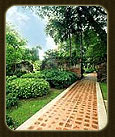
Access to the Park
The park can be reached by both land and water. There are two road entrances: from Somdet Chao Phraya Bridge via Wat Anongkharam Alley, and from Phaya Mai Road beside Phra Phutthayotfa Bridge. By the Chao Phraya River, there is a pier in front of the Guan Yu Shrine, from which visitors can walk along a path into the park.
This Princess Srinagarindra Park may be regarded as a “historical park,” created for future generations to remember “the Princess Grandmother of the Thai people,” who carried out her royal duties with wholehearted devotion for the benefit and well-being of her subjects. It is also a place established under the royal initiative of His Majesty the King to honor Her Royal Highness Princess Srinagarindra, while allowing the public to make use of the park. This represents an immeasurable act of royal benevolence for the Thai people.
(Veena Rojanarat and Suwakon Tangsuhan, Chaipattana Foundation Journal, December 1996: 52–61)